Last updated: August 28, 2026

Building a working list of medical contacts sounds simple until you try it. Providers switch practices, phone numbers age out, and public directories rarely include a personal email or direct cell number. If you’re trying to reach physicians, nurses, or facility administrators for recruiting, sales, or research outreach, the gap between “available” data and “usable” data is where most campaigns stall.
Heartbeat AI builds and maintains contact records for healthcare professionals and organizations across the U.S., combining licensing data, public records, and verified sources into a searchable database. Here’s what that looks like in practice, what to check before you buy any list, and how to use one without running into compliance trouble.
What’s on this page:
What’s Included in a Heartbeat Medical Contact Record
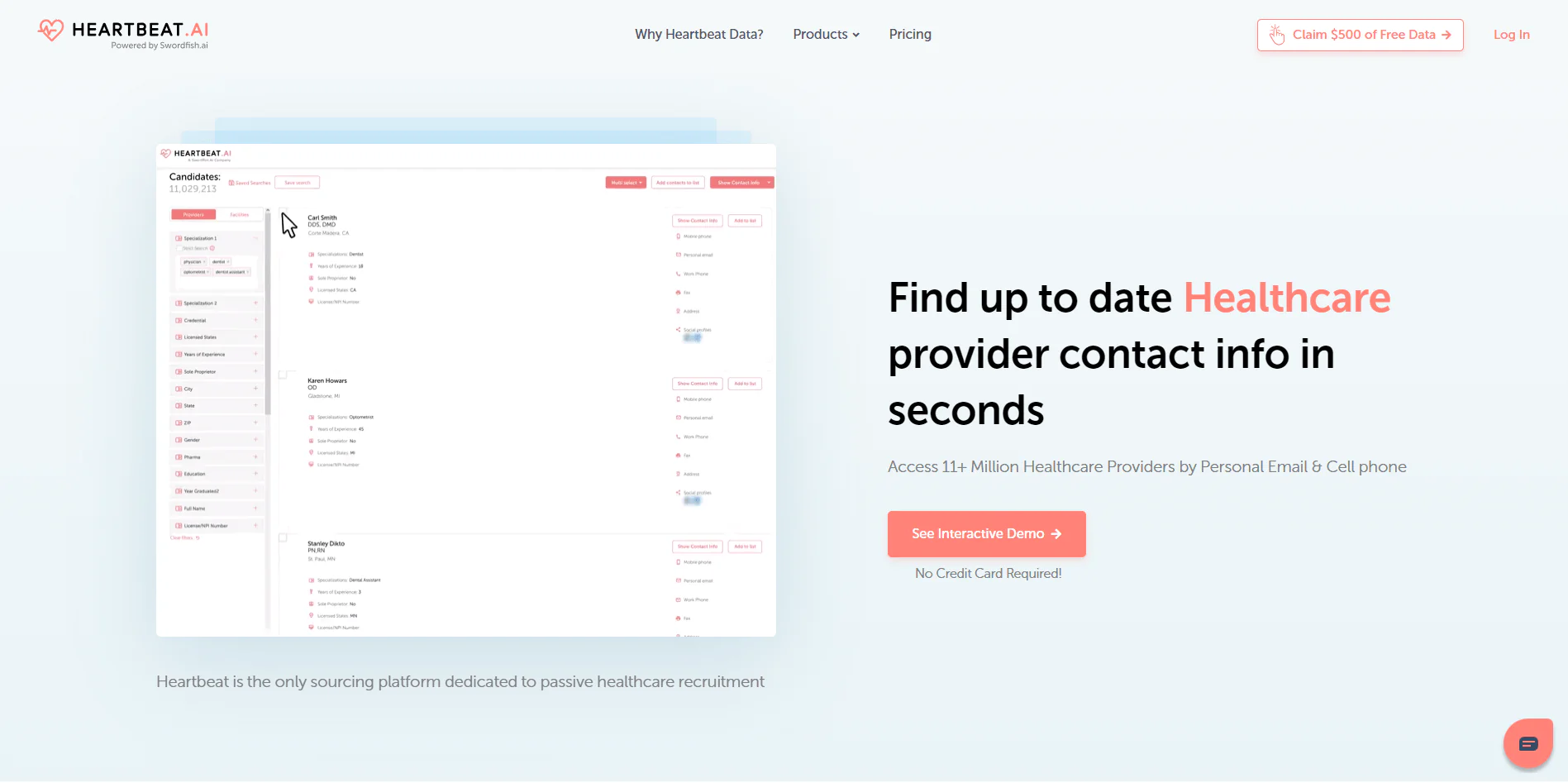
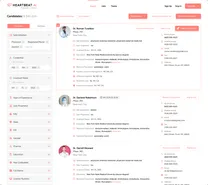
A usable healthcare contact record needs more than a name and a generic office line. Heartbeat AI’s records are built to support outreach that actually reaches a real person, with fields that let you filter by role, location, or specialty rather than working through a flat, undifferentiated list.
- Direct contact details: work, mobile, and fax numbers alongside personal and professional email addresses.
- Professional credentials: license numbers, licensed states, and years of experience.
- Practice information: specialization, sole proprietor status, and affiliated organization.
- Location data: mailing address and geographic filters down to city or state.
Data Fields at a Glance
- Provider name
- Location
- Contact numbers (work, cell, mobile)
- Email address
- Specialization
- Years of experience
- Sole proprietor status
- Licensed states
- License number
- Fax
- Mailing address
 Accuracy & coverage of personal contact info were unrivaled by other platforms… this gives any healthcare recruiter a competitive advantage when engaging hard-to-reach healthcare providers.
Senior Growth Strategist





Why a Verified List Beats a Scraped One
A scraped list off a public directory usually gets you an outdated office fax number and maybe a general practice email that a front desk staffer checks once a week. A verified list changes the math on outreach in a few concrete ways.
Precision in Targeting
Accurate records let you segment by specialty, license status, or location instead of blasting a generic list and hoping something lands.
Better Response Rates
Reaching a provider directly, rather than through a shared front-desk inbox, meaningfully improves the odds of a reply.
Cost Efficiency
Every bounced email or disconnected number is wasted spend. Clean data reduces that waste, even if it doesn’t eliminate it entirely.
Room for Personalization
Knowing a provider’s specialty, years in practice, or location lets you write a message that reads as relevant instead of generic.
Support for Market Expansion
A detailed directory makes it easier to identify underserved regions or specialties worth targeting next.
Medical Institutions Covered, by Category
The directory spans the following facility types.
| Medical Institutions by Category |
| Hospitals |
| Clinics |
| Pharmacies |
| Laboratories |
| Rehabilitation Centers |
| Nursing Homes |
| Urgent Care Centers |
| Medical Imaging Centers |
| Ambulatory Surgery Centers |
| Dental Clinics |
| Mental Health Facilities |
| Home Health Agencies |
Coverage by State
The database includes medical institutions across every U.S. state.
How the Data Gets Compiled
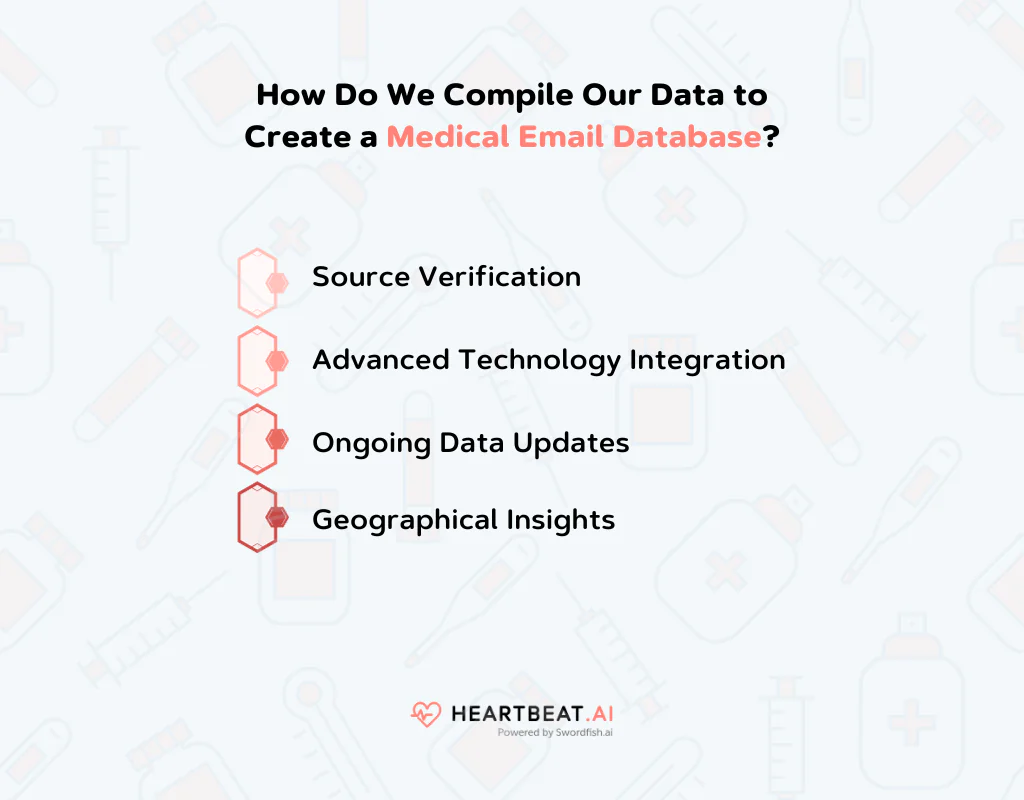
Building a reliable directory isn’t a one-time scrape. It’s an ongoing process of sourcing, checking, and refreshing records.
Source Verification
Records are drawn from a network of data partners and a mix of public and private channels, cross-checked before they’re added to the directory.
Technology-Assisted Matching
Automated matching helps link scattered records, such as a license filing and a practice address, back to the same individual, reducing duplicate or fragmented entries.
Ongoing Updates
Provider information changes constantly. Directories that don’t refresh regularly go stale fast, so records are reviewed and updated on an ongoing basis rather than left static after the initial build.
Geographic Filtering
City, state, and facility affiliation data let you narrow a list down to a specific region instead of working through an undifferentiated national file.
What to Check Before You Buy a List
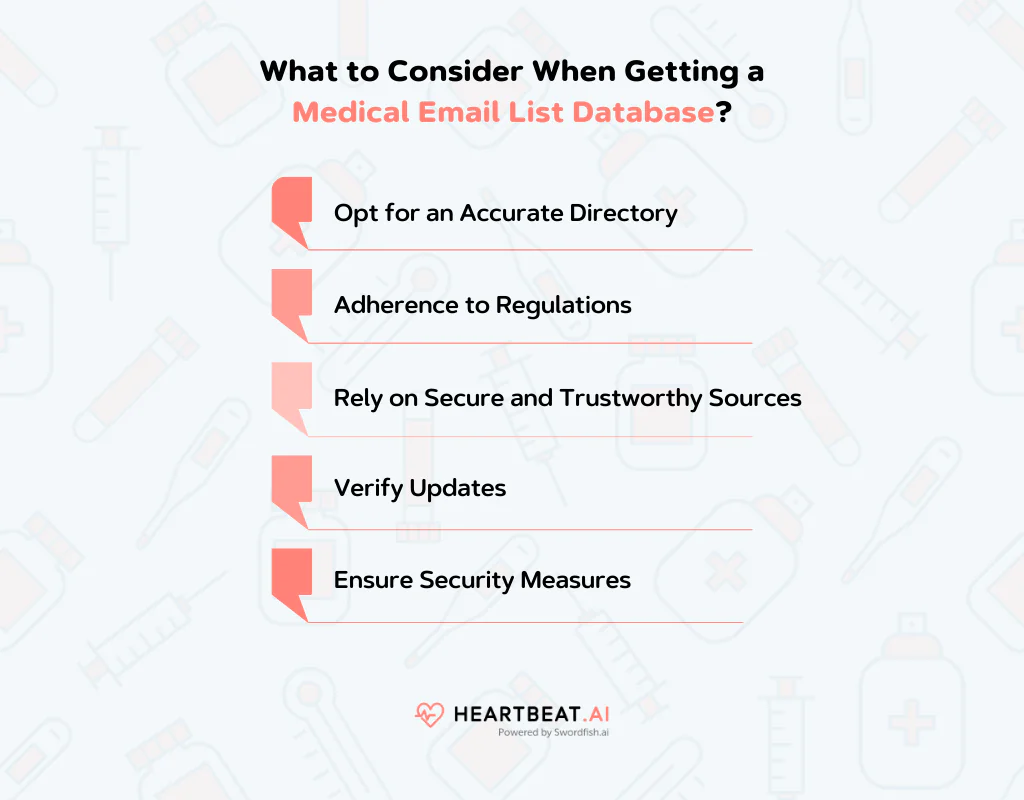
Not every vendor selling “medical contact data” is offering the same thing. A few questions are worth asking before you commit budget to any list.
- How current is it? Ask when records were last refreshed and how often updates happen. A directory that hasn’t been touched in a year isn’t worth much.
- Where did the data come from? Sources matter both for accuracy and for compliance. Vague answers here are a red flag.
- Does it cover the fields you actually need? A list heavy on office numbers but light on direct contacts won’t help a recruiter trying to reach a candidate personally.
- How is the data secured? Confirm the vendor has reasonable safeguards against unauthorized access, since you’re taking on some responsibility once the data is in your systems.
- Can you segment it? Filtering by specialty, license status, or geography saves time later and improves targeting from day one.
A Note on HIPAA and Provider Contact Data
It’s worth being precise about what HIPAA actually covers here. The HIPAA Privacy Rule primarily governs how patient protected health information can be used and disclosed, particularly for marketing that touches PHI. A directory of provider business contact information (a physician’s work email, license number, or practice address) is a different category of data than patient records, but that doesn’t mean outreach is unregulated. Email marketing in the U.S. is also governed by the CAN-SPAM Act, which requires accurate sender information and a working opt-out mechanism, and cold calling or texting providers may implicate telemarketing rules depending on the channel. Anyone using a list to reach patients directly, rather than providers, should treat that as a separate and more heavily regulated activity.
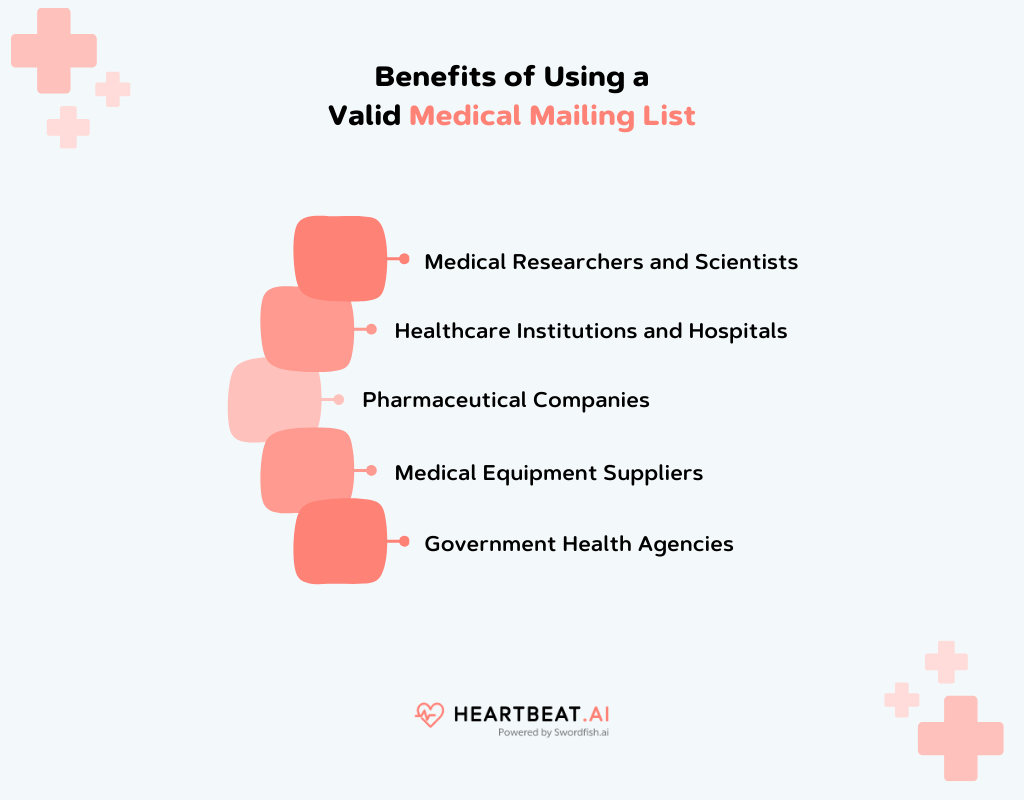
Who Actually Uses Provider Contact Lists
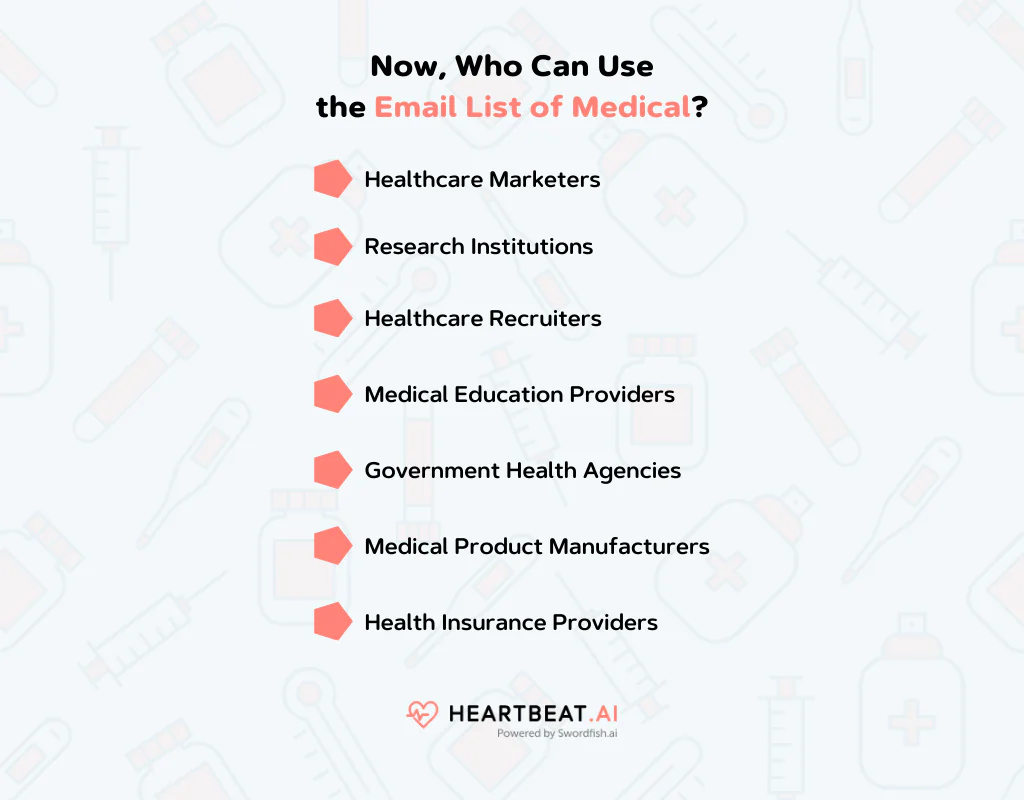
Healthcare Marketers
Pharmaceutical companies, equipment suppliers, and service vendors use provider lists to target outreach by specialty rather than blanket-marketing an entire region.
Research Institutions
Access to a segmented pool of professionals helps with recruiting participants for studies and surveys.
Healthcare Recruiters
Direct contact details shorten the gap between identifying a candidate and actually reaching them, which matters in a competitive hiring market.
Medical Education Providers
Schools and continuing-education providers use contact data to reach educators and practicing professionals about courses or certifications.
Government Health Agencies
Public health teams sometimes need direct lines to providers for coordination or information distribution.
Medical Product Manufacturers
Device and pharmaceutical companies use provider contacts for product education, feedback collection, or trial recruitment.
Health Insurance Providers
Payers may use provider data to manage network communications or explore partnership opportunities.
Getting More Out of a Provider Database
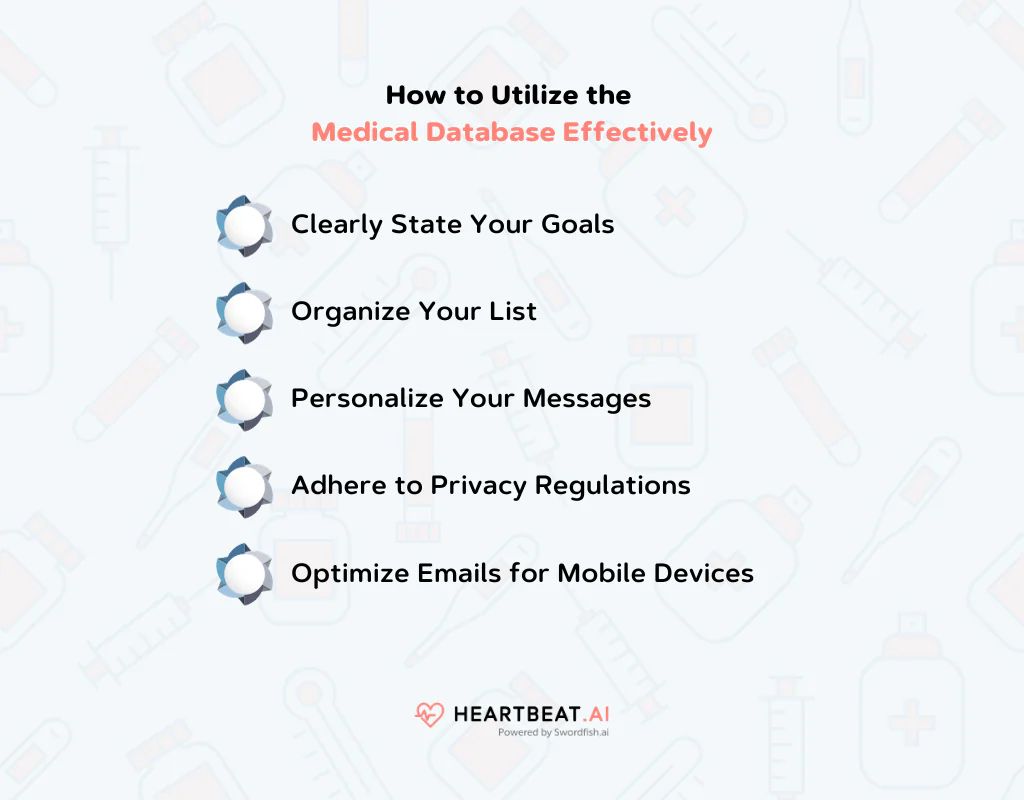
Buying a good list is only half the job. How you use it determines whether it turns into results or just sits in a CRM unopened.
Define the Objective First
Recruiting, research, and product marketing all call for different messaging and different segments of the same list. Decide the goal before you start pulling records.
Segment Before You Send
Group contacts by specialty, location, or experience level. A cardiologist in Texas and a family physician in Ohio shouldn’t get the same email.
Personalize the Message
Referencing a provider’s specialty or region in the first line does more for response rates than a longer, more polished generic pitch.
Respect Applicable Regulations
Beyond CAN-SPAM and general privacy law, be mindful of HIPAA whenever a campaign could touch patient-level information, not just provider business contacts.
Design for Mobile
Most professionals check email on a phone between patients or meetings. Emails that render poorly on mobile lose responses before they’re even read.
Where This Leaves You
Manually assembling accurate contact details for thousands of providers isn’t realistic for most teams, and public directories rarely have the depth needed for real outreach. A maintained, verified database closes that gap faster than building one from scratch.
Heartbeat AI offers packages at different pricing points, so teams of different sizes can access provider contact data without over-committing budget upfront.
Get Heartbeat AI today.
FAQs
How can a medical email list benefit healthcare professionals?
It gives professionals a more direct way to network, pursue collaborations, and stay informed about industry opportunities, rather than relying on shared institutional inboxes.
Can the list be customized to specific criteria?
Yes. Records can typically be filtered by specialty, location, and other parameters so outreach targets a relevant segment rather than an entire national database.
How is data security handled?
Reputable providers apply safeguards to limit unauthorized access to contact data, though buyers should still confirm a vendor’s specific security practices before purchasing.