What’s on this page:
Key takeaways
- Choose the owner or associate outreach lane based on the decision you need.
- Treat ownership indicators, including sole proprietor status, as signals to verify rather than proof of decision-making authority.
- Use role-specific scripts and track outcomes separately for owners and associate candidates.
- Measure reachability by channel and audit suppression across the CRM, dialer, and email platform.
- Preview and check a sample for role accuracy and reachability before scaling outreach.
Last updated: August 28, 2026
By Ben Argeband, Founder & CEO of Heartbeat.ai
Who this is for
This is written for dental recruiters and DSOs sourcing dentists and practice owners who need actual conversations, not just a list of names. Dental outreach stalls for a predictable reason: dentists are chairside most of the day, office lines are gatekept by front desk staff, and the person who can say yes changes depending on what you’re asking for.
To move faster, route each contact to the right lane—owner or associate—based on the decision you need. Use a direct channel when available, and apply opt-out suppression consistently to avoid unwanted follow-up.
Quick Answer
- Core Answer
- Use a dentist contact database to separate practice owners from associates, prioritize direct channels, and confirm role before pitching a practice-level decision.
- Practical Signal
- Sole proprietor filtering is a useful routing signal when your outreach needs an owner-level decision, not a guarantee of legal or tax status.
- Best For
- Dental recruiters and DSOs sourcing dentists and practice owners.
Compliance & Safety
This method is for legitimate recruiting outreach only. Respect candidate privacy, opt-out requests, and local data laws. Heartbeat does not provide medical, tax, or legal advice.
Owner vs associate: who actually decides
In dental recruiting, the key is finding the dentist who can make or influence the decision tied to your specific ask.
- Owner decisions: practice-level choices — partnerships, affiliation conversations, staffing vendors, major operational changes.
- Associate decisions: personal career moves — a new role, a schedule change, relocation.
Targeting owners narrows the contact pool and may reduce touches to people who cannot make a practice-level decision. Including associates can broaden candidate outreach, but calls for a separate script and success measure.
Step-by-step method
Step 1: Write down the decision you need before you pull contacts
Before pulling contacts, state the decision you need: "This outreach requires a practice owner decision" or "This outreach is for dentist candidates." That helps teams focus on contacts who fit the goal, rather than call volume alone.
Step 2: Build your search around ownership signals, not just specialty
Ownership status can help route practice-level outreach, but it is only a signal. Consider filtering on available ownership indicators, such as sole proprietor, then confirm the person’s role before pitching a practice-level decision.
| Filter / field | Use it when | What it changes operationally |
|---|---|---|
| Sole proprietor (ownership signal) | You need a practice-level decision-maker | Routes reps into the owner lane and reduces “not my decision” outcomes |
| Geography (city/region) | You have a defined market | Keeps outreach relevant and improves reply quality |
| Practice setting / affiliation (if available) | You need to avoid mismatched environments | Prevents pitching the wrong model to the wrong practice type |
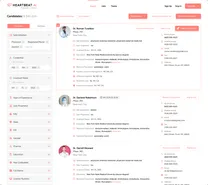
| Direct mobile number (output field) | You need speed to conversation | Enables direct calling without relying on office-line gatekeepers |
| Email + suppression flags (output fields) | You run sequences | Protects deliverability and enforces opt-out across tools |
Step 3: Pull output fields a rep can actually work
A usable export should give a rep the information needed for the next action in one place. At minimum, include:
- Identity fields (name, location, practice name when available)
- Role/ownership signal (owner/associate indicators, including sole proprietor where applicable)
- Direct channels when available, including a direct mobile number
- Suppression fields (prior opt-out, wrong person, do-not-contact flags)
Step 4: Choose channels that match chairside reality
Because dentists may be in procedures during much of the workday, keep the first touch short and easy to respond to.
- Phone: fastest when you have a direct line; office lines are commonly gatekept.
- Email: better for context and credibility; deliverability is a measurable constraint worth tracking.
- Text: only where appropriate and lawful for your channel and region; keep it minimal and include opt-out language.
Step 5: Run a two-lane cadence
Keep owner and associate outreach in separate lanes: each has a different goal and should use a fitting prompt.
- Owner lane: confirm they’re the decision-maker, then ask for a short slot.
- Associate lane: confirm interest and timing, then move to a quick screen.
Step 6: Start with a preview-first workflow
When evaluating a data source, preview a sample first. Check role accuracy and reachability before scaling.
CTA: start free search & preview data.
Diagnostic table
| Use case | Who you should target first | Best first message | Best first channel | What to log in CRM |
|---|---|---|---|---|
| Affiliation / acquisition intro | Practice owner (start with sole proprietor where applicable) | Role-confirm + short slot request | Direct phone, then short email | Owner confirmed? (Y/N). Preferred channel. Opt-out? |
| Associate placement | Dentist candidate (associate/partner) | Interest + timing check | Phone + email | Open to move? Timeline. Must-haves. |
| Coverage / staffing gap | Practice owner (or delegated ops lead) | Problem/need confirmation + next step | Phone first | Need type. Start window. Credentialing owner. |
| Reactivation of cold accounts | Practice owner | Permission-based re-intro | Email first, then one call attempt | Prior history. Opt-out status. Next follow-up date. |
Weighted checklist
Score each record from 0 to 2 on the items below, then prioritize records with the highest totals.
- Decision fit (0–2): Does the use case require an owner decision or a candidate decision?
- Ownership signal (0–2): Is there an owner indicator, such as sole proprietor, when you need a decision-maker?
- Direct channel (0–2): Is there a direct mobile number or direct email available?
- Suppression clean (0–2): No prior opt-out or do-not-contact flags.
- Script match (0–2): Do you have the correct lane script ready?
Routing rule: if ownership signal scores 0 and you need an owner decision, run role-confirmation first instead of pitching.
Outreach templates
Template 1 — Owner lane (voicemail)
“Hi Dr. [Last], this is [Name]. Quick question — are you the practice owner for [Practice/City]? If yes, I’d like to ask one thing about [topic]. If not, who should I speak with? My number is [number].”
Template 2 — Owner lane (email)
Subject: Quick question for the practice owner
“Dr. [Last] — I’ll be brief. Are you the practice owner for [Practice/City]? If yes, can we grab 10 minutes this week about [topic]? If not, who’s the right person? Reply ‘no’ anytime and I’ll opt you out.”
Template 3 — Associate lane (email)
Subject: Dental role in [Area] — quick timing check
“Dr. [Last] — reaching out on a [role type] option in [area]. Open to a quick call to see if it fits your schedule and goals? If you prefer no outreach, reply ‘no’ and I’ll opt you out.”
Template 4 — Role-confirmation micro-touch
“Dr. [Last], quick check so I route this correctly — are you currently an owner/partner, or practicing as an associate? If you prefer no outreach, tell me and I’ll opt you out.”
Common pitfalls
- Pitching practice-level decisions to associates: you’ll get polite replies and no movement.
- Over-dialing office lines: gatekeepers protect chair time; more volume doesn’t fix a channel mismatch.
- Front desk routing mistakes: if you call an office line, ask for the best time or channel to reach the dentist rather than pressuring staff to bypass internal rules.
- Not operationalizing opt-out: if suppression isn’t enforced across tools, you’ll re-contact people who asked you not to.
- Confusing “found” with “reachable”: a record isn’t a conversation — track reachability separately.
Decision-tree worksheet: owner vs associate routing
- Q1: What decision are we asking for?
- Practice-level (affiliation, acquisition, staffing vendor, partnership) → target the practice owner.
- Employment mobility (new role, schedule change) → target the dentist candidate.
- Q2: Do we need a signer/approver in the first conversation?
- Yes → start with sole proprietor filtering, then expand if volume is too low.
- No → associates can be included, but keep messaging lane-specific.
- Q3: Do we have a direct channel?
- Yes → run the lane cadence.
- No → send a role-confirmation email first; avoid repeated office-line dialing.
- Q4: Any opt-out or do-not-contact flag?
- Yes → suppress across CRM, dialer, and email tool immediately.
How to improve results
To improve results, separate owner and associate outreach, measure reachability, and maintain suppression processes rather than simply adding more names.
Metric definitions
- Connect Rate = connected calls / total dials (per 100 dials).
- Answer Rate = human answers / connected calls (per 100 connected calls).
- Deliverability Rate = delivered emails / sent emails (per 100 sent emails).
- Bounce Rate = bounced emails / sent emails (per 100 sent emails).
- Reply Rate = replies / delivered emails (per 100 delivered emails).
- Ownership (definition): for this workflow, ownership means the dentist is a practice owner, often a sole proprietor, who can approve practice-level decisions.
Measurement instructions
- Split your sequences into an owner lane and an associate lane.
- Tag outcomes on first meaningful interaction: owner confirmed, associate confirmed, wrong person, or opted out.
- Track weekly by lane: Connect Rate, Answer Rate, Deliverability Rate, and Reply Rate.
- Audit suppression weekly to confirm opt-outs are removed from future sends and dial lists across CRM, dialer, and email platform.
- Run a monthly role-accuracy audit: sample “owner” records and confirm they’re actual practice-level decision-makers, then adjust filters or scripts based on the misses.
Workflow upgrades worth making
- Shorten the ask: owners respond better to a clear next step than to a long pitch.
- Stop office-line escalation: after two gatekept attempts, switch channels or move the contact to nurture.
- Make suppression permanent: opt-out and wrong-person flags should never re-enter a sequence.
Legal and ethical use
Use a dentist contact database only for legitimate recruiting outreach, and build your process around:
- Consent: follow applicable rules for your region and channel (email, phone, text).
- Opt-out: provide a clear opt-out path and honor it quickly across all systems.
- Data minimization: store only what your recruiting workflow needs.
- No guarantees: don’t represent any dataset as a guaranteed owner list.
Treat sole proprietor status as a possible routing signal, not proof that someone owns or controls a practice. Confirm the person’s role, and do not use the filter as a legal or tax classification. This is not tax or legal advice.
Evidence and trust notes
Baseline provider identifiers, including for dentists, can be cross-referenced through the NPPES NPI registry maintained by CMS. It’s useful for validating identity fields, but it doesn’t indicate reachability or a provider’s preferred contact channel.
For more on how Heartbeat approaches data quality, sourcing ethics, and suppression, see Trust & methodology for contact data.
Related guides:
FAQs
How do I use a dentist contact database to reach practice owners, not just associates?
Route by decision type. If it’s practice-level, start with ownership signals like sole proprietor, confirm they’re the owner in the first touch, then ask for a short slot.
What should I track to know if my outreach is working?
Track lane-specific metrics: Connect Rate (connected calls / total dials, per 100 dials), Answer Rate (human answers / connected calls, per 100 connected calls), Deliverability Rate (delivered emails / sent emails, per 100 sent emails), and Reply Rate (replies / delivered emails, per 100 delivered emails).
How do I operationalize opt-out so I don’t re-contact dentists?
Use one suppression source of truth, usually your CRM, sync it to your dialer and email tool, and require reps to log opt-outs immediately. Audit weekly to confirm suppressed contacts stay uncallable and unemailable.
Is it okay to text dentists?
It depends on your local rules and your compliance posture. If you do, keep it minimal, identify yourself, and include opt-out language (for example, “Reply STOP to opt out”).
What’s the safest way to start if I’m evaluating data quality?
Use a preview-first workflow: start free search & preview data, spot-check role accuracy (owner vs associate), then scale only after suppression and verification steps are working.
How do I use a dentist contact database to reach practice owners (not just associates)?
Route by decision type. If it’s practice-level, start with ownership signals like sole proprietor, confirm they’re the owner in the first touch, then ask for a short slot.
How do I operationalize opt-out so we don’t re-contact dentists?
Use one suppression source of truth (usually your CRM), sync it to your dialer and email tool, and require reps to log opt-outs immediately. Audit weekly to confirm suppressed contacts are not callable or emailable.
Next steps
- Pick your lane: owner decision or dentist candidate.
- Build a small test pull and validate role accuracy and reachability.
- Enforce suppression across CRM, dialer, and email tool.
- Run the workflow in Heartbeat.ai: start free search & preview data.
About the Author
Ben Argeband is the Founder and CEO of Swordfish.ai and Heartbeat.ai. With deep expertise in data and SaaS, he has built two successful platforms trusted by over 50,000 sales and recruitment professionals. Ben’s mission is to help teams find direct contact information for hard-to-reach professionals and decision-makers, providing the shortest route to their next win. Connect with Ben on LinkedIn.