Last updated: August 31, 2026
Wyoming’s healthcare workforce leans heavily on advanced practice nurses because the state is large, rural, and short on physicians in many counties. If you’re building outreach lists, recruiting for a rural clinic, or trying to connect with prescriptive-authority nurses across the state, having accurate contact data matters more here than in denser markets — there’s often no backup provider down the street.
This page covers what prescriptive authority means for nurses in Wyoming, why contact accuracy is a real operational problem in a state this spread out, and how a verified contact database like Heartbeat can support recruiting, marketing, or professional networking without wasting time on stale directories.
What’s on this page:
Get a Prescriptive Nurse Contact List for Wyoming from Heartbeat
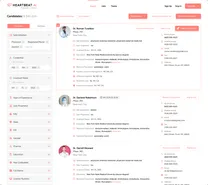
Heartbeat.ai’s database covers licensed healthcare professionals across the United States, including nurse practitioners and other advanced practice registered nurses (APRNs) with prescriptive authority. You can filter by specialty, location, and licensure to build a targeted list instead of scrolling through generic directories.
The list spans specialties from adult and pediatric care to geriatrics and acute care, plus subspecialties like oncology, cardiology, and gastroenterology where they apply. Coverage includes hospitals, nursing homes, and private practice settings.
Instead of assembling contacts manually or relying on a list that’s a year out of date, you can pull current records directly through the platform.
Healthcare Landscape in Wyoming
Wyoming’s healthcare system is decentralized by necessity — the state has a small population spread across a large area, and many communities depend on a handful of regional hospitals. Facilities like Cheyenne Regional Medical Center and Wyoming Medical Center anchor care in their regions, but a lot of day-to-day primary and chronic care in rural counties runs through nurse practitioners and other APRNs rather than physicians.
Wyoming is a full practice authority (FPA) state. Wyoming is a full practice authority state — APRNs practice independently within their role, population focuses, and certification under Wyoming law, with no physician oversight agreement required by the Nurse Practice Act. That means nurse practitioners can evaluate, diagnose, and manage treatment without a collaborative physician agreement — a meaningfully different setup than “restricted” or “reduced” practice states where NPs need ongoing physician sign-off.
In FPA states, nurse practitioners can independently prescribe medications, including Schedule II through V controlled substances, without a collaborative agreement or physician co-signature. Wyoming specifically has full practice authority with controlled substance prescribing authorized.
What prescriptive authority actually requires in Wyoming
Full practice authority doesn’t mean prescriptive authority is automatic on day one of licensure. Prescriptive authority requires additional steps: 30 contact hours of pharmacology coursework and separate WSBN Rx recognition, and controlled substance prescribing also requires a DEA registration and a Wyoming Controlled Substance Registration.
Maintaining that authority isn’t a one-time approval either. Renewal of prescriptive authority requires 15 contact hours of continuing education in pharmacotherapeutics, or pharmacology and clinical management. On top of that, APRNs with prescriptive authority are required 3 hours of continuing education related to the responsible prescribing of controlled substances or treatment of substance abuse disorders every two years.
If you’re recruiting or building a targeted list, it’s worth knowing that these credentials — pharmacology CE, DEA registration, controlled substance registration — sit on top of the base NP license. A contact list that only flags “nurse practitioner” without noting prescriptive status may include providers who aren’t actively prescribing.
Why Accurate Contact Data Matters Here
Contact accuracy affects three different groups in different ways:
- Patients and referral partners need current numbers to schedule care or coordinate a handoff — especially critical in a state where the next available provider might be an hour’s drive away.
- Recruiters lose time and candidates when outreach bounces or lands in an inbox someone stopped checking two jobs ago.
- Peer networking — collaboration on best practices, referrals, continuing education — depends on reaching the right person the first time, not the third.
None of this is unique to Wyoming, but the state’s low provider density raises the cost of a wrong number. There’s less redundancy in the system to absorb a missed connection.
Challenges Specific to Finding Prescriptive Nurses in Wyoming
Two structural issues make this harder than in denser states:
- Geography. Long distances and low population density mean fewer providers are concentrated in any one place, and directories built around urban assumptions don’t always reflect how care is actually distributed.
- Workforce shortage. Like much of rural America, Wyoming doesn’t have an oversupply of advanced practice nurses relative to need, which puts a premium on knowing exactly who’s practicing where.
Telehealth has closed some of the distance gap, letting prescriptive nurses manage patients remotely in some circumstances. Centralized, regularly updated provider databases help on the workforce side by making it easier to see who’s licensed, where, and in what specialty — reducing the guesswork in matching patients or job openings to available nurses.
What’s in Heartbeat’s Prescriptive Nurse Contact Data
Each record is built to support real outreach, not just a name and a guess at an email address:
- Prescriptive nurse name
- Location
- Contact numbers (work, cell, mobile)
- Email address
- Specialization
- Years of experience
- Sole proprietor status
- Licensed states
- License number
- Fax
- Address
Prescriptive Nurse Contact Lists by State
Explore prescriptive nurse contact data for other states below.
| Prescriptive nurse by states |
|---|
| Prescriptive nurse in Alabama |
| Prescriptive nurse in Alaska |
| Prescriptive nurse in Arizona |
| Prescriptive nurse in Arkansas |
| Prescriptive nurse in California |
| Prescriptive nurse in Colorado |
| Prescriptive nurse in Connecticut |
| Prescriptive nurse in Delaware |
| Prescriptive nurse in Florida |
| Prescriptive nurse in Georgia |
| Prescriptive nurse in Hawaii |
| Prescriptive nurse in Idaho |
| Prescriptive nurse in Illinois |
| Prescriptive nurse in Indiana |
| Prescriptive nurse in Iowa |
| Prescriptive nurse in Kansas |
| Prescriptive nurse in Kentucky |
| Prescriptive nurse in Louisiana |
| Prescriptive nurse in Maine |
| Prescriptive nurse in Maryland |
| Prescriptive nurse in Massachusetts |
| Prescriptive nurse in Michigan |
| Prescriptive nurse in Minnesota |
| Prescriptive nurse in Mississippi |
| Prescriptive nurse in Missouri |
| Prescriptive nurse in Montana |
| Prescriptive nurse in Nebraska |
| Prescriptive nurse in Nevada |
| Prescriptive nurse in New hampshire |
| Prescriptive nurse in New jersey |
| Prescriptive nurse in New mexico |
| Prescriptive nurse in New york |
| Prescriptive nurse in North carolina |
| Prescriptive nurse in North dakota |
| Prescriptive nurse in Ohio |
| Prescriptive nurse in Oklahoma |
| Prescriptive nurse in Oregon |
| Prescriptive nurse in Pennsylvania |
| Prescriptive nurse in Rhode island |
| Prescriptive nurse in South carolina |
| Prescriptive nurse in South dakota |
| Prescriptive nurse in Tennessee |
| Prescriptive nurse in Texas |
| Prescriptive nurse in Utah |
| Prescriptive nurse in Vermont |
| Prescriptive nurse in Virginia |
| Prescriptive nurse in Washington |
| Prescriptive nurse in West virginia |
| Prescriptive nurse in Wisconsin |
| Prescriptive nurse in Wyoming |
How Heartbeat Compiles This Data
Heartbeat aggregates provider data from a wide range of official, public, and private industry sources, then cross-references and verifies records rather than pulling from a single static directory. That process is designed to keep phone numbers and email addresses current as providers change jobs, locations, or credentials — which happens often in a field with as much mobility as nursing.
No contact database, including this one, will be 100% accurate at every moment; providers change roles and numbers constantly. The practical goal is a high match rate combined with regular refresh cycles, not a claim of permanent accuracy.
Who Uses a Prescriptive Nurse Contact List?
- Recruiters and staffing firms filling NP or APRN roles in rural or underserved facilities.
- Marketing and sales teams at healthcare vendors, pharma, or medical device companies targeting prescribers directly.
- Independent professionals — insurance agents, financial advisors serving healthcare workers — who need verified contact channels.
- Event organizers and associations coordinating continuing education or professional gatherings.
Any use of this kind of data should stay within applicable privacy and anti-spam regulations, and outreach involving patient-adjacent communication should respect HIPAA boundaries where relevant.
Using the List Effectively: A Quick Checklist
- Segment by specialty and license status before sending anything — a general oncology-focused message to a pediatric NP wastes both parties’ time.
- Confirm prescriptive authority status separately from base licensure if that distinction matters for your outreach.
- Keep messages short, specific about intent, and easy to opt out of.
- For recruitment, lead with role details and location realities (rural distances, on-call expectations) rather than generic pitches.
- Log bounced contacts and refresh data periodically rather than treating any list as permanent.
Where This Data Doesn’t Help
A contact list solves the “how do I reach this person” problem. It doesn’t solve credentialing verification, scope-of-practice questions, or clinical decisions — those still require checking directly with the Wyoming State Board of Nursing or the relevant licensing body. Treat the database as a starting point for outreach, not a substitute for verifying a provider’s current standing before any formal engagement.
Frequently Asked Questions
What is a prescriptive nurse?
It generally refers to an advanced practice registered nurse — a nurse practitioner, clinical nurse specialist, or similar role — who holds the additional authority to prescribe medications, including in some cases controlled substances.
What does it take to get prescriptive authority in Wyoming?
Prescriptive authority requires additional steps: 30 contact hours of pharmacology coursework and separate WSBN Rx recognition, on top of standard APRN licensure requirements. Controlled substance prescribing adds a DEA registration and state controlled substance registration.
Can nurse practitioners in Wyoming practice independently?
Wyoming is a full practice authority state — APRNs practice independently within their role, population focuses, and certification under Wyoming law, with no physician oversight agreement required by the Nurse Practice Act. That said, facility policy at a given hospital or clinic can still set additional expectations around supervision or competency validation.