Last updated: August 31, 2026
Building outreach lists for pediatric specialists in New Jersey is trickier than it looks. The state has a dense, fragmented provider landscape — large academic medical centers alongside independent practices — and contact details go stale quickly as physicians change affiliations or move between hospital systems. For anyone doing healthcare recruitment, medical sales, or professional networking, that turnover is the core problem worth solving before you start any outreach campaign.
What’s on this page:
Why Accurate Pediatrician Contact Data Matters
Outdated contact information costs more than a bounced email. A recruiter chasing a stale phone number loses days on a search that should take hours. A sales rep who reaches the wrong department burns credibility before the conversation even starts. And a research or advocacy group trying to build a coalition of specialists can lose momentum if half their list is unreachable.
Three practical use cases stand out:
- Recruitment and staffing: Hospitals and staffing agencies need direct lines to pediatric specialists — not general switchboard numbers — to move quickly on time-sensitive openings.
- Vendor and pharma outreach: Companies introducing pediatric products or devices need to reach the right subspecialists (cardiology, endocrinology, oncology) rather than blasting a generic pediatrician list.
- Professional networking and research collaboration: Academic and advocacy groups rely on verified contact data to coordinate multi-site studies or community health initiatives.
New Jersey’s Pediatric Care Landscape
New Jersey has several major pediatric hospital systems that anchor the state’s pediatric workforce. Children’s Hospital of New Jersey at Newark Beth Israel Medical Center offers more than 30 specialized pediatric services, including New Jersey’s largest Valerie Fund Children’s Center for Cancer and Blood Disorders and a Children’s Heart Center offering a complete range of medical and surgical treatments for complex cardiac abnormalities. The hospital provides highly specialized treatment to nearly 3,000 newborns each year. Newark Beth Israel itself is a large facility — a 665-bed quaternary care, teaching hospital serving Newark and the Northern Jersey area — and it’s affiliated with Rutgers New Jersey Medical School, which trains many of the state’s pediatric residents.
Beyond Newark Beth Israel, families and recruiters in New Jersey also work with pediatric departments at Saint Peter’s University Hospital and Hackensack Meridian Children’s Health, along with numerous independent pediatric practices spread across the state’s counties. Because coverage is uneven — dense in North Jersey, thinner in some rural southern counties — sourcing accurate contact data means accounting for both large systems and small, harder-to-track private practices.
Why Finding the Right Pediatrician Contact Is Harder Than It Looks
A few practical obstacles come up repeatedly when compiling or using pediatrician contact lists in New Jersey:
- Population density variance: Northern New Jersey has a high concentration of specialists, while some southern and rural counties have fewer options, which affects both patient access and list coverage.
- Affiliation changes: Pediatricians frequently move between hospital systems, group practices, and academic centers, which means static directories go out of date fast.
- Credential verification: Confirming board certification matters for recruitment and referral purposes — the American Board of Pediatrics maintains certification records that can be checked directly rather than relying on a practice’s own website.
- Insurance network fragmentation: A pediatrician’s insurance participation can change year to year, which complicates any list meant to support patient-facing outreach.
Technology has narrowed some of these gaps. Telehealth platforms reduce the friction of geographic distance for consultations, and scheduling software has made appointment booking easier for patients. But none of that solves the data accuracy problem for B2B outreach — knowing a practice exists is different from having a working direct line or a current professional email address for the specific physician you need.
What a Usable Pediatrician Contact List Should Include
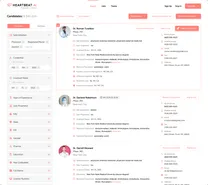
A contact list that’s actually useful for recruitment or outreach purposes should go beyond a name and a general office number. At minimum, look for:
- Full name and credentials
- Practice location and affiliated hospital system
- Direct contact numbers (not just a front-desk line)
- Professional email address
- Specialization or subspecialty
- Years in practice
- Licensed states and license number
- Fax and mailing address
Heartbeat’s pediatrician contact data for New Jersey is built around these fields, giving recruiters, sales teams, and healthcare organizations a way to filter down to the specific type of pediatric specialist — general pediatrics, cardiology, neurology, endocrinology, oncology, and other subspecialties — rather than working through an undifferentiated list.
Available Pediatrician Contact Lists by State
| Pediatrician by states |
|---|
| Pediatrician in Alabama |
| Pediatrician in Alaska |
| Pediatrician in Arizona |
| Pediatrician in Arkansas |
| Pediatrician in California |
| Pediatrician in Colorado |
| Pediatrician in Connecticut |
| Pediatrician in Delaware |
| Pediatrician in Florida |
| Pediatrician in Georgia |
| Pediatrician in Hawaii |
| Pediatrician in Idaho |
| Pediatrician in Illinois |
| Pediatrician in Indiana |
| Pediatrician in Iowa |
| Pediatrician in Kansas |
| Pediatrician in Kentucky |
| Pediatrician in Louisiana |
| Pediatrician in Maine |
| Pediatrician in Maryland |
| Pediatrician in Massachusetts |
| Pediatrician in Michigan |
| Pediatrician in Minnesota |
| Pediatrician in Mississippi |
| Pediatrician in Missouri |
| Pediatrician in Montana |
| Pediatrician in Nebraska |
| Pediatrician in Nevada |
| Pediatrician in New hampshire |
| Pediatrician in New jersey |
| Pediatrician in New mexico |
| Pediatrician in New york |
| Pediatrician in North carolina |
| Pediatrician in North dakota |
| Pediatrician in Ohio |
| Pediatrician in Oklahoma |
| Pediatrician in Oregon |
| Pediatrician in Pennsylvania |
| Pediatrician in Rhode island |
| Pediatrician in South carolina |
| Pediatrician in South dakota |
| Pediatrician in Tennessee |
| Pediatrician in Texas |
| Pediatrician in Utah |
| Pediatrician in Vermont |
| Pediatrician in Virginia |
| Pediatrician in Washington |
| Pediatrician in West virginia |
| Pediatrician in Wisconsin |
| Pediatrician in Wyoming |
How Heartbeat Compiles Pediatrician Contact Data
Heartbeat aggregates provider contact information from a wide range of official, private, and public sources, then applies predictive modeling to fill in gaps where a direct source isn’t available. The result is a searchable database covering millions of U.S. healthcare professionals, including direct cell numbers and personal email addresses alongside standard practice information. Users can filter by specialty, location, license status, and years of experience to build a list matched to a specific outreach goal rather than working from a generic directory.
No third-party data source is perfect. Contact details for any individual provider can lag behind a recent job change, and it’s worth spot-checking a sample of records against a hospital directory or state licensing lookup before launching a large campaign — especially for time-sensitive recruitment outreach.
Who Uses Pediatrician Contact Lists
The people relying on this kind of data aren’t limited to recruiters. Common users include:
- Healthcare staffing agencies filling pediatric specialist roles
- Medical device and pharmaceutical sales teams targeting pediatric product lines
- Public relations and advocacy groups building physician coalitions
- Researchers recruiting participants or collaborators for pediatric studies
- Event organizers inviting specialists to conferences or CME programs
Using Pediatrician Contact Data Responsibly
A working phone number or email address doesn’t give you a blank check for outreach volume. A few practical guardrails:
- Lead with a clear, specific reason for contacting the physician — vague pitches get ignored or reported as spam.
- Keep messages short; pediatricians and their staff have limited time between patients.
- Any communication touching on patient health information must respect HIPAA requirements; marketing and recruitment messaging should stay separate from anything resembling clinical communication.
- Personalize outreach to the specialty and practice setting rather than sending identical mass messages.
The Bottom Line
Finding pediatricians in New Jersey isn’t a matter of scarcity — the state has a strong base of hospital systems and independent practices. The real friction is keeping contact data current enough to be useful for recruitment, sales, or professional networking. A verified, filterable contact list saves the manual work of cross-referencing hospital directories and licensing boards one provider at a time.
Frequently Asked Questions
What qualifications do pediatricians in New Jersey have?
Pediatricians complete medical school followed by a residency in pediatrics, and must hold a license to practice medicine in New Jersey. Many pursue board certification through the American Board of Pediatrics, which can be verified directly through the board’s records.
How can I find a pediatrician in New Jersey?
Referrals from a primary care physician, insurance provider directories, and hospital system websites are common starting points. For professional outreach rather than personal care, a filterable contact database is more efficient than manual directory searches.
What services do pediatricians in New Jersey provide?
General pediatricians handle routine check-ups, immunizations, and common childhood illnesses, while subspecialists at centers like Children’s Hospital of New Jersey handle complex cases in areas such as cardiology, oncology, and neonatal intensive care.
What should I consider when choosing a pediatrician in New Jersey?
Location, office hours, insurance network participation, and hospital affiliation are practical starting points. This article is general information, not medical advice — consult directly with providers about care decisions.