Last updated: August 29, 2026
Nuclear medicine specialists in Washington State work at the intersection of diagnostic imaging and targeted treatment, using radioactive tracers to detect cancer, heart disease, and other conditions. For anyone building a recruiting pipeline, a marketing list, or a professional referral network in this niche, the challenge is rarely finding a specialist exists — it’s finding one whose license, location, and contact details are actually current.
This guide covers what a usable nuclear medicine specialist contact list should include, why manual sourcing tends to break down, and how Heartbeat’s provider database approaches the problem.
What’s on this page:
Nuclear Medicine in Washington’s Healthcare Landscape
Washington’s larger health systems, including academic medical centers and multi-hospital networks in the Seattle metro area, maintain dedicated nuclear medicine units alongside radiology and oncology departments. These teams typically include diagnostic imaging specialists, nuclear cardiology practitioners, and physicians supporting cancer treatment protocols that rely on radiopharmaceuticals.
Because nuclear medicine sits at the crossroads of several specialties, the same physician may appear in directories under radiology, oncology, or cardiology depending on how a health system categorizes staff. That overlap is one reason generic provider directories often undercount this specialty.
Why Contact Accuracy Matters Here
Outdated contact information causes different problems depending on who’s using the list:
- Recruiters waste cycles on disconnected numbers and bounced emails, slowing down time-to-hire for a specialty that already has a limited talent pool.
- Marketers risk low deliverability and wasted ad spend when a meaningful share of a list is stale.
- Referral and networking contacts depend on reaching the right person quickly, particularly when coordinating around specialized nuclear medicine procedures.
None of these problems are unique to Washington, but the state’s relatively small specialist pool makes each bad contact more costly — there are fewer alternates to fall back on.
Why Sourcing This List Is Harder Than It Looks
A few practical obstacles come up repeatedly when compiling nuclear medicine specialist data:
- Small specialty, small footprint. Nuclear medicine requires advanced training in radiopharmacology and radiation safety, so the total number of practicing specialists in any one state is modest compared to primary care or general radiology.
- Privacy and licensing rules. Individual contact details for licensed clinicians aren’t always published in public directories, and where they are, they’re often limited to a work phone or general facility line.
- Data decay. Physicians change employers, retire, or shift specialties, and public license records don’t always reflect employment changes in real time.
Washington’s Department of Health does maintain a public Provider Credential Search tool that can confirm whether a license is active and check for disciplinary history, which is useful for verification even though it isn’t designed as a contact directory. National credentialing bodies for the specialty can serve a similar verification role. Neither source replaces a purpose-built contact database, but both are worth using as a cross-check.
What a Heartbeat Nuclear Medicine Specialist List Includes
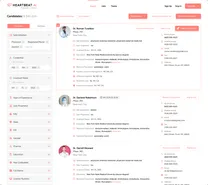
Heartbeat’s provider database is built to combine the verification layer above with actual outreach data — the fields recruiters and marketers need to make first contact, not just confirm a license number.
- Nuclear medicine specialist name
- Location (state, city, zip code)
- Contact numbers (work, cell, mobile)
- Email address
- Specialization
- Years of experience
- Sole proprietor status
- Licensed states
- License number
- Fax
- Address
Heartbeat aggregates data from public and private sources and applies predictive modeling to fill in gaps where a direct match isn’t available. As with any modeled data, treat freshly generated contact details as a strong starting point rather than a guarantee — a quick verification pass before a large outreach push is good practice regardless of the source.
Nuclear Medicine Specialist Lists by State
Explore nuclear medicine specialist contact data across other states in our directory:
| Nuclear medicine specialist list by states |
|---|
| Nuclear medicine specialist list in Alabama |
| Nuclear medicine specialist list in Alaska |
| Nuclear medicine specialist list in Arizona |
| Nuclear medicine specialist list in Arkansas |
| Nuclear medicine specialist list in California |
| Nuclear medicine specialist list in Colorado |
| Nuclear medicine specialist list in Connecticut |
| Nuclear medicine specialist list in Delaware |
| Nuclear medicine specialist list in Florida |
| Nuclear medicine specialist list in Georgia |
| Nuclear medicine specialist list in Hawaii |
| Nuclear medicine specialist list in Idaho |
| Nuclear medicine specialist list in Illinois |
| Nuclear medicine specialist list in Indiana |
| Nuclear medicine specialist list in Iowa |
| Nuclear medicine specialist list in Kansas |
| Nuclear medicine specialist list in Kentucky |
| Nuclear medicine specialist list in Louisiana |
| Nuclear medicine specialist list in Maine |
| Nuclear medicine specialist list in Maryland |
| Nuclear medicine specialist list in Massachusetts |
| Nuclear medicine specialist list in Michigan |
| Nuclear medicine specialist list in Minnesota |
| Nuclear medicine specialist list in Mississippi |
| Nuclear medicine specialist list in Missouri |
| Nuclear medicine specialist list in Montana |
| Nuclear medicine specialist list in Nebraska |
| Nuclear medicine specialist list in Nevada |
| Nuclear medicine specialist list in New hampshire |
| Nuclear medicine specialist list in New jersey |
| Nuclear medicine specialist list in New mexico |
| Nuclear medicine specialist list in New york |
| Nuclear medicine specialist list in North carolina |
| Nuclear medicine specialist list in North dakota |
| Nuclear medicine specialist list in Ohio |
| Nuclear medicine specialist list in Oklahoma |
| Nuclear medicine specialist list in Oregon |
| Nuclear medicine specialist list in Pennsylvania |
| Nuclear medicine specialist list in Rhode island |
| Nuclear medicine specialist list in South carolina |
| Nuclear medicine specialist list in South dakota |
| Nuclear medicine specialist list in Tennessee |
| Nuclear medicine specialist list in Texas |
| Nuclear medicine specialist list in Utah |
| Nuclear medicine specialist list in Vermont |
| Nuclear medicine specialist list in Virginia |
| Nuclear medicine specialist list in Washington |
| Nuclear medicine specialist list in West virginia |
| Nuclear medicine specialist list in Wisconsin |
| Nuclear medicine specialist list in Wyoming |
How Heartbeat Builds Its Provider Data
Heartbeat pulls provider records from a mix of public licensing sources, professional registries, and private data partnerships, then cross-references and refreshes those records on an ongoing basis. Where a direct match on a cell number or personal email isn’t available, the platform uses predictive modeling built on patterns across its broader provider dataset to generate a likely match.
That combination — verified base records plus modeled fill-in data — is what separates a purpose-built provider database from a static list scraped from a single directory. It’s also why any list, including this one, benefits from spot-checking a sample of contacts before a full campaign launch.
Who Uses This Kind of List
Nuclear medicine specialist contact data gets used differently depending on the goal:
- Healthcare recruiters sourcing candidates for imaging or oncology departments.
- Medical device and pharma marketers targeting practitioners who work with radiopharmaceuticals.
- Referral coordinators at hospitals or clinics building specialist networks.
- Researchers recruiting participants for clinical studies involving nuclear medicine procedures.
Regardless of use case, outreach to licensed healthcare professionals should follow applicable consent and communication rules — a purchased or aggregated list doesn’t override those requirements.
Getting More Out of a Specialist List
A few practical habits improve results with any provider contact list:
- Segment by sub-specialty (diagnostic, therapeutic, pediatric, cardiology-focused) before drafting outreach — a generic message performs worse than one tailored to the specialist’s actual practice area.
- Verify license status through the state’s Provider Credential Search before recruiting outreach, especially for time-sensitive placements.
- Keep messages short and specific about why you’re reaching out; specialists in a small field tend to ignore generic pitches faster than in larger specialties.
- Refresh or re-verify contact data periodically — nuclear medicine specialists move between health systems and practice settings like any other clinician.
Limitations to Keep in Mind
No contact database, including one built with predictive modeling, guarantees a 100% match rate. Modeled cell numbers and emails should be treated as a starting point for outreach, not a confirmed line to the provider. Cross-checking against a state licensing tool adds a layer of confidence but won’t confirm current employment or contact preferences.
Given the small size of the nuclear medicine specialist pool in any one state, building a list is only half the job — segmenting it correctly and following up responsibly is what actually moves a hire or a campaign forward.
Frequently Asked Questions
How can I find a nuclear medicine specialist in Washington?
You can search a provider contact database, check the Washington State Provider Credential Search for licensing status, or ask for a referral from a primary care physician or hospital referral coordinator.
What qualifications do nuclear medicine specialists in Washington have?
Nuclear medicine specialists typically hold a medical degree (MD or DO) along with specialized training in nuclear medicine and radiology, and are licensed through the state’s medical licensing process.
How can I verify a specialist’s license is active?
Washington’s Department of Health offers a public Provider Credential Search tool that shows license status and any recorded disciplinary actions.