Last updated: August 30, 2026
Wisconsin’s mental health workforce spans psychiatrists, psychologists, licensed counselors, marriage and family therapists, clinical social workers, and psychiatric nurses working across hospital systems, clinics, and private practices. For recruiters, marketers, and healthcare organizations, the practical challenge isn’t finding names — it’s finding current, working phone numbers and email addresses for the right specialists.
This guide covers what a mental health professional contact list should include, how Wisconsin’s provider landscape breaks down, and how Heartbeat’s data can support recruitment and outreach.
What’s on this page:
Get a Mental Health Professionals List in Wisconsin from Heartbeat
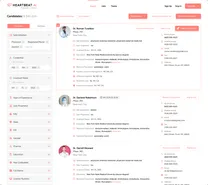
Heartbeat.ai’s contact database covers licensed healthcare professionals across the United States, including mental health specialists in Wisconsin. You can apply filters for specialty, location, and license status to build a targeted list and reach out directly.
A mental health professionals list typically includes psychiatrists, psychologists, mental health counselors, marriage and family therapists, clinical social workers, and psychiatric nurses. For recruitment teams, marketing campaigns, or professional networking, having verified contact details for this group cuts down the time spent chasing outdated directory entries.
Getting access is straightforward: reach out with your target specialty and geography, and Heartbeat provides a curated contact list built from its provider database.
Wisconsin’s Healthcare Landscape
Wisconsin’s healthcare system includes a mix of large academic medical centers, regional health systems, and rural care networks. Major facilities such as University of Wisconsin Hospital and Clinics, Aurora Sinai/Aurora St. Luke’s Medical Center, and Marshfield Clinic anchor much of the state’s mental health service delivery, while networks like ThedaCare extend care into rural communities.
Mental health providers in Wisconsin work across a range of settings — hospital-based psychiatry, outpatient counseling practices, integrated primary care, and community mental health centers — which means a single statewide list has to account for very different practice environments and referral patterns.
Why Accurate Contact Information Matters
Outdated contact data creates friction in three main areas:
- Patient access: Individuals seeking care need working phone numbers and current practice information to schedule appointments without delay.
- Recruitment: Healthcare staffing teams and hospital systems need direct lines to candidates, not general office numbers that get filtered through gatekeepers.
- Professional networking: Referral relationships and interdisciplinary collaboration depend on providers being reachable when a patient needs a warm handoff to another specialist.
Stale data doesn’t just slow things down — it can mean a recruiter never reaches a strong candidate, or a referral falls through because the receiving provider’s contact information is years out of date.
Why Wisconsin Provider Lists Are Hard to Keep Current
A few structural factors make Wisconsin mental health data harder to maintain than it looks on paper:
- Providers move between health systems, private practice, and telehealth-only arrangements more frequently than public directories update.
- Rural and urban providers are unevenly distributed, so a list built from one region’s directories may miss providers elsewhere in the state.
- Specialty and sub-specialty labels vary by source — a provider might be listed as a “counselor” in one directory and a “therapist” in another, complicating searches.
- Licensing status, practice location, and contact details all change independently, so a list can be accurate on one field and outdated on another.
Databases that combine multiple sourcing methods — licensing board records, professional directories, and verified contact data — tend to hold up better over time than single-source directories, though no list is ever fully static given how often providers change roles.
What a Heartbeat Contact List Includes
Heartbeat’s mental health professional records are built to support both regional Wisconsin searches and broader multi-state recruitment or outreach efforts. A typical record includes:
- Provider name
- Location
- Contact numbers (work, cell, mobile)
- Email address
- Specialization
- Years of experience
- Sole proprietor status
- Licensed states
- License number
- Fax
- Address
Mental Health Professionals Lists by State
Explore mental health professional contact lists organized by state.
| Mental health professionals list by states |
|---|
| Mental health professionals list in Alabama |
| Mental health professionals list in Alaska |
| Mental health professionals list in Arizona |
| Mental health professionals list in Arkansas |
| Mental health professionals list in California |
| Mental health professionals list in Colorado |
| Mental health professionals list in Connecticut |
| Mental health professionals list in Delaware |
| Mental health professionals list in Florida |
| Mental health professionals list in Georgia |
| Mental health professionals list in Hawaii |
| Mental health professionals list in Idaho |
| Mental health professionals list in Illinois |
| Mental health professionals list in Indiana |
| Mental health professionals list in Iowa |
| Mental health professionals list in Kansas |
| Mental health professionals list in Kentucky |
| Mental health professionals list in Louisiana |
| Mental health professionals list in Maine |
| Mental health professionals list in Maryland |
| Mental health professionals list in Massachusetts |
| Mental health professionals list in Michigan |
| Mental health professionals list in Minnesota |
| Mental health professionals list in Mississippi |
| Mental health professionals list in Missouri |
| Mental health professionals list in Montana |
| Mental health professionals list in Nebraska |
| Mental health professionals list in Nevada |
| Mental health professionals list in New hampshire |
| Mental health professionals list in New jersey |
| Mental health professionals list in New mexico |
| Mental health professionals list in New york |
| Mental health professionals list in North carolina |
| Mental health professionals list in North dakota |
| Mental health professionals list in Ohio |
| Mental health professionals list in Oklahoma |
| Mental health professionals list in Oregon |
| Mental health professionals list in Pennsylvania |
| Mental health professionals list in Rhode island |
| Mental health professionals list in South carolina |
| Mental health professionals list in South dakota |
| Mental health professionals list in Tennessee |
| Mental health professionals list in Texas |
| Mental health professionals list in Utah |
| Mental health professionals list in Vermont |
| Mental health professionals list in Virginia |
| Mental health professionals list in Washington |
| Mental health professionals list in West virginia |
| Mental health professionals list in Wisconsin |
| Mental health professionals list in Wyoming |
How Heartbeat Compiles Wisconsin Provider Data
Heartbeat’s contact records draw from a combination of licensing board data, professional directories, and public and private sourcing, then apply matching to associate cell phone numbers and personal email addresses with individual providers. The goal is to reduce the manual work of cross-referencing outdated directory listings against current practice information.
No contact database is perfect. Providers change jobs, retire, or move between states, and any list should be treated as a starting point that benefits from periodic verification rather than a permanently static record.
Who Uses a Mental Health Professionals Contact List
Contact lists like this serve a range of users:
- Healthcare staffing agencies and hospital recruiters filling clinical roles
- Medical device, pharmaceutical, and health-tech sales teams targeting behavioral health specialists
- Researchers and professional associations coordinating outreach or continuing education
- Individuals or organizations building referral networks among mental health providers
Using the List Effectively
A few practical guidelines make outreach more productive and more respectful of providers’ time:
- Match your outreach to a provider’s actual specialty rather than sending generic messages to the entire list.
- Keep communications concise and clearly state the purpose of the outreach up front.
- Respect professional boundaries and any applicable privacy or communication regulations when reaching out, particularly by phone or text.
- Treat the list as a working document — flag bounced emails or disconnected numbers so future outreach doesn’t repeat the same dead ends.
Recruiters and marketers who see the best response rates generally combine accurate contact data with a specific, relevant reason for reaching out — a role that matches the provider’s specialty, or a referral opportunity tied to their practice area.
Conclusion
Finding mental health professionals in Wisconsin isn’t the hard part — the hard part is reaching them with information that’s still accurate. A well-maintained contact database, combined with a targeted outreach approach, makes recruitment, referrals, and professional networking considerably more efficient than relying on public directories alone.
Frequently Asked Questions
Where can I find a list of mental health professionals in Wisconsin?
You can search online directories such as Psychology Today, contact professional associations like the Wisconsin Psychological Association, or use a verified provider database like Heartbeat for direct contact information.
What types of mental health professionals practice in Wisconsin?
Wisconsin’s mental health workforce includes psychiatrists, psychologists, licensed clinical social workers, counselors, marriage and family therapists, and psychiatric nurses.
How can I verify the credentials of a mental health professional in Wisconsin?
Credentials and license status can be verified through the Wisconsin Department of Safety and Professional Services, which maintains licensing records for healthcare professionals in the state.