Last updated: August 30, 2026
Building a usable contact list of mental health professionals in Virginia is harder than it sounds. The field spans psychiatrists, psychologists, licensed clinical social workers, psychiatric nurse practitioners, marriage and family therapists, and counselors — each licensed and tracked differently, often by separate boards. For recruiters, marketers, and healthcare organizations trying to reach these professionals directly, that fragmentation is the real problem, not a lack of interest in the data.
This guide covers what’s actually involved in finding and verifying contact information for mental health professionals in Virginia, where the common obstacles come from, and how a data provider like Heartbeat fits into that workflow.
What’s on this page:
Get an Email List of Mental Health Professionals in Virginia from Heartbeat
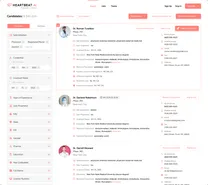
Heartbeat.ai’s database covers licensed healthcare professionals across the United States, including mental health specialists in Virginia. You can filter by specialty, location, and other criteria to build a targeted list instead of manually cross-referencing directories.
Virginia’s Mental Health Provider Landscape
Virginia’s mental health workforce is regulated across multiple boards depending on the profession — psychologists fall under the Virginia Board of Psychology, while social workers, counselors, and therapists are licensed through their own respective boards within the Department of Health Professions. Anyone verifying credentials should check the specific board tied to that license type rather than assuming one directory covers everyone.
Academic medical centers such as the University of Virginia Health System and Inova Fairfax Hospital play a significant role in the state’s mental health infrastructure, alongside a network of community health centers that serve underserved and rural populations. Programs like the Virginia Mental Health Access Program focus specifically on expanding access to mental health services for children and adolescents through pediatric provider consultation models.
For anyone building outreach lists, this matters because provider density and specialty mix vary a lot between Northern Virginia, the Richmond metro area, and more rural regions of the state. A list built for urban psychiatric recruitment won’t necessarily transfer well to a rural counseling initiative.
Why Contact Accuracy Actually Matters Here
Bad contact data has different costs depending on who’s using it. For individuals trying to reach a provider, an outdated phone number or email can delay access to care at a point when timing matters. For recruiters, wrong details mean wasted outreach cycles and missed candidates in a workforce that’s already competitive to hire into. For anyone doing professional networking or partnership outreach — referral relationships, research collaboration, community health initiatives — inaccurate contact info simply kills the connection before it starts.
None of this is unique to mental health, but the stakes feel higher given the sensitivity of the field and the documented access gaps in behavioral health care.
Why This Data Is Hard to Compile
A few recurring issues make mental health provider lists harder to build than, say, a list of primary care physicians:
- Specialty fragmentation: Psychiatrists, psychologists, LCSWs, and counselors are often licensed by different boards with different public data formats.
- Confidentiality norms: Mental health practices sometimes limit how much practitioner contact information they publish, more so than other specialties.
- Provider mobility: Therapists and counselors move between private practice, group practices, and telehealth platforms more frequently than some other provider types, so contact details go stale faster.
- Rural-urban gaps: Provider directories tend to skew toward metro areas, making it harder to find verified contacts in underserved parts of the state.
Technology helps close some of these gaps — aggregating public licensing data, cross-referencing multiple sources, and flagging outdated records — but it doesn’t eliminate the underlying fragmentation. Any list, including a purchased one, should be treated as a starting point that needs periodic re-verification, not a permanent source of truth.
What a Heartbeat Contact List Includes
Heartbeat’s database is built to help you filter healthcare provider contacts by state, specialty, and other criteria rather than manually assembling data from scattered directories. Typical fields include:
- Mental health professional name
- Location
- Contact numbers (work, cell, mobile)
- Email address
- Specialization
- Years of experience
- Sole proprietor status
- Licensed states
- License number
- Fax
- Address
Mental Health Professional Lists by State
Browse mental health professional contact lists for other states below.
| Mental health professionals list by states |
|---|
| Mental health professionals list in Alabama |
| Mental health professionals list in Alaska |
| Mental health professionals list in Arizona |
| Mental health professionals list in Arkansas |
| Mental health professionals list in California |
| Mental health professionals list in Colorado |
| Mental health professionals list in Connecticut |
| Mental health professionals list in Delaware |
| Mental health professionals list in Florida |
| Mental health professionals list in Georgia |
| Mental health professionals list in Hawaii |
| Mental health professionals list in Idaho |
| Mental health professionals list in Illinois |
| Mental health professionals list in Indiana |
| Mental health professionals list in Iowa |
| Mental health professionals list in Kansas |
| Mental health professionals list in Kentucky |
| Mental health professionals list in Louisiana |
| Mental health professionals list in Maine |
| Mental health professionals list in Maryland |
| Mental health professionals list in Massachusetts |
| Mental health professionals list in Michigan |
| Mental health professionals list in Minnesota |
| Mental health professionals list in Mississippi |
| Mental health professionals list in Missouri |
| Mental health professionals list in Montana |
| Mental health professionals list in Nebraska |
| Mental health professionals list in Nevada |
| Mental health professionals list in New hampshire |
| Mental health professionals list in New jersey |
| Mental health professionals list in New mexico |
| Mental health professionals list in New york |
| Mental health professionals list in North carolina |
| Mental health professionals list in North dakota |
| Mental health professionals list in Ohio |
| Mental health professionals list in Oklahoma |
| Mental health professionals list in Oregon |
| Mental health professionals list in Pennsylvania |
| Mental health professionals list in Rhode island |
| Mental health professionals list in South carolina |
| Mental health professionals list in South dakota |
| Mental health professionals list in Tennessee |
| Mental health professionals list in Texas |
| Mental health professionals list in Utah |
| Mental health professionals list in Vermont |
| Mental health professionals list in Virginia |
| Mental health professionals list in Washington |
| Mental health professionals list in West virginia |
| Mental health professionals list in Wisconsin |
| Mental health professionals list in Wyoming |
How Heartbeat Builds and Maintains This Data
Heartbeat compiles healthcare provider contact data from a mix of official, private, and public sources, then applies predictive modeling to fill gaps and keep records current. No contact database is ever perfectly current — providers change jobs, numbers get reassigned, and email addresses lapse — so any list should be treated as a working tool that benefits from periodic re-verification rather than a static, one-time download.
Who Uses a List Like This
Typical users include healthcare recruiters sourcing candidates for behavioral health roles, marketing teams promoting relevant products or services to licensed providers, and organizations coordinating referral networks or professional partnerships. Individuals occasionally use directories for personal networking or job searching within the field. Whatever the use case, outreach involving licensed healthcare professionals should follow applicable privacy and communication regulations, including relevant provisions of laws like the CAN-SPAM Act and TCPA where phone outreach is involved.
Practical Tips for Using the Data Well
- Segment outreach by specialty and license type — a message relevant to a psychiatrist rarely fits a licensed clinical social worker equally well.
- Verify licensure status through the relevant Virginia board before finalizing recruitment or referral decisions.
- Respect opt-outs and privacy preferences immediately; healthcare professionals are frequent targets of unsolicited outreach and will disengage quickly from lists that ignore this.
- Refresh contact lists periodically rather than assuming a purchased or scraped list stays accurate indefinitely.
Limitations to Keep in Mind
No third-party contact database can guarantee real-time accuracy for every provider, especially in a field where practitioners move between practice settings often. Confidentiality norms in mental health also mean some providers intentionally limit their public contact footprint. Treat any list — Heartbeat’s included — as a strong starting point that still requires spot-checking for roles or campaigns where accuracy is critical.
Frequently Asked Questions
Where can I find a list of mental health professionals in Virginia?
You can check the Virginia Department of Health Professions license lookup tools, professional association directories, insurance provider networks, or a healthcare contact data provider like Heartbeat for a filtered list.
What qualifications should I look for in a mental health professional in Virginia?
Confirm active licensure through the relevant Virginia board, relevant experience with the specific concern involved, and whether the provider accepts your insurance if applicable.
How do I know if a mental health professional in Virginia is a good fit for me?
An initial consultation is generally the best way to gauge fit. Comfort level and communication style matter, and it’s reasonable to try a different provider if the first one doesn’t feel right.