Last updated: August 29, 2026

Group practices make up a large and growing share of the U.S. healthcare market, and estimates of active physician group practices now run into the hundreds of thousands nationally. That’s a lot of potential contacts, but it’s also a lot of noise. Practices merge, close, relocate, or change ownership constantly, and a list that was accurate six months ago can be stale today.
For marketers and recruiters, this creates a straightforward problem: outreach only works if the contact data behind it is current. A medical group practice email list is only as useful as its maintenance schedule. Below, we cover what a good list should include, how it’s typically built, who uses it, and what to check before you buy one.
What’s on this page:
What a Medical Group Practice Email List Should Include
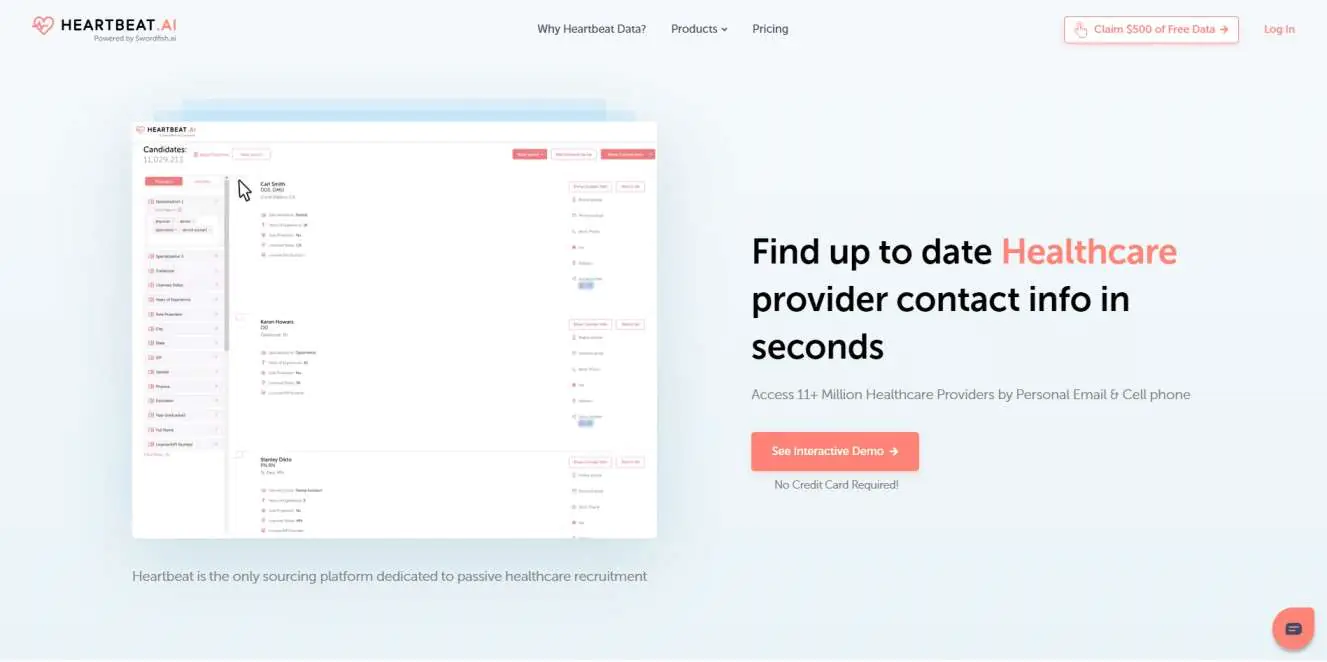
A useful list goes beyond a name and an email address. At minimum, it should give you enough context to segment and personalize outreach rather than blast a generic message to everyone on the file.
- Verified, current contact data: Email addresses and phone numbers that have been checked recently, not pulled from a directory that hasn’t been refreshed in years.
- Practice-level detail: Practice name, location, and specialty, so you can filter down to the segment that actually matters for your campaign.
- Individual profiles: Names, titles, direct numbers, and email addresses for the people you’re actually trying to reach, not just a generic practice inbox.
- Geographic filtering: The ability to narrow by state or region, since a national blast rarely performs as well as a targeted regional campaign.
- Specialty tagging: Knowing whether a practice is primary care, cardiology, orthopedics, or something else lets you tailor messaging instead of guessing.
Typical Data Fields in a Medical Group Practice Mailing List
- Medical Group Name
- Location
- Contact Numbers (Work, Cell, Mobile)
- Email Address
- Specialization
- Years of Experience
- Sole Proprietor Status
- Licensed States
- License Number
- Fax
- Address
 Accuracy & coverage of personal contact info were unrivaled by other platforms… this gives any healthcare recruiter a competitive advantage when engaging hard-to-reach healthcare providers.
Senior Growth Strategist






Why Accurate Contact Data Matters
An outdated list doesn’t just underperform, it actively costs you time and credibility. Here’s what changes when the data behind your outreach is reliable:
- Targeted outreach: Reliable segmentation means your message reaches people who are actually relevant to your offer, rather than a broad, unqualified list.
- Fewer bounces, more replies: Verified addresses reduce bounce rates and improve the odds that a real decision-maker sees your message.
- Lower cost per contact: Every wasted send against a dead email or disconnected number is money and time you don’t get back.
- Better sender reputation: High bounce rates from bad data can hurt your domain’s deliverability across all your campaigns, not just this one.
- Direct access: Working from individual contacts instead of general practice inboxes means fewer messages get lost before reaching the right person.
Medical Practice Categories You’ll Encounter
Group practice data generally breaks down into a handful of organizational models. Knowing which one you’re targeting changes how you should approach outreach.
| Medical Practice Categories |
| Private Practices |
| Locum Tenens |
| Integrated Delivery Systems |
| Hospital-Based Work |
| Health Maintenance Organizations |
Browse Medical Group Practice Contacts by State
If your outreach strategy is regional, filtering by state avoids wasted sends to practices outside your service area or licensing footprint.
| Medical Group Practice By States |
| Medical Group Practice in Alabama |
| Medical Group Practice in Alaska |
| Medical Group Practice in Arizona |
| Medical Group Practice in Arkansas |
| Medical Group Practice in California |
| Medical Group Practice in Colorado |
| Medical Group Practice in Connecticut |
| Medical Group Practice in Delaware |
| Medical Group Practice in Florida |
| Medical Group Practice in Georgia |
| Medical Group Practice in Hawaii |
| Medical Group Practice in Idaho |
| Medical Group Practice in Illinois |
| Medical Group Practice in Indiana |
| Medical Group Practice in Iowa |
| Medical Group Practice in Kansas |
| Medical Group Practice in Kentucky |
| Medical Group Practice in Louisiana |
| Medical Group Practice in Maine |
| Medical Group Practice in Maryland |
| Medical Group Practice in Massachusetts |
| Medical Group Practice in Michigan |
| Medical Group Practice in Minnesota |
| Medical Group Practice in Mississippi |
| Medical Group Practice in Missouri |
| Medical Group Practice in Montana |
| Medical Group Practice in Nebraska |
| Medical Group Practice in Nevada |
| Medical Group Practice in New Hampshire |
| Medical Group Practice in New Jersey |
| Medical Group Practice in New Mexico |
| Medical Group Practice in New York |
| Medical Group Practice in North Carolina |
| Medical Group Practice in North Dakota |
| Medical Group Practice in Ohio |
| Medical Group Practice in Oklahoma |
| Medical Group Practice in Oregon |
| Medical Group Practice in Pennsylvania |
| Medical Group Practice in Rhode Island |
| Medical Group Practice in South Carolina |
| Medical Group Practice in South Dakota |
| Medical Group Practice in Tennessee |
| Medical Group Practice in Texas |
| Medical Group Practice in Utah |
| Medical Group Practice in Vermont |
| Medical Group Practice in Virginia |
| Medical Group Practice in Washington |
| Medical Group Practice in West Virginia |
| Medical Group Practice in Wisconsin |
| Medical Group Practice in Wyoming |
How This Kind of Data Gets Compiled
Building a mailing list of medical practices is less about scraping a directory once and more about maintaining a pipeline. A few practices matter here:
- Multiple industry sources: Pulling from medical directories, healthcare associations, and licensing databases rather than relying on a single source reduces blind spots.
- Email verification: Running addresses through verification tools before they go live on a list catches dead or disposable addresses before you do.
- Cleansing and deduplication: Removing duplicate or inconsistent entries keeps your outreach from hitting the same contact twice under two different records.
- Ongoing refresh cycles: Since practices open, close, and change staff regularly, a list needs periodic re-verification, not a one-time build.
- Specialty and experience tagging: Attaching specialty and tenure data lets buyers segment beyond just geography.
- Compliance with data and email regulations: Any legitimate compilation process should follow CAN-SPAM and related privacy rules around commercial email.
What Heartbeat.ai Offers
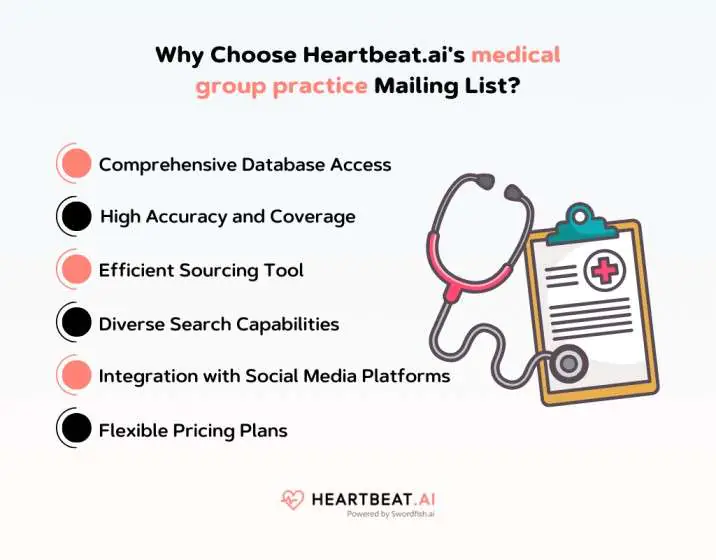
Database Size
Heartbeat maintains a database covering 11 million U.S. healthcare professionals, which gives you room to search across specialties and geographies without switching vendors mid-campaign.
Contact Accuracy
Heartbeat Prospector reports an 84% accuracy rate on cell phone numbers and 92% on personal emails for the first result returned. Treat these as vendor-reported figures and verify against your own campaign results over time.
Direct Contact Volume
The platform provides access to 8.8 million direct cell phone numbers, 9.3 million personal email addresses, and 6 million direct dials, which is useful when you need to reach individuals rather than general practice lines.
Search Across Platforms
The Chrome extension extends contact-finding to LinkedIn, Facebook, and general web search, so you’re not limited to one data source when researching a specific contact.
Social Integration
Heartbeat Prospector connects with LinkedIn and Facebook, letting you cross-reference professional profiles against contact records.
Pricing
Heartbeat offers several pricing tiers, so a solo recruiter and a large health system marketing team aren’t paying for the same plan.
What to Check Before You Buy a List
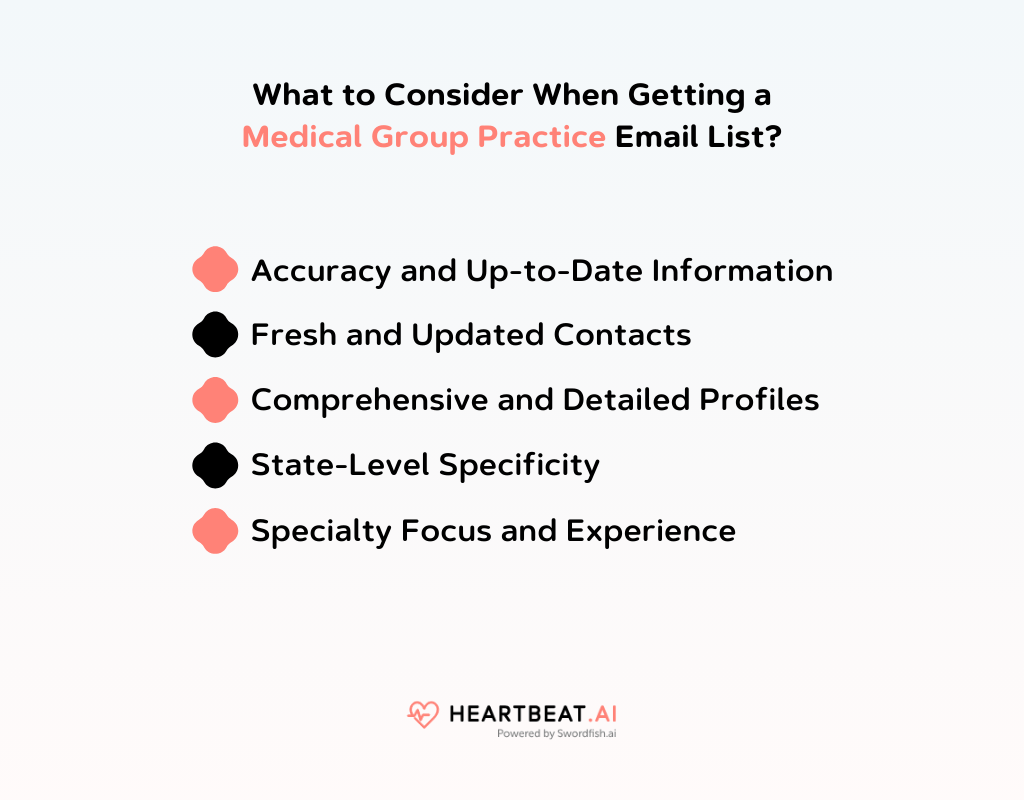
A short checklist before committing budget to any vendor:
How Recent Is the Data?
Ask when the list was last refreshed and how often it’s updated. A list that hasn’t been touched in a year will have meaningfully more dead contacts than one refreshed quarterly.
Are Contacts Verified, Not Just Scraped?
Scraped directories often include closed practices or outdated staff listings. Verification against a live source reduces this risk but rarely eliminates it entirely.
Do You Get Individual-Level Detail?
Names, titles, direct numbers, and emails matter more than a general practice contact form, which often goes unanswered or unmonitored.
Can You Filter by Geography?
State-level filtering matters if you’re bound by licensing, regional sales territory, or a specific market you’re recruiting into.
Does It Include Specialty and Tenure?
Knowing whether a practice is newly formed or well-established, and what it specializes in, helps you write a message that’s actually relevant instead of generic.
Who Typically Uses This Kind of List
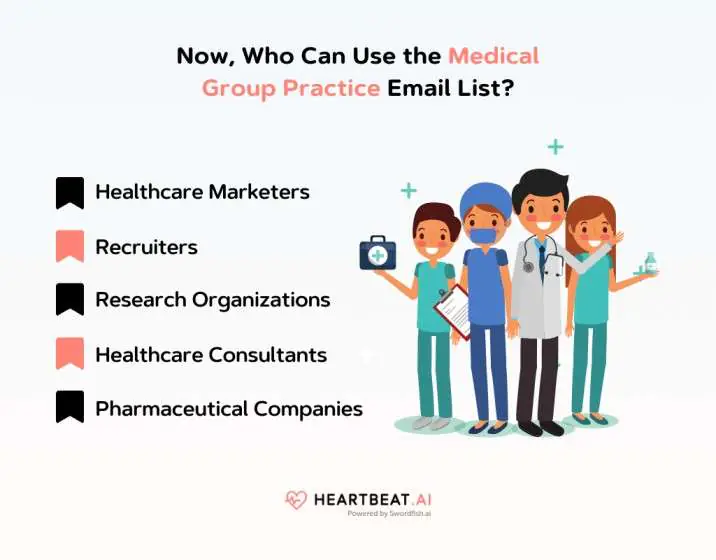
Healthcare Marketers
Companies selling products, services, or software to medical practices use contact data to reach decision-makers directly instead of going through general channels.
Recruiters
Recruitment agencies and internal HR teams use practice contact data to identify and reach out to physicians, nurses, and administrative staff during hiring searches.
Research Organizations
Academic and research groups sometimes use practice-level data to recruit participants or gather input for surveys and studies.
Healthcare Consultants
Consultants offering operational, compliance, or growth advice use the data to identify practices that might benefit from their services.
Pharmaceutical Companies
Pharma teams use practice contact data to communicate about new products, clinical trial recruitment, or partnership opportunities.
Getting More Out of the List Once You Have It
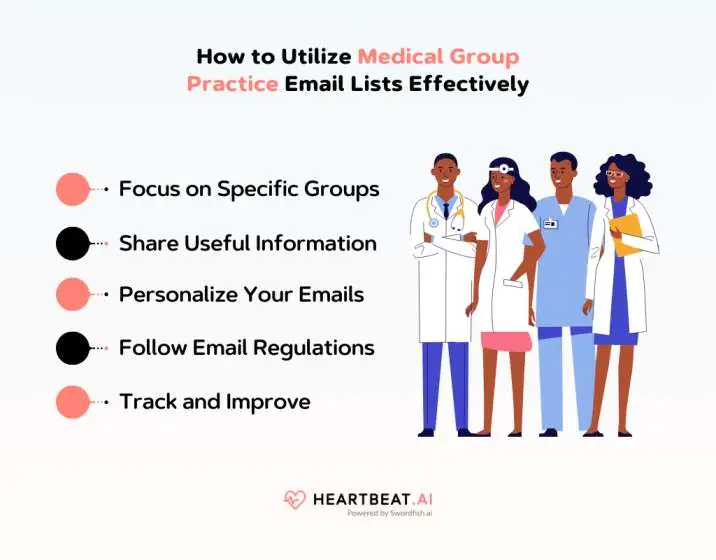
Segment Before You Send
Splitting a list by role, physicians, nurses, administrators, before writing copy usually beats sending one message to everyone.
Lead With Something Useful
A message built around a relevant trend, resource, or insight tends to outperform a straight pitch, especially on a first contact.
Personalize Beyond the First Name
Referencing someone’s specialty or practice type in the message body signals you did your homework, which matters in a crowded inbox.
Stay Inside Email and Privacy Rules
Commercial email to healthcare professionals still has to follow CAN-SPAM requirements, and any patient-adjacent data handling should respect HIPAA boundaries. This is a compliance issue, not a nice-to-have.
Track What’s Actually Working
Open rates, click-throughs, and reply rates tell you more about list quality than gut feel. Use that data to prune underperforming segments over time rather than resending to the same dead contacts.
Bottom Line
A medical group practice email list is a tool, and like any tool, it’s only as good as its upkeep. Accuracy, verification, and compliance with privacy and email regulations matter more than raw volume. A smaller, well-maintained list will usually outperform a larger one full of stale contacts.
Heartbeat provides a database built around verified individual contacts, specialty and geographic filtering, and cross-platform search tools for teams that need to reach healthcare professionals directly.
FAQs
What is a medical group practice email list?
It’s a database of contact information, usually including email addresses and phone numbers, for healthcare professionals working within group practices. It’s used for outreach, recruitment, and marketing within the healthcare industry.
Can I promote products or services on this list?
Yes, provided you follow CAN-SPAM requirements for commercial email and any applicable privacy rules. The list gives you a direct channel to practice decision-makers rather than general inboxes.
Can I find medical group practice email lists for free?
Free lists tend to be outdated or incomplete, since verification and maintenance require ongoing work. Paid, actively maintained sources are generally more reliable if accuracy matters to your campaign.