What’s on this page:
Key takeaways
- Medical group practice contact data can become outdated when providers change practices or update their details.
- Heartbeat.ai says its database can be filtered by specialty, practice type, and location.
- Contact records may include details such as practice name, location, contact information, specialty, and licensing information.
- The article describes the database as a starting point, not a guarantee that every contact is current or reachable.
- Before choosing a contact data vendor, assess its refresh frequency, filtering options, compliance information, and export formats.
- Users are responsible for ensuring their outreach complies with applicable privacy and anti-spam requirements.
Last updated: August 31, 2026
Finding and maintaining accurate contact information for medical group practices in Massachusetts can be challenging. Recruiters, sales teams, and healthcare marketers may encounter outdated directories, physicians who have moved between groups, and generic listings that lack working phone numbers or email addresses.
This guide explains what medical group practice can mean in Massachusetts, why accurate contact data matters, common challenges in finding it, and how a contact database like Heartbeat’s may fit into an outreach or recruiting workflow.
Get an Email List of Medical Group Practices in Massachusetts from Heartbeat
Heartbeat.ai says its database covers licensed healthcare professionals across the United States, including Massachusetts. Its filters include specialty, practice type, and location, which can help users build a targeted list rather than rely on a generic directory.
Medical group practice is a broad category, and the structure of a group affects how you should approach outreach. Common types include:
- Primary care practices – groups of general practitioners handling preventive care and common conditions.
- Specialty practices – physicians concentrated in one field, such as cardiology, orthopedics, or neurology.
- Multispecialty practices – several specialties operating under one organization to coordinate care.
- Independent Physician Associations (IPAs) – networks of private-practice physicians sharing a business agreement.
- Physician Hospital Organizations (PHOs) – partnerships between hospitals and physicians for coordinated care.
- Accountable Care Organizations (ACOs) – groups of providers organized around coordinated, quality-based care.
- Managed Services Organizations (MSOs) – entities providing administrative or non-medical support to practices.
If your target list falls into one of these categories, or a different structure entirely, Heartbeat.ai’s filtering options may help narrow the search.
Healthcare Landscape in Massachusetts
Massachusetts is home to hospitals and academic medical centers, including Massachusetts General Hospital and Boston Children’s Hospital. The state has reported low uninsurance rates, with coverage programs including MassHealth and the Health Connector. Check current state data when making comparisons or describing present-day coverage rates.
Affordability may also be relevant to outreach involving costs or insurance. For current comparisons of premiums or health care spending in Massachusetts and nationally, consult recent data.
Why Accurate Contact Information Matters
Outdated contact data creates real friction on both the patient and business side.
- Patients need working numbers to schedule appointments or reach a practice with urgent questions.
- Recruiters lose time and candidates when a listed phone number or email no longer connects to the right physician.
- Vendors and partners depend on current contact details to sustain referral relationships, research collaborations, or supply agreements.
Outdated contact data can lead to wasted outreach, missed hiring opportunities, delayed partnerships, and slower efforts to fill open roles.
Common Obstacles to Finding Medical Group Practice Contacts in Massachusetts
A few recurring problems show up when building outreach lists in this state:
- Too many practices with overlapping specialties and unclear differentiation.
- Inconsistent or missing detail on insurance networks accepted by a given group.
- Physical distance between a patient’s location and a practice, which matters for referral-based outreach.
- Limited, scattered information on practice reputation or provider credentials.
- Directory data that reflects a provider’s prior employer, not their current one.
A centralized database can reduce manual cross-referencing by bringing specialty, location, and contact details together. Its usefulness depends on the accuracy and freshness of the records, so verify important contacts before relying on them.
What You Get With a Heartbeat Medical Group Practice Contact List
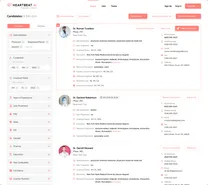
Heartbeat says its database is intended to reduce the manual work of checking provider contact details one at a time. A typical exported record may include:
- Medical group practice name
- Location
- Contact numbers (work, cell, mobile)
- Email address
- Specialization
- Years of experience
- Sole proprietor status
- Licensed states
- License number
- Fax
- Address
Medical Group Practices by State
Heartbeat’s contact database extends beyond Massachusetts to cover medical group practices nationwide.
| Medical group practice by states |
|---|
| Medical group practice in Alabama |
| Medical group practice in Alaska |
| Medical group practice in Arizona |
| Medical group practice in Arkansas |
| Medical group practice in California |
| Medical group practice in Colorado |
| Medical group practice in Connecticut |
| Medical group practice in Delaware |
| Medical group practice in Florida |
| Medical group practice in Georgia |
| Medical group practice in Hawaii |
| Medical group practice in Idaho |
| Medical group practice in Illinois |
| Medical group practice in Indiana |
| Medical group practice in Iowa |
| Medical group practice in Kansas |
| Medical group practice in Kentucky |
| Medical group practice in Louisiana |
| Medical group practice in Maine |
| Medical group practice in Maryland |
| Medical group practice in Massachusetts |
| Medical group practice in Michigan |
| Medical group practice in Minnesota |
| Medical group practice in Mississippi |
| Medical group practice in Missouri |
| Medical group practice in Montana |
| Medical group practice in Nebraska |
| Medical group practice in Nevada |
| Medical group practice in New hampshire |
| Medical group practice in New jersey |
| Medical group practice in New mexico |
| Medical group practice in New york |
| Medical group practice in North carolina |
| Medical group practice in North dakota |
| Medical group practice in Ohio |
| Medical group practice in Oklahoma |
| Medical group practice in Oregon |
| Medical group practice in Pennsylvania |
| Medical group practice in Rhode island |
| Medical group practice in South carolina |
| Medical group practice in South dakota |
| Medical group practice in Tennessee |
| Medical group practice in Texas |
| Medical group practice in Utah |
| Medical group practice in Vermont |
| Medical group practice in Virginia |
| Medical group practice in Washington |
| Medical group practice in West virginia |
| Medical group practice in Wisconsin |
| Medical group practice in Wyoming |
How Heartbeat Compiles Massachusetts Medical Group Practice Data
Heartbeat.ai says it aggregates provider data from official, private, and public sources and uses predictive modeling when a direct match is unavailable. Because the article does not specify the sources, modeling method, or validation process, users should confirm how those estimates are identified and checked.
Treat any contact database, including Heartbeat’s, as a starting point rather than a guarantee that every record will connect. Verifying a sample of contacts before a large outreach effort is a practical quality check.
Choosing a Contact Data Vendor: What to Look For
If you’re evaluating Heartbeat.ai or any competing data provider for Massachusetts outreach, a few practical criteria matter more than marketing claims:
- Refresh frequency – how often is the underlying data updated, and does the vendor disclose it?
- Filter granularity – can you segment by specialty, practice type, and license status, not just by state?
- Compliance posture – does the provider address consent, opt-outs, and applicable communication laws?
- Export flexibility – can you get data in a format that plugs into your existing CRM or outreach tooling?
Who Uses a Medical Group Practice Email List?
Contact lists like this may be used by recruiters sourcing candidates for clinical roles, sales and marketing teams introducing products or services to practices, and organizations building professional networks with providers, suppliers, or research partners. Real estate brokers, insurance agents, and consultants working with healthcare clients may also use similar lists for business outreach.
Users should ensure that any use of contact data complies with applicable privacy and anti-spam requirements. A data vendor cannot assume the user’s compliance responsibilities.
Using a Contact List Effectively
These practices may help make outreach to physicians and practice staff more relevant and respectful:
- Keep the first message short and specific about why you’re reaching out.
- Respect that clinical staff have limited time between patients – lead with the point.
- Reference the recipient’s specialty or practice type to show the outreach isn’t generic.
- Follow up once or twice, then move on rather than repeatedly re-contacting the same person.
- Confirm your approach aligns with relevant communication regulations before a large send.
Limitations to Keep in Mind
No contact database can be assumed to be fully current at all times. Physicians may change practices, retire, or update their contact details. Treat match rates and accuracy figures as estimates rather than guarantees for every record, and verify contacts before high-volume outreach.
Frequently Asked Questions
What is a medical group practice?
A medical group practice is a team of healthcare providers who work together to deliver medical care to patients under a shared organizational structure.
What services are typically offered by a medical group practice in Massachusetts?
Depending on the group, services can include primary care, specialty care, diagnostics, preventive care, and treatment for a range of medical conditions.
Is a referral required to see a specialist at a medical group practice in Massachusetts?
It depends on the practice and the patient’s insurance plan. Some plans and practices require a primary care referral, while others allow direct scheduling with specialists.