What’s on this page:
Key takeaways
- Check how a hospital CIO contact list was built, how often it is refreshed, and what verification steps are used.
- CIO titles and IT leadership structures can vary across hospitals and health systems.
- Use public sources, such as hospital websites and conference rosters, to help confirm current roles.
- Treat predictive contact details as leads to verify, not as guarantees.
- Handle contact data in line with applicable privacy and communication laws.
Last updated: August 31, 2026
Washington State’s health systems run on complex IT infrastructure, and the people managing that infrastructure — hospital Chief Information Officers — are increasingly hard to reach through generic outreach lists. For sales teams, recruiters, and health-tech vendors, having accurate contact details for these decision-makers is often the difference between a wasted email blast and a real conversation.
This page covers what a hospital CIO contact list actually needs to contain, why Washington’s healthcare IT landscape makes sourcing this data harder than it looks, and what to check before you buy or use any contact list.
Get a Hospital CIO Email List for Washington from Heartbeat
Heartbeat.ai’s platform lets you search licensed healthcare professionals across the United States, including hospital IT leadership, and filter results down to the specific roles and locations you need.
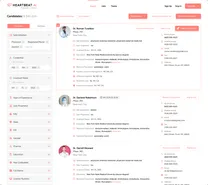
The Washington list covers roles such as Chief Information Officer, Head of IT, IT Director, and IT Manager across hospitals and health systems in the state. Records typically include direct contact details rather than just a name and job title, which matters if your goal is an actual conversation rather than an unopened email.
If you’re building outreach around hospital IT leadership in Washington — or any other state — it’s worth checking how a list was built, how often it’s refreshed, and what verification steps were used before you rely on it for a campaign.
Washington’s Healthcare IT Landscape
Washington State has a mix of large academic medical centers, regional health systems, and community hospitals, each with its own IT leadership structure. Systems such as University of Washington Medicine, Swedish Health Services, and Virginia Mason Medical Center anchor much of the state’s clinical and research activity.
Hospital CIOs in this environment are typically responsible for electronic health record systems, cybersecurity, data governance, and the rollout of new clinical technology. Their backgrounds vary widely — some come from clinical operations, others from enterprise IT or health informatics — which is part of why generic contact databases often misclassify or miss these roles entirely.
Why Accurate CIO Contact Data Matters
A wrong or outdated contact record costs more than a bounced email. In practice, inaccurate data creates problems in three areas:
- Recruitment: Recruiters and staffing firms need a direct line to the person who owns hiring decisions for IT roles, not a general hospital switchboard.
- Vendor and sales outreach: Health-tech and services companies selling into hospital IT departments need to reach the actual decision-maker, since CIO turnover and title changes are common.
- Professional networking: Conference organizers, industry associations, and peer networks rely on current contact details to keep CIOs engaged in ongoing initiatives.
Stale contact information can compound over time as people change jobs and titles. Recheck records before using a list for outreach rather than assuming it remains current.
Why Finding Hospital CIOs in Washington Is Harder Than It Looks
A few things make this search more difficult than a standard LinkedIn or directory search:
- Small talent pool: There’s a limited number of professionals with both deep healthcare IT experience and familiarity with regulatory requirements like HIPAA.
- Title inconsistency: Some hospitals use “CIO,” others use “VP of Information Technology” or “Chief Digital Officer” for what is functionally the same role.
- Frequent turnover: Healthcare IT leadership changes jobs more often than many other executive roles, which makes static directories go stale quickly.
- Public information gaps: Many CIOs don’t maintain an active public profile, so open-source research alone often comes up short.
A useful workaround is combining structured databases with public digital footprint signals — conference speaker lists, published case studies, or association memberships — to confirm someone is still in the role before reaching out.
What a Heartbeat Hospital CIO Contact List Includes
A well-built contact list should give you more than a name and a guess at an email address. At minimum, look for:
- Hospital CIO Name
- Location
- Contact Numbers (Work, Cell, Mobile)
- Email Address
- Specialization
- Years of Experience
- Sole Proprietor Status
- Licensed States
- License Number
- Fax
- Address
Hospital CIO Contact Lists by State
Browse hospital CIO contact information for other states below.
| Hospital CIO by State |
|---|
| Hospital CIO in Alabama |
| Hospital CIO in Alaska |
| Hospital CIO in Arizona |
| Hospital CIO in Arkansas |
| Hospital CIO in California |
| Hospital CIO in Colorado |
| Hospital CIO in Connecticut |
| Hospital CIO in Delaware |
| Hospital CIO in Florida |
| Hospital CIO in Georgia |
| Hospital CIO in Hawaii |
| Hospital CIO in Idaho |
| Hospital CIO in Illinois |
| Hospital CIO in Indiana |
| Hospital CIO in Iowa |
| Hospital CIO in Kansas |
| Hospital CIO in Kentucky |
| Hospital CIO in Louisiana |
| Hospital CIO in Maine |
| Hospital CIO in Maryland |
| Hospital CIO in Massachusetts |
| Hospital CIO in Michigan |
| Hospital CIO in Minnesota |
| Hospital CIO in Mississippi |
| Hospital CIO in Missouri |
| Hospital CIO in Montana |
| Hospital CIO in Nebraska |
| Hospital CIO in Nevada |
| Hospital CIO in New Hampshire |
| Hospital CIO in New Jersey |
| Hospital CIO in New Mexico |
| Hospital CIO in New York |
| Hospital CIO in North Carolina |
| Hospital CIO in North Dakota |
| Hospital CIO in Ohio |
| Hospital CIO in Oklahoma |
| Hospital CIO in Oregon |
| Hospital CIO in Pennsylvania |
| Hospital CIO in Rhode Island |
| Hospital CIO in South Carolina |
| Hospital CIO in South Dakota |
| Hospital CIO in Tennessee |
| Hospital CIO in Texas |
| Hospital CIO in Utah |
| Hospital CIO in Vermont |
| Hospital CIO in Virginia |
| Hospital CIO in Washington |
| Hospital CIO in West Virginia |
| Hospital CIO in Wisconsin |
| Hospital CIO in Wyoming |
How This Data Gets Compiled
Building an accurate hospital CIO list means combining several sources: hospital websites and press releases, professional licensing records, public conference and speaker rosters, and verified contact submissions. No single source stays current on its own, since executives change roles, hospitals restructure IT departments, and public directories lag behind real staffing changes.
Predictive modeling can help fill gaps where a direct source isn’t available, but it should be treated as a starting point for verification rather than a guarantee. Evaluate claims about cell numbers or personal emails carefully, since turnover and job changes can make contact data outdated.
Choosing a Hospital CIO Contact List Provider: What to Check
Before committing to any healthcare contact data provider, run through this short checklist:
- Refresh cadence: How often is the data re-verified? Quarterly updates are common; anything older than a year should be treated with caution.
- Source transparency: Does the provider explain where contact records come from, or is it a black box?
- Compliance posture: Does the provider address data privacy obligations relevant to healthcare outreach?
- Segmentation options: Can you filter by state, facility type, or specific IT role rather than getting one undifferentiated list?
- Sample or trial access: Can you test a small segment before buying the full dataset?
Who Uses Hospital CIO Contact Lists?
These lists get used by a range of teams: recruiters filling healthcare IT leadership roles, health-tech vendors prospecting into hospital IT departments, marketing teams running account-based campaigns, and industry associations coordinating with CIO members. Whatever the use case, the data should be handled in line with applicable privacy and communication laws.
Using the List Effectively
A contact list is only as useful as the outreach built around it. A few practical guidelines:
- Lead with something relevant to the CIO’s actual priorities — security, EHR integration, staffing — rather than a generic pitch.
- Get consent before adding anyone to a recurring marketing sequence; being listed in a database isn’t the same as opting in to your emails.
- Keep messages short and specific. Hospital IT leaders get pitched constantly, so vague value propositions get ignored.
- Track bounce and response rates so you can flag records that need re-verification, rather than assuming the list is static.
Bottom Line
Washington’s hospital CIOs sit at the center of decisions about IT infrastructure, security, and technology spending, which makes accurate contact information genuinely valuable for recruiters and vendors alike. The harder part isn’t finding a list — it’s finding one that’s current, transparently sourced, and used responsibly once you have it.
Frequently Asked Questions
What are the responsibilities of a Hospital CIO in Washington?
A Hospital CIO typically oversees IT strategy, technology implementation, data security and privacy, and technical support across the hospital or health system.
How does a Hospital CIO in Washington approach regulatory compliance?
Hospital CIOs generally work to align IT policies and systems with state and federal healthcare regulations, including data security requirements, and coordinate with compliance and legal teams on implementation.
What background do Hospital CIOs in Washington typically have?
Most come from a mix of IT leadership and healthcare operations experience, often holding a degree in a related field along with several years in healthcare IT management before stepping into a CIO role.