Last updated: August 31, 2026

Health maintenance organizations run on decisions made by a relatively small group of managers — people overseeing clinical operations, network contracts, pharmacy benefits, member services, and finance. Reaching them directly, rather than guessing at a generic info@ inbox, is the difference between a campaign that gets read and one that gets filtered.
An HMO managers email list gives sales, recruiting, and business development teams a way to identify and contact these professionals without building a prospect list from scratch. Heartbeat AI maintains this kind of contact data for the U.S. healthcare market, with segmentation options that let you narrow a list down to the roles and regions that matter for a given campaign.
What’s on this page:
What You Get With Heartbeat’s HMO Managers Email Database

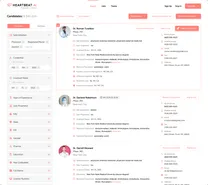
Heartbeat AI focuses on giving outreach teams accurate, current contact records so they can plan campaigns around real people instead of guesswork. Here’s what that typically includes:
- Direct access: contact information for HMO managers across the country, useful for starting conversations, pitching services, or building a referral network.
- Verified contacts: records that are checked and refreshed on a regular cadence to reduce bounces and dead ends.
- Segmentation: the ability to filter by location, specialty, or role so outreach doesn’t go out as a blanket blast.
- Better response potential: accurate contact details generally mean more of your messages actually land and get opened.
- Campaign flexibility: the same data can support email outreach, market research, or direct sales prospecting.
Types of Data Typically Included
- Name of the HMO manager
- Location
- Contact numbers (work, cell, mobile)
- Email address
- Specialization
- Years of experience
- Sole proprietor status
- Licensed states
- License number
- Fax
- Mailing address
 Accuracy & coverage of personal contact info were unrivaled by other platforms… this gives any healthcare recruiter a competitive advantage when engaging hard-to-reach healthcare providers.
Senior Growth Strategist






Why a Verified List Matters More Than List Size

A list of 50,000 stale addresses is worth less than 2,000 accurate ones. Here’s why quality and freshness carry more weight than raw volume:
Targeted outreach
Instead of casting a wide net, you’re reaching people who actually influence decisions inside an HMO. That relevance is what determines whether a message gets opened or ignored.
Time and cost efficiency
Building a manager-level contact list manually — searching directories, LinkedIn, and public filings one name at a time — eats hours that could go toward writing better messaging.
Response rates
Emails sent to a current, targeted list tend to perform better than blasts sent to a generic or outdated one, simply because fewer messages bounce or land with the wrong person.
Relationship building
Direct communication with HMO managers isn’t just a one-off pitch — it’s the start of a professional relationship that can lead to partnerships or ongoing collaboration.
Credibility
Reaching out with accurate, specific contact information signals that you’ve done your homework, rather than sending a mass email that reads as spam.
Competitive positioning
Many competitors still rely on generic marketing lists. A targeted, verified list lets you differentiate your approach in a market that’s easy to blend into.
HMO Manager Roles You’ll Typically Find in This Data
HMO management isn’t a single job title — it spans several functions, each with different priorities and buying authority. Knowing which role you’re targeting shapes how you write the pitch.
| HMO Manager Categories |
| Clinical Operations Manager |
| Medical Director |
| Health Services Manager |
| Network Manager |
| Pharmacy Benefits Manager (PBM) |
| Quality Improvement Manager |
| Risk Manager |
| Member Services Manager |
| Finance Manager |
HMO Managers Available by State
Browse state-level pages if you need to narrow outreach to a specific region.
How This Kind of Data Is Typically Compiled

Building an accurate mailing list of HMO managers is a multi-step process, not a one-time export. Understanding the steps helps you judge whether a provider’s data is likely to hold up.
Research and identification
The starting point is identifying which HMOs exist across regions by working through public records, healthcare directories, and industry reports.
Data collection
Once organizations are identified, contact details for the relevant managers get pulled from online resources, professional networking sites, and healthcare databases, with a focus on direct rather than generic contact points.
Verification
Collected data gets cross-referenced against multiple sources and run through email verification tools to catch invalid or dead addresses before they ever reach a customer’s list.
Segmentation
Verified contacts get organized by location, organization size, and role, which is what makes filtered exports possible later.
Ongoing updates
Because people change jobs and organizations restructure, static lists degrade quickly. Regular refresh cycles matter more than a single point-in-time snapshot.
Compliance
Any legitimate provider should be able to describe how it handles data privacy and regulatory compliance, including how contact information is sourced and how opt-outs are respected.
Choosing a Provider: What Actually Matters

Not every provider claiming healthcare contact data delivers the same thing. A few factors are worth checking before you commit budget to a list:
Database size and scope
Heartbeat.ai’s database covers millions of U.S. healthcare professionals, including direct cell phone numbers and personal email addresses, which matters if your campaign needs to scale beyond a single region or specialty.
Stated accuracy
Providers should be transparent about how contact accuracy is measured and maintained — for example, whether data is refreshed on a schedule or verified against multiple sources before delivery. Ask any vendor for their current accuracy methodology rather than relying on a static published number.
Prospecting tools
Beyond raw data, tools like Heartbeat’s Prospector let you search by specialty, sub-specialty, and procedure, while the Chrome Extension pulls contact details directly from LinkedIn and Facebook profiles.
Diversity filters
Filters that support diversifying a candidate or contact pool can be useful for recruiting and outreach teams trying to reflect the communities they serve.
Enterprise fit
For larger teams, look for team collaboration features, credit management, and reporting that fit how your organization is structured — a single shared login rarely scales well past a few users.
Checklist: What to Confirm Before Buying an HMO Managers List

- Freshness: ask when the data was last verified and how often it’s refreshed. Old lists produce higher bounce rates and can hurt sender reputation.
- Relevance: confirm the roles included actually match the people who make the decisions relevant to what you’re selling.
- Engagement quality: a smaller list of engaged contacts usually outperforms a larger list padded with inactive or irrelevant records.
- Compliance: check how the data aligns with laws like the CAN-SPAM Act and confirm there’s a clear opt-out path for recipients.
- Sourcing transparency: ask where the contact data actually comes from — vague answers are a warning sign.
- Specialization: a list built specifically around HMO managers will generally outperform a generic healthcare contact list for this use case.
Who Typically Uses an HMO Managers List

This kind of contact data tends to get used by a fairly consistent set of buyers:
Healthcare product suppliers
Medical device, equipment, and pharmaceutical companies use manager-level contacts to introduce products to the people who typically influence procurement decisions.
Medical service providers
Telemedicine, patient care, and healthcare IT vendors use the data to pitch services that could enhance what an HMO already offers its members.
Healthcare consultants
Consultants working on management, compliance, or operational efficiency use the list to reach HMOs that might benefit from outside expertise.
Insurance companies
Insurers exploring partnerships or looking to fold their products into HMO plans use manager contacts to open those conversations directly.
Healthcare training and education providers
Organizations offering training, certifications, or continuing education for healthcare professionals use the list to promote programs to HMOs.
Healthcare technology firms
Vendors of EHR systems, patient management software, and telehealth platforms use the data to pitch technology solutions directly to decision-makers.
Getting More Out of an HMO Manager Email List

Having accurate contacts is only half the equation — how you use them determines whether the campaign actually performs.
Segment before you send
Break the list down by geography, organization size, or role before writing a single email. A message tailored to a Pharmacy Benefits Manager shouldn’t read the same as one aimed at a Risk Manager.
Personalize beyond the first name
Reference details relevant to the recipient’s actual role or organization. Generic templates get skimmed and deleted; specific ones get read.
Lead with something useful
Industry insight, a relevant case example, or a genuinely useful resource works better than an opening pitch. Give the recipient a reason to keep reading past the first line.
Make the next step obvious
One clear call-to-action — book a call, download a resource, visit a page — outperforms an email that asks for three things at once.
Stay compliant
Follow the requirements of the CAN-SPAM Act, including a visible opt-out option, and honor unsubscribe requests promptly.
Track and adjust
Open rates, click-through rates, and reply patterns tell you what’s working. Treat the first campaign as a test, not a final answer, and adjust segmentation or messaging based on what the data shows.
Where This Fits in a Broader Outreach Strategy
An HMO managers email list is a starting point, not a complete strategy on its own. It works best paired with a clear value proposition, a compliant outreach process, and a willingness to refine targeting based on actual response data rather than assumptions. Heartbeat AI maintains this kind of healthcare contact data for teams that want to skip the manual research phase and get straight to outreach.
Frequently Asked Questions
Is it legal to use a list of HMO managers with email addresses for marketing?
Generally yes, provided you comply with applicable laws such as the CAN-SPAM Act, which requires honest sender information and a working opt-out mechanism.
Can I share my HMO manager mailing list with others?
It’s not recommended without explicit permission from the data provider, since licensing terms and privacy considerations typically restrict redistribution.
Is it worth investing in an HMO manager mailing list?
It can be, if you pair it with a clear outreach strategy and use the contacts responsibly rather than treating the list as a one-time mass blast.