Last updated: August 30, 2026
If you work in healthcare recruiting, medical sales, or provider network development in Utah, tracking down accurate contact information for general surgeons is often harder than it should be. Directories go stale, hospital staff pages lag behind actual staffing changes, and cold outreach through a general office line rarely reaches the surgeon directly. This guide covers what a working contact list should include, how Utah’s surgical workforce is distributed, and where a data provider like Heartbeat fits into the process.
What’s on this page:
Finding Verified Contact Data for General Surgeons in Utah
Heartbeat.ai maintains a searchable database of licensed healthcare professionals, including general surgeons, across the United States. You can filter by specialty, location, and other criteria to build a targeted contact list rather than working through a generic directory.
General surgery is a broad category. Some surgeons in the database focus on trauma or emergency cases, others on pediatric, vascular, cardiac, colorectal, endocrine, oncologic, transplant, or breast surgery. Filtering by sub-specialty matters if you’re recruiting for a specific service line or trying to connect a patient referral with the right type of surgeon rather than a general listing.
If you need to build a list for recruitment, partnership outreach, or research purposes, contact Heartbeat.ai directly to discuss access to the underlying data.
Utah’s Surgical Workforce: A Quick Overview
Utah’s healthcare system is anchored by a mix of academic medical centers, large regional hospital systems, and community hospitals. University of Utah Health operates as the state’s academic medical center, with a research and teaching mission that includes specialized surgical services. Intermountain Health (formerly Intermountain Healthcare) runs a large network of hospitals across the state, including major facilities in the Salt Lake City area. St. Mark’s Hospital is another established Salt Lake City-area facility providing general and specialty surgical care.
Beyond these flagship institutions, general surgeons in Utah also practice in smaller community hospitals and rural facilities, particularly outside the Wasatch Front corridor where the bulk of the state’s population lives. That geographic imbalance is one of the recurring challenges in reaching this specialty.
Why Accurate Contact Information Matters
Outdated contact details cause different problems depending on who’s using them:
- Patients and referring clinicians risk delays when trying to reach a surgeon’s office for scheduling or follow-up questions.
- Recruiters lose time and money chasing dead phone numbers or bounced emails when filling open surgical positions, which can extend time-to-hire on roles that are already hard to staff.
- Industry partners and researchers depend on working contact channels to coordinate collaborative studies, device trials, or professional education initiatives.
In each case, the cost of bad data isn’t abstract — it shows up as missed appointments, extended vacancies, or stalled projects.
Why It’s Hard to Reach General Surgeons in Utah
A few factors make this specialty harder to reach than many others:
- Geographic spread. Utah’s population is concentrated along the Wasatch Front, but surgical need extends into rural and frontier counties where practitioners are scarcer.
- Workforce shortages in rural areas. Like much of the country, rural Utah faces a persistent gap between surgical demand and available surgeons.
- Staff turnover at practices. Front-desk and scheduling staff change often, and public-facing contact info doesn’t always keep pace.
Telemedicine has helped close some of the access gap by allowing consultations and follow-up visits without long-distance travel, though it doesn’t replace the need for accurate direct contact information when in-person coordination is required. A well-maintained provider database — one that tracks specialty, location, and current contact details — is the practical tool for keeping up with a workforce that’s constantly shifting.
What a Heartbeat General Surgeons Contact List Includes
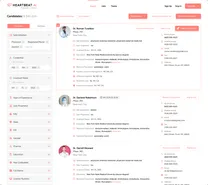
A Heartbeat contact record for a general surgeon in Utah typically includes:
- General surgeon’s name
- Location
- Contact numbers (work, cell, mobile)
- Email address
- Specialization
- Years of experience
- Sole proprietor status
- Licensed states
- License number
- Fax
- Address
General Surgeons by State
Heartbeat maintains contact lists for general surgeons across every state. Use the table below to find a list for a different state.
| General surgeons by states |
|---|
| General surgeons in Alabama |
| General surgeons in Alaska |
| General surgeons in Arizona |
| General surgeons in Arkansas |
| General surgeons in California |
| General surgeons in Colorado |
| General surgeons in Connecticut |
| General surgeons in Delaware |
| General surgeons in Florida |
| General surgeons in Georgia |
| General surgeons in Hawaii |
| General surgeons in Idaho |
| General surgeons in Illinois |
| General surgeons in Indiana |
| General surgeons in Iowa |
| General surgeons in Kansas |
| General surgeons in Kentucky |
| General surgeons in Louisiana |
| General surgeons in Maine |
| General surgeons in Maryland |
| General surgeons in Massachusetts |
| General surgeons in Michigan |
| General surgeons in Minnesota |
| General surgeons in Mississippi |
| General surgeons in Missouri |
| General surgeons in Montana |
| General surgeons in Nebraska |
| General surgeons in Nevada |
| General surgeons in New hampshire |
| General surgeons in New jersey |
| General surgeons in New mexico |
| General surgeons in New york |
| General surgeons in North carolina |
| General surgeons in North dakota |
| General surgeons in Ohio |
| General surgeons in Oklahoma |
| General surgeons in Oregon |
| General surgeons in Pennsylvania |
| General surgeons in Rhode island |
| General surgeons in South carolina |
| General surgeons in South dakota |
| General surgeons in Tennessee |
| General surgeons in Texas |
| General surgeons in Utah |
| General surgeons in Vermont |
| General surgeons in Virginia |
| General surgeons in Washington |
| General surgeons in West virginia |
| General surgeons in Wisconsin |
| General surgeons in Wyoming |
How Heartbeat Compiles This Data
Heartbeat.ai aggregates healthcare provider data, including direct cell phone numbers and personal emails, from a combination of official, private, and public sources. Records are cross-referenced and updated on an ongoing basis so that contact details reflect current practice locations rather than a single point-in-time snapshot.
Because provider data changes constantly — surgeons move between hospital systems, switch practices, or update contact preferences — no list is ever perfectly complete. Treat any purchased or licensed contact list as a strong starting point for outreach, not a guarantee that every record is current at the moment you use it.
Who Uses General Surgeon Contact Lists
Typical users include healthcare recruiters filling surgical staff positions, medical device and pharmaceutical sales teams targeting specific surgical specialties, hospital and health system business development staff, marketing agencies running campaigns for healthcare clients, and researchers or professional associations coordinating with practicing surgeons. Each of these users has different volume and filtering needs, which is why specialty- and location-based filtering matters more than a flat, unsorted list.
Getting Outreach Right
A contact list is only as useful as the outreach built around it. A few practical guidelines:
- Segment by sub-specialty before you send anything. A trauma surgeon and a breast surgeon have different priorities and won’t respond to the same message.
- Respect their schedule. Surgeons often have unpredictable hours built around case loads; timing and follow-up cadence matter more than volume.
- Personalize past the name field. Reference their specialty or practice setting rather than sending a generic template.
- Confirm licensing and location details before using contact information for any recruitment or compliance-sensitive purpose.
- Follow up responsibly. One or two well-timed follow-ups outperform repeated, undifferentiated messages.
Limitations to Keep in Mind
No third-party contact database, including Heartbeat’s, can guarantee real-time accuracy for every record. Surgeons change employers, retire, or relocate, and there’s typically a lag between that change and when it’s reflected in any external dataset. Cross-checking key contacts against a hospital’s own directory or state licensing board is a reasonable practice before high-stakes outreach, such as a formal recruitment offer.
Frequently Asked Questions
What services do general surgeons in Utah typically provide?
General surgeons in Utah typically provide a wide range of surgical services, including but not limited to appendectomies, hernia repairs, colorectal surgeries, and gallbladder surgeries.
How can I find a reputable general surgeon in Utah?
You can start by asking for recommendations from your primary care physician or other healthcare providers. You can also research online, read reviews, and check the surgeon’s credentials and experience.
What are the common qualifications of general surgeons in Utah?
General surgeons in Utah typically complete medical school, a general surgery residency, and in some cases additional fellowship training in a surgical subspecialty. They must be board-certified and licensed to practice in the state of Utah.