Last updated: August 30, 2026

Finding the right contact at a diagnostic imaging center rarely comes down to luck. Radiology groups, MRI and CT providers, mammography clinics, and hospital-affiliated imaging departments each have their own decision-makers, and generic outreach lists tend to miss them entirely or serve up contacts that went stale months ago.
A diagnostic imaging centers email list solves a narrower problem: it puts verified contact details for imaging administrators, radiologists, and center operators in one place, so outreach teams aren’t starting from a cold search every time. Heartbeat AI builds these lists for healthcare sales, recruiting, and marketing teams that need to reach this specific segment without wasting cycles on outdated directories.
What’s on this page:
What You Get From Heartbeat’s Diagnostic Imaging Center Email Directory
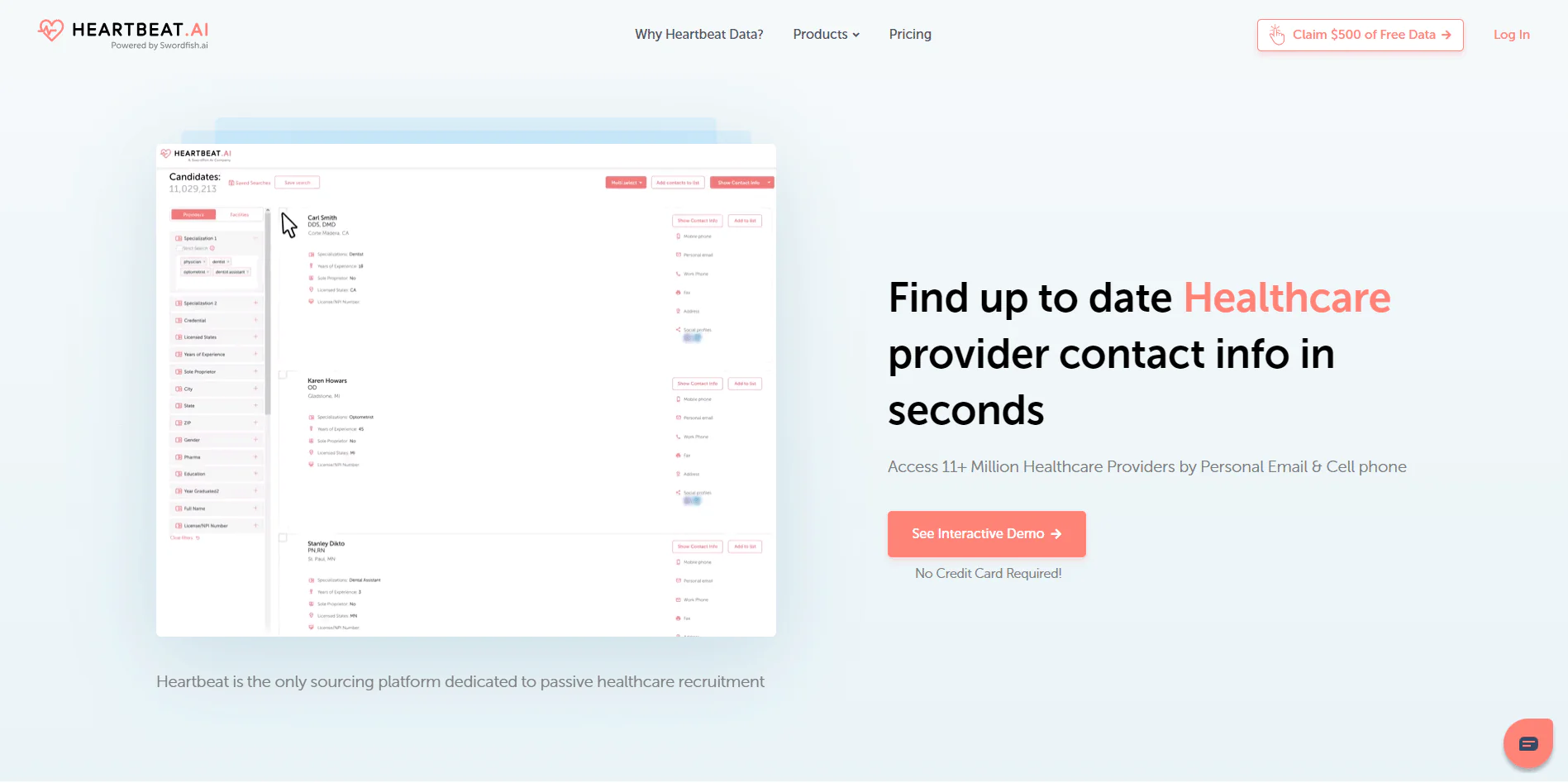
Heartbeat AI is a sourcing platform built for passive healthcare recruitment and outreach, with access to contact details for over 11 million healthcare professionals, including personal emails and cell phone numbers.
Here’s what’s included in the diagnostic imaging center email list database:
- Direct contacts: Access to key professionals working at diagnostic imaging centers, not just general facility inboxes.
- Efficient targeting: Reach the audience segment relevant to your outreach faster, without manual list-building.
- Current information: Verified, regularly refreshed email addresses instead of static, aging records.
- Broader reach: Expand beyond a single region or specialty within the imaging space.
- Integration: Export or connect data with the CRM and marketing tools you already use.
Types of Data Included
- Diagnostic imaging center name
- Location
- Contact numbers (work, cell, mobile)
- Email address
- Specialization
- Years of experience
- Sole proprietor status
- Licensed states
- License number
- Fax
- Address
 Accuracy & coverage of personal contact info were unrivaled by other platforms… this gives any healthcare recruiter a competitive advantage when engaging hard-to-reach healthcare providers.
Senior Growth Strategist





Benefits of a Valid Diagnostic Imaging Center Email Database
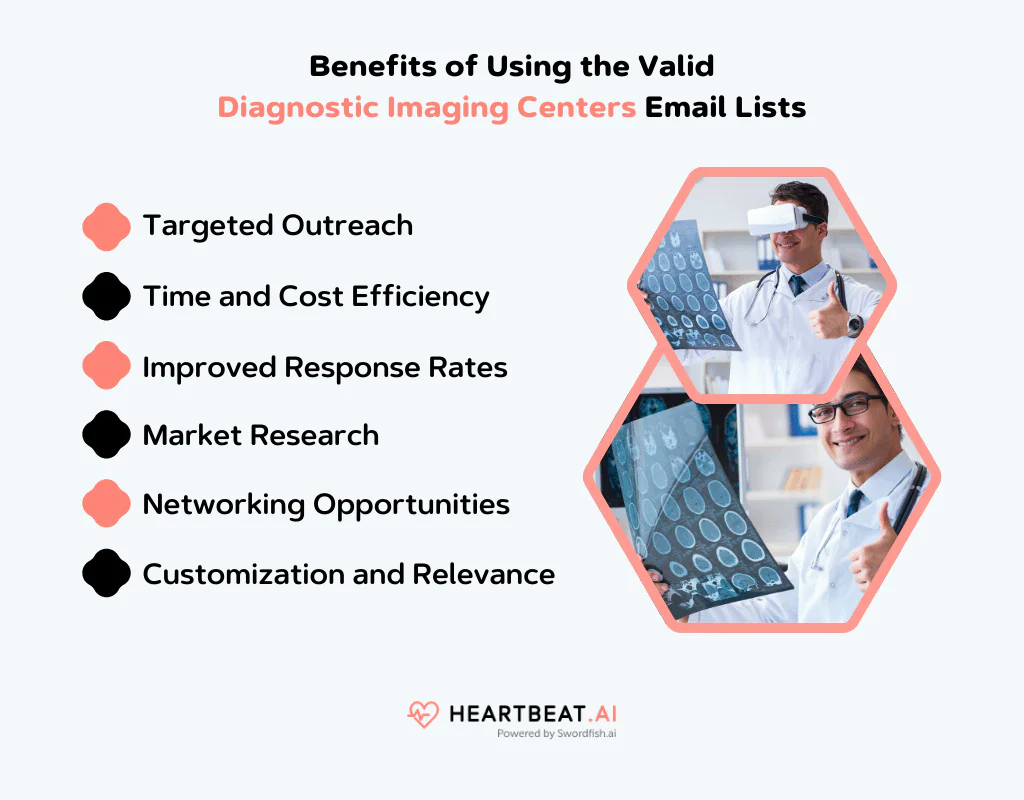
Targeted outreach
A focused list connects you directly with people working in the imaging field, rather than a general healthcare contact pool where most recipients have no reason to respond.
Time and cost efficiency
Building a contact list from scratch by searching directories and websites eats hours that could go toward actual outreach or follow-up. A ready-made list shortcuts that research phase.
Better response rates
Messages sent to a relevant, current list are more likely to get opened than blasts to a stale or mismatched audience — though response rates still depend heavily on message quality and offer relevance.
Market visibility
Looking across a list of imaging centers by specialty, size, and location can surface patterns — where certain modalities cluster, or which regions are underserved — that inform territory planning.
Networking
Having direct lines to imaging center staff opens doors for partnerships, referrals, or informal industry conversations that wouldn’t happen through cold web searches.
Customization
Segmenting a list by modality, state, or center size lets you tailor messaging instead of sending one generic email to everyone on the list.
Diagnostic Imaging Center Categories in the Directory
The directory spans multiple types of imaging facilities, including:
| Diagnostic Imaging Center Categories |
| Radiology Center |
| MRI Center |
| CT Scan Center |
| Ultrasound Clinic |
| Mammography Center |
| Nuclear Medicine Center |
| Cardiac Imaging Center |
| Vascular Imaging Center |
| Oncology Imaging Center |
| Neuroimaging Center |
| Orthopedic Imaging Center |
| Gastrointestinal Imaging Center |
| Women’s Imaging Center |
| Pediatric Imaging Center |
| Interventional Radiology Center |
| Musculoskeletal Imaging Center |
| Emergency Radiology Center |
Diagnostic Imaging Centers by State
Browse the directory by state to find imaging center contacts in a specific region:
How the Data Is Compiled
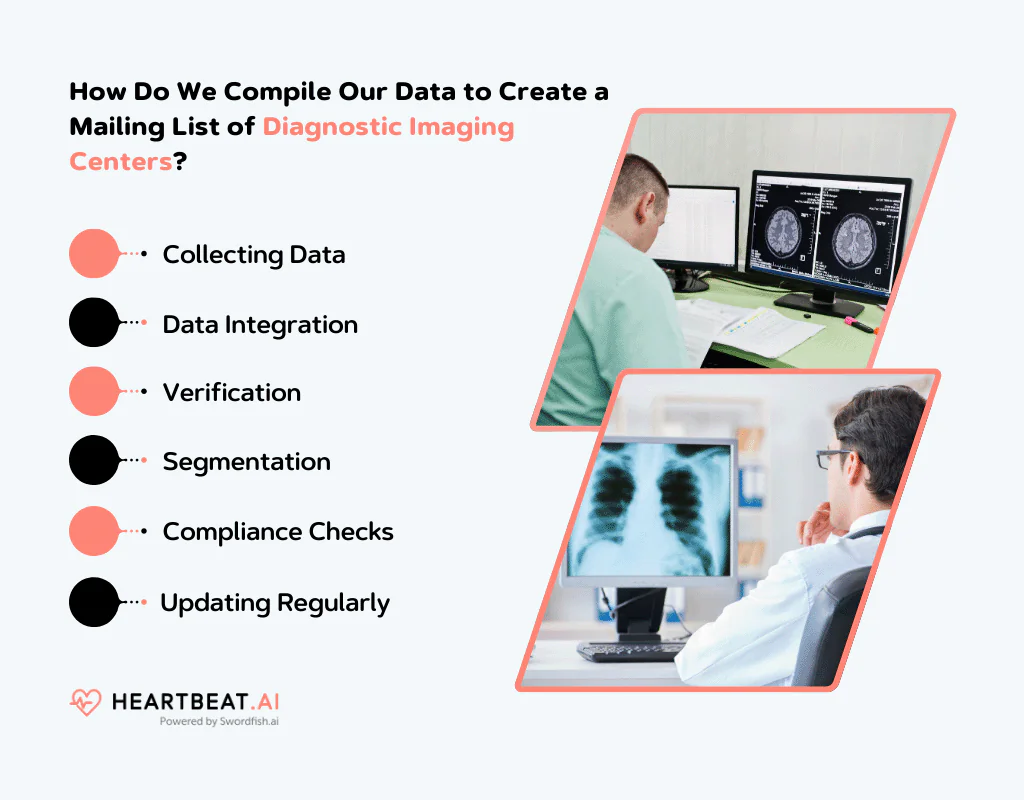
Collecting data
Information is pulled from a wide range of sources, including medical directories, healthcare databases, and industry-specific records, prioritizing credible and current inputs.
Data integration
Records from different sources are merged and deduplicated so a single center or provider doesn’t appear multiple times under slightly different details.
Verification
Emails, names, and other details are checked for accuracy using a combination of automated verification and manual review.
Segmentation
Verified data is organized by factors like location, center size, and services offered, so it’s easier to filter down to a relevant subset instead of working through one giant list.
Compliance checks
Lists are built with attention to privacy regulations such as GDPR and HIPAA. Note that HIPAA governs protected health information in clinical contexts; it’s worth confirming with your own compliance team how it applies to your specific outreach use case.
Regular updates
Because staff move, centers open and close, and contact details change, the list is refreshed on an ongoing basis rather than compiled once and left static.
Why Choose Heartbeat.ai’s Diagnostic Imaging Center Mailing List
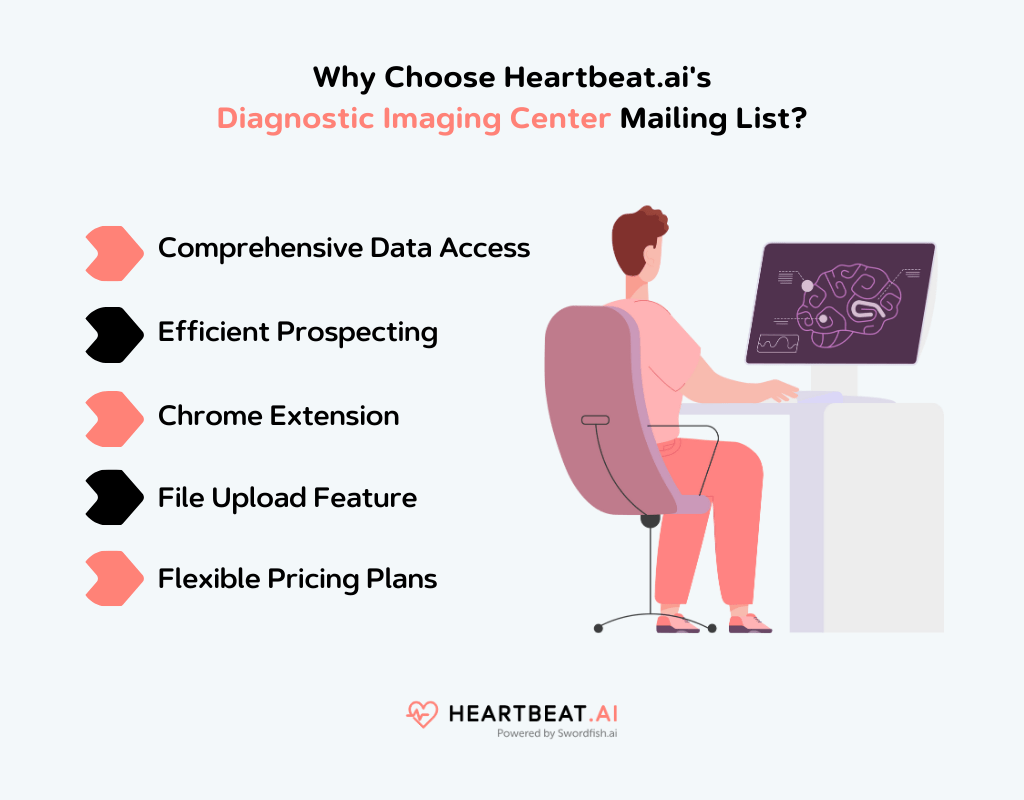
Comprehensive data access
Heartbeat.ai provides extensive coverage of American healthcare providers, including diagnostic imaging center experts, physicians, nurses, dentists, and more. Predictive modeling supports high accuracy in contact information, with 84% accuracy for cell phone numbers and 92% for personal emails.
Efficient prospecting
The Prospector tool lets you find healthcare providers by specialty and subspecialty, along with direct emails and cell phone numbers, cutting down the manual research involved in identifying imaging center specialists.
Chrome extension
The Chrome Extension surfaces contact information across platforms like LinkedIn and Facebook, useful for pulling professional details without leaving your browser.
File upload feature
The file upload feature handles bulk data processing, so existing spreadsheets can be enriched with current contact information rather than rebuilt from scratch.
Flexible pricing plans
Heartbeat.ai offers a range of pricing plans for different team sizes, from individual recruiters to larger enterprises, with database access, team management, and integration support scaled accordingly.
What to Consider Before Buying a Diagnostic Imaging Center Email List
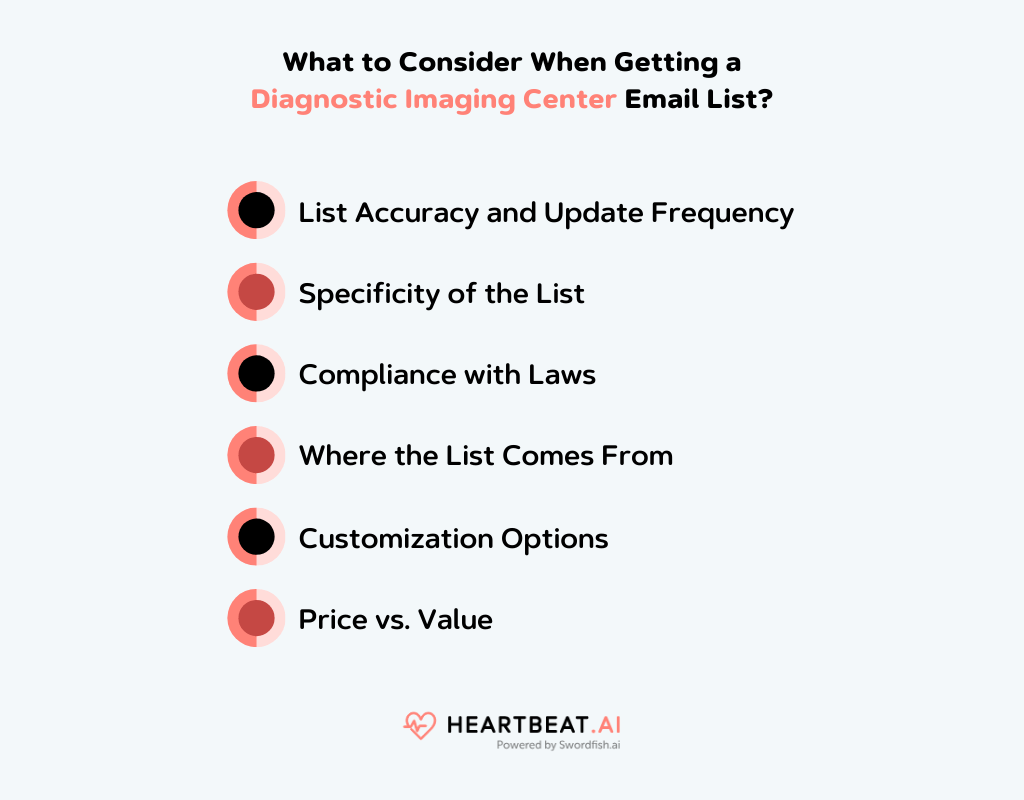
Accuracy and update frequency
Ask how often the list is refreshed. A list updated quarterly behaves very differently from one updated once a year.
Specificity
Check whether the list distinguishes between modalities, like MRI versus mammography versus nuclear medicine, so you’re not sending irrelevant pitches to centers that don’t offer that service.
Legal compliance
Confirm the provider’s data practices align with GDPR and HIPAA where applicable. Using a noncompliant list can create legal exposure well beyond the cost of the list itself.
Data source
Ask how the list was built — industry partnerships, public directories, direct opt-ins, or a mix. The sourcing method affects both accuracy and how recipients might react to being contacted.
Customization
Look for the ability to filter by location, center size, or modality rather than buying one undifferentiated national list.
Price versus value
The lowest-cost list is rarely the best deal if half the contacts bounce. Weigh cost against verified deliverability and segmentation options.
Who Uses a Diagnostic Imaging Center Email List
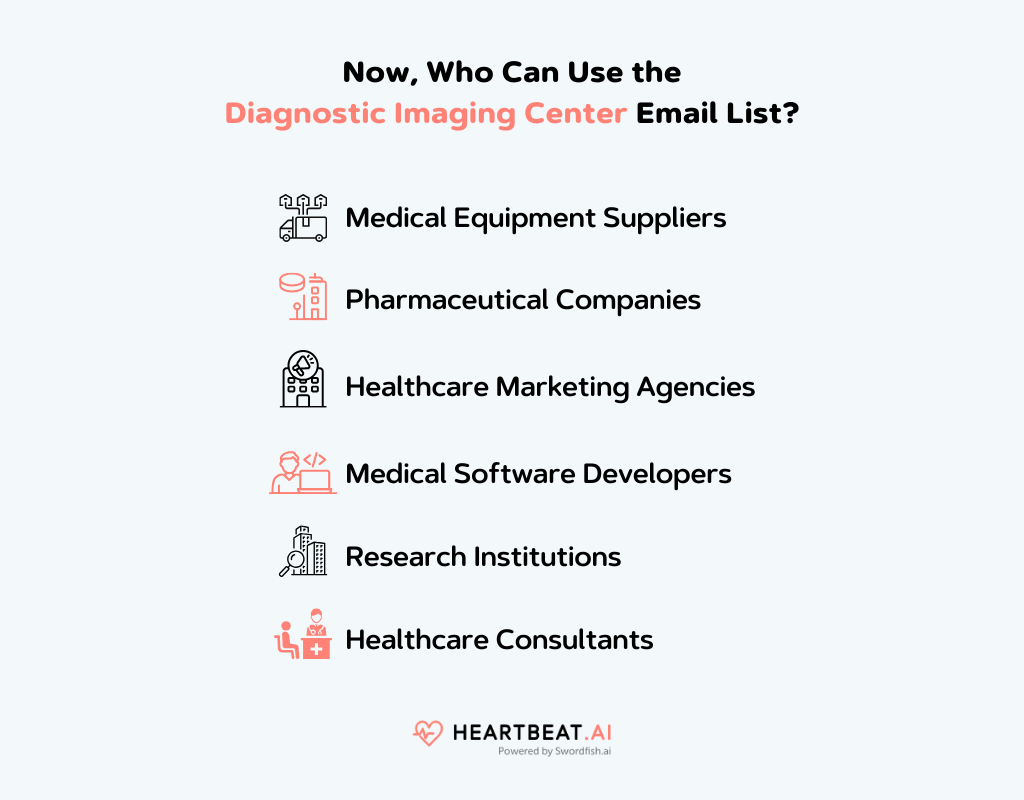
- Medical equipment suppliers selling MRI machines, CT scanners, or X-ray equipment to centers that need to upgrade or expand.
- Pharmaceutical companies promoting contrast agents or drugs used in imaging procedures.
- Healthcare marketing agencies running targeted campaigns or informational outreach for imaging clients.
- Medical software developers building imaging-related applications or practice management systems.
- Research institutions looking to collaborate with centers, share findings, or recruit for studies.
- Healthcare consultants offering services around management, operational efficiency, or compliance.
Using the List Effectively
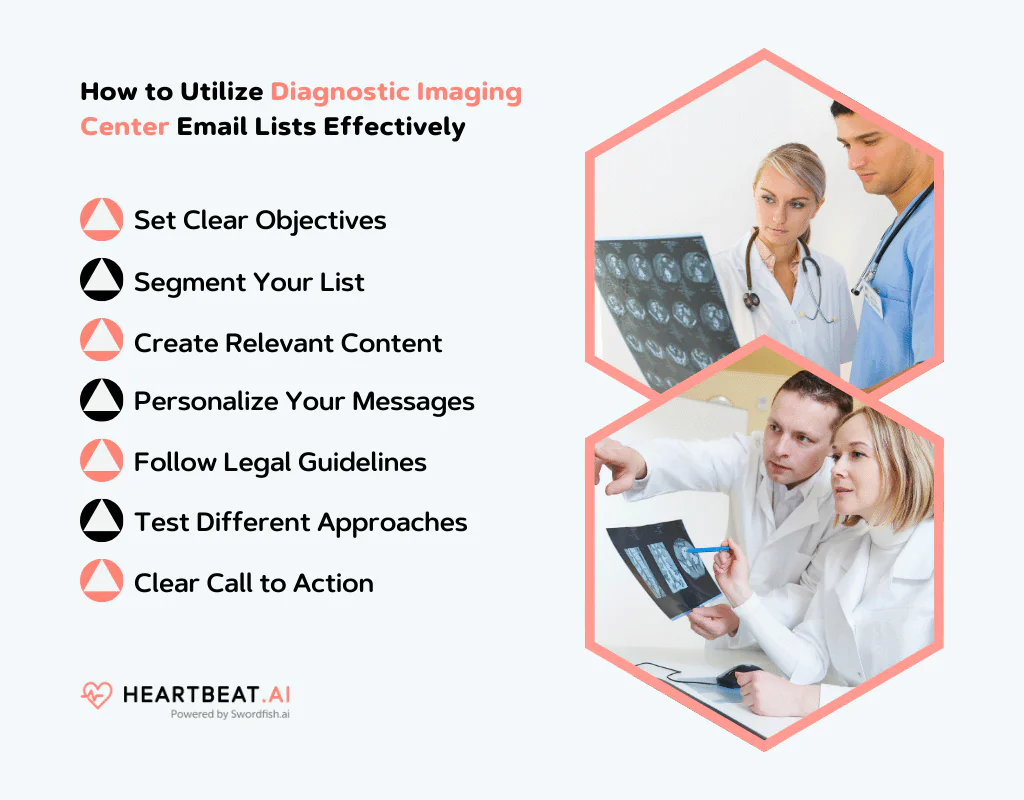
- Set a clear objective. Selling equipment, offering services, or sharing industry research each calls for a different message and audience segment.
- Segment the list. Group contacts by region, center size, or imaging modality before sending anything.
- Write relevant content. A note about new MRI technology should go to centers that actually run MRIs, not the full list.
- Personalize the message. Using a recipient’s name and referencing their specialty tends to outperform generic templates.
- Follow legal guidelines. Stay within GDPR and HIPAA boundaries relevant to your outreach.
- Test different approaches. Vary subject lines, formats, and timing, and track open and click-through rates to see what actually works.
- Include a clear call to action. Make it obvious whether you want the recipient to visit a page, reply, or book a call.
Conclusion
A well-maintained diagnostic imaging centers email list won’t fix a weak offer or a poorly targeted campaign, but it removes a real bottleneck: finding accurate, current contact details for a fragmented and specialized segment of healthcare. Whether you’re selling equipment, recruiting, or running a marketing campaign aimed at imaging centers, starting from a verified list rather than a manual search saves time and improves the odds that your message reaches someone who can act on it.
If you’re looking for a reliable email list of diagnostic imaging centers, Heartbeat AI offers verified, regularly updated contact data built for this kind of targeted outreach.
Frequently Asked Questions
Are there risks to using a diagnostic imaging center email list?
Yes. Poorly targeted or excessive outreach can generate spam complaints, and noncompliant data use can create legal exposure. Following ethical marketing practices and applicable privacy laws reduces these risks.
Can I expect a high response rate from this kind of list?
Response rates vary by message quality, timing, and targeting. A well-segmented, accurate list improves your odds, but no list guarantees a specific response rate.
How do I keep the email addresses on the list clean and valid?
Regular email verification, either through dedicated tools or features built into most email marketing platforms, helps catch invalid or bounced addresses before they hurt your sender reputation.