What’s on this page:
Key takeaways
- A dental assistant contact record may include contact details, work location, specialization, experience, and certification status.
- Check how recently a provider verifies records and which filters are available before buying a list.
- Recruiting, B2B lead generation, and market research are examples of uses described for these lists.
- Third-party contact data can become outdated, so treat a purchased list as a starting point and re-verify it for long-running campaigns.
Last updated: August 28, 2026
A dental assistant contact database can support recruiting, dental supply and equipment sales, and continuing-education outreach. A useful list should contain relevant contact and professional details, offer filters suited to the campaign, and be checked for recency and limitations. This guide explains how to evaluate and use a certified dental assistant (CDA) contact database.
Who Certified Dental Assistants Are, and Why They’re a Distinct Segment
A Certified Dental Assistant has passed a recognized credentialing exam on top of clinical training, which distinguishes them from assistants who learned entirely on the job. There are several possible paths to becoming a dental assistant, and some states require assistants to graduate from an accredited program and pass an exam, while in other states there are no formal educational requirements and dental assistants learn through on-the-job training. That distinction matters for outreach: a CDA credential is a reasonable proxy for someone who has invested in the profession and is more likely to respond to career, continuing-education, or product messaging aimed at credentialed staff specifically.
The median annual wage for dental assistants was $48,070 in May 2025. The lowest 10 percent earned less than $37,130, and the highest 10 percent earned more than $62,250. Employment of dental assistants is projected to grow 7 percent from 2025 to 2035, much faster than the average for all occupations, with about 53,000 openings projected each year, on average, over the decade. That growth rate is one reason recruiting-focused campaigns aimed at this role tend to have a large enough addressable pool to sustain ongoing outreach rather than a one-time list purchase.
What a Dental Assistant Contact Record Should Actually Include
A usable record for outreach or recruiting purposes generally needs more than a name and an email address. At minimum, look for:
- Full name and current work location
- Direct work phone and, where available, a cell or mobile number
- A verified email address (work or personal)
- Specialization or practice setting (general dentistry, orthodontics, pediatric, oral surgery, etc.)
- Years of experience and certification status
- Licensed state(s) and license or credential number, if applicable
- Fax and mailing address for compliance and multichannel outreach
Heartbeat.ai says its dental assistant database draws on a network of data partners to keep contact fields current. Ask the provider how records are sourced and refreshed before relying on them.
How to Evaluate a Dental Assistant Email List Before You Buy
Not every provider verifies data the same way, so it’s worth running through a short checklist before committing to a list:
- Recency of verification. Ask how often records are checked against source data, not just when the list was first compiled.
- Filtering depth. Can you segment by specialization, years of experience, state license, or graduation year, or is it a flat, unsegmented file?
- Coverage of both channels. A list with only email addresses limits you to one outreach channel; mobile and work phone numbers matter for recruiting timelines especially.
- Match to your use case. A recruiting campaign for hospital-based dental assistants has different filtering needs than a lead-gen campaign for a dental supply company targeting orthodontic practices.
- Compliance basics. Confirm how the provider sources contact data and what opt-out or consent practices apply, since healthcare contact outreach carries its own regulatory considerations depending on channel and content.
Customizing a Dental Assistant List by Filter
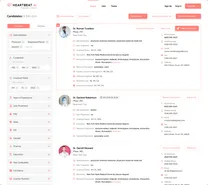
Heartbeat.ai says users can build a dental assistant list around specific criteria rather than working from a static export. Available filters typically include specialization, credentials, years of experience, sole proprietor status, licensed state, city, state, ZIP, gender, education, year graduated, full name, and license number. Confirm which filters and fields are available for your intended use before purchasing.
You can review a live example of the filtering interface here: https://heartbeat.ai/vi/search-result?sp1=70&page=1
Common Use Cases for This Kind of List
The most common applications fall into three categories:
- Recruiting and staffing. Dental practices, DSOs, and staffing agencies use contact data to source candidates for open dental assistant roles, particularly in markets with tight labor supply.
- B2B lead generation. Dental supply companies, equipment vendors, and continuing-education providers use filtered lists to reach assistants by specialization or location.
- Market research. Some organizations use aggregate contact data to study workforce trends, such as where certified assistants are concentrated or how specialization mixes vary by region.
Where the Data Comes From, and Its Limits
Heartbeat.ai says it sources contact information from a network of data partners and refreshes records on an ongoing basis rather than relying on a single static compile. No third-party contact database is perfect: job changes, license renewals, and email migrations can leave some records out of date. Treat a purchased list as a starting point for outreach, not a permanent source of truth, and plan to re-verify or refresh data for long-running campaigns.
Heartbeat.ai’s broader database also covers related healthcare roles, including Nurses Email Lists, Physicians Email Lists, and Doctors Email Lists, which can be useful for organizations recruiting or marketing across multiple dental and clinical roles at once.
Check out Heartbeat.ai’s dental assistant contact database for yourself with a free trial.
 Image Credit: 123rf.com / Dolgachov.
Getting Started
Before investing in a dental assistant contact list, consider the scale and duration of your recruiting or sales campaign and how often you will need to refresh the data. A one-time list may become outdated as people change jobs or contact details; a maintained, filterable database may better suit ongoing outreach.
How to Get Access
Heartbeat.ai provides Healthcare & Medical Data Lists, including emails and cell phone numbers of Dental Assistants, Dentists, Nurses, Physicians, Doctors, and other Locum Tenens Professionals. Search millions of Healthcare Providers’ contact records in a few clicks to get personal email addresses and cell or mobile phone numbers.
See pricing here and sign up for Heartbeat.ai Free Trial today.
Cover Image Licensed from: 123RF.com / Georgerudy.
Frequently asked questions
What information should a dental assistant contact record include?
The article recommends looking for details such as full name, work location, work phone, email, specialization or practice setting, experience, certification status, and applicable license information.
What filters does the article say may be available?
It lists filters such as specialization, credentials, years of experience, licensed state, city, ZIP, education, graduation year, and license number. Availability should be confirmed with the provider.
How can organizations use a dental assistant contact list?
The article describes recruiting and staffing, B2B lead generation for suppliers and education providers, and aggregate market research as possible uses.
Can a third-party dental assistant contact list be assumed to be current?
No. The article notes that job changes, license renewals, and email migrations can make records outdated, and recommends treating a list as a starting point and re-verifying it for ongoing campaigns.