What’s on this page:
Key takeaways
- Contact records can become outdated when pharmacists change employers or pharmacies change ownership.
- Before selecting a contact list, check how recently records were refreshed and which fields and filters are available.
- License numbers and licensed-state fields can help with verification, but high-priority contact details should still be re-checked.
- Segment outreach by practice setting and make messages relevant to the recipient.
- Honor opt-outs and follow applicable privacy and anti-spam requirements.
Last updated: August 30, 2026
Recruiters, medical marketers, and healthcare organizations trying to reach community pharmacists in West Virginia run into a familiar problem: verified contact information is hard to find, and general-purpose directories go stale quickly. Pharmacists move between retail chains, independent shops, and hospital-affiliated outpatient pharmacies, and their listed contact details often lag behind their current role.
This guide covers why accurate pharmacist contact data matters for outreach and recruitment, what makes West Virginia’s pharmacy workforce distinct, and how a verified contact list from Heartbeat.ai fits into a practical outreach workflow.
Get a Community Pharmacist Email List for West Virginia from Heartbeat
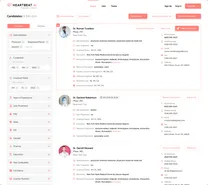
Heartbeat.ai describes its platform as a way to search and filter licensed U.S. healthcare professionals, including community pharmacists, by state, practice setting, and specialty, and to access contact details for outreach.
The database spans multiple community pharmacy roles, including retail pharmacists, ambulatory care pharmacists, independent pharmacy owners, and clinical community pharmacists. That range matters if your outreach targets a specific segment rather than the entire pharmacist population in a state.
Heartbeat.ai describes its service as a self-serve SaaS platform. Users can search, filter, and export contact records without a sales call, and the team is available for questions about coverage or licensing.
Community Pharmacy in West Virginia: A Quick Overview
West Virginia’s healthcare system includes academic medical centers such as West Virginia University Hospitals, along with regional systems like Charleston Area Medical Center and St. Mary’s Medical Center. Community pharmacies operate alongside these larger institutions, often serving as the most accessible point of care in rural counties.
Community pharmacists may provide services beyond dispensing medication, including medication counseling, support with chronic disease management, and vaccinations where permitted under applicable state requirements. In rural areas with limited primary care access, they may also be an accessible first point of contact for basic health questions.
A note on workforce data: exact statewide counts of practicing community pharmacists fluctuate and are best confirmed through the West Virginia Board of Pharmacy or the West Virginia Pharmacists Association rather than treated as a fixed figure.
Why Accurate Contact Information Matters
Outdated or incorrect contact data creates real friction in three common use cases:
- Recruitment: Healthcare staffing teams lose time and candidates when outreach goes to an old email address or a disconnected number. In a tight pharmacist labor market, a delayed response can mean losing a candidate to a competing offer.
- Marketing and sales: Vendors selling clinical tools, pharmacy software, or continuing education programs need to reach the pharmacist directly, not a general pharmacy front desk line.
- Professional networking: Researchers, association organizers, and peer-to-peer outreach programs depend on being able to reach pharmacists individually, especially in a state with a large share of independent and rural pharmacies.
Challenges Specific to Reaching Pharmacists in West Virginia
Several factors can complicate pharmacist outreach in West Virginia:
- Rural distribution. A meaningful share of the state’s pharmacies sit outside major metro areas, where staff turnover and consolidation happen with less public reporting.
- Independent ownership. Independent pharmacies don’t always maintain the same kind of updated corporate directory that chain pharmacies do, which makes public contact data less reliable.
- Telepharmacy limits. West Virginia’s rules around remote pharmacy operations are more restrictive than some states, which shapes how and where pharmacists are physically based and how outreach should be scoped.
- Licensing continuing education cycles. Pharmacists complete required continuing education on a recurring basis, and practice settings can shift around renewal periods, which is another reason static lists age quickly.
None of these are solved by a single data pull. A workable approach combines a verified contact database with periodic re-checks against licensing boards for high-priority targets.
What’s Included in Heartbeat’s Community Pharmacist Contact Data
Heartbeat.ai’s pharmacist records are built to support outreach that goes beyond a name and a general pharmacy phone number. Typical fields include:
- Community pharmacist name
- Location
- Contact numbers (work, cell, mobile)
- Email address
- Specialization
- Years of experience
- Sole proprietor status
- Licensed states
- License number
- Fax
- Address
Community Pharmacist Contact Lists by State
Explore community pharmacist contact data available across all U.S. states.
| Community pharmacists by state |
|---|
| Community pharmacists in Alabama |
| Community pharmacists in Alaska |
| Community pharmacists in Arizona |
| Community pharmacists in Arkansas |
| Community pharmacists in California |
| Community pharmacists in Colorado |
| Community pharmacists in Connecticut |
| Community pharmacists in Delaware |
| Community pharmacists in Florida |
| Community pharmacists in Georgia |
| Community pharmacists in Hawaii |
| Community pharmacists in Idaho |
| Community pharmacists in Illinois |
| Community pharmacists in Indiana |
| Community pharmacists in Iowa |
| Community pharmacists in Kansas |
| Community pharmacists in Kentucky |
| Community pharmacists in Louisiana |
| Community pharmacists in Maine |
| Community pharmacists in Maryland |
| Community pharmacists in Massachusetts |
| Community pharmacists in Michigan |
| Community pharmacists in Minnesota |
| Community pharmacists in Mississippi |
| Community pharmacists in Missouri |
| Community pharmacists in Montana |
| Community pharmacists in Nebraska |
| Community pharmacists in Nevada |
| Community pharmacists in New Hampshire |
| Community pharmacists in New Jersey |
| Community pharmacists in New Mexico |
| Community pharmacists in New York |
| Community pharmacists in North Carolina |
| Community pharmacists in North Dakota |
| Community pharmacists in Ohio |
| Community pharmacists in Oklahoma |
| Community pharmacists in Oregon |
| Community pharmacists in Pennsylvania |
| Community pharmacists in Rhode Island |
| Community pharmacists in South Carolina |
| Community pharmacists in South Dakota |
| Community pharmacists in Tennessee |
| Community pharmacists in Texas |
| Community pharmacists in Utah |
| Community pharmacists in Vermont |
| Community pharmacists in Virginia |
| Community pharmacists in Washington |
| Community pharmacists in West Virginia |
| Community pharmacists in Wisconsin |
| Community pharmacists in Wyoming |
How the Contact Data Is Compiled
Heartbeat.ai says it aggregates healthcare provider data from public and private sources and matches records to associate contact details with licensed professionals, rather than relying only on general practice or corporate contact lines. Ask the provider how it verifies and updates these details, particularly direct phone numbers and personal email addresses.
In West Virginia, independent pharmacies and rural practice settings may make some public contact information less consistent. Verification can help address gaps, but contact records should still be checked before high-priority outreach.
How to Evaluate a Pharmacist Contact List Before You Buy
If you’re comparing data providers, a few practical checks help avoid wasted spend:
- Ask how recently records were refreshed. Pharmacist contact data ages faster in rural states with high independent-pharmacy ownership.
- Check what fields are included. A list with only a name and general pharmacy phone number isn’t much better than a public directory.
- Confirm filtering options. If you only need independent community pharmacists, or only pharmacists with immunization credentials, filtering saves outreach time.
- Look for licensing detail. License number and licensed-state fields help confirm you’re reaching an actively licensed professional, not a stale record.
Who Uses Community Pharmacist Contact Lists
Potential users of community pharmacist contact lists include healthcare staffing agencies, pharmacy chain HR teams, medical device and pharmaceutical sales teams, continuing education providers, and researchers studying rural pharmacy access. Market research firms and professional associations may also use them for surveys or membership outreach.
Whatever the use case, handle contact data carefully. Unsolicited bulk messaging that ignores opt-out requests may violate applicable privacy or anti-spam requirements and can damage the sender’s standing with the professional community being contacted.
A Practical Outreach Workflow
Once you have a verified list, a simple sequence tends to work better than a single mass email:
- Segment the list by practice setting (independent, chain, hospital-affiliated) so messaging matches context.
- Lead with a specific, relevant reason for contact rather than a generic introduction.
- Respect standard business hours and any stated communication preferences.
- Follow up once, not repeatedly, if there’s no response.
- Keep a record of opt-outs and honor them immediately across future campaigns.
This approach takes longer than a single bulk send, but it helps tailor outreach and makes it easier to honor communication preferences and opt-outs.
Limitations to Keep in Mind
No contact database is perfect. Pharmacists change employers, independent pharmacies close or change ownership, and license renewals don’t always trigger an update to public contact records. Treat any purchased list as a strong starting point, not a permanently accurate source, and re-verify contact details for high-priority outreach before a final send.
Frequently Asked Questions
What services do community pharmacists in West Virginia provide?
Community pharmacists in West Virginia provide medication dispensing, medication therapy management, immunizations, and basic health screenings, in addition to counseling patients on managing chronic conditions.
How can I find a community pharmacist in West Virginia?
You can check the West Virginia Board of Pharmacy’s license lookup, use professional directories, or ask a primary care provider for a recommendation.
Do community pharmacists in West Virginia provide medication counseling?
Yes. Community pharmacists are trained to counsel patients on proper medication use, potential side effects, and drug interactions as part of standard dispensing practice.