Last updated: August 31, 2026
Community pharmacists are often the most frequently visited healthcare professionals in Tennessee, handling everything from prescription counseling to vaccinations and medication therapy management. For recruiters, medical sales teams, and healthcare marketers, reaching them directly matters — but pharmacist contact information changes often as professionals move between retail chains, independent pharmacies, and hospital systems.
This guide covers what makes Tennessee’s community pharmacist workforce distinct, why outdated contact data creates real friction in recruiting and outreach, and how a verified contact list fits into a practical outreach workflow.
What’s on this page:
Community Pharmacists’ Role in Tennessee’s Healthcare System
Tennessee’s healthcare landscape includes major academic and pediatric centers such as Vanderbilt University Medical Center, Baptist Memorial Hospital, and St. Jude Children’s Research Hospital. Community pharmacists work outside these large systems, in retail, independent, and clinic-based settings, and they’re frequently the first point of contact for patients managing chronic conditions or picking up new prescriptions.
To practice in Tennessee, pharmacists must be at least 21 years old, hold a degree from an accredited pharmacy program, and pass the required licensing examinations, including the North American Pharmacist Licensure Examination (NAPLEX) and the Multistate Pharmacy Jurisprudence Examination (MPJE). A minimum of 1,700 pharmaceutical internship hours are required for licensure, and applicants must submit affidavits documenting those hours. Once licensed, pharmacists must complete at least thirty hours of continuing pharmaceutical education during each two-year license cycle, with at least fifteen hours obtained through live contact programs. All license types issued by the Tennessee Board of Pharmacy have a 2-year renewal cycle that starts the month of initial licensure.
Why Accurate Contact Information Matters
Stale or incorrect contact data creates problems on three fronts:
- Recruitment: A wrong email or disconnected phone number means a recruiting outreach never lands, and the candidate never learns about the opening.
- Networking and partnerships: Pharmacists interact with prescribers, researchers, and industry reps regularly. Outdated details cause missed collaboration opportunities and wasted follow-up time.
- Operational efficiency: Sales and marketing teams targeting pharmacists for products or programs lose time and budget chasing bounced emails and disconnected numbers.
None of this is about clinical outcomes — it’s about whether outreach actually reaches the intended person.
Why Finding Reliable Pharmacist Contacts Is Difficult
A few practical obstacles come up repeatedly when building outreach lists for community pharmacists:
- Fragmented sources. No single public directory lists every community pharmacist in Tennessee with current, verified contact details.
- Workforce turnover. Pharmacists relocate, retire, or move between employers more often than list maintainers can track manually.
- Licensing data gaps. State license records confirm that someone holds an active license, but they rarely include a working cell number or personal email.
A maintained, regularly refreshed database narrows this gap by consolidating licensing status, practice location, and contact details in one place, rather than requiring manual cross-referencing across multiple sources.
What a Heartbeat Contact List Includes
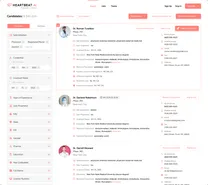
Heartbeat’s community pharmacist contact lists are built to give recruiters, marketers, and healthcare organizations a working record they can filter and act on. Typical fields include:
- Pharmacist name
- Location
- Contact numbers (work, cell, mobile)
- Email address
- Specialization
- Years of experience
- Sole proprietor status
- Licensed states
- License number
- Fax
- Address
Available Community Pharmacists in Our Contact List by States
Explore our comprehensive email list featuring community pharmacists across all states in the U.S.
| Community pharmacists by states |
|---|
| Community pharmacists in Alabama |
| Community pharmacists in Alaska |
| Community pharmacists in Arizona |
| Community pharmacists in Arkansas |
| Community pharmacists in California |
| Community pharmacists in Colorado |
| Community pharmacists in Connecticut |
| Community pharmacists in Delaware |
| Community pharmacists in Florida |
| Community pharmacists in Georgia |
| Community pharmacists in Hawaii |
| Community pharmacists in Idaho |
| Community pharmacists in Illinois |
| Community pharmacists in Indiana |
| Community pharmacists in Iowa |
| Community pharmacists in Kansas |
| Community pharmacists in Kentucky |
| Community pharmacists in Louisiana |
| Community pharmacists in Maine |
| Community pharmacists in Maryland |
| Community pharmacists in Massachusetts |
| Community pharmacists in Michigan |
| Community pharmacists in Minnesota |
| Community pharmacists in Mississippi |
| Community pharmacists in Missouri |
| Community pharmacists in Montana |
| Community pharmacists in Nebraska |
| Community pharmacists in Nevada |
| Community pharmacists in New hampshire |
| Community pharmacists in New jersey |
| Community pharmacists in New mexico |
| Community pharmacists in New york |
| Community pharmacists in North carolina |
| Community pharmacists in North dakota |
| Community pharmacists in Ohio |
| Community pharmacists in Oklahoma |
| Community pharmacists in Oregon |
| Community pharmacists in Pennsylvania |
| Community pharmacists in Rhode island |
| Community pharmacists in South carolina |
| Community pharmacists in South dakota |
| Community pharmacists in Tennessee |
| Community pharmacists in Texas |
| Community pharmacists in Utah |
| Community pharmacists in Vermont |
| Community pharmacists in Virginia |
| Community pharmacists in Washington |
| Community pharmacists in West virginia |
| Community pharmacists in Wisconsin |
| Community pharmacists in Wyoming |
How Heartbeat Compiles Pharmacist Contact Data
Heartbeat aggregates provider data from a wide network of official, private, and public sources, then applies predictive modeling to fill gaps where direct records are incomplete. The result is a working dataset of cell phone numbers, personal emails, and practice details, refreshed to reflect job changes, relocations, and new licensure. Coverage and accuracy will vary somewhat by state and specialty, since some pharmacists change roles more frequently than public licensing records are updated — so it’s worth spot-checking a sample before launching a large outreach campaign.
Who Uses a Community Pharmacist Contact List?
Marketing teams, sales reps, recruiters, researchers, and PR professionals commonly rely on lists like this, along with advertising agencies, market research firms, and non-profit organizations running outreach campaigns. Any use of the data should comply with applicable data privacy laws and regulations, including rules around unsolicited communication.
Using the List Effectively
A few practices make outreach to pharmacists more productive:
- Personalize messages based on specialization or practice setting rather than sending generic blasts.
- Keep communications concise and respectful of their time during working hours.
- Be accurate and specific about why you’re reaching out — vague pitches get ignored faster with clinical professionals than with most audiences.
- Respect confidentiality norms and professional boundaries; this list is for outreach, not for anything resembling patient-facing communication.
Limitations to Keep in Mind
No contact database is perfect. Pharmacists change employers and phone carriers, some license records lag behind real-world job changes, and predictive modeling can’t always resolve a name to a current number. Treat any list as a strong starting point for outreach, not a guaranteed match — and build a verification step into your workflow before large campaigns.
Conclusion
Reaching Tennessee’s community pharmacists efficiently depends on having current, verified contact details rather than static directories that go stale within months. A maintained database that combines licensing information with direct contact data reduces wasted outreach and speeds up recruiting and networking efforts, provided it’s used with reasonable expectations about accuracy and refreshed periodically.
Frequently Asked Questions
What qualifications are required to become a community pharmacist in Tennessee?
Candidates must complete a Doctor of Pharmacy program, accumulate the required internship hours, and pass the NAPLEX and MPJE exams before applying for licensure through the Tennessee Board of Pharmacy.
What services do community pharmacists in Tennessee typically provide?
Community pharmacists dispense medications, counsel patients on proper use, monitor for drug interactions, administer vaccinations, and conduct basic health screenings.
How can patients find a reputable community pharmacist in Tennessee?
Patients can ask their healthcare providers for recommendations, check reviews, and confirm the pharmacist holds an active license through the Tennessee Board of Pharmacy.