Last updated: August 29, 2026

Clinical research coordinators sit at the center of every trial site — screening patients, managing protocols, and keeping studies compliant. Reaching them directly is harder than it sounds. Job titles vary by employer, contact info often isn’t published, and generic hospital directories rarely list a CRC’s direct line or personal inbox. That’s the gap a purpose-built clinical research coordinators email list is meant to close.
Estimates of exactly how many CRCs work in the U.S. vary a lot depending on the source and how the role is classified, so we won’t repeat a single headshot number here. What’s consistent across labor-market data is that demand for people managing clinical trials has been trending upward as trial volume and regulatory complexity increase.
Heartbeat AI builds contact lists for this audience using verified healthcare provider data, filtering options by specialty and location, and routine refreshes to keep the information usable.
What’s on this page:
About Heartbeat’s Clinical Research Coordinators Email List: What You Will Get

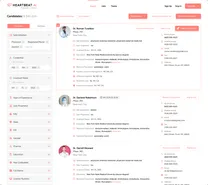
Heartbeat is a healthcare contact platform covering more than 11 million healthcare workers, including a segment specific to clinical research coordinators. Here’s what’s included:
- Direct emails: Contact addresses for coordinators across different healthcare and research settings.
- Targeted filtering: Narrow contacts by location, specialty, and years of experience so outreach goes to relevant people rather than a broad, unqualified list.
- Outreach-ready format: Contacts organized for recruiting, marketing, or professional networking campaigns.
- Periodic refresh: Records are updated on a recurring basis to reduce the number of dead or outdated contacts.
- Time savings: Skips the manual work of building a contact list from scratch, so teams can focus on messaging and strategy.
Data Fields Typically Included
- Name
- Location
- Contact numbers (work, cell, mobile)
- Email address
- Specialization
- Years of experience
- Sole proprietor status
- Licensed states
- License number
- Fax
- Address
 Accuracy & coverage of personal contact info were unrivaled by other platforms… this gives any healthcare recruiter a competitive advantage when engaging hard-to-reach healthcare providers.
Senior Growth Strategist






Benefits of Using a Verified Clinical Research Coordinators Email List

Sharper marketing
A specialty-specific list lets messaging speak directly to what CRCs actually deal with day to day, rather than generic healthcare copy that gets ignored.
Simpler networking
Drug companies and device manufacturers can reach coordinators who influence how products get evaluated and adopted at the site level.
Lower waste
Targeting reduces spend on outreach that lands with the wrong audience — a common problem with broad healthcare contact lists.
Time back
Building a coordinator contact list manually is slow. A maintained list shifts effort toward messaging and strategy instead of research.
Compliance-minded sourcing
A properly compiled list is built with attention to spam and data protection rules, which matters for both legal exposure and recipient trust.
Clinical Research Coordinator Categories in Our Database
Coordinators specialize differently depending on trial phase, therapeutic area, and institutional role. Below are common categories represented in our data.
| Clinical Research Coordinators Categories |
| Clinical Trials Coordinator( CTC) |
| Clinical Research Educator |
| Clinical Research Assistant |
| Clinical Professional Development Specialist (CPD) |
Clinical Research Coordinators by State
Our database is organized by state so you can build regional or nationwide outreach lists depending on where your trials, sites, or programs are located.
How the Data Gets Compiled

Building a usable coordinator list is less about volume and more about process discipline. Here’s the general workflow:
1. Collect
Gather workplace, specialty, and professional activity info from a wide range of sources, including healthcare directories, public profiles, and professional forums.
2. Filter and sort
Isolate the fields that actually matter for outreach — name, workplace, specialty, and verified contact details.
3. Verify
Check accuracy and currency. Stale contact data is close to useless for outreach that depends on deliverability.
4. Organize
Structure records by location, experience, and specialty so users can filter down to a relevant subset quickly.
5. Assemble the list
Compile verified profiles into a usable mailing list rather than a flat name dump.
6. Refresh regularly
Coordinators change roles, employers, and specialties over time, so lists need periodic updates to stay accurate.
Why Choose Heartbeat.ai’s Clinical Research Coordinators Mailing List

Broad, current coverage
Heartbeat.ai’s database includes contacts for over 11 million healthcare providers in the U.S. — CRCs, physicians, nurses, dentists, and other specialists — with direct cell phone numbers and personal email addresses where available.
Verification-focused accuracy
Heartbeat reports a 92% accuracy rate for personal emails and 84% for cell phone numbers, which affects how much of your outreach actually reaches an active inbox or line rather than bouncing.
Granular targeting
Filter by specialty, location, and experience level to build lists that match a specific campaign rather than a broad healthcare audience.
Workflow tools
A Chrome Extension works with sites like LinkedIn, making it faster to look up and verify a coordinator’s contact info while researching prospects.
Flexible pricing
Different pricing plans accommodate independent recruiters, agencies, and larger organizations with different volume needs.
What to Check Before Buying a Clinical Research Coordinators Email List

- Source transparency: Know where the data comes from. A trustworthy provider should be able to explain how contacts were sourced and verified.
- Update frequency: Ask how often records refresh. An outdated list means paying for addresses that no longer work.
- Filtering options: Confirm you can segment by location, specialty, and experience — otherwise you’re buying a generic list with a specific label.
- Legal compliance: The list should be built with attention to privacy rules like CAN-SPAM and, where relevant, GDPR.
- Price versus value: A cheap list that’s mostly outdated contacts costs more in wasted time than a properly maintained one.
Who Uses a Clinical Research Coordinators Email List

- Drug companies: Communicate about new medications, share study information, and collect feedback from coordinators involved in trials.
- Medical device manufacturers: Introduce new tools, provide training, and get practical feedback from people using equipment on the ground.
- Healthcare recruiters: Source experienced coordinators for open roles in research or leadership positions.
- Continuing education providers: Promote courses, workshops, and certifications relevant to research staff.
- Research organizations: Recruit participants for studies or connect with coordinators who can provide operational insight.
- Healthcare event organizers: Reach research professionals directly when promoting conferences or training events.
Using a Clinical Research Coordinators Email List Effectively

- Set a clear goal: Know whether you’re sharing information, promoting a product, or inviting them to an event before writing a word.
- Know the audience: Coordinators respond to practical, educational content relevant to their day-to-day work, not broad marketing copy.
- Keep the message short: Lead with the main point. Coordinators are busy and won’t read past a vague opening.
- Personalize where possible: Reference their specialty or workplace context to improve engagement over a generic blast.
- Offer something useful: A relevant resource, invitation, or piece of information gives them a reason to respond.
- Write a specific subject line: It’s the first thing they see and decides whether the email gets opened at all.
Bottom Line
A well-maintained clinical research coordinators email list saves time and improves reach compared to building contacts manually. The tradeoff is that quality varies a lot between providers — checking source, update frequency, and filtering options up front avoids paying for a list that’s mostly noise.
Heartbeat AI compiles and verifies coordinator contact data as part of its broader healthcare provider database, with tools built for outreach at scale.
Frequently Asked Questions
Can I target specific types of clinical research coordinators using the list?
Yes. You can filter and select coordinators based on location, specialty, experience level, and other criteria to reach the most relevant professionals for a given campaign.
Is the clinical research coordinators email list compliant with legal standards like GDPR?
The list is built with attention to privacy regulations such as GDPR and the CAN-SPAM Act, but compliance for any specific outreach campaign still depends on how you use the data — consult your own legal counsel if you have questions about a particular use case.
What makes Heartbeat AI’s list different from other clinical research coordinators mailing lists?
Heartbeat AI combines broad, regularly updated coverage with granular filtering, workflow tools like the Chrome Extension, and pricing tiers built for different team sizes and budgets.