Last updated: August 28, 2026
Reaching physicians in California by email or phone gets harder every year, simply because there are so many of them spread across such a large, fragmented healthcare market. Recruiters, medical marketers, and healthcare vendors all run into the same problem: contact details go stale fast, and no single public source keeps a complete, current list.
This guide looks at why accurate physician contact data matters, what makes it hard to find in California specifically, and how a database like Heartbeat’s fits into a practical outreach workflow.
What’s on this page:
Why Accurate Physician Contact Data Matters

Bad contact data costs time and creates real friction, whether you’re recruiting, marketing, or coordinating care logistics.
Reaching the Right Person
Correct contact information gets your message to the physician you actually intend to reach, rather than a disconnected number or an inbox nobody checks anymore.
Faster Response Times
When a phone number or email is current, follow-up happens on your timeline instead of after several bounced attempts.
Scheduling and Coordination
Recruiters coordinating interviews, or vendors scheduling demos, rely on accurate details to avoid delays and back-and-forth corrections.
Fewer Costly Mistakes
Outdated contact records lead to misdirected outreach, wasted campaign spend, and sometimes contacting the wrong specialist entirely.
Time-Sensitive Outreach
In situations where a quick response matters, such as urgent staffing gaps or time-limited opportunities, having a working contact on file is the difference between reaching someone and missing the window.
Why Finding a Physician Contact Database in California Is Difficult
Building a reliable list of licensed physicians in California runs into a consistent set of obstacles:
Privacy Regulations
Laws such as the Health Insurance Portability and Accountability Act (HIPAA) govern how medical information is shared, which makes many healthcare institutions cautious about releasing physician contact details, even when the data itself isn’t clinical.
Frequent Turnover
Physicians change practices, email domains, and phone numbers regularly. A list that’s accurate today can have meaningful gaps within months if it isn’t refreshed.
Fragmented Sources
Contact information sits scattered across hospital systems, medical associations, insurance networks, and state licensing records. Pulling it into one usable list takes real effort.
Verification Overhead
Cross-checking data from multiple sources to confirm it’s current is time-consuming, and skipping this step is exactly how outdated lists happen in the first place.
Restricted Access
Some directories are only available to authorized organizations or licensed institutions, which limits what external parties like agencies or vendors can access directly.
What’s Included in Heartbeat’s California Physician Contact Data

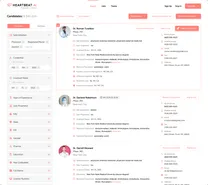
Heartbeat AI compiles physician contact records and applies verification and search filtering so users can build targeted lists instead of manually assembling one from scratch.
A Heartbeat search of California physicians typically returns:
- A large national database: Millions of physician records spanning specialties, locations, and affiliations, filterable down to California specifically.
- Regularly refreshed records: Contact data is periodically updated to reduce the rate of bounced emails and disconnected numbers.
- Custom search filters: Narrow results by specialty, geography, or hospital affiliation instead of sorting through an unfiltered list.
- Faster list-building: Pulling a targeted list takes minutes rather than the hours needed to compile one manually from public directories.
Data Fields Typically Included
- Physician name
- Practice location
- Contact numbers (work, cell, mobile)
- Email address
- Specialization
- Years of experience
- Sole proprietor status
- Licensed states
- License number
- Fax
- Address
 Accuracy & coverage of personal contact info were unrivaled by other platforms… this gives any healthcare recruiter a competitive advantage when engaging hard-to-reach healthcare providers.
Senior Growth Strategist






Physician Categories Available
Heartbeat’s California physician records span a range of specialties, so you can filter down to the specific type of provider that matches your outreach goal.
| Physicians Categories |
| Family physicians |
| Internists |
| Emergency physicians |
| Psychiatrists |
| Obstetricians and gynecologists |
| Neurologists |
| Radiologists |
| Anesthesiologists |
| Pediatricians |
| Cardiologists |
Physician Contact Lists by State
Looking for a state other than California? Below is a directory of physician contact lists across the U.S.
| Physician By States |
| Physicians in New York |
| Physician in Alabama |
| Physician in Alaska |
| Physician in Arizona |
| Physician in Arkansas |
| Physician in Colorado |
| Physician in Connecticut |
| Physician in Delaware |
| Physician in Florida |
| Physician in Georgia |
| Physician in Hawaii |
| Physician in Idaho |
| Physician in Illinois |
| Physician in Indiana |
| Physician in Iowa |
| Physician in Kansas |
| Physician in Kentucky |
| Physician in Louisiana |
| Physician in Maine |
| Physician in Maryland |
| Physician in Massachusetts |
| Physician in Michigan |
| Physician in Minnesota |
| Physician in Mississippi |
| Physician in Missouri |
| Physician in Montana |
| Physician in Nebraska |
| Physician in Nevada |
| Physician in New Hampshire |
| Physician in New Jersey |
| Physician in New Mexico |
| Physician in New York |
| Physician in North Carolina |
| Physician in North Dakota |
| Physician in Ohio |
| Physician in Oklahoma |
| Physician in Oregon |
| Physician in Pennsylvania |
| Physician in Rhode Island |
| Physician in South Carolina |
| Physician in South Dakota |
| Physician in Tennessee |
| Physician in Texas |
| Physician in Utah |
| Physician in Vermont |
| Physician in Virginia |
| Physician in Washington |
| Physician in West Virginia |
| Physician in Wisconsin |
| Physician in Wyoming |
How the Data Gets Compiled

Building a usable California physician list generally follows a similar workflow, regardless of who’s assembling it:
1. Gather from Multiple Sources
Pull records from medical directories, hospital sites, and state licensing boards to establish a baseline of who’s practicing and where.
2. Verify for Accuracy
Cross-check entries against multiple sources so the final list doesn’t carry forward outdated or duplicate information.
3. Filter by Location
Narrow the dataset down to physicians actually practicing in California, since a national list without geographic filtering isn’t useful for state-specific outreach.
4. Remove Duplicates
Clean out repeat entries so the list stays efficient to work with.
5. Group by Specialty
Organize by specialty so users can pull sub-lists, such as cardiologists or pediatricians, without manually sorting a flat file.
6. Compile Contact Details
Assemble verified emails and phone numbers from available sources, following applicable contact and privacy rules along the way.
What Heartbeat Adds Beyond a Basic Directory

Broad Coverage
Heartbeat.ai maintains an extensive database covering millions of healthcare providers, including physicians, nurses, and dentists, which gives users a single place to search across provider types rather than juggling separate directories.
Direct Contact Details
Rather than routing through a front desk or generic practice inbox, Heartbeat surfaces direct cell numbers and personal email addresses, which tends to produce more personal, higher-response outreach.
Verified, Regularly Updated Records
Heartbeat reports accuracy rates of 84% for cell phone numbers and 92% for personal emails, achieved through predictive modeling combined with private and public source matching.
Specialty-Level Filtering
Search by specialty, sub-specialty, or procedures performed to target outreach precisely instead of contacting broad, unqualified lists.
Diversity Filters
Filtering options can help recruiters build a more diverse candidate pool when that’s part of a hiring initiative.
Browser Extension
A Chrome Extension extends contact lookup to platforms like LinkedIn, so you can pull verified details while researching a prospect directly on their profile.
Who Actually Uses a Physician Contact Directory

Patients and Healthcare Consumers
People looking for a primary care physician or specialist in California can use a directory to find and confirm contact details for providers near them.
Healthcare Researchers
Researchers studying physician demographics, care delivery trends, or health policy sometimes pull directory data as a starting point for broader academic or market analysis.
Healthcare Facilities and Recruiters
Hospitals, clinics, and staffing teams use directories to identify and contact potential hires, and to network within the broader medical community.
Pharmaceutical and Medical Equipment Companies
Companies marketing products or services to physicians use directory data to reach relevant specialists directly rather than relying on broad, untargeted campaigns.
Medical Associations and Regulatory Bodies
Associations and regulators use directories to keep member and licensing records current and to maintain lines of communication within the profession.
Using a Physician Mailing List Without Wasting It

A verified list is only half the job. How you use it determines whether it turns into replies or gets ignored.
Segment First
Group physicians by specialty, location, or another relevant criterion before sending anything. A single generic blast to an unsegmented list tends to underperform compared to targeted sends.
Write Content Worth Opening
Physicians get a lot of email. Relevant research summaries, case studies, or specialty-specific updates hold attention better than generic pitches.
Personalize Where It’s Easy
Referencing a physician’s specialty or location in the message takes little effort and noticeably improves relevance.
Stay Within Privacy Rules
Mailing practices should comply with relevant regulations, including the Health Insurance Portability and Accountability Act (HIPAA) where patient information is involved, and general email marketing law for commercial messages.
Use a Proper Email Platform
A dedicated email marketing tool with list management, personalization fields, and open/click tracking makes it easier to see what’s actually working.
Write Subject Lines That Earn a Look
Keep subject lines short and specific. Avoid anything that reads as clickbait, since spam filters and skeptical recipients both penalize it.
Check Mobile Rendering
A large share of email gets opened on a phone first. Test formatting on smaller screens before sending at scale.
California’s Medical Board
The Medical Board of California licenses and regulates physicians and surgeons practicing in the state, and offers a public license verification tool so patients, employers, and recruiters can confirm a physician’s current license status before making a decision. Anyone using contact or credential data for hiring or referral purposes should treat the Board’s license lookup as the authoritative source, rather than relying solely on third-party directories.
The Bottom Line
A dependable California physician contact list saves time and reduces wasted outreach, but only if the underlying data is verified and kept current. Manually compiling that list from scattered public sources is possible, but it’s slow and prone to going stale within months.
Heartbeat AI is built to shortcut that process, combining a large, filterable database with regularly refreshed contact records.
Frequently Asked Questions
Is it legal to use a physician email database for marketing?
Generally yes, but compliance matters. Commercial email marketing falls under the CAN-SPAM Act, and any handling of patient-related information falls under HIPAA. Getting legal guidance before a large campaign is a reasonable precaution.
How do I protect the privacy of physician contact data I’ve collected?
Use secure storage and transmission, limit access to people who need it, and follow applicable data protection regulations to stay compliant and maintain trust.
Can I use a California physician database for recruitment?
Yes, physician contact data is commonly used for recruitment outreach, but it should be paired with compliance with employment law and standard ethical recruiting practices.