Last updated: August 28, 2026
Colorado’s healthcare workforce spans large academic systems in Denver and Aurora down to rural clinics scattered across the mountains and plains. For recruiters, marketers, and healthcare vendors trying to reach physicians in the state, the practical challenge isn’t understanding that the market exists — it’s getting current, verified contact details for the right specialists in the right region.
This guide covers what the Colorado physician market looks like, why contact accuracy matters more than people assume, and how a purpose-built database like Heartbeat.ai fits into a realistic outreach workflow.
What’s on this page:
Get a Physician Email List for Colorado from Heartbeat
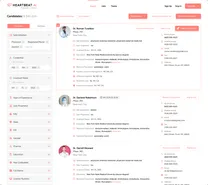
Heartbeat.ai’s database covers licensed physicians and other healthcare professionals across the United States, including Colorado. You can filter by specialty, location, license status, and other criteria to build a list matched to your outreach goals rather than working through a generic directory.
The catalogue spans primary care physicians as well as specialists — cardiologists, endocrinologists, gastroenterologists, neurologists, orthopedic surgeons, pediatricians, and more. Whether the goal is recruiting, marketing a healthcare product, building a referral network, or inviting physicians to an event, the starting point is the same: verified contact data that doesn’t go stale after a few months.
Getting started involves creating an account and selecting filters relevant to your search. If you run into questions along the way, Heartbeat’s team can help walk through list setup.
Colorado’s Healthcare Landscape at a Glance
Colorado’s healthcare system includes a mix of academic medical centers, community hospitals, and specialty facilities. UCHealth University of Colorado Hospital, on the Anschutz Medical Campus in Aurora, is the state’s only adult academic medical center and has consistently ranked among the top hospitals in Colorado in U.S. News & World Report’s annual rankings, though its exact rank shifts year to year as other systems improve. Denver Health is known for trauma and emergency care, Children’s Hospital Colorado handles pediatric specialty care, and National Jewish Health is recognized nationally for respiratory and pulmonary treatment. The Anschutz Medical Campus in Aurora also anchors much of the state’s medical education and research activity.
These institutions concentrate a large share of Colorado’s specialist physicians in the Denver-Aurora metro area, which matters for anyone building outreach lists — geographic clustering affects how you should segment a campaign.
Why Contact Accuracy Matters for Physician Outreach
Bad contact data doesn’t just waste a few emails — it compounds across a campaign. A few practical consequences worth planning around:
- Recruitment delays. A recruiter reaching a disconnected number or dead email loses the candidate to a competing offer, especially in high-demand specialties.
- Wasted ad and outreach spend. Marketing to outdated addresses inflates bounce rates and can affect email deliverability for future campaigns.
- Missed networking and referral opportunities. Physician-to-physician referrals and collaborative research depend on being reachable through current channels.
None of this replaces the physician-patient relationship or clinical communication protocols — this is strictly about professional outreach, recruitment, and B2B contact use cases.
Common Obstacles to Finding the Right Physician Contacts in Colorado
A few recurring problems come up when sourcing physician contact data in this state:
- Rural-urban imbalance. Physician density is much higher around Denver and Aurora than in Colorado’s rural counties, making it harder to source contacts for underserved regions.
- Fragmented directories. Hospital websites, state licensing boards, and professional associations each hold partial data, rarely cross-referenced or updated at the same pace.
- Specialty and insurance filtering. Narrowing a list to a specific specialty or practice type usually requires manual research across multiple sources.
Centralized databases that aggregate location, specialty, and licensing data address the fragmentation problem directly, letting you filter and build a targeted list instead of stitching one together by hand.
What’s Included in Heartbeat’s Physician Contact Data
Heartbeat.ai’s physician records are built to support recruitment, marketing, and networking use cases with the following data points:
- Physician Name
- Location
- Contact Numbers (Work, Cell, Mobile)
- Email Address
- Specialization
- Years of Experience
- Sole Proprietor Status
- Licensed States
- License Number
- Fax
- Address
Physician Contact Lists by State
Browse physician contact data for other states below.
| Physician by states |
|---|
| Physician in Alabama |
| Physician in Alaska |
| Physician in Arizona |
| Physician in Arkansas |
| Physician in California |
| Physician in Colorado |
| Physician in Connecticut |
| Physician in Delaware |
| Physician in Florida |
| Physician in Georgia |
| Physician in Hawaii |
| Physician in Idaho |
| Physician in Illinois |
| Physician in Indiana |
| Physician in Iowa |
| Physician in Kansas |
| Physician in Kentucky |
| Physician in Louisiana |
| Physician in Maine |
| Physician in Maryland |
| Physician in Massachusetts |
| Physician in Michigan |
| Physician in Minnesota |
| Physician in Mississippi |
| Physician in Missouri |
| Physician in Montana |
| Physician in Nebraska |
| Physician in Nevada |
| Physician in New hampshire |
| Physician in New jersey |
| Physician in New mexico |
| Physician in New york |
| Physician in North carolina |
| Physician in North dakota |
| Physician in Ohio |
| Physician in Oklahoma |
| Physician in Oregon |
| Physician in Pennsylvania |
| Physician in Rhode island |
| Physician in South carolina |
| Physician in South dakota |
| Physician in Tennessee |
| Physician in Texas |
| Physician in Utah |
| Physician in Vermont |
| Physician in Virginia |
| Physician in Washington |
| Physician in West virginia |
| Physician in Wisconsin |
| Physician in Wyoming |
How Heartbeat Builds Its Physician Contact Data
Heartbeat.ai’s database draws on hundreds of public, private, and official sources, cross-referenced to keep records current. The goal is to pair each provider record with verified contact channels — cell numbers and personal email addresses — rather than relying on a single stale directory. Predictive modeling helps fill gaps and flag likely outdated entries so lists stay usable over time.
For teams running recruitment or outreach campaigns, this generally means less manual verification work before a list is ready to use — though no third-party database can guarantee 100% real-time accuracy, and periodic spot-checking against direct sources is still good practice.
Who Uses Physician Contact Lists — and How
Physician contact data gets used by a range of teams: healthcare recruiters filling open positions, medical device and pharma marketers targeting specialists, HR departments running credentialing outreach, researchers recruiting study participants, and business development teams building referral partnerships. Non-profits, academic institutions, and public health campaigns also use these lists for outreach.
Regardless of use case, any campaign built on this kind of data needs to comply with applicable privacy and anti-spam regulations — that responsibility sits with the list user, not the data provider.
A Practical Checklist for Using Physician Contact Lists
- Segment by specialty and region before writing outreach copy — a message to a rural family physician should read differently than one to an urban specialist.
- Keep messages short. Physicians have limited time between patients, so lead with the value proposition, not background.
- Confirm consent and applicable regulatory requirements before adding contacts to marketing sequences.
- Refresh lists periodically rather than treating a single export as permanent — contact details change as physicians move practices or update credentials.
- Track response and bounce rates by segment to catch data quality issues early.
Where This Fits and Where It Doesn’t
A contact database speeds up finding and reaching physicians for recruitment, marketing, and networking purposes. It’s not a substitute for care coordination, patient scheduling systems, or clinical referral networks, and it shouldn’t be used for anything resembling medical advice or patient communication. Used within that scope, accurate contact data removes a lot of the friction that otherwise slows down Colorado-focused healthcare outreach.
Frequently Asked Questions
What qualifications does a physician in Colorado need?
Licensed physicians in Colorado hold an M.D. or D.O. degree from an accredited medical school, complete residency training, and pass required licensing exams before practicing.
How can I find a physician in Colorado?
Patients can search the Colorado Medical Board’s licensee lookup, use hospital-system provider directories, or ask a primary care doctor for a referral. For B2B outreach and recruitment, a contact database like Heartbeat.ai is a faster route to verified professional contact details.
What services do physicians in Colorado offer?
Services vary by specialty but typically include routine check-ups, diagnosis and treatment of illness and injury, preventive care, chronic disease management, and referrals to specialists.
What insurance plans do physicians in Colorado accept?
Accepted insurance varies by practice. It’s best to confirm directly with the physician’s office or your insurance provider before scheduling care.