What’s on this page:
Key takeaways
- An audiologist contact list may include names, locations, contact details, specialties, and experience fields, but the exact fields vary by provider.
- Before buying a list, ask how records are sourced, checked, refreshed, and permitted to be used.
- Segment contacts by relevant factors such as specialty or location, and test a small group before scaling outreach.
- Track bounces and replies to assess both contact-data quality and message performance.
- A purchased list does not guarantee that every record is current or that your outreach complies with applicable requirements.
Last updated: August 28, 2026
Finding audiologists to hire, pitch, or partner with usually means digging through state licensing boards, association directories, and LinkedIn one profile at a time. An audiologist email list is meant to shortcut that process, but the value depends entirely on how the list was built and how current it is.
This guide walks through what a usable audiologist contact list actually contains, how to judge whether a provider’s data is worth paying for, and how to put the list to work without wasting outreach on stale contacts.

What’s Inside HeartBeat’s Audiologist Email Lists
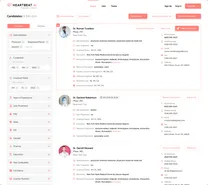
HeartBeat’s audiologist database covers audiologists across the United States and is built to be filtered down to a specific segment rather than used as one giant, undifferentiated file.

- National coverage: Records span all 50 states, so you can build a national campaign or narrow to a single region.
- Filterable fields: Segment by specialization, credentials, and years of experience instead of emailing the entire list at once.
- Multiple use cases: The same data supports recruiting, sales prospecting, partnership outreach, and market research.
- Sourced from a network of data partners: Records are refreshed on an ongoing basis rather than compiled once and left static.
- Full contact profiles: Names, locations, phone numbers, email addresses, specialization, and experience level are included where available.
Fields Typically Included in an Audiologist Mailing List
- Audiologist name
- Location
- Contact numbers (work, cell, mobile)
- Email address
- Specialization
- Years of experience
- Sole proprietor status
- Licensed states
- License number
- Fax
- Address
 Accuracy & coverage of personal contact info were unrivaled by other platforms… this gives any healthcare recruiter a competitive advantage when engaging hard-to-reach healthcare providers.
Senior Growth Strategist





What a Well-Built Audiologist List Actually Gets You
A curated audiologist list can help organize outreach, but its usefulness depends on the accuracy of its records and how well it matches your audience. Before using one, check the available fields, source and update practices, and whether the intended use fits your campaign.
- Targeted marketing: Reach audiologists directly instead of running broad healthcare campaigns and hoping the right people notice.
- Faster communication: Skip the gatekeeping that comes with cold-calling front desks or generic contact forms.
- Networking: Identify audiologists for referral partnerships, advisory roles, or collaborative research.
- Resource efficiency: Spend budget on a focused audience instead of a scattershot campaign.
- Market visibility: Get a clearer read on how audiologists in a given region or specialty are structured.
- Compliance: A properly sourced list should already account for relevant privacy and data protection rules, reducing your own legal exposure.
For further exploration of harnessing doctors mailing details for healthcare marketing, we invite you to review our article focusing on leveraging nurse practitioners mailing list for targeted outreach strategies in the medical domain.
Audiologist Categories You’ll Find in the List
Audiology isn’t one job title. The specialty splits into distinct practice areas, and knowing which one you’re targeting matters more than the raw contact count.
| Audiologist Category |
| Pediatric Audiologist |
| Educational Audiologist |
| Clinical Audiologist |
| Industrial Audiologist |
| Research Audiologist |
| Rehabilitative Audiologist |
| Forensic Audiologist |
| Cochlear Implant Specialists |
| Hearing Aid Dispensing Audiologist |
| Tinnitus Management Audiologist |
| Vestibular Assessment and Therapy Audiologist |
| Auditory Processing Disorder Care Audiologist |
Audiologists Available by State
The same underlying database can be filtered down to a single state or region, which matters if your outreach is geographically limited to specific licensing jurisdictions or service areas.
| Audiologist By States |
| Audiologist in Alabama |
| Audiologist in Alaska |
| Audiologist in Arizona |
| Audiologist in Arkansas |
| Audiologist in California |
| Audiologist in Colorado |
| Audiologist in Connecticut |
| Audiologist in Delaware |
| Audiologist in Florida |
| Audiologist in Georgia |
| Audiologist in Hawaii |
| Audiologist in Idaho |
| Audiologist in Illinois |
| Audiologist in Indiana |
| Audiologist in Iowa |
| Audiologist in Kansas |
| Audiologist in Kentucky |
| Audiologist in Louisiana |
| Audiologist in Maine |
| Audiologist in Maryland |
| Audiologist in Massachusetts |
| Audiologist in Michigan |
| Audiologist in Minnesota |
| Audiologist in Mississippi |
| Audiologist in Missouri |
| Audiologist in Montana |
| Audiologist in Nebraska |
| Audiologist in Nevada |
| Audiologist in New Hampshire |
| Audiologist in New Jersey |
| Audiologist in New Mexico |
| Audiologist in New York |
| Audiologist in North Carolina |
| Audiologist in North Dakota |
| Audiologist in Ohio |
| Audiologist in Oklahoma |
| Audiologist in Oregon |
| Audiologist in Pennsylvania |
| Audiologist in Rhode Island |
| Audiologist in South Carolina |
| Audiologist in South Dakota |
| Audiologist in Tennessee |
| Audiologist in Texas |
| Audiologist in Utah |
| Audiologist in Vermont |
| Audiologist in Virginia |
| Audiologist in Washington |
| Audiologist in West Virginia |
| Audiologist in Wisconsin |
| Audiologist in Wyoming |
Why Use Heartbeat.ai’s Audiologist Mailing List

Reach Beyond Just Audiologists
HeartBeat’s database extends to other healthcare provider types, including physicians, nurses, dentists, respiratory therapists, pharmacists, and physical therapists, which is useful if your outreach touches adjacent specialties beyond audiology alone.
Coverage Across the U.S. Provider Base
The prospector pairs direct cell phone numbers with personal email data, which is generally the harder combination to source compared to work email addresses alone.
Data Sourcing
Records draw from a network of official, private, and public sources, with the goal of keeping contact data current rather than relying on a single static compile.
Provider Volume
HeartBeat says its database covers millions of U.S. healthcare professionals and may include direct cell phone numbers and personal email addresses. Multiple contact channels can give outreach teams options, but verify what fields are included in the specific list and how those details may be used.
Direct-Dial Access
A direct-dial number may help you reach an audiologist without going through a front desk, but routing and number accuracy can vary. Confirm the number type and test contact records before scaling outreach.
How the Data Is Compiled

A useful audiology list draws on clearly described sources, checks records for accuracy, and lets buyers filter contacts to their needs. Ask how the data is collected and maintained rather than assuming every list follows the same process.
Multiple Data Sources
HeartBeat says its information is gathered from audiology associations, healthcare directories, and professional networks. Ask the provider which sources apply to the list you are buying and how records are checked.
Ongoing Verification
HeartBeat works with a network of data partners to keep records checked and refreshed rather than left to go stale after the initial compile.
Customizable Filtering
You can filter by area of expertise, location, years in practice, and other fields, so the list you download matches the segment you’re actually trying to reach.
Consent and Compliance
Ask the provider how consent, permitted uses, and applicable privacy requirements are addressed for the records supplied. A vendor’s process does not remove your responsibility to assess the rules that apply to your own outreach.
What to Check Before Buying an Audiologist Email List
Not every vendor selling a “verified” list is offering the same thing. Run through these before you commit budget:
Accuracy and Relevance
Ask when and how email addresses were last verified, and whether the provider offers a process for handling invalid records. Verification can reduce avoidable bounces, but it cannot guarantee that every address will still work when you send.
Legal Compliance
Ask how the list was compiled and whether its permitted uses align with applicable requirements, including the CAN-SPAM Act in the U.S. and GDPR where applicable. Check your own obligations as the sender; buying a list does not by itself establish compliance or protect your sender reputation.
Specificity and Segmentation
A list that can be filtered by region, specialty, or experience level can help you tailor messages to a relevant audience. Segmentation does not guarantee better results, so test a small, appropriate group and compare outcomes.
Source Transparency
Ask the vendor directly where the data comes from, how it is maintained, and what uses are permitted. If the vendor cannot explain its sourcing, consider looking elsewhere.
Update Frequency
Audiologists may change practices, retire, or relocate. Ask how often records are refreshed and how the provider handles outdated contact details.
CRM Integration
Check whether the data exports cleanly into your existing CRM or marketing platform. A list that requires heavy manual cleanup before use adds hidden cost.
Usage Rights
Confirm that the list’s permitted uses—such as direct marketing, recruiting, or research—match your planned use, and check any applicable requirements before contacting people.
Cost vs. Value
A cheaper list that’s poorly segmented or outdated often costs more in wasted outreach time than a pricier, well-maintained one.
Explore our comprehensive insights on leveraging obstetrics gynecologist email lists for healthcare marketing.
Who Actually Uses an Audiologist Contact List

Healthcare Marketers
Companies selling hearing aids or audiology equipment use the list to reach the professionals who make or influence purchasing decisions.
Pharmaceutical Companies
Firms working on treatments related to ear health can reach audiologists directly with updates on new products, trials, or clinical developments.
Medical Equipment Suppliers
Suppliers of diagnostic and testing equipment use the list to promote products to clinics and individual practitioners.
Recruitment Agencies
Recruiters use the list to find and contact qualified audiologists for open roles rather than posting and waiting for applicants.
Event Organizers
Conference and workshop organizers use it to build attendance for audiology-focused events.
Research Institutions
Researchers use it for study recruitment, collaboration outreach, or sharing findings with practicing audiologists.
Educational Institutions
Programs training future audiologists use the list to reach prospective students or faculty.
Healthcare Consultants
Consultants offering practice management or operational services use the list to introduce themselves to potential clients.
A Practical Workflow for Using the List
Buying the list is the easy part. Getting a response rate worth the spend takes a bit more structure.
1. Define the Segment First
Decide whether you’re targeting pediatric audiologists, clinical audiologists, or a specific state before you pull any contacts. A narrower, relevant list beats a broad one almost every time.
2. Set One Clear Goal Per Campaign
Selling a product, recruiting for a role, and inviting someone to a conference each need a different message. Don’t try to do all three in one email.
3. Write for a Busy Clinician
Use a clear, relevant subject line and explain why the message may matter to the recipient. Avoid implying a personal connection or familiarity that you do not have.
4. Personalize Where It’s Cheap to Do So
You already have specialization, location, and experience level in the data — use them. Even a single relevant detail in the opening line changes how an email reads.
5. Track Opens, Replies, and Bounces
Bounce rate tells you about list quality. Reply rate tells you about message quality. Don’t blame the list for a problem that’s actually in your copy, and don’t blame your copy for a problem that’s actually a stale list.
6. Adjust Before You Scale
Test a small segment before emailing the full list. It’s cheaper to fix a weak subject line on 200 sends than to find out after 20,000.
Limitations Worth Knowing
No purchased contact list is perfect. Even a maintained database can become outdated between checks as providers change jobs, retire, or switch email addresses. Treat verification claims as a starting point, not a guarantee, and review bounce and response data after a small initial send.
Conclusion
An audiologist email list is most useful when its fields, accuracy, permitted uses, and update practices fit your needs. A clearly defined segment and campaign goal can make contact research more manageable, but results depend on the quality of the data and the outreach.
FAQs
What data fields are typically included in an audiologist contact list?
Names, locations, contact numbers, email addresses, areas of expertise, and years of experience are the common fields, giving you enough to segment outreach meaningfully.
Who benefits from HeartBeat’s healthcare data services?
HeartBeat’s data supports a range of users including recruiters, healthcare marketers, life sciences companies, medical equipment and supply providers, agencies, and research and educational organizations.
Why market to audiologists?
Market research firms tracking the audiology sector generally project continued growth over the next several years, driven by an aging population and rising demand for hearing care, though specific size and growth-rate figures vary by report and should be checked against the source before quoting them.
Can free audiologist mailing lists be found?
Free lists exist but tend to be small, outdated, or incomplete. For anything beyond casual outreach, a paid, regularly updated source is worth the cost in saved time and reduced bounce rates.
Why buy an audiologist contact list instead of building one manually?
A purchased list saves the manual research time of tracking down individual contacts, and a well-maintained one gives you filtering options and current data that a manual search would take far longer to assemble.