Last updated: August 28, 2026

Reaching women’s health nurse practitioners (WHNPs) by email or phone is a common ask for medical device reps, pharma field teams, recruiters, and healthcare marketers. The trouble is that WHNPs move between practices, change licenses across states, and often use personal inboxes that generic directories don’t capture. A stale list wastes budget and annoys the people you’re trying to reach.
WHNPs are advanced practice registered nurses who provide reproductive, gynecological, and primary care from adolescence through the postmenopausal years. Board certification for the specialty comes from the National Certification Corporation, and most practitioners complete an MSN or DNP program before sitting for the exam. Knowing this scope matters when you’re building outreach lists, because not every nurse practitioner working in a women’s health setting actually holds the WHNP credential — some are family nurse practitioners (FNPs) practicing in the same clinics without the specialty certification.
What’s on this page:
About Heartbeat Women’s Health Nurse Practitioners Email Lists: What You Will Get

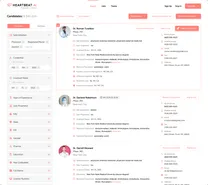
Heartbeat maintains contact records for women’s health nurse practitioners across the United States, searchable nationally or narrowed down to a specific state. Here’s what you can expect from the dataset:
- Regular verification: Records are checked on an ongoing basis rather than compiled once and left static.
- Frequent refresh cycles: New contacts and updated details are added as they become available.
- Full contact profiles: Name, workplace, phone number, email, and area of specialty for each practitioner.
- State-level filtering: Search by any state to find WHNPs practicing in that jurisdiction.
- Specialty tagging: Filter by the specific area of women’s health a practitioner focuses on.
Types of Data Included in the Women’s Health Nurse Practitioners Mailing List
- Women’s Health Nurse Practitioner Name
- Location
- Contact Numbers (Work, Cell, Mobile)
- Email Address
- Specialization
- Years of Experience
- Sole Proprietor Status
- Licensed States
- License Number
- Fax
- Address
 Accuracy & coverage of personal contact info were unrivaled by other platforms… this gives any healthcare recruiter a competitive advantage when engaging hard-to-reach healthcare providers.
Senior Growth Strategist





Benefits of Using a Valid Women’s Health Nurse Practitioners Email Database
A clean, verified list changes the math on outreach. Fewer bounced emails means more budget spent actually reaching people who can respond.
- Targeting accuracy: Messages land with practitioners who are relevant to your offer, not a generic nursing audience.
- Higher response rates: Deliverable addresses mean more opens and replies, which supports stronger relationship-building over time.
- Lower cost per contact: Money isn’t wasted sending to addresses that bounce or belong to people who’ve left the field.
- Personalization at scale: Full profile data (specialty, state, experience) lets you tailor messaging instead of sending one generic blast.
- Ongoing relevance: A list that’s refreshed regularly keeps pace with practitioners changing jobs or entering the field.
Who You’re Likely to See in a Women’s Health Nurse Practitioners Email List, by Category
Women’s health outreach isn’t one homogeneous group. Practitioners cluster into several sub-specialties worth knowing before you segment a campaign.
| Categories of WHNP |
| Certified Nurse Midwives |
| Women’s Health Nurse Practitioners |
| Family Planning Nurse Practitioners |
| Reproductive Health Specialists |
| Menopause Specialists |
| Adolescent Gynecology Specialists |
| Breast Health Nurses |
| Urogynecology Nurse Practitioners |
| Maternal-Fetal Medicine Specialists |
| Gynecological Oncology Nurses |
Available Women’s Health Nurse Practitioners Email Directory by State
Below is a state-by-state directory for teams that need to segment outreach geographically.
How the Data Is Compiled
Building a usable WHNP contact list involves more than scraping a directory once and calling it done. A defensible process looks like this:
- Multiple sourcing channels: Pulling from several data sources rather than one single feed reduces gaps and blind spots.
- Ongoing verification: Checking that email addresses still function and that practitioners are still active in women’s health, rather than relying on a one-time snapshot.
- Filterable fields: Letting users select the fields and segments they actually need instead of forcing a one-size list.
- Consent-based collection: Using contacts obtained with appropriate consent supports both deliverability and compliance.
- Deduplication and cleanup: Removing duplicate entries and correcting errors before the list reaches a customer.
Why Choose Heartbeat.ai’s Women’s Health Nurse Practitioners Mailing List?

Accuracy and Freshness
Records are checked regularly, with reported accuracy around 92% for personal emails and 84% for cell phone numbers, so outreach is less likely to hit dead addresses or disconnected numbers.
Ease of Use
The list is built to be searched and filtered quickly, without a steep learning curve, so campaigns can launch without a long setup process.
Depth of Detail
Profiles include names, workplaces, specialties, and contact details. The broader Heartbeat healthcare provider database covers more than 11 million U.S. healthcare professionals, including 9.3 million personal email addresses and 8.8 million direct cell phone numbers, with 5.8 million nurses represented in the database. A Chrome extension also pulls contact details from LinkedIn, Facebook groups, and other professional forums.
Compliance
Operating within applicable privacy and communication regulations matters in healthcare outreach specifically because these are licensed clinical professionals whose time and inboxes are already in high demand. Contacts obtained with proper consent reduce legal exposure and protect sender reputation.
Coverage
Coverage spans multiple women’s health specialties and every state, with the underlying database updated on an ongoing basis as new information becomes available.
What to Consider When Getting a Women’s Health Nurse Practitioners Email List

Data Source and Quality
Trace where the contacts come from. Data pulled from verified, consent-based sources is far more likely to reach a real inbox than a scraped or purchased-in-bulk list with no verification trail.
Consent and Compliance
Confirm the provider obtained contacts with appropriate consent. This is especially important in healthcare, where recipients are licensed professionals and unsolicited outreach can damage your sender reputation quickly.
Fit With Your Goals
A list should match your actual campaign objective. If you’re marketing a product tied to menopause care, a broad women’s health list without specialty filtering won’t perform as well as one segmented by that focus area.
Ongoing Maintenance
A list that’s accurate today can be stale in a year. Look for providers who refresh data on a recurring schedule rather than a static one-time export.
Cost Versus Return
Weigh the price of the list against what it’s likely to generate. A higher-quality, verified list often costs more upfront but produces better deliverability and response rates than a cheap, unverified alternative.
Who Uses a Women’s Health Nurse Practitioners Database?

Healthcare Providers and Hospitals
Hospitals and health systems use this data to identify WHNPs for referral networks, staffing needs, or invitations to clinical training and seminars.
Medical Equipment Companies
Device and supply manufacturers use the list to reach practitioners directly about products relevant to women’s health care.
Pharmaceutical Companies
Pharma teams use verified contacts to share information about treatments relevant to women’s health, keeping messaging factual and compliant with promotional guidelines.
Healthcare Recruiters
Recruiters use the database to source candidates for open WHNP roles and match opportunities to practitioners’ experience and location.
Research and Educational Institutions
Academic and research groups use the list to recruit participants for studies, surveys, and continuing education programs relevant to women’s health practice.
How to Use a Women’s Health Nurse Practitioners Email List Effectively

Keep Content Current and Relevant
Before sending, confirm the information is actually timely and tied to women’s health practice. Outdated or generic content gets ignored quickly by busy clinicians.
Build Relationships, Not Just Transactions
Invitations to webinars, conferences, or peer discussions build goodwill that a purely promotional email won’t.
Write With Professional Respect
These are licensed clinicians with limited time. Skip heavy sales language and unnecessary jargon; a direct, respectful tone performs better.
Track Performance and Adjust
Monitor open rates, click-throughs, and replies so you can refine subject lines, timing, and content over subsequent sends.
Lead With Useful Content
Research summaries, new tools, or patient-care insights tend to earn more attention than a straightforward pitch.
Conclusion
A women’s health nurse practitioner list is only as useful as the process behind it — sourcing, verification, consent, and ongoing maintenance all matter more than raw contact volume. Segmenting by specialty and state, respecting recipients’ time, and tracking what actually gets opened will do more for a campaign than any single data point.
If you’re looking for a women’s health nurse practitioners email database, Heartbeat AI offers a regularly updated option worth evaluating against your specific outreach goals.
FAQs
Can I find women’s health nurse practitioners email lists for free?
Free lists are hard to trust because they’re rarely updated or obtained with proper consent. Paid lists from a verified provider tend to hold up better on accuracy and compliance.
How accurate is a list of women’s health nurse practitioners with email addresses?
Accuracy depends heavily on the source and how often it’s refreshed. Providers that verify data on an ongoing basis will consistently outperform static, one-time exports.
How can a database of women’s health nurse practitioners benefit my marketing efforts?
Targeting the right specialty and state segment improves engagement compared to blasting a generic nursing list, since the message actually matches the recipient’s clinical focus.