What’s on this page:
Key takeaways
- A transplant surgeons email list may include contact details, specialty, location, experience, and licensing information; available fields vary by provider.
- Confirm the list’s geographic and sub-specialty coverage before purchasing, since the article notes that coverage may vary by state.
- Ask how the provider sources, verifies, and refreshes its records, and request details about its accuracy and replacement policies.
- Check which filters are available and whether they match the audience you need to reach.
- A contact list does not guarantee delivery, engagement, or campaign results; outreach must follow applicable email marketing rules.
Last updated: August 28, 2026
Transplant surgery is a small, highly specialized field, and the surgeons who practice it are not easy to find through generic physician directories. Between limited numbers, hospital affiliations that change, and contact information that goes stale quickly, outreach to this group tends to fail for practical reasons rather than lack of interest. A working, verified transplant surgeons email list solves a data problem, not a relationship problem — but it only helps if the underlying contact data holds up over time.
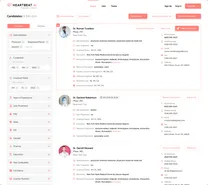
Heartbeat AI maintains a database built for this kind of targeted healthcare outreach, with profiles that can be filtered by specialty, location, and experience level. Below is what’s actually in the data, how it gets built, and what to check before you commit to any provider’s list.
About HeartBeat’s Email List of Transplant Surgeons: What You Will Get

Heartbeat is a healthcare contact database used for hiring, sales, and outreach, with provider records spanning multiple specialties. For transplant surgeons specifically, the list is built around a few practical benefits:
- Comprehensive contact information: email contacts for transplant surgeons across hospitals, transplant centers, and private practice settings.
- Segmentation for targeted campaigns: filter by location, sub-specialty, and years of experience instead of emailing a flat, undifferentiated list.
- Direct outreach: supports recruitment, product marketing, and professional communication without routing through office staff or general inboxes.
- Ongoing data maintenance: records are checked and refreshed on a schedule rather than compiled once and left static.
- Networking support: useful for building professional relationships across transplant programs and referral networks.
- Time savings: replaces manual list-building with a ready-made, filterable dataset.
Types of Data Included in Transplant Surgeons Email Lists
- Name
- Location
- Contact numbers (work, cell, mobile)
- Email address
- Specialization
- Years of experience
- Sole proprietor status
- Licensed states
- License number
- Fax
- Address
 Accuracy & coverage of personal contact info were unrivaled by other platforms… this gives any healthcare recruiter a competitive advantage when engaging hard-to-reach healthcare providers.
Senior Growth Strategist





Benefits of a Verified Transplant Surgeons Email List

Targeted marketing and communication
A verified list can help you focus outreach on transplant surgeons rather than sending messages to a broad physician audience. It may also reduce reliance on general office contact channels, but it does not guarantee that a message will reach a particular decision-maker.
Efficient networking
Pharmaceutical representatives, device makers, and healthcare organizations may use this kind of list to identify relevant professionals for outreach and networking.
Cost efficiency
A narrow, relevant list can help avoid spending on outreach to people outside the intended specialty, though results and costs depend on the campaign and the quality of the data.
Time savings
Building a transplant surgeon contact list manually — pulling names from hospital directories, conference rosters, and professional associations — takes real time. A maintained list removes that step.
Compliance considerations
Working from a list that respects applicable email marketing rules, including data protection standards, reduces legal exposure and keeps outreach credible.
Transplant Surgeon Categories in the List
The database groups surgeons by transplant sub-specialty. This can help distinguish audiences such as heart and kidney transplant surgeons, whose clinical focus and professional needs may differ.
| Transplant Surgeon Categories |
| Heart Transplant Surgeon |
| Liver Transplant Surgeon |
| Kidney Transplant Surgeon |
| Lung Transplant Surgeon |
Transplant Surgeons in the List by State
Transplant programs are based at hospitals and other specialized centers, and the number of relevant contacts may vary by state. The table below links to state-level listings.
How the Data Gets Compiled

Data collection
The described compilation process draws on sources such as hospital directories, professional listings, publications, and conference attendance records for details such as practice location and sub-specialty. Ask a provider which sources it uses and how it verifies the data.
Filtering and sorting
Records get organized around the details that matter for outreach: name, workplace, specialty, and contact information.
Verification and updating
Raw data should be checked before it is used. Outdated or incorrect entries can reduce the usefulness of a list, so ask what verification steps the provider performs.
Segmentation
Surgeons get grouped by location, experience, and area of expertise so you can filter down to the exact audience you need instead of working from one flat list.
List assembly
The final list is built around relevance — not a random export, but a set of contacts matched to a defined outreach purpose.
Ongoing refresh
Surgeons may change hospitals, join new programs, or shift focus areas. Ask how often the provider refreshes records and how it handles outdated contact information.
Why Consider Heartbeat.ai’s Transplant Surgeons Mailing List

Database size
Heartbeat’s database covers a broad range of U.S. healthcare providers, including transplant surgeons, physicians, nurses, and dentists, with direct cell phone and personal email data rather than general office lines.
Accuracy claims
Heartbeat states its personal email and cell phone data hit high accuracy rates; treat any specific percentage a vendor quotes as a claim to verify against your own campaign results, not a guarantee.
Precise targeting
The article describes search filters for specialty, sub-specialty, and procedure experience. Confirm which filters are available and how those categories are defined before purchasing.
Workflow tools
A Chrome Extension that integrates with LinkedIn and Facebook can speed up finding and connecting with individual transplant surgeons during prospecting.
Pricing flexibility
Heartbeat offers different pricing plans depending on whether you’re an individual recruiter, an agency, or a larger organization.
What to Check Before Buying a Transplant Surgeons Email List

List origin
Ask where the data comes from and whether the provider can explain its sourcing and verification methods. Clear, traceable methods make it easier to assess whether a list fits your needs.
Refresh rate
Stale contact information can lead to bounced emails and wasted sends. Ask how often records are checked and updated before committing to a plan.
Customization
Confirm you can filter by geography, specialty, and experience level. Without filtering, a large list is not necessarily a useful one.
Legal compliance
Check that the provider’s data practices align with applicable rules, including GDPR where relevant and the CAN-SPAM Act for U.S. email marketing.
Pricing versus quality
Compare cost with your budget and the provider’s verification, update, and replacement policies. A low price alone does not establish whether a list is current or useful.
Who Uses a Transplant Surgeons Email List

Pharmaceutical companies
Used to inform transplant surgeons about new drugs and gather clinical feedback on existing products.
Medical equipment manufacturers
Used to introduce and demonstrate new surgical equipment and collect input from practicing surgeons.
Healthcare recruiters
Used to source candidates for clinical, educational, or leadership roles at hospitals and transplant programs.
Continuing education providers
Used to promote courses, workshops, and seminars relevant to transplant surgery.
Research institutions
Used to recruit study participants or gather clinical insight for research initiatives.
Conference and event organizers
Used to promote relevant healthcare events and conferences to a specialized surgical audience.
How to Use a Transplant Surgeons Email List Effectively

- Set a clear goal. Know whether you’re sharing news, promoting a product, or inviting surgeons to an event before you write anything.
- Know your audience. Transplant surgeons respond better to concrete, clinically relevant content than to generic sales language.
- Keep it short. Lead with the point in the first two lines; assume the reader has limited time.
- Personalize where it matters. Reference their specific sub-specialty or institution rather than sending a template with a name swapped in.
- Offer something concrete. A useful resource, a relevant invitation, or specific information performs better than a vague pitch.
- Write a specific subject line. Vague subject lines get ignored; specific, relevant ones get opened.
Bottom Line
A transplant surgeons email list is only as useful as its upkeep. Its value depends on whether contact details are current, whether the list can be filtered to your audience, and what evidence the provider offers about accuracy. Heartbeat AI describes its approach as including verification and regular refresh cycles; ask the provider how those processes work and what recourse is available for inaccurate records before committing.
Frequently Asked Questions
Does a transplant surgeons email list focus on one specialty or a broader range?
It depends on the provider. Some lists are narrowly built around one transplant sub-specialty, while others span heart, liver, kidney, and lung transplant surgeons together. Match the list scope to what your campaign actually needs.
Can the list be used for direct marketing campaigns?
Yes — the list format supports direct marketing outreach to transplant surgeons, provided the campaign follows applicable email marketing regulations.
Is the list useful outside healthcare-specific industries?
It’s built primarily for healthcare-related use cases, but research organizations, educational institutions, and marketing agencies with healthcare clients can also make use of it.