What’s on this page:
Key takeaways
- A Texas dental assistants email list is most useful when its contacts match the campaign’s audience and purpose.
- Before buying a list, ask how the data was sourced, how often it is updated, and what restrictions apply to its use.
- Test a sample for relevance and accuracy, but do not treat it as a guarantee that the full list is reliable.
- Segment outreach thoughtfully and make the content relevant to dental assistants’ work.
- Remove or correct invalid addresses and review applicable email and data-protection requirements before sending.
Last updated: August 28, 2026
Texas employs somewhere in the range of 33,000 to 43,000 dental assistants, depending on which Bureau of Labor Statistics dataset you reference and when it was pulled. Reaching this workforce with any consistency requires more than a generic healthcare contact list — it requires a database built specifically around dental assistants, their credentials, and where they practice across the state.
This guide covers what a Texas dental assistants email list is useful for, how to evaluate providers, and how to run outreach that doesn’t land in a spam folder or waste a compliance officer’s afternoon.

Why a Targeted List Beats a Generic One
A list built around one professional group inside one state does a few specific things a broad healthcare contact database can’t.
Precision in Marketing Efforts
Messages tailored to dental assistants — such as continuing education, staffing, or supply information — can be more relevant than generic healthcare emails. Make sure the content clearly applies to the recipient’s work.
Higher Engagement and Conversion
Relevant content may encourage more opens and replies, but results depend on the audience, offer, and campaign. Avoid assuming that a targeted list alone will improve engagement.
Better Use of Marketing Budget
Narrow targeting can reduce irrelevant sends. Rather than emailing a broad medical list, define the audience and campaign purpose before sending.
Networking Beyond the Inbox
A well-built contact list also supports partnership building, referral outreach, and recruiting conversations that don’t fit neatly into a marketing campaign but still depend on having accurate contact details.
How to Find Verified Texas Dental Assistants Email Lists

Professional Associations
Groups such as the Texas Dental Assistants Association (TDAA) or the American Dental Assistants Association sometimes maintain member directories. Access usually requires membership or a fee, but the contacts tend to be reliable since members opt in.
State Licensing Records
The Texas State Board of Dental Examiners regulates dentistry in the state, but dental assistants should not be assumed to have a general state registration requirement. Requirements may apply to specific duties or credentials. Check current board rules and the permitted uses of any public records before building a marketing list.
Educational Institutions
Community colleges and vocational schools running dental assistant programs sometimes facilitate alumni or student outreach for professional development purposes — worth a direct inquiry if your goal is recruiting or continuing education promotion.
LinkedIn and Professional Networks
Filtered LinkedIn searches can surface Texas-based dental assistants one profile at a time. It’s slow, but it works for smaller, highly targeted outreach where volume isn’t the priority.
Purchasing From a Data Provider
If you buy a list, choose a provider that can explain how the data was sourced and verified. Request a sample and spot-check contacts before committing; a sample can reveal quality issues, though it cannot guarantee the accuracy of the full list.
3 Providers Worth Comparing
Here’s how three providers in this space differ, so you can match the right one to your budget and use case.
1. Heartbeat AI

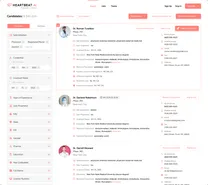
Heartbeat AI provides nationwide access to healthcare professional contacts, including dentists and dental assistants, sourced and cross-referenced across a wide range of public platforms. The platform reports self-measured accuracy rates for its cell phone and email data — figures worth verifying against your own sample before scaling a campaign.
About Heartbeat AI
- Founded: 2020
- Headquarter: Delaware
- Company Size: 11-50 Employees
Key Features
Email Verification
Ongoing verification aims to reduce bounce rates and keep delivery consistent.
Chrome Extension and Prospector Tool
The Swordfish AI Chrome Extension pulls contact details from sites like LinkedIn while browsing. The Prospector Tool lets you search healthcare providers by specialty and pull contact details directly.
File Upload
You can upload files of existing contacts for enrichment or cleanup rather than building lists from scratch.
CRM Sync and Bulk Operations
Syncing with your CRM keeps records consistent, and bulk processing tools cut down manual work when handling large contact volumes.
Pricing
Pricing is customized based on volume and use case; contact sales for a quote.
Pros
- Reliable, actively refreshed contact information
- Attention to privacy and data security standards
- List customization for targeted campaigns
Cons
- Pricing may be steep for very small operations
2. MedicoReach

MedicoReach focuses specifically on healthcare marketing lists, including dental assistant contacts, with an emphasis on regular database updates.
About MedicoReach
- Founded: 2014
- Headquarter: Leander, Texas
- Company Size: 11-50 Employees
Features
- Healthcare Specialty: Custom lists built specifically for dental outreach
- Data Verification: Processes aimed at reducing bounce rates
- CRM Integration: Works with common CRM and marketing automation tools
- Consultative Support: Strategic guidance included with list purchases
Pricing
Pricing isn’t published; contact MedicoReach directly for a quote.
Pros
- Healthcare-specific focus improves relevance
- CRM integration simplifies campaign setup
- Consultative support included
Cons
- Limited usefulness outside healthcare marketing
- Interface may take time to learn for new users
3. DoctorMailing

DoctorMailing offers a broader collection of medical professional email addresses, including dental staff, aimed at advertising and networking use cases across specialties.
About DoctorMailing
- Founded: 2020
- Headquarter: Claymont, Delaware
- Company Size: 2-10 Employees
Features
- Up-to-date Lists: Ongoing updates to maintain relevance
- Verified Emails: Verification process for authenticity
- Specialty-Based Selection: Filter by role or specialty
- Geographical Targeting: Location-based search
- Marketing Tool Integration: Works with common CRM systems
Pricing
Custom pricing based on client needs.
Pros
- Broad, verified contact database
- Regular updates
- Specialty and location filters for targeting
Cons
- Custom pricing may not suit smaller budgets
- Export options may be limited
How to Choose a Provider

A few checks before you commit to a provider:
Reputation
Look for reviews, testimonials, or known clients. A provider with no verifiable track record is a red flag regardless of how polished their sales page looks.
Data Sourcing
Ask directly where contacts come from and what permissions or restrictions apply to their use. Association directories, public records, and information gathered online can each have different access and marketing-use rules; do not assume a source is appropriate just because it is public.
Compliance
Confirm the provider’s practices align with applicable data protection rules, including HIPAA where patient data is involved and the GDPR if you have any European contacts in scope.
Update Frequency
Contact data can become outdated as people change jobs or contact details. Ask how often the provider refreshes its records and how it handles corrections and removal requests.
Customization
Segmentation by geography, experience, or specialty within healthcare communication campaigns makes targeting sharper and reduces wasted sends.
Pricing and Support
Compare pricing across providers, along with sourcing, sample quality, update frequency, and support. Responsive support can also matter when questions arise during a campaign.
Request a Sample
Request and test a sample before buying the full list. Check a range of records for relevance and accuracy, and ask how the provider’s sample compares with the complete list.
Why Consider Heartbeat AI

Data Access
Heartbeat AI provides contact data across a large pool of dentists and dental staff nationally, useful when your outreach isn’t limited to a single metro area.
Search Filters
Filtering by specialty, sub-specialty, or procedures performed helps recruiters and marketers narrow in on the right contacts rather than sorting through irrelevant records manually.
Bulk Operations
Bulk list creation and enrichment tools reduce the manual work involved in managing large contact volumes.
Chrome Extension
The extension pulls contact details from healthcare professional profiles while browsing sites like LinkedIn, useful for one-off outreach or recruiting conversations.
Verification
A file upload option lets you check existing lists against Heartbeat’s data to catch outdated or incorrect contacts before a campaign goes out.
Using the List Effectively

A good list only pays off if the outreach around it is thought through. A practical checklist:
- Set Clear Objectives: Know whether you’re promoting a product, filling a role, or building brand awareness before you write a single email.
- Segment the List: Break contacts down by city, experience level, or specialty interest (orthodontics, pediatric dentistry) rather than sending one message to everyone.
- Write for the Reader: Continuing education updates, career tips, and product news land better than generic sales copy.
- Personalize Where Possible: Using a recipient’s name and referencing relevant context improves open and response rates.
- Design for Mobile: Many recipients will read on a phone, so responsive design and fast load times matter.
- Test Timing: Early weekdays and mid-mornings tend to perform well, but this varies by audience — test rather than assume.
Limitations Worth Knowing
No purchased list is perfect. Dental assistants may change jobs or contact details, and records can become outdated. Expect some invalid addresses and establish a process to remove or correct them rather than assuming the list will remain accurate indefinitely.
Conclusion
A well-sourced Texas dental assistants email list can sharpen outreach that would otherwise get lost in broader healthcare marketing. The real work is in vetting the provider, segmenting the list sensibly, and writing content that’s actually relevant to the people receiving it.
If you’re evaluating providers, Heartbeat AI is one option worth comparing against MedicoReach and DoctorMailing based on your budget, volume needs, and how much support you expect during setup.
Frequently Asked Questions
Is it legal to use Texas dental assistants email lists for marketing?
Yes, provided the list was compiled through legitimate means and your marketing practices comply with applicable laws such as the CAN-SPAM Act, including honoring opt-outs and using accurate sender information.
Can I get a free dental assistants email list?
Some providers offer small samples for free, but comprehensive, regularly updated lists typically require payment. Free lists are worth testing but shouldn’t be your only data source for a serious campaign.
What should I do if I receive bounce-back emails from the list?
Remove or correct invalid addresses promptly, and look into why the bounces happened — it may point to an outdated list or content that’s triggering spam filters.