


Last updated: August 28, 2026
Telemedicine has grown into a permanent part of US healthcare delivery, and the practitioners running these programs are a distinct outreach target from traditional in-office clinicians. If you work in healthcare recruiting, medical device or software sales, or professional services, reaching this group directly matters more than reaching a generic physician list.
The catch is that contact data for telemedicine practitioners goes stale quickly. Providers move between platforms, change employers, and pick up new state licenses as telehealth coverage expands. Privacy rules also limit what’s publicly scrapeable, so building an accurate list in-house is slow and error-prone.
This guide covers what a telemedicine practitioner email list should include, how the data gets compiled, who typically uses it, and what to check before you buy one.
What’s on this page:
What a Telemedicine Practitioners Email List Should Include
A useful list goes beyond a name and an email address. Look for these fields at minimum:
- Practitioner name and specialization
- Location and licensed states
- Work, cell, and mobile phone numbers
- Personal and professional email addresses
- Years of experience
- License number and sole proprietor status
- Fax and mailing address
License and state-licensing detail matters more for telemedicine than for other specialties, since practitioners frequently hold licenses across multiple states through interstate compacts. If your outreach depends on state-specific rules or licensing status, confirm the data provider actually tracks that field rather than just physical address.
 Accuracy & coverage of personal contact info were unrivaled by other platforms… this gives any healthcare recruiter a competitive advantage when engaging hard-to-reach healthcare providers.
Senior Growth Strategist






Why a Verified List Matters More Than a Cheap One
A cheap, unverified list often costs more once you factor in bounced emails, wasted send reputation, and hours spent manually re-checking contacts. A verified list changes the math in a few concrete ways.
Precise Targeting
Verified contacts mean your messages reach practitioners who actually match your criteria, rather than a mix of active and defunct addresses.
Better Response Rates
Direct, correct contact info naturally produces more replies than blasting a generic or outdated list.
Lower Cost Per Contact
Fewer bounces and wasted sends mean your budget goes further, even if the per-record price of a verified list looks higher upfront.
Room for Personalization
Accurate specialty and location data lets you tailor messaging instead of sending one generic email to everyone.
Easier Expansion
Reliable contact data makes it simpler to test new geographic markets or niche telemedicine specialties without starting from scratch.
Telemedicine Practitioners by Category
Heartbeat’s directory organizes telemedicine practitioners by specialty, including the categories below.
Telemedicine Practitioners by State
Heartbeat’s database covers telemedicine practitioners across all 50 states.
How the Data Gets Compiled
Multiple Verified Sources
Heartbeat pulls its data from a wide network of data partners rather than a single feed, which reduces the odds that one bad or outdated source skews the whole database.
Automated Matching and Enrichment
Records get cross-checked against public professional profiles and licensing information to fill gaps and flag stale entries before they reach a client list.
Geographic and Licensing Detail
Location and licensed-state fields let you filter by where a practitioner actually practices, which matters given how many telemedicine providers hold multi-state licenses.
Custom Filtering for Client Needs
Lists can be filtered by specialty, state, experience level, and other criteria so the segment you buy actually matches your campaign, not a generic bulk export.
What Sets Heartbeat’s Telemedicine Data Apart
Broad Healthcare Coverage
Heartbeat’s database spans more than 11 million healthcare professionals across the US, giving telemedicine outreach the benefit of a much larger underlying data infrastructure rather than a niche, thinly-maintained list.
Segment-Level Targeting
Filtering by specialty and location means your outreach goes to practitioners actually relevant to your offer, which tends to produce better engagement than broad, unfiltered blasts.
Chrome Extension for Manual Lookups
Heartbeat’s Chrome extension lets you pull contact details for individual healthcare professionals directly from their social profiles, useful when you need to fill in a specific contact the bulk list missed.
Room for Message Customization
Accurate specialty and experience data gives you enough context to write emails that speak to what a telemedicine practitioner actually does, instead of a generic pitch.
What to Check Before You Buy a List
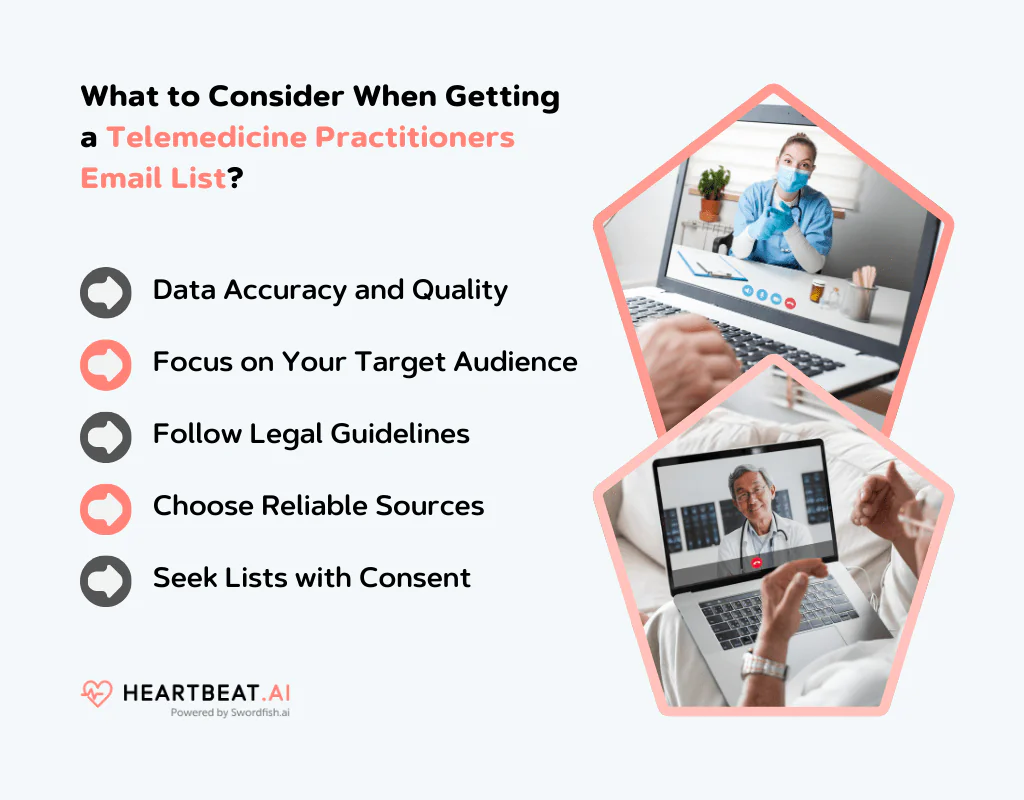
Data Accuracy and Refresh Cycle
Ask how often the vendor re-verifies contact records. A list that’s accurate today but never refreshed will decay within months.
Target Audience Fit
Define who you actually need to reach by specialty, state, or licensing status before you buy, rather than purchasing a broad list and filtering after the fact.
Legal Compliance
Email outreach in the US is governed by the CAN-SPAM Act, which sets requirements around sender identification, opt-out mechanisms, and honest subject lines. If you’re contacting practitioners outside the US, additional rules like GDPR may apply. Confirm your provider’s data collection practices align with these requirements before you launch a campaign.
Vendor Track Record
Work with a provider that can explain where its data comes from and how it’s verified, rather than one that treats sourcing as a black box.
Consent and Deliverability
Lists built from professional directories and licensing records generally perform better than scraped or purchased “cold” lists with no verification trail.
Who Actually Uses This Kind of List
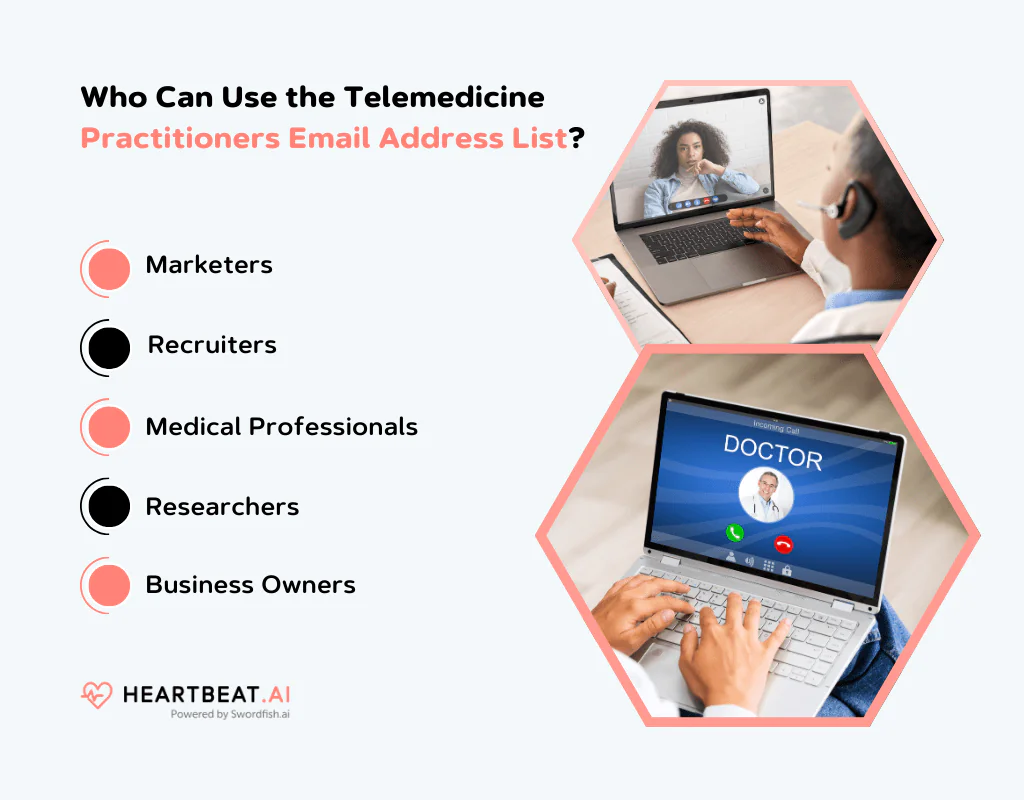
Marketers
Teams selling products or services to telemedicine practices use targeted contact data to reach decision-makers directly instead of relying on generic outbound lists.
Recruiters
Healthcare staffing and recruiting teams use practitioner contact data to source candidates for telemedicine roles, particularly as demand for remote clinical coverage grows.
Medical Professionals and Partners
Clinicians and health systems sometimes reach out to telemedicine practitioners for collaboration, referral networks, or knowledge-sharing purposes.
Researchers
Academic and industry researchers studying telehealth adoption or outcomes may use verified contact lists to recruit participants for surveys or studies.
Healthcare Business Owners
Companies building partnerships in the telehealth space use this kind of data to identify and reach potential collaborators.
Getting Better Results From Outreach
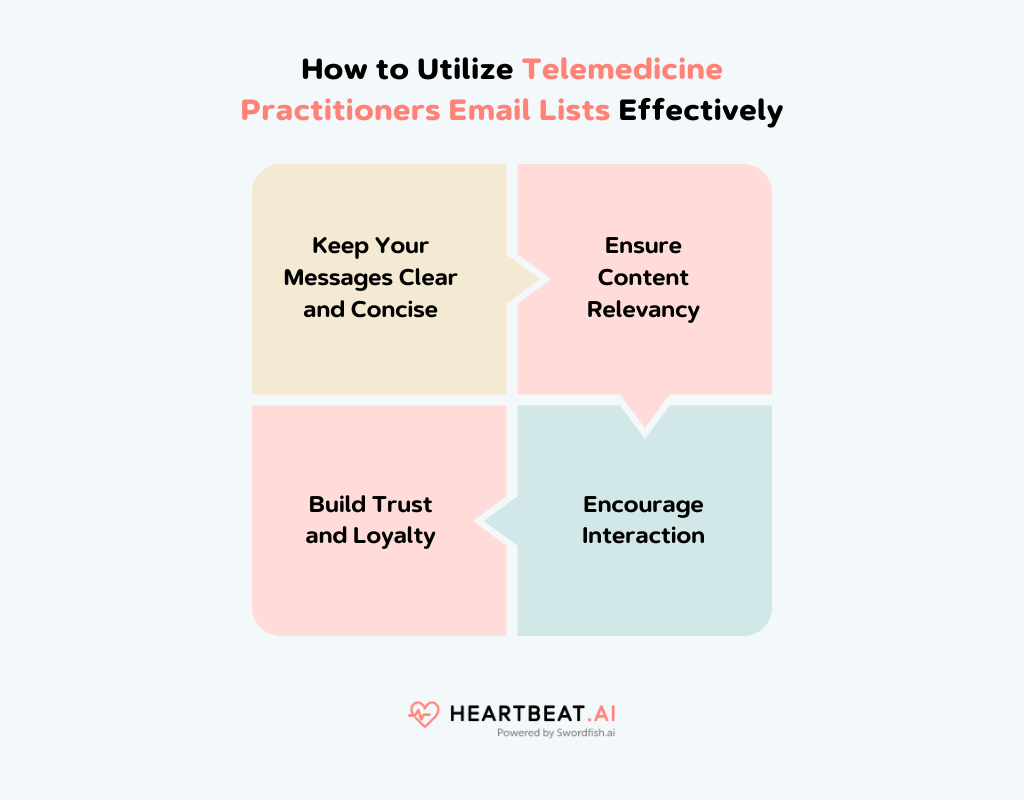
A good list only gets you halfway. How you use it determines whether it turns into replies and meetings.
- Keep messages short. Telemedicine practitioners run tight schedules between patient visits; emails that take 10 seconds to scan get read.
- Make the content relevant. Reference their specialty or licensing footprint instead of sending the same pitch to every specialty.
- Invite a response. A direct question increases the odds of a reply compared to a one-way pitch.
- Play the long game. Consistent, useful contact builds trust over time; one-off blasts rarely convert on the first send.
Bottom Line
A telemedicine practitioner list is only as useful as its accuracy and its fit to your specific outreach goal. Before buying, define your target segment, check how the vendor sources and refreshes data, and confirm your outreach plan complies with CAN-SPAM and any other applicable rules.
Heartbeat.ai builds its telemedicine practitioner data from a large healthcare provider database with contact detail across phone, email, and location fields, and supports filtering by specialty and state for more targeted campaigns.
FAQs
How accurate is the information in a telemedicine practitioners email list?
Accuracy varies by vendor and depends heavily on how often the data is refreshed. Ask any provider for their verification methodology and update cadence before relying on a list for a large campaign.
Can the list be customized to specific criteria?
Yes. Heartbeat allows filtering by geographic location, specialty, and other criteria so the list matches a specific outreach or marketing goal rather than being a generic bulk export.
Can this data be used for multi-channel outreach?
Yes, contact records that include phone, email, and mailing address can support email, direct mail, and phone-based outreach strategies, provided each channel follows its own applicable compliance rules.

