Last updated: August 28, 2026

Tele-oncology has moved from a pandemic stopgap to a regular part of cancer care, though adoption varies widely by institution and specialty. One academic medical center director estimated that roughly 12% of outpatient oncology visits at his center are now conducted by telehealth, a figure that illustrates the trend but shouldn’t be read as a national average since utilization differs significantly across health systems.
For anyone trying to reach these specialists — recruiters, telemedicine vendors, pharmaceutical field teams, or research coordinators — finding current, working contact details is harder than it sounds. Directories go stale fast. Oncologists change practices, licenses lapse or get added in new states, and generic physician databases rarely flag who actually practices telemedicine.
This is where a purpose-built tele-oncologist contact list earns its keep. Below is what to expect from Heartbeat’s list, how the data gets compiled, and how to use it without wasting outreach budget.
What’s on this page:
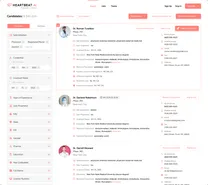
What’s Included in Heartbeat’s Tele-Oncologist Email List

Heartbeat’s tele-oncologist database is built for healthcare professionals, marketers, and businesses trying to connect with oncology specialists working in telemedicine. Here’s what’s included:
- Broad coverage: Contact records for licensed tele-oncologists across the specialty, rather than a narrow subset of one practice type.
- Segmentation: Filter by geography, sub-specialty, or years of experience so outreach doesn’t get sent blind to an entire specialty.
- Regular updates: Contact records are refreshed on an ongoing basis rather than compiled once and left static.
- Direct contact routes: Email addresses paired with other identifying details, so you’re not stuck guessing at a generic office line.
Data Fields Typically Included
- Name of the tele-oncologist
- Location
- Contact numbers (work, cell, mobile)
- Email address
- Specialization
- Years of experience
- Sole proprietor status
- Licensed states
- License number
- Fax
- Address
 Accuracy & coverage of personal contact info were unrivaled by other platforms… this gives any healthcare recruiter a competitive advantage when engaging hard-to-reach healthcare providers.
Senior Growth Strategist






Why a Targeted List Beats a Generic Physician Database

Targeted communication
A list built around tele-oncology means your message reaches people actually working in remote cancer care, not a broad sweep of unrelated specialists.
Better response rates
Relevance drives opens and replies. A tightly scoped list will generally outperform a mass mailing sent to a general oncology or physician database.
Time and cost efficiency
Every email sent to an uninterested recipient is a sunk cost. Narrowing the list upfront saves both budget and follow-up effort.
Networking and collaboration
Direct access to tele-oncology practitioners opens doors for research partnerships, referral relationships, and knowledge-sharing that a cold LinkedIn search rarely produces.
Market insight
Ongoing contact with this specialist group can surface real signals about what tele-oncology practices actually need, rather than assumptions.
Brand visibility
Consistent, relevant outreach builds familiarity within a fairly small professional community over time.
Tele-Oncologist Categories in the List
The directory spans the sub-specialties that make up oncology, including:
| Tele-Oncologist Category |
| Medical Oncologists |
| Radiation Oncologists |
| Surgical Oncologists |
| Pediatric Oncologists |
| Hematologist-Oncologists |
| Gynecologic Oncologists |
| Thoracic Oncologists |
| Head and Neck Oncologists |
| Neuro-oncologists |
| Bone and Soft Tissue Oncologists |
| Palliative Care Oncologists |
Tele-Oncologists Available by State
State-level access matters because telemedicine practice generally requires the provider to hold a license in the patient’s state. The table below covers each U.S. state.
| Tele-Oncologist By States |
| Tele-Oncologist in Alabama |
| Tele-Oncologist in Alaska |
| Tele-Oncologist in Arizona |
| Tele-Oncologist in Arkansas |
| Tele-Oncologist in California |
| Tele-Oncologist in Colorado |
| Tele-Oncologist in Connecticut |
| Tele-Oncologist in Delaware |
| Tele-Oncologist in Florida |
| Tele-Oncologist in Georgia |
| Tele-Oncologist in Hawaii |
| Tele-Oncologist in Idaho |
| Tele-Oncologist in Illinois |
| Tele-Oncologist in Indiana |
| Tele-Oncologist in Iowa |
| Tele-Oncologist in Kansas |
| Tele-Oncologist in Kentucky |
| Tele-Oncologist in Louisiana |
| Tele-Oncologist in Maine |
| Tele-Oncologist in Maryland |
| Tele-Oncologist in Massachusetts |
| Tele-Oncologist in Michigan |
| Tele-Oncologist in Minnesota |
| Tele-Oncologist in Mississippi |
| Tele-Oncologist in Missouri |
| Tele-Oncologist in Montana |
| Tele-Oncologist in Nebraska |
| Tele-Oncologist in Nevada |
| Tele-Oncologist in New Hampshire |
| Tele-Oncologist in New Jersey |
| Tele-Oncologist in New Mexico |
| Tele-Oncologist in New York |
| Tele-Oncologist in North Carolina |
| Tele-Oncologist in North Dakota |
| Tele-Oncologist in Ohio |
| Tele-Oncologist in Oklahoma |
| Tele-Oncologist in Oregon |
| Tele-Oncologist in Pennsylvania |
| Tele-Oncologist in Rhode Island |
| Tele-Oncologist in South Carolina |
| Tele-Oncologist in South Dakota |
| Tele-Oncologist in Tennessee |
| Tele-Oncologist in Texas |
| Tele-Oncologist in Utah |
| Tele-Oncologist in Vermont |
| Tele-Oncologist in Virginia |
| Tele-Oncologist in Washington |
| Tele-Oncologist in West Virginia |
| Tele-Oncologist in Wisconsin |
| Tele-Oncologist in Wyoming |
How the Data Gets Compiled

Gathering data
Records are collected from a range of official sources — medical directories, professional publications, and public databases that list oncology professionals — with a focus on those offering telemedicine services.
Analyzing and refining
Raw records are filtered down to isolate oncologists who actually provide remote consultation or treatment, rather than every physician tagged with an oncology-adjacent keyword.
Validating
Roles, specialties, and contact details are checked for accuracy. Stale data is one of the biggest reasons targeted outreach underperforms, so this step matters more than it sounds.
Segmenting
Verified records are categorized by location, sub-specialty, and telemedicine service type, which is what makes filtered searches possible later.
Compliance checks
Lists go through compliance checks tied to privacy and data protection standards before being finalized.
List creation
The final step compiles verified, segmented records into a usable list, ready for outreach, research, or recruitment purposes.
Why Use Heartbeat.ai for This List

Database size
Heartbeat maintains an extensive database covering over 11 million healthcare providers in the United States, spanning physicians, nurses, dentists, and specialists such as tele-oncologists.
Direct contact details
Records include verified cell phone numbers and personal email addresses rather than just a general office line, which matters when a practice’s front desk is the usual gatekeeper.
Time-saving tools
Bulk list creation and specialty-based search (built from medical license data) speed up the process of finding the right contacts instead of manually cross-referencing directories.
Chrome extension
The Chrome Extension extends contact lookups to platforms like LinkedIn and Facebook, useful when you’ve found a name but need a working email or number.
Flexible pricing
Several pricing plans are available, scaled for headhunters, agencies, and larger enterprise teams with different budget requirements.
What to Check Before Buying Any Tele-Oncologist Email List

Accuracy
Outdated or mistyped contact information wastes budget before a campaign even starts. Ask how often the provider refreshes records.
Relevance to your goals
A list that isn’t scoped to your actual target — say, pediatric tele-oncology versus general medical oncology — won’t perform no matter how clean the data is.
Permission-based sourcing
Lists built from legitimately sourced professional contact data carry less risk of spam complaints than scraped or unverified sources.
Segmentation options
Look for filtering by location, specialization, or experience level so you’re not sending one message to an entire specialty.
Regulatory compliance
Providers should operate with data protection and email marketing regulations in mind, including relevant privacy and anti-spam requirements. Confirm this before signing a contract.
Pricing versus ROI
Compare providers on value, not just sticker price. A cheaper list with poor accuracy usually costs more in wasted outreach time.
Who Actually Uses This Kind of List

Oncologists
Used to connect with peers, share research, and stay current on telemedicine developments in cancer care.
Telemedicine providers
Hospitals, clinics, and telehealth companies use these lists to identify potential partners as they expand tele-oncology service lines.
Pharmaceutical companies
Used to reach oncologists and telemedicine providers for research collaboration or product-related outreach.
Research institutions
Academic and research groups use the list to find collaborators for studies or clinical trials involving tele-oncology.
Healthcare administrators
Hospital decision-makers use the data to evaluate potential tele-oncology partners and track trends in cancer care delivery.
Indirect beneficiaries: patients and caregivers
Patients don’t access this list directly, but they benefit when their providers use it to build out tele-oncology referral networks and access to specialists.
Getting More Out of a Tele-Oncologist List

- Define the audience narrowly. “Tele-oncologists” isn’t one audience — pediatric, surgical, and palliative-care specialists have different priorities.
- Personalize past the first line. Reference the recipient’s actual sub-specialty or state licensure rather than a generic greeting.
- Keep content specific. Explain concretely how your product or service applies to their practice, not general industry talk.
- Space out cadence. Regular contact beats either a single blast or constant inbox pressure.
- Track what happens after send. Opens, clicks, and replies tell you whether the segment or message needs adjusting.
- Respect opt-outs immediately. This protects deliverability and keeps the list usable long-term.
- Make the next step obvious. One clear call to action — book a call, view a demo, reply with interest — outperforms vague requests.
The Bottom Line
Finding accurate contact information for tele-oncologists is harder than for general practice physicians simply because the field is smaller and licensing spans multiple states. A list built specifically for this specialty, refreshed regularly and segmented by sub-specialty and geography, saves the back-and-forth of chasing down bounced emails and disconnected numbers.
Heartbeat AI compiles this kind of list from verified sources and updates it on an ongoing basis, which is worth checking against whatever directory or CRM export you’re currently working from.
Frequently Asked Questions
Is the information on a tele-oncologist email list kept up to date?
Contact details change often as providers move practices or add state licenses. Reputable providers refresh records regularly rather than compiling once and leaving them static.
What information is typically included?
Most lists include the oncologist’s name, email address, phone number, specialty, licensed states, and sometimes practice location or license number.
Can the list be customized to specific criteria?
Yes. Most providers, including Heartbeat, allow filtering by location, sub-specialty, and years of experience so outreach can be scoped to a defined segment rather than the entire field.