Last updated: August 31, 2026
Sleep medicine specialists in Pennsylvania cover a wide range of disorders, from obstructive sleep apnea to insomnia, narcolepsy, and restless leg syndrome. For recruiters, marketers, and healthcare organizations trying to reach these providers, the practical bottleneck usually isn’t finding the specialty exists — it’s finding accurate, current contact details for the individual physicians, technologists, and psychologists who work in it.
This page walks through what the sleep medicine landscape in Pennsylvania looks like, why contact accuracy matters for recruitment and outreach, and how Heartbeat’s contact database can help you connect with these professionals faster.
What’s on this page:
Get a Sleep Medicine Specialist Email List for Pennsylvania from Heartbeat
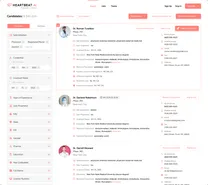
Heartbeat.ai’s database covers licensed healthcare professionals across the United States, including sleep medicine specialists in Pennsylvania. You can filter by specialty, location, and other criteria to build a targeted list instead of manually searching hospital directories one at a time.
Our list groups several roles under the sleep medicine umbrella: sleep physicians, sleep technologists, sleep psychologists, pediatric sleep specialists, and behavioral sleep medicine specialists, among others. Each role tends to focus on a different piece of the diagnostic and treatment picture — a sleep physician might order and interpret a sleep study, while a behavioral sleep medicine specialist works on cognitive behavioral approaches to insomnia. Knowing which role you actually need before you start outreach saves time.
If you’re building a recruitment pipeline, a marketing campaign, or a research outreach list, browsing the Heartbeat platform lets you narrow down to the right professional type and reach out directly, without going through generic hospital switchboards.
Sleep Medicine in Pennsylvania: A Quick Overview
Pennsylvania has several academic centers with dedicated sleep medicine programs. The Penn Sleep Centers, part of the University of Pennsylvania Health System, describe themselves as a multidisciplinary specialty that is comprised of clinicians, educators, researchers, faculty, and support staff spanning multiple Penn Medicine locations, with new and follow-up office visits, telemedicine visits, attended lab sleep testing, home sleep apnea testing support, the Penn CPAP Program and CPAP Clinic among their services.
In central Pennsylvania, Penn State Health’s Sleep Research and Treatment Center at Milton S. Hershey Medical Center positions itself as the only integrated sleep center in central Pennsylvania with expertise available from various departments including Pulmonary, Psychiatry, Pediatrics, Adolescent Medicine and Behavioral Sleep Medicine, and the center treats everything from insomnia and sleep apnea to narcolepsy and restless leg syndrome. The Hershey campus itself is a large teaching hospital affiliated with Penn State College of Medicine.
Beyond these two systems, sleep specialists also practice at community hospitals, independent sleep labs, and pulmonology or psychiatry practices across the state, so the specialty is broader than just a handful of flagship centers.
Why Accurate Contact Information Matters
Accurate contact data affects three distinct use cases:
- Recruitment: Staffing teams and recruiting agencies rely on correct phone numbers and emails to schedule interviews, verify credentials, and move candidates through a hiring process without delays caused by bounced emails or disconnected lines.
- Networking and referrals: Physicians and allied professionals connect with peers to discuss cases, referral patterns, or research collaboration. Outdated contact records break that chain.
- Marketing and business development: Vendors selling equipment, services, or continuing education to sleep medicine practices need to reach the right decision-makers directly rather than generic front-desk lines.
In each case, stale or incorrect data doesn’t just waste time — it can cause you to miss a hiring window or a sales cycle entirely.
Why Finding Sleep Medicine Specialists in Pennsylvania Can Be Difficult
A few practical obstacles come up repeatedly:
- Geographic spread: Pennsylvania has large rural stretches where sleep specialists are sparse, concentrated instead around Philadelphia, Pittsburgh, and the Hershey/Harrisburg corridor.
- Niche specialty, smaller pool: Sleep medicine is a subspecialty, so the total number of practicing specialists is smaller than in primary care or more common specialties, making cold outreach lists harder to build from scratch.
- Insurance and network fragmentation: Confirming which specialists accept a given plan usually requires checking multiple sources, since this information isn’t always centralized.
- Outdated directories: Hospital and insurer directories are often months or years behind actual staffing changes.
Digital contact databases, online scheduling, and telemedicine have each chipped away at these barriers — telemedicine in particular helps patients in rural counties consult with specialists without a long drive. But for B2B outreach purposes, the core problem of finding verified, current contact details for individual providers still requires a purpose-built data source rather than general search.
What You Get in Heartbeat’s Sleep Medicine Specialist Contact Lists
Heartbeat’s contact records for sleep medicine specialists can be filtered by state or pulled nationwide, and typically include the provider’s name, location, contact details, and specialization area — whether that’s sleep apnea, insomnia, sleep-related seizure activity, or another focus. Fields usually included are:
- Sleep medicine specialist name
- Location
- Contact numbers (work, cell, mobile)
- Email address
- Specialization
- Years of experience
- Sole proprietor status
- Licensed states
- License number
- Fax
- Address
 Accuracy & coverage of personal contact info were unrivaled by other platforms… this gives any healthcare recruiter a competitive advantage when engaging hard-to-reach healthcare providers.
Senior Growth Strategist






Sleep Medicine Specialists by State
Heartbeat maintains sleep medicine specialist contact lists across all 50 states, so you can expand a search regionally or nationally as your needs change.
| Sleep medicine specialists by states |
|---|
| Sleep medicine specialists in Alabama |
| Sleep medicine specialists in Alaska |
| Sleep medicine specialists in Arizona |
| Sleep medicine specialists in Arkansas |
| Sleep medicine specialists in California |
| Sleep medicine specialists in Colorado |
| Sleep medicine specialists in Connecticut |
| Sleep medicine specialists in Delaware |
| Sleep medicine specialists in Florida |
| Sleep medicine specialists in Georgia |
| Sleep medicine specialists in Hawaii |
| Sleep medicine specialists in Idaho |
| Sleep medicine specialists in Illinois |
| Sleep medicine specialists in Indiana |
| Sleep medicine specialists in Iowa |
| Sleep medicine specialists in Kansas |
| Sleep medicine specialists in Kentucky |
| Sleep medicine specialists in Louisiana |
| Sleep medicine specialists in Maine |
| Sleep medicine specialists in Maryland |
| Sleep medicine specialists in Massachusetts |
| Sleep medicine specialists in Michigan |
| Sleep medicine specialists in Minnesota |
| Sleep medicine specialists in Mississippi |
| Sleep medicine specialists in Missouri |
| Sleep medicine specialists in Montana |
| Sleep medicine specialists in Nebraska |
| Sleep medicine specialists in Nevada |
| Sleep medicine specialists in New hampshire |
| Sleep medicine specialists in New jersey |
| Sleep medicine specialists in New mexico |
| Sleep medicine specialists in New york |
| Sleep medicine specialists in North carolina |
| Sleep medicine specialists in North dakota |
| Sleep medicine specialists in Ohio |
| Sleep medicine specialists in Oklahoma |
| Sleep medicine specialists in Oregon |
| Sleep medicine specialists in Pennsylvania |
| Sleep medicine specialists in Rhode island |
| Sleep medicine specialists in South carolina |
| Sleep medicine specialists in South dakota |
| Sleep medicine specialists in Tennessee |
| Sleep medicine specialists in Texas |
| Sleep medicine specialists in Utah |
| Sleep medicine specialists in Vermont |
| Sleep medicine specialists in Virginia |
| Sleep medicine specialists in Washington |
| Sleep medicine specialists in West virginia |
| Sleep medicine specialists in Wisconsin |
| Sleep medicine specialists in Wyoming |
How Heartbeat Compiles This Data
Heartbeat.ai aggregates data from over 200 official, private, and public sources, then applies predictive modeling to fill gaps and improve match accuracy. The database includes direct cell phone numbers, personal email addresses, and direct dial numbers for U.S. healthcare providers, covering roughly 11 million professionals nationwide with around 8.8 million cell phone numbers, 9.3 million personal emails, and 6 million direct dials on file. Heartbeat cites an accuracy rate of up to 84% for cell phone numbers and 92% for personal emails on initial results — figures worth spot-checking against your own outreach data over time, since accuracy on any large contact database can vary by specialty and region.
Who Uses a Sleep Medicine Specialist Email List?
Typical users include:
- Healthcare recruiters and staffing agencies filling open sleep medicine positions
- Marketing teams promoting equipment, software, or services to sleep medicine practices
- Business development reps at medical device or diagnostics companies
- Independent consultants building referral networks within sleep medicine
Using the List Effectively: A Few Practical Guidelines
- Segment before you send. A sleep physician and a sleep technologist have different priorities — tailor your message to the role, not just the specialty label.
- Lead with something specific. Generic pitches get ignored faster in a niche field where recipients already get plenty of vendor outreach.
- Respect time and inbox limits. Keep messages short, and make it easy to say no or unsubscribe.
- Verify before high-stakes outreach. For recruitment offers or contract discussions, confirm license status and current employer directly rather than relying solely on database records.
- Track response rates by list segment. This tells you which specialty subgroup or region converts best, so future campaigns can be targeted more precisely.
Conclusion
Finding sleep medicine specialists in Pennsylvania isn’t hard because the specialists don’t exist — academic centers like Penn Medicine and Penn State Health run established sleep programs. It’s hard because verified, current contact information for individual providers is scattered across directories that go stale quickly. A maintained contact database narrows that gap for recruitment, marketing, and networking purposes, though any list should still be paired with basic verification before high-stakes outreach.
Frequently Asked Questions
What is a sleep medicine specialist?
A sleep medicine specialist is a healthcare professional trained to diagnose and treat sleep disorders such as sleep apnea, insomnia, and narcolepsy.
How can I find a sleep medicine specialist in Pennsylvania?
Options include checking academic health system directories such as Penn Medicine or Penn State Health, asking a primary care physician for a referral, or contacting a local sleep clinic directly.
What conditions do sleep medicine specialists treat?
Common conditions include sleep apnea, insomnia, narcolepsy, restless leg syndrome, and other sleep-related breathing or movement disorders.