Last updated: August 28, 2026
About 7,500 physicians in the United States hold board certification in sleep medicine, according to the American Academy of Sleep Medicine. That’s a small, specialized pool compared to primary care or general internal medicine, which makes accurate contact data more important than volume when you’re building outreach lists for this specialty.
If you’re marketing sleep therapy devices, recruiting for a sleep center, or researching practice patterns, a verified sleep medicine specialist contact list saves time you’d otherwise spend cross-referencing directories, hospital staff pages, and state license boards one by one.
What’s on this page:
What’s Included in a Sleep Medicine Specialist Contact List

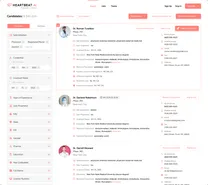
Heartbeat.ai’s database covers healthcare providers broadly, with sleep medicine specialists represented alongside related fields such as pulmonology, neurology, and otolaryngology. A usable record set typically includes:
- Name and practice location
- Work, cell, and mobile phone numbers
- Personal and professional email addresses
- Specialization and years of experience
- Sole proprietor status
- Licensed states and license number
- Fax and mailing address
Database scale: Our database contains more than 11 million healthcare provider records, which gives you a broad pool to filter down to sleep medicine and adjacent specialties.
Update cadence: Provider contact data decays quickly — physicians change practices, phone carriers, and email domains more often than most outreach teams expect. Lists should be refreshed on a regular schedule rather than treated as a one-time purchase.
 Accuracy & coverage of personal contact info were unrivaled by other platforms… this gives any healthcare recruiter a competitive advantage when engaging hard-to-reach healthcare providers.
Senior Growth Strategist






Why a Targeted List Beats Generic Prospecting
- Direct outreach: Skip gatekeepers and general practice inboxes by reaching specialists directly at verified phone numbers and emails.
- Lower cost per contact: Compared to conference sponsorships or print advertising, a verified list is a cheaper way to reach a narrow, high-value specialty.
- Better segmentation: Sleep medicine overlaps with pulmonology, neurology, psychiatry, ENT, dentistry, and pediatrics — filtering by sub-focus keeps your message relevant instead of generic.
- Credibility with clinicians: Physicians are quick to disregard poorly targeted or outdated outreach. A current, accurate list reduces bounce and complaint rates that damage sender reputation.
Sleep Medicine Specialist Categories
Sleep medicine draws from multiple base specialties. A well-built list should let you filter by these categories rather than treating “sleep medicine” as one undifferentiated group.
Sleep Medicine Specialists by State
Coverage varies by state, largely following population density and the number of accredited sleep centers in the region. Use the table below to jump to a specific state.
How the Data Is Compiled
Building a usable specialist list isn’t a single scrape — it’s an ongoing process of sourcing, verifying, and pruning.
Sourcing
Records are pulled from a wide range of public and licensed data sources, including licensing boards and provider directories, then cross-checked against multiple inputs before being added to the database.
Refresh cycles
Provider mobility means data goes stale. Regular refresh cycles catch practice changes, retirements, and new licensure so contacts stay usable rather than accumulating bounces.
Compliance
Sensitive contact data requires careful handling. Any provider database you use for outreach should be built and maintained with privacy and consent regulations in mind — this matters more in healthcare than in most other B2B verticals given how HIPAA and state privacy laws intersect with provider communications.
Segmentation
Filtering by location, sub-specialty, and experience level lets you build narrower, more relevant campaigns instead of blasting one generic message to an entire specialty.
Choosing a Provider: What Actually Matters

Not all specialist lists are built the same way. Before buying, check for the following:
- Verification method: Ask how contact details are validated, not just how they were sourced.
- Privacy compliance: Confirm the provider’s process aligns with relevant privacy frameworks for collecting and handling contact data.
- Segmentation options: Can you filter by sub-specialty, state, or experience level, or is it one flat list?
- Maintenance cadence: Ask how often records are refreshed and how bounced or invalid contacts are handled.
Who Actually Uses This Kind of List

Marketers
Device makers, CPAP suppliers, and continuing education providers use targeted lists to reach specialists directly instead of relying on broad healthcare advertising.
Recruiters
Given the small national pool of board-certified sleep physicians, direct outreach to passive candidates is often more productive than posting job listings and waiting.
Medical professionals
Physicians and allied staff sometimes use directories to find peers for referrals, case consultation, or collaborative research.
Researchers
Survey-based research on practice patterns or treatment adoption depends on being able to reach a representative sample of practicing specialists.
Getting Better Response Rates

- Keep it short. Sleep specialists, like most clinicians, read email in short windows between patients. Get to the point in the first two sentences.
- Make relevance obvious. State plainly why the message matters to their specific practice or patient population.
- Invite a response. A direct question tends to outperform a generic call-to-action button.
- Play the long game. One email rarely converts. Consistent, useful contact over time builds the kind of trust that eventually turns into a reply.
Limitations Worth Knowing
No provider database is perfect. Contact information changes when physicians relocate, retire, or switch employers, and even well-maintained lists will have some percentage of outdated entries. Treat any purchased list as a starting point that still needs monitoring for bounces and opt-outs, and always follow CAN-SPAM, TCPA, and applicable state privacy rules when contacting healthcare providers.
Bottom Line
A sleep medicine specialist contact list is most useful when it’s filtered by sub-specialty and state, refreshed regularly, and used with realistic expectations about accuracy. Given the small national physician pool, precision matters more than raw volume in this specialty.
FAQs
What information does a sleep medicine specialist list typically include?
Name, location, phone numbers (work, cell, mobile), email addresses, sub-specialty focus, years of experience, licensed states, license number, fax, and mailing address.
How often should this kind of list be updated?
Provider contact details change often enough that lists should be refreshed on a regular schedule rather than used indefinitely without checks. Ask any provider about their update cadence before relying on the data for a large campaign.
Can researchers use a specialist list for survey work?
Yes, provided the outreach complies with applicable consent and privacy rules. A representative contact list helps researchers reach practicing specialists efficiently for survey-based studies.