Last updated: August 28, 2026
Reaching registered dietitians by email or phone takes more than a generic contact list. The U.S. Bureau of Labor Statistics estimated roughly 73,860 dietitians and nutritionists employed nationally as of May 2023, and the workforce continues to grow as clinical nutrition, sports nutrition, and corporate wellness programs expand. That growth is good news for recruiters and marketers, but it also means outdated lists go stale fast.
Finding accurate, current contact details for this group is genuinely difficult. Many practitioners work across multiple settings, change employers, or maintain private practices with limited public contact information. Heartbeat AI compiles and maintains a searchable database of registered dietitians across the U.S. so healthcare organizations, recruiters, and wellness brands can build outreach lists without manually verifying every contact.
What’s on this page:
What’s Included in Heartbeat’s Registered Dietitian Data
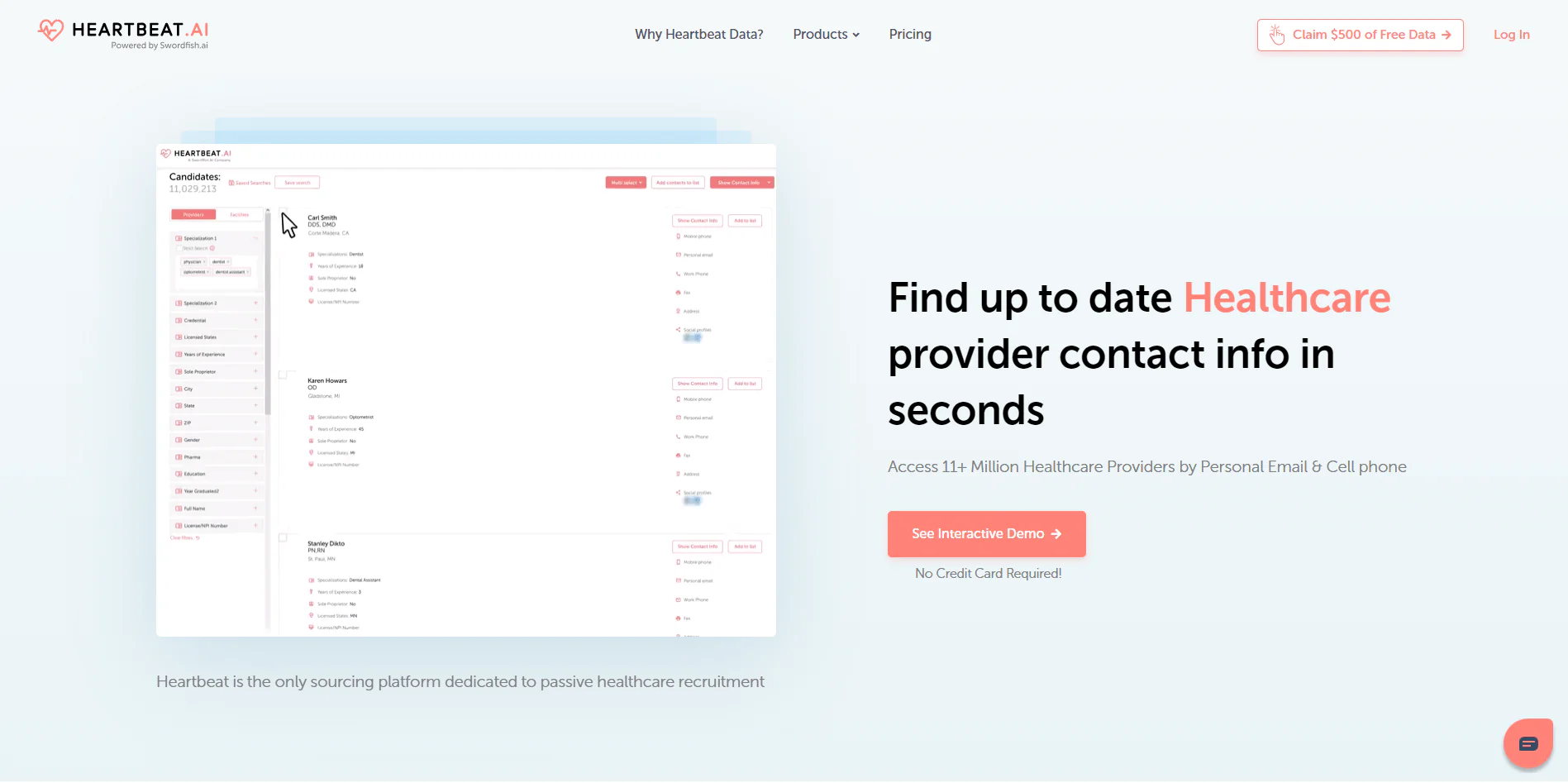
The database is built for targeted outreach within healthcare marketing and recruiting, giving you access to licensed registered dietitians across the country.
- Comprehensive contact data: names, locations, phone numbers, and email addresses for each listed professional.
- Custom list building: filter by specialization, location, or other criteria instead of buying one static file.
- Regular data refreshes: contact records are updated on an ongoing basis to reduce bounce rates and outdated entries.
- Nationwide coverage: records span all 50 states, covering a wide range of dietetics specialties.
Data Fields Typically Included
- Name
- Location information
- Contact numbers (work, cell, mobile)
- Email address
- Specialization details
- Years of professional experience
- Sole proprietor status
- Licensed state(s)
- License number
- Fax number
- Physical address
 Accuracy & coverage of personal contact info were unrivaled by other platforms… this gives any healthcare recruiter a competitive advantage when engaging hard-to-reach healthcare providers.
Senior Growth Strategist





Why an Accurate Dietitian Contact List Matters
Better Targeting
A well-segmented list lets you send messages aligned to a recipient’s specialty or setting instead of blasting a generic pitch to everyone at once.
Fewer Wasted Sends
Bad emails hurt sender reputation and skew campaign metrics. A list that’s actually maintained reduces bounces and keeps deliverability rates in a healthy range.
Lower Legal Risk
Any list you use should be compiled and used in a way that respects GDPR and CAN-SPAM requirements. Ignoring consent and opt-out rules can expose you to real compliance problems, not just poor open rates.
Better Cost-Per-Contact
A curated list focused on the right specialty and geography tends to produce more qualified conversations per dollar spent than a broad, unfiltered purchase.
Dietitian Specialties Covered
The database spans multiple practice areas within dietetics, which matters if your outreach is specialty-specific rather than a blanket campaign.
Registered Dietitians by State
Contact records are organized by state so you can build a regional list rather than a national blast.
How the Data Is Compiled
Building a reliable directory of licensed dietitians takes a multi-step process rather than a single data pull.
Sourcing
Records are collected from public records, healthcare directories, and industry publications rather than a single feed, which reduces the risk of relying on one outdated source.
Cross-Verification
Entries are cross-referenced across multiple sources to catch inconsistencies and flag records that look stale or duplicated.
Quality Control
Records go through checks intended to catch errors before a list ships to a customer, rather than relying purely on automated matching.
Data Partnerships
Heartbeat draws on information from over 200 data partners, including medical directories, industry reports, and professional associations, which adds redundancy when one source has gaps.
Where This Fits Compared to Other List Sources
Static list purchases and self-scraped directories are the two most common alternatives to a maintained database. Static lists are cheap upfront but decay quickly since dietitians change jobs, states, and practice settings. Scraping public directories yourself avoids a vendor fee but takes real staff time and still misses direct phone and personal email data that isn’t publicly listed. A maintained, filterable database sits between the two: it costs more than a one-time list but keeps data fresher and lets you narrow by specialty or state without re-doing the research each time.
Who Uses This Kind of Contact Data
- Healthcare institutions — hospitals and clinics recruiting dietitians or coordinating on patient nutrition care.
- Nutrition and wellness companies — brands seeking partnerships, promotions, or professional endorsements.
- Educational institutions — dietetics programs doing outreach for research or recruitment.
- Research organizations — teams recruiting participants or collaborators for nutrition studies.
- Government agencies — public health departments running nutrition-related initiatives.
- Fitness and sports organizations — teams or brands seeking sports nutrition expertise.
- Professional associations — member communication, event invitations, and networking.
- Recruitment agencies — staffing firms filling dietitian roles.
Using the List Responsibly
Segment before you send
Group contacts by specialty, state, or years of experience so each message is relevant to the recipient instead of generic.
Lead with something useful
Share content, collaboration opportunities, event invitations, or job openings that are actually relevant to a dietitian’s practice area — not a blanket sales pitch.
Respect consent and opt-outs
Follow GDPR or CAN-SPAM requirements, honor unsubscribe requests promptly, and avoid purchasing lists from vendors who can’t explain how the data was sourced.
Track deliverability, not just sends
Monitor bounce and complaint rates after each campaign. A rising bounce rate is usually the first sign a list segment needs refreshing.
A Practical Checklist Before You Buy a List
- Does the vendor explain how contact data is sourced and verified?
- Can you filter by specialty, state, or experience level rather than buying one flat file?
- Is the data refreshed on a defined schedule, or is it a one-time snapshot?
- Does the provider’s process account for consent and applicable data privacy regulations?
- Can you test a smaller segment before committing to a full national list?
Bottom Line
Accurate, current contact information for registered dietitians takes real verification work — it isn’t something you can shortcut with a single directory scrape. Heartbeat AI maintains a searchable database built from multiple sourcing and verification steps so recruiters, marketers, and healthcare organizations can build filtered lists without doing that legwork themselves. Whether you’re staffing a clinical role, pitching a wellness partnership, or inviting dietitians to an event, a well-segmented, consent-aware list will consistently outperform a generic blast.
FAQs
What is a registered dietitian, and what qualifications do they have?
A registered dietitian is a healthcare professional trained in nutrition and dietetics. Earning the RD/RDN credential requires completing the required academic coursework, a supervised internship, and passing a national registration exam.
How can a registered dietitian assist with sports nutrition?
Dietitians who specialize in sports nutrition build eating plans intended to support athletic performance and recovery based on an athlete’s training demands.
Can Heartbeat AI’s list be customized by specialty?
Yes. Lists can be filtered by specialty, such as clinical, sports, or renal dietitians, as well as by state or years of experience.