Last updated: August 31, 2026
Building an accurate contact list of psychiatrists in Maryland is a narrower problem than it looks. The state has a genuine concentration of psychiatric talent, but reaching the right person at the right practice or hospital department still comes down to having correct, current phone numbers and emails, not just a name and a specialty tag.
This guide covers what makes Maryland’s psychiatric workforce distinct, why outdated contact data quietly derails recruiting and outreach efforts, and how a verified list from Heartbeat.ai fits into a practical outreach workflow.
What’s on this page:
Get an Email List of Psychiatrists in Maryland from Heartbeat
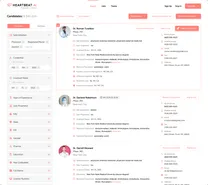
Heartbeat.ai’s database covers licensed healthcare professionals across the United States, including psychiatrists practicing in Maryland. You can filter by specialty, location, and other criteria to narrow down the profiles relevant to your outreach.
The list is organized by subspecialty, including general psychiatrists, child and adolescent psychiatrists, geriatric psychiatrists, addiction psychiatrists, forensic psychiatrists, and consultation-liaison psychiatrists, among others. If your outreach depends on reaching a specific type of practitioner, that segmentation matters more than raw list size.
Hospitals, pharmaceutical companies, medical device firms, and staffing agencies use these lists for different reasons, but the underlying need is the same: fewer wasted contacts and faster time to a real conversation.
Maryland’s Psychiatric Healthcare Landscape
Maryland is home to several nationally recognized psychiatric programs. The Johns Hopkins Hospital is ranked #1 for Psychiatry in Maryland and the Baltimore metro region, according to U.S. News & World Report’s 2026–27 Best Hospitals list. The Department of Psychiatry and Behavioral Sciences at Johns Hopkins treats adults, adolescents and children through community psychiatric services, consultation clinics, inpatient units and day hospitals across more than a dozen specialty areas.
The department also runs active research programs. The Johns Hopkins Center for Psychedelic and Consciousness Research is exploring innovative treatments using psilocybin, one example of how Maryland institutions are pushing into newer areas of psychiatric treatment beyond standard clinical care.
The University of Maryland Medical Center also operates a broad psychiatric service line covering inpatient, outpatient, and consultation care. Between these two systems and the smaller practices and community mental health centers around the state, Maryland’s psychiatric workforce is sizable but unevenly distributed, which is worth understanding before you build an outreach plan.
Why Accurate Contact Information Matters
Three groups run into the same problem for different reasons:
- Individuals seeking care need a working phone number or intake email when a mental health concern needs prompt attention.
- Recruiters and staffing teams need current contact details to fill psychiatric positions efficiently, especially given ongoing demand for mental health services nationally.
- Referring providers and researchers rely on accurate contacts to coordinate care, refer patients, or recruit study participants.
Stale contact data doesn’t just slow things down. It creates a false sense of coverage: a list that looks comprehensive but bounces half its emails or dials disconnected numbers is worse than a smaller, accurate one.
Why Finding Psychiatrists in Maryland Is Harder Than It Should Be
A few structural issues make this task harder than a simple directory search:
- Geographic concentration: Psychiatrists cluster around Baltimore and the DC suburbs, leaving rural counties with thinner coverage.
- Workforce shortage: Demand for mental health services has outpaced the supply of psychiatrists in many regions, which shows up as longer appointment waits.
- Fragmented directories: Hospital systems, insurance networks, and state licensing boards each maintain separate, partial records that go stale at different rates.
None of these problems disappear because a database exists, but a well-maintained contact list reduces the friction of finding and reaching the right person once you know who you’re looking for.
What a Heartbeat Psychiatrist Contact Record Includes
Each entry in Heartbeat’s database is built to support outreach rather than just identification. A typical record includes:
- Psychiatrist’s name
- Location
- Contact numbers (work, cell, mobile)
- Email address
- Specialization
- Years of experience
- Sole proprietor status
- Licensed states
- License number
- Fax
- Address
 Accuracy & coverage of personal contact info were unrivaled by other platforms… this gives any healthcare recruiter a competitive advantage when engaging hard-to-reach healthcare providers.
Senior Growth Strategist






Psychiatrist Contact Lists by State
Explore comprehensive email lists featuring psychiatrists across other U.S. states.
| Psychiatrists by state |
|---|
| Psychiatrists in Alabama |
| Psychiatrists in Alaska |
| Psychiatrists in Arizona |
| Psychiatrists in Arkansas |
| Psychiatrists in California |
| Psychiatrists in Colorado |
| Psychiatrists in Connecticut |
| Psychiatrists in Delaware |
| Psychiatrists in Florida |
| Psychiatrists in Georgia |
| Psychiatrists in Hawaii |
| Psychiatrists in Idaho |
| Psychiatrists in Illinois |
| Psychiatrists in Indiana |
| Psychiatrists in Iowa |
| Psychiatrists in Kansas |
| Psychiatrists in Kentucky |
| Psychiatrists in Louisiana |
| Psychiatrists in Maine |
| Psychiatrists in Maryland |
| Psychiatrists in Massachusetts |
| Psychiatrists in Michigan |
| Psychiatrists in Minnesota |
| Psychiatrists in Mississippi |
| Psychiatrists in Missouri |
| Psychiatrists in Montana |
| Psychiatrists in Nebraska |
| Psychiatrists in Nevada |
| Psychiatrists in New hampshire |
| Psychiatrists in New jersey |
| Psychiatrists in New mexico |
| Psychiatrists in New york |
| Psychiatrists in North carolina |
| Psychiatrists in North dakota |
| Psychiatrists in Ohio |
| Psychiatrists in Oklahoma |
| Psychiatrists in Oregon |
| Psychiatrists in Pennsylvania |
| Psychiatrists in Rhode island |
| Psychiatrists in South carolina |
| Psychiatrists in South dakota |
| Psychiatrists in Tennessee |
| Psychiatrists in Texas |
| Psychiatrists in Utah |
| Psychiatrists in Vermont |
| Psychiatrists in Virginia |
| Psychiatrists in Washington |
| Psychiatrists in West virginia |
| Psychiatrists in Wisconsin |
| Psychiatrists in Wyoming |
How Heartbeat Compiles Contact Data
Heartbeat.ai aggregates healthcare provider records from roughly 200 official, private, and public sources, then matches cell phone numbers and personal emails to each provider profile. The platform’s stated coverage includes over 11 million healthcare professionals, with 8.8 million direct cell phone numbers, 9.3 million personal email addresses, and 6 million direct dials, and reports first-attempt accuracy rates around 84% for cell phone numbers and 92% for personal emails using predictive modeling.
These figures come from Heartbeat’s own platform data and should be evaluated as vendor-reported metrics rather than independently audited statistics.
Who Uses a Psychiatrist Contact List, and What They Should Watch For
Recruiters, marketing teams, medical device and pharmaceutical companies, and researchers are the most common users. Each has slightly different requirements:
- Recruiters need current work and mobile numbers, plus specialty and years of experience, to qualify candidates quickly.
- Marketers need segmentation by subspecialty so messaging stays relevant instead of generic.
- Researchers need license verification fields to confirm eligibility before outreach.
Regardless of use case, any outreach using this data has to comply with applicable data privacy and communications regulations. That’s a compliance responsibility on the user’s end, not something a contact list resolves on its own.
Using a Psychiatrist Contact List Without Wasting It
A few practical habits separate effective outreach from spam:
- Segment by subspecialty before drafting messaging; a child psychiatrist and a forensic psychiatrist have different priorities.
- Keep messages short. Psychiatrists, like most specialists, have limited time for unsolicited outreach.
- Lead with something specific and relevant rather than a generic pitch.
- Respect opt-outs and update your working list regularly rather than treating it as a one-time export.
Frequently Asked Questions
What services do psychiatrists in Maryland offer?
Psychiatrists in Maryland evaluate, diagnose, and treat mental health conditions such as depression, anxiety, bipolar disorder, and schizophrenia. Many provide therapy, prescribe medication, and coordinate care with other healthcare providers. This is general information, not medical advice.
How can I find a psychiatrist in Maryland?
Common starting points include a referral from a primary care physician, your insurance company’s provider directory, or listings maintained by mental health organizations and hospital systems.
What qualifications should I look for in a psychiatrist in Maryland?
Look for a psychiatrist who is licensed and board certified, has completed a psychiatry residency, and ideally has experience relevant to your specific concerns.
What does it cost to see a psychiatrist in Maryland?
Costs vary by provider, location, and services rendered. Checking directly with your insurance provider is the most reliable way to understand coverage and expected out-of-pocket costs.