Last updated: August 30, 2026
Preventive medicine specialists are a small but important slice of the physician workforce in Indiana. They work in occupational health clinics, public health departments, hospital systems, and increasingly in health tech and informatics roles. If you’re building a recruitment pipeline, running a medical sales campaign, or coordinating outreach for a healthcare organization, finding accurate, current contact information for this group is harder than it looks.
This guide covers who counts as a preventive medicine specialist, why contact data for this specialty tends to go stale quickly, and how a verified provider database like Heartbeat.ai fits into a sourcing or recruitment workflow.
What’s on this page:
What Counts as a Preventive Medicine Specialist
Preventive medicine is a recognized medical specialty with several distinct certification paths. Physicians in this field generally fall into a few practice areas:
- Public Health and General Preventive Medicine: physicians focused on population-level disease prevention, screening programs, and community health initiatives.
- Occupational Medicine: specialists who manage workplace injury prevention, employee health programs, and return-to-work assessments.
- Aerospace Medicine: a smaller subspecialty addressing the health needs of pilots, astronauts, and aviation personnel.
- Addiction Medicine: physicians certified through preventive medicine pathways who focus on substance use prevention and treatment.
- Clinical Informatics: a newer subspecialty applying health IT and data systems to improve preventive care delivery.
Not every list labeled “preventive medicine” distinguishes between these tracks, which is one reason generic directories can be misleading for targeted outreach. If you need occupational medicine physicians specifically, for example, a list that lumps every subspecialty together will waste time.
Indiana’s Healthcare Landscape
Indiana’s provider network is anchored by a handful of large health systems. Indiana University Health stands as the largest network of physicians across Indiana, with a partnership tied to the Indiana University School of Medicine that supports research and training in preventive and population health. Community Health Network and Ascension St. Vincent also operate significant hospital and clinic networks across the state, each employing preventive medicine and occupational health staff as part of broader primary care and specialty operations.
Academic programs matter here too. Indiana University’s community health and preventive medicine program has a strong track record for producing graduates in the field, which means the pipeline of new preventive medicine professionals in the state is tied closely to IU-affiliated institutions.
Because these organizations concentrate a large share of Indiana’s preventive medicine workforce, a targeted list strategy often starts by mapping which specialists are affiliated with IU Health, Community Health Network, Ascension St. Vincent, and the state’s public health departments before expanding to independent practitioners.
Why Contact Accuracy Matters More Than It Seems
Bad contact data doesn’t just waste an email send — it compounds across a workflow. A few concrete consequences:
- Recruitment delays: a recruiter chasing an outdated phone number or a bounced email loses days on a single candidate, and that adds up across a hiring pipeline.
- Referral gaps: healthcare organizations that rely on referral networks need working contact details to route patients or coordinate care without friction.
- Wasted campaign spend: marketing or business development teams sending outreach to defunct addresses see lower response rates and skewed analytics, making it harder to judge what’s actually working.
- Compliance exposure: outdated license or specialization data can lead to miscommunication about a provider’s current scope of practice.
None of this is unique to preventive medicine, but the specialty’s smaller population size means there’s less margin for error — a stale record represents a larger share of your total addressable list than it would in a bigger specialty like family medicine.
Why This Data Is Hard to Compile Independently
A few structural issues make manual list-building difficult in this specialty:
- Fragmented practice settings: preventive medicine specialists work across hospitals, corporate occupational health departments, government agencies, and academic medical centers, so no single directory captures all of them.
- Inconsistent self-reporting: physicians update their public profiles on their own schedule, so directories pulled from a single source lag behind real staffing changes.
- Privacy constraints: personal contact details aren’t publicly listed for most providers, which is appropriate, but it also means directories built from public web scraping tend to return only work phone numbers or general switchboard lines.
- Subspecialty ambiguity: as noted above, many public directories don’t separate occupational medicine from aerospace medicine from general preventive medicine, forcing you to manually verify specialization before outreach.
Database tools that aggregate licensing records, professional registries, and verified contact submissions can reduce some of this friction, but no dataset is perfect — verification and periodic re-checks are still part of a responsible workflow.
What Heartbeat.ai’s Preventive Medicine Specialist Data Includes
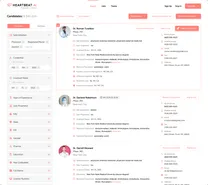
Heartbeat.ai maintains a searchable database of U.S. healthcare providers, including preventive medicine specialists in Indiana, with filters to narrow by specialization, location, and license status. A typical record includes:
- Preventive medicine specialist name
- Location
- Contact numbers (work, cell, mobile)
- Email address
- Specialization
- Years of experience
- Sole proprietor status
- Licensed states
- License number
- Fax
- Address
The value of a database like this comes from combining fields that are usually scattered across separate sources — licensing boards, hospital directories, and professional networking platforms — into one searchable profile.
Preventive Medicine Specialist Lists by State
| Preventive medicine specialist list by states |
|---|
| Preventive medicine specialist list in Alabama |
| Preventive medicine specialist list in Alaska |
| Preventive medicine specialist list in Arizona |
| Preventive medicine specialist list in Arkansas |
| Preventive medicine specialist list in California |
| Preventive medicine specialist list in Colorado |
| Preventive medicine specialist list in Connecticut |
| Preventive medicine specialist list in Delaware |
| Preventive medicine specialist list in Florida |
| Preventive medicine specialist list in Georgia |
| Preventive medicine specialist list in Hawaii |
| Preventive medicine specialist list in Idaho |
| Preventive medicine specialist list in Illinois |
| Preventive medicine specialist list in Indiana |
| Preventive medicine specialist list in Iowa |
| Preventive medicine specialist list in Kansas |
| Preventive medicine specialist list in Kentucky |
| Preventive medicine specialist list in Louisiana |
| Preventive medicine specialist list in Maine |
| Preventive medicine specialist list in Maryland |
| Preventive medicine specialist list in Massachusetts |
| Preventive medicine specialist list in Michigan |
| Preventive medicine specialist list in Minnesota |
| Preventive medicine specialist list in Mississippi |
| Preventive medicine specialist list in Missouri |
| Preventive medicine specialist list in Montana |
| Preventive medicine specialist list in Nebraska |
| Preventive medicine specialist list in Nevada |
| Preventive medicine specialist list in New hampshire |
| Preventive medicine specialist list in New jersey |
| Preventive medicine specialist list in New mexico |
| Preventive medicine specialist list in New york |
| Preventive medicine specialist list in North carolina |
| Preventive medicine specialist list in North dakota |
| Preventive medicine specialist list in Ohio |
| Preventive medicine specialist list in Oklahoma |
| Preventive medicine specialist list in Oregon |
| Preventive medicine specialist list in Pennsylvania |
| Preventive medicine specialist list in Rhode island |
| Preventive medicine specialist list in South carolina |
| Preventive medicine specialist list in South dakota |
| Preventive medicine specialist list in Tennessee |
| Preventive medicine specialist list in Texas |
| Preventive medicine specialist list in Utah |
| Preventive medicine specialist list in Vermont |
| Preventive medicine specialist list in Virginia |
| Preventive medicine specialist list in Washington |
| Preventive medicine specialist list in West virginia |
| Preventive medicine specialist list in Wisconsin |
| Preventive medicine specialist list in Wyoming |
How the Data Is Compiled
Heartbeat.ai pulls provider records from a combination of licensing boards, public and private healthcare directories, and professional registries, then cross-references fields like license status and specialization to reduce duplicate or outdated entries. Contact records are periodically reviewed against these sources so that email addresses and phone numbers reflect a provider’s current standing rather than a one-time snapshot.
No provider database is complete or permanently accurate — physicians change jobs, retire, or update their preferred contact method regularly. Treat any purchased or licensed list as a strong starting point for outreach, not a guaranteed-current record, and build in a verification step (bounce tracking, phone confirmation) before large-scale campaigns.
Who Uses This Kind of Provider List
Contact databases for specialties like preventive medicine tend to serve a few recurring use cases:
- Healthcare recruiters sourcing candidates for occupational health or public health roles.
- Medical device and pharmaceutical sales teams targeting physicians in specific practice settings.
- Hospital systems and staffing agencies filling preventive medicine or occupational medicine openings.
- Researchers and public health organizations coordinating with specialists on population health initiatives.
- Medical education programs connecting with practicing specialists for training partnerships.
A Practical Outreach Checklist
Before running an outreach campaign to preventive medicine specialists, it helps to work through a short checklist:
- Confirm you’re targeting the right subspecialty (occupational, aerospace, public health, addiction, or informatics) rather than the broad category.
- Cross-check license status and state for each contact before reaching out.
- Keep initial messages short and specific about why you’re reaching out — physicians in this specialty are often juggling clinical and administrative roles.
- Track bounce and response rates so you can flag stale records for removal or re-verification.
- Respect opt-outs and any applicable communication preferences immediately.
These steps won’t guarantee a response, but they reduce wasted effort and keep your list healthier over time.
For teams that need a starting point rather than building this from scratch, Heartbeat.ai’s database lets you filter Indiana-based preventive medicine specialists by subspecialty, location, and other fields, then export verified contact details for recruitment or outreach.
Frequently Asked Questions
How can I find a preventive medicine specialist in Indiana?
You can search hospital system directories such as Indiana University Health or Community Health Network, ask for a referral from a primary care physician, or use a verified provider database that lets you filter by specialty and location.
What services do preventive medicine specialists in Indiana offer?
Depending on their subspecialty, preventive medicine specialists may offer health screenings, vaccinations, occupational health assessments, lifestyle counseling, and population-level disease prevention programs.
What’s the difference between occupational medicine and general preventive medicine?
Occupational medicine focuses specifically on workplace-related injury prevention and employee health, while general preventive medicine addresses broader population health and individual screening programs. Both are certified subspecialties within preventive medicine.