Last updated: August 30, 2026
Ohio’s physician workforce spans big academic medical centers and small rural practices, which makes finding accurate, current contact information harder than it should be. Anyone recruiting, referring, or marketing to doctors in the state runs into the same problem: directories go stale, physicians change practices, and public records rarely include a direct email or mobile number.
This guide covers what a physician contact database should include, how data like this is typically compiled, who actually uses it, and how to use it responsibly once you have it.
What’s on this page:
Ohio’s Healthcare Landscape, Briefly
Ohio is home to several large health systems, including Cleveland Clinic and Ohio State University Wexner Medical Center, alongside a dense network of independent practices and rural clinics. The mix of academic medicine and community-based care means physician specialties and practice settings vary widely by region.
Ohio’s primary care supply is also under pressure. Statistics reported a shortfall of 1,200 primary care physicians in Ohio by 2025, and workforce researchers have flagged geographic maldistribution as an ongoing concern, with rural counties historically underserved relative to urban areas. For anyone building outreach or recruiting strategy in Ohio, this shortage context matters: primary care talent is competitive, and outdated contact lists waste time you don’t have.
Why Accurate Physician Contact Data Matters
Bad contact data isn’t just an inconvenience — it has real downstream costs.
- Timely care coordination: Referrals and follow-ups move faster when the phone number or email on file is actually current.
- Recruitment speed: Health systems competing for the same shrinking pool of primary care physicians can’t afford weeks of bounced emails.
- Networking and referrals: Specialists and primary care doctors rely on working contact channels to coordinate patient care.
- Operational efficiency: Administrators scheduling coverage or coordinating care teams need contact details that don’t require three follow-up calls to verify.
Common Obstacles When Searching for Physicians in Ohio
Most of the friction in physician search comes down to a handful of recurring issues, and each has a practical workaround:
- Vague specialization listings. Filtering by specialty in a structured database narrows results faster than a generic web search.
- Geographic gaps. Rural areas are harder to cover; location filters help, but don’t assume every rural county has the same density of specialists as a metro area.
- Appointment availability. Real-time scheduling data isn’t always reliable across sources — treat it as a starting point, not a guarantee.
- Credential verification. Cross-check licensure through the Ohio State Medical Board’s public records rather than relying solely on a third-party profile.
- Interpreting reviews. Patient reviews vary in reliability; weigh volume and recency, not just star ratings.
- Insurance compatibility. Filtering by accepted insurance saves time, but plans change — confirm directly before assuming coverage.
What a Physician Contact List Should Include
A useful physician database for Ohio goes beyond a name and a fax number. At minimum, look for:
- Physician name and practice location
- Work, cell, and mobile numbers
- Direct email address
- Specialty and years of experience
- Sole proprietor status
- Licensed states and license number
- Fax and mailing address
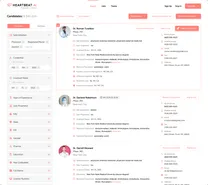
HeartBeat’s physician data for Ohio is built around these fields, with filters for specialty, geography, and other criteria so you’re not sorting through irrelevant records.
 Accuracy & coverage of personal contact info were unrivaled by other platforms… this gives any healthcare recruiter a competitive advantage when engaging hard-to-reach healthcare providers.
Senior Growth Strategist






Physician Categories Available
Depending on your recruiting or outreach goal, you may need a narrower slice of the physician population rather than the full list. Common categories include:
| Category |
| Physician Assistants |
| Physician Recruiters |
| Emergency Physicians |
| Osteopathic Physicians |
| Physiotherapists |
| Clinical Trial Physicians |
| Primary Care Physicians |
| AMA Physicians |
| Clinical Trial Physicians (AMA) |
| Sports Medicine Physicians |
| Aerospace Medicine Physicians |
| Bariatric Physician |
Physicians Available by State
If your search extends beyond Ohio, the same category breakdown applies across other states:
| Physicians By States |
| Physicians in Alabama |
| Physicians in Alaska |
| Physicians in Arizona |
| Physicians in Arkansas |
| Physicians in California |
| Physicians in Colorado |
| Physicians in Connecticut |
| Physicians in Delaware |
| Physicians in Florida |
| Physicians in Georgia |
| Physicians in Hawaii |
| Physicians in Idaho |
| Physicians in Illinois |
| Physicians in Indiana |
| Physicians in Iowa |
| Physicians in Kansas |
| Physicians in Kentucky |
| Physicians in Louisiana |
| Physicians in Maine |
| Physicians in Maryland |
| Physicians in Massachusetts |
| Physicians in Michigan |
| Physicians in Minnesota |
| Physicians in Mississippi |
| Physicians in Missouri |
| Physicians in Montana |
| Physicians in Nebraska |
| Physicians in Nevada |
| Physicians in New Hampshire |
| Physicians in New Mexico |
| Physicians in New York |
| Physicians in North Carolina |
| Physicians in North Dakota |
| Physicians in Oklahoma |
| Physicians in Oregon |
| Physicians in Pennsylvania |
| Physicians in Rhode Island |
| Physicians in South Carolina |
| Physicians in South Dakota |
| Physicians in Tennessee |
| Physicians in Texas |
| Physicians in Utah |
| Physicians in Vermont |
| Physicians in Virginia |
| Physicians in Washington |
| Physicians in West Virginia |
| Physicians in Wisconsin |
| Physicians in Wyoming |
How Physician Contact Data Gets Compiled
Building and maintaining an accurate physician list requires pulling from multiple sources and cross-checking them against each other. In practice, that typically means:
- State medical board records for licensure status and baseline identity verification.
- Hospital and clinic partnerships to capture updated affiliations as physicians move between systems.
- Medical association and society directories for specialty-specific member lists.
- Professional networks like LinkedIn, cross-referenced against other sources rather than trusted alone.
- Academic institutions, since many physicians retain teaching or research affiliations.
- Ongoing verification cycles to catch practice changes, retirements, and new licensure before the data goes stale.
No single source is complete or permanently accurate on its own — physicians change jobs, retire, or move between specialties, and any database claiming perfect real-time accuracy should be treated skeptically.
Choosing a Physician Data Provider: What to Check
Not all contact lists are built the same way. Before committing to a vendor, it’s worth checking a few things directly:
- Field depth: Does the record include direct email and mobile, or just a general practice line?
- Refresh cadence: Ask how often records are re-verified, not just when the database was first built.
- Specialty and geographic filters: Can you narrow to primary care physicians in a specific Ohio county, or only search statewide?
- Compliance posture: Confirm how the provider sources and handles contact data, and make sure your own outreach complies with applicable privacy and marketing regulations.
- Support: Is there a real support channel if a batch of records turns out to be outdated?
HeartBeat’s Ohio physician data includes name, location, work/cell/mobile numbers, email, specialty, years of experience, sole proprietor status, licensed states, license number, fax, and address — built with search and geographic filters so you’re not scrolling through an unfiltered spreadsheet.
Who Uses Physician Contact Data
The same dataset serves fairly different use cases depending on who’s asking:
- Patients looking for a new doctor, specialist, or second opinion.
- Healthcare professionals coordinating referrals or seeking peer consultation.
- Medical sales representatives identifying physicians relevant to a specific product line.
- Researchers recruiting participants or expert collaborators.
- Insurance companies building or verifying provider networks.
- Healthcare marketers targeting campaigns by specialty or region.
- Hospital and clinic administrators filling open roles.
- Event organizers inviting physicians as attendees or speakers.
Using a Physician Contact List Effectively
Having the data is only half the job. A few practices separate effective outreach from wasted effort:
- Define the need first. A recruiter looking to fill a hospitalist role and a rep launching a new device need different filters and different messaging.
- Respect privacy and consent. Follow applicable privacy and marketing regulations when reaching out, and don’t treat contact data as a license for unsolicited bulk messaging.
- Personalize the message. A generic blast to every cardiologist in Ohio performs worse than a note that references their specialty or practice setting.
- Segment for marketing. Target by specialty and practice type rather than sending one message to the entire list.
- Use it for networking too. Referral relationships and professional collaboration benefit from the same accurate contact base.
- Follow up appropriately. A timely, relevant follow-up matters more than the volume of initial contacts.
- Keep your own records current. Track who’s been contacted and what came of it — this compounds over time and prevents duplicate outreach.
Limitations Worth Knowing
No physician database is perfect. Contact records lag behind real-world job changes, license renewals, and retirements. Appointment availability and insurance acceptance shift more often than most directories update. Treat any list as a strong starting point for outreach and verification, not a final source of truth — and always confirm licensure and credentials through the Ohio State Medical Board when accuracy really matters.
FAQs
Are there specialized physicians practicing in Ohio?
Yes. Ohio’s physician workforce includes cardiologists, oncologists, pediatricians, and many other specialists with additional training in their fields, in addition to primary care physicians.
What should I expect during a visit to a physician in Ohio?
Typically a review of medical history, a physical exam, and a discussion of symptoms or concerns, possibly followed by recommendations for further testing or treatment. This is general information, not medical advice.
Can I access telehealth services with physicians in Ohio?
Many Ohio physicians offer telehealth for follow-ups or minor issues, though availability varies by practice and specialty — check directly with the provider.