Last updated: August 28, 2026

Building a pharmacy email list sounds simple until you try to do it. Public directories go stale fast, license status changes, and pharmacists switch employers often enough that a list compiled last year is already showing cracks by the time you launch a campaign.
This guide walks through what a usable pharmacy contact database actually needs to include, how that data should be sourced and verified, and what to check before you commit budget to any provider — including Heartbeat AI.
What’s on this page:
What a Pharmacy Email Database Should Include

Heartbeat AI’s pharmacy directory is built for nationwide outreach, with contact records designed to support both state-level and national campaigns.
- Nationwide reach: coverage across the United States for targeted marketing at the state or national level.
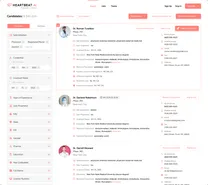
- Detailed contact information: names, license details, phone numbers, postal addresses, and more for each pharmacy record.
- Professional context: background data intended to help you understand the pharmacies and pharmacists you’re contacting, not just their contact details.
Data Fields Typically Found in a Pharmacy Contact List
- Pharmacy name
- Location information
- Contact numbers (work, cell, mobile)
- Email addresses
- Specialization details
- Years of professional experience
- Sole proprietor status
- Licensed states
- License numbers
- Fax numbers
- Physical addresses
 Accuracy & coverage of personal contact info were unrivaled by other platforms… this gives any healthcare recruiter a competitive advantage when engaging hard-to-reach healthcare providers.
Senior Growth Strategist





Why an Accurate Pharmacy Mailing List Matters

Bad data doesn’t just waste a send — it erodes deliverability and, in the case of pharmacy outreach, wastes the time of licensed professionals who don’t want irrelevant messages.
Targeting precision
An accurate list lets you segment by specialty, location, or practice setting instead of blasting a generic message to everyone with a pharmacy license.
Better engagement and open rates
Current, error-free contact data means fewer bounces and a higher share of messages actually reaching people who might care about the content.
Legal compliance
The CAN-SPAM Act does not require prior consent before sending commercial email, unlike GDPR, which mandates a lawful basis such as consent. That said, every commercial email needs a clear unsubscribe option, and any opt-out mechanism must remain functional for at least 30 days after the message is sent. Enforcement is real: the FTC fined Verkada $2.95 million in August 2024 for CAN-SPAM violations, and per-email penalties can now reach up to $53,088. If your outreach touches recipients in the EU, GDPR’s consent-based standard applies regardless of the US rules.
Pharmacy Categories Covered
A useful directory should let you segment by pharmacy type rather than treating the sector as one homogenous group.
Pharmacies by State
Coverage by state lets you scope outreach to specific licensing jurisdictions or regional campaigns.
How Data Gets Compiled and Verified

Heartbeat AI sources pharmacy records from public records, licensing boards, and trusted healthcare directories, then runs them through cross-referencing to catch outdated entries before they reach a client’s list. Records draw on 200+ data partners, including medical directories and professional associations, which spreads the verification workload across multiple independent sources rather than relying on a single feed.
Quality control also checks license status, so records represent pharmacies and pharmacists who are actually active and compliant, not stale entries pulled from an old scrape.
What to Look for in Any Pharmacy Contact List

Whether you’re evaluating Heartbeat AI or a competing provider, run through this checklist before buying:
- Source credibility: data should trace back to medical directories, licensing boards, or professional associations — not scraped web pages of unknown age.
- Segmentation options: the ability to filter by pharmacy type, geography, or specialty matters more than raw record count.
- Privacy compliance: confirm the provider’s data handling aligns with applicable laws; if you’re emailing across borders, GDPR’s consent standard may apply even if CAN-SPAM doesn’t require it domestically.
- Verification cadence: ask how often records are cross-checked and refreshed, since pharmacist turnover and license changes happen continuously.
- Integration: check that exports work cleanly with your CRM or email platform so the list doesn’t sit idle after purchase.
Who Actually Uses a Pharmacy Email Database

A pharmacy directory supports several distinct use cases across the pharmacy and healthcare sectors.
Pharmacists and pharmacy technicians
Professionals use these lists indirectly — as recipients of continuing education content, certification updates, and industry news relevant to their license and specialty.
Pharmaceutical companies
Sales and marketing teams use verified contact data to reach pharmacists directly with product information, without relying on intermediaries.
Pharmacy schools and colleges
Academic institutions use the data to connect with practicing pharmacists for collaboration, guest lectures, or continuing education promotion.
Health authorities and pharmacy associations
Regulatory bodies and trade groups use verified contact lists to distribute compliance updates, licensing changes, and member communications.
Using a Pharmacy Email List Without Wasting It
Buying accurate data solves half the problem. The rest comes down to how you use it.
Match content to the audience
A hospital pharmacy director and an independent community pharmacist have different priorities. Segment your messaging accordingly instead of sending one generic template to the whole list.
Lead with a clear value proposition
State plainly what the recipient gets — a product update, a resource, a collaboration opportunity — in the first few lines. Pharmacists are busy and won’t dig for the point.
Design for mobile
Most recipients check email on a phone first. Test your layout on a small screen before sending at scale.
Offer something useful, not just promotional
Whitepapers, case studies, or short educational pieces tend to earn more attention than a straightforward pitch, especially on a first contact.
The Bottom Line
No pharmacy contact list stays perfect forever — license changes, job moves, and closures mean some decay is inevitable no matter the source. What matters is how often a provider verifies and refreshes records, and whether the data is segmented enough to support targeted, relevant outreach rather than a blanket blast.
Heartbeat AI compiles pharmacy contact data from public records and licensing sources, cross-references it across partner databases, and structures it for state- and specialty-level targeting.
FAQs
Can I target specific regions or states with pharmacy email directories?
Yes, records can typically be filtered by city, region, or state.
What types of pharmacy settings are covered?
Coverage generally includes community pharmacies, hospital pharmacies, specialty pharmacies, compounding pharmacies, and related categories.
Is a pharmacy email list practical for small businesses?
Yes — smaller organizations can use segmented lists to reach specific pharmacy types or regions without paying for broader coverage they don’t need.