Last updated: August 30, 2026

A pharmaceutical email list gives sales, recruiting, and marketing teams a way to reach pharmacists, hospital pharmacy directors, and other pharmaceutical professionals directly, instead of relying on general outreach or cold calls with no context.
Used well, a list like this supports product education, clinical trial recruitment, and hiring outreach. Used carelessly, it becomes another source of unsubscribes and complaints. The difference usually comes down to data quality and how the list is segmented before it’s ever used.
This page walks through what’s typically included in a pharmaceutical mailing list, how providers compile this kind of data, what to check before buying one, and how to structure outreach so it performs.
What’s on this page:
What’s Typically Included in a Pharmaceutical Mailing List

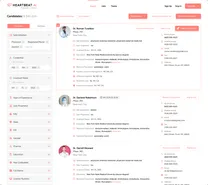
A pharmaceutical contact database usually organizes records by role, location, and specialization so you can narrow a broad list down to the people actually relevant to your campaign.
- Broad coverage: Contact records spanning pharmacists, pharmacy directors, hospital pharmacy staff, and related roles across the US.
- State-level filtering: Lists segmented by state or region for outreach that needs to stay geographically specific.
- Role-level detail: Names, titles, locations, and specialization fields that support more personalized messaging than a generic blast.
Data Fields Commonly Found in Pharmaceutical Contact Lists
- Name
- Location
- Contact numbers (work, cell, mobile)
- Email address
- Specialization
- Years of experience
- Licensed states
- License number
- Fax
- Address
Not every provider includes every field above, and coverage varies by state and specialty. Ask any vendor exactly which fields are populated for the segment you need before you buy, rather than assuming a full record exists for every contact.
 Accuracy & coverage of personal contact info were unrivaled by other platforms… this gives any healthcare recruiter a competitive advantage when engaging hard-to-reach healthcare providers.
Senior Growth Strategist






Why List Quality Matters More Than List Size
A list with a million email addresses is worthless if half of them bounce or belong to people who left the role two years ago. Before evaluating any provider, weigh these factors against each other:
- Deliverability over volume: A smaller, verified list outreaches a large stale one on almost every practical metric — open rate, bounce rate, and sender reputation.
- Time saved: Building a comparable list in-house from public records and association rosters takes weeks; a pre-built list compresses that into a single download, provided the source data is current.
- Targeting precision: Filtering by specialization, license state, or role lets you skip generic blasts and go straight to the people who can act on your message.
- Compliance posture: A provider that can explain where data comes from and how it’s verified is easier to work with when privacy questions come up internally.
Roles You Can Typically Segment For
Pharmaceutical mailing lists usually let you filter by role rather than treating every contact the same way.
| Category |
| Pharmacists |
| Registered Pharmacists |
| Pharmaceuticals |
| Hospital Druggist |
| Druggist |
| Ambulatory Care Pharmacists |
| Academic Pharmacist |
| Pharmacist Clinicians |
| Hospital Pharmacists |
| Pharmacy Directors |
| Industrial Pharmacists |
| Clinical Pharmacists |
| Retail Pharmacists |
| Surgery Unit Pharmacists |
| Compounding Pharmacists |
| Community Pharmacists |
| Critical Care Pharmacist |
| Nuclear Pharmacists |
| Managed Care Pharmacist Leads |
Coverage by State
Outreach requirements often depend on geography — a regional launch, a state licensing requirement, or a hiring push in a specific market. State-level segmentation is the standard filter for this kind of work.
| Pharmaceutical By States |
| Pharmaceutical in Alabama |
| Pharmaceutical in Alaska |
| Pharmaceutical in Arizona |
| Pharmaceutical in Arkansas |
| Pharmaceutical in California |
| Pharmaceutical in Colorado |
| Pharmaceutical in Connecticut |
| Pharmaceutical in Delaware |
| Pharmaceutical in Florida |
| Pharmaceutical in Georgia |
| Pharmaceutical in Hawaii |
| Pharmaceutical in Idaho |
| Pharmaceutical in Illinois |
| Pharmaceutical in Indiana |
| Pharmaceutical in Iowa |
| Pharmaceutical in Kansas |
| Pharmaceutical in Kentucky |
| Pharmaceutical in Louisiana |
| Pharmaceutical in Maine |
| Pharmaceutical in Maryland |
| Pharmaceutical in Massachusetts |
| Pharmaceutical in Michigan |
| Pharmaceutical in Minnesota |
| Pharmaceutical in Mississippi |
| Pharmaceutical in Missouri |
| Pharmaceutical in Montana |
| Pharmaceutical in Nebraska |
| Pharmaceutical in Nevada |
| Pharmaceutical in New Hampshire |
| Pharmaceutical in New Jersey |
| Pharmaceutical in New Mexico |
| Pharmaceutical in New York |
| Pharmaceutical in North Carolina |
| Pharmaceutical in North Dakota |
| Pharmaceutical in Ohio |
| Pharmaceutical in Oklahoma |
| Pharmaceutical in Oregon |
| Pharmaceutical in Pennsylvania |
| Pharmaceutical in Rhode Island |
| Pharmaceutical in South Carolina |
| Pharmaceutical in South Dakota |
| Pharmaceutical in Tennessee |
| Pharmaceutical in Texas |
| Pharmaceutical in Utah |
| Pharmaceutical in Vermont |
| Pharmaceutical in Virginia |
| Pharmaceutical in Washington |
| Pharmaceutical in West Virginia |
| Pharmaceutical in Wisconsin |
| Pharmaceutical in Wyoming |
How This Kind of Data Gets Compiled
Reputable providers don’t pull pharmaceutical contact data from a single source. It’s usually built from several layers, cross-checked against each other:

- Public business databases: Sources like Dun & Bradstreet provide baseline contact information from companies that share their details publicly. Heartbeat draws on over 200 data sources in this category.
- Industry association rosters: With appropriate permissions, trade groups and professional associations tied to the pharmaceutical industry contribute member data.
- Public filings and reports: SEC filings, annual reports, and industry analyses surface companies and personnel that generic databases sometimes miss.
- Third-party list purchases: Buying existing lists from established data sellers can add depth to a database quickly, though this step still requires downstream verification.
- Validation and de-duplication: Confirming that a business and contact are still active, and removing duplicate entries, is what keeps a list from degrading over time.
No compilation process guarantees perfect accuracy indefinitely. Pharmacists change employers, hospitals restructure, and licenses lapse or transfer. Any list — Heartbeat’s included — should be treated as a snapshot that needs periodic refreshing rather than a permanent asset.
What Heartbeat’s Pharmaceutical Data Offers

Broad, Current Coverage
Heartbeat’s database includes over 2 million physician and health professional contact records, spanning pharmacists and other pharmaceutical-adjacent roles.
Daily Refresh Cycle
Records are updated on an ongoing basis, which matters in a field where job changes and license updates happen constantly.
Filterable by Role and Region
Segment by specialization, state, or license status rather than working from one undifferentiated list.
Straightforward Interface
The platform is built for marketers and recruiters, not database administrators, so filtering and exporting doesn’t require technical training.
Opt-Out Support
Recipients can unsubscribe at any time, which keeps outreach compliant and reduces spam complaints over time.
What to Check Before You Buy a Pharmaceutical Email List

Accuracy and Verification
Ask how the provider sources its data — professional organizations, public records, and healthcare databases are reasonable starting points. Confirm they verify individual email addresses rather than just aggregating raw lists, and ask how often records are refreshed.
Filtering Options
- Specialization: Can you filter by specific pharmaceutical role or specialty, or is the list flat?
- Location: Does the provider support state or regional segmentation for geographically targeted campaigns?
- Data depth: What fields are actually populated — names and titles only, or fuller records with phone numbers and license details?
Compliance and Consent
Confirm the provider’s practices align with applicable privacy regulations such as HIPAA and CAN-SPAM, and ask how consent and opt-outs are handled. A provider that’s vague about data collection methods is a warning sign, not a minor detail to overlook.
Practical Extras
Compare pricing against what’s actually included, check the responsiveness of customer support before you commit, and read the terms of use so your intended outreach fits within what’s permitted.
Who Typically Uses Pharmaceutical Contact Data

Healthcare Organizations
Hospitals, clinics, and public health departments use this kind of data for professional education outreach and research collaboration.
Pharmaceutical Companies
Marketing teams use targeted lists for product launches, clinical trial recruitment, and physician education campaigns.
Medical Device Manufacturers
Teams identify decision-makers for device introductions, training sessions, and research partnerships.
Research Institutions
Recruiting trial participants and sharing findings with relevant professionals both depend on accurate contact segmentation.
Recruiters and Staffing Agencies
Connecting with pharmacists, researchers, and administrators for open roles is faster with a filterable contact base.
Publishers and Marketing Agencies
Promoting journals and educational resources, or running campaigns on behalf of clients, both rely on reaching the right professional audience rather than a generic one.
Getting More Out of a Pharmaceutical Email List

A list is a starting point, not a strategy. These practices tend to separate outreach that gets read from outreach that gets deleted:
- Personalize beyond the first name: Reference the recipient’s role or specialty so the message reads as relevant rather than mass-produced.
- Segment before sending: Break the list into smaller groups by geography, role, or specialty so each message actually fits its audience.
- Track what’s working: Open rates, click-through rates, and conversions tell you which segments and subject lines are worth repeating.
- Protect the data: Treat contact records as sensitive information, store them securely, and follow applicable privacy rules.
- Adjust as you go: Response patterns shift, so revisit your approach periodically instead of running the same campaign indefinitely.
The Bottom Line
A pharmaceutical mailing list is only as useful as the accuracy behind it and the judgment applied to using it. Pair verified, segmented data with respectful, well-targeted outreach, and it becomes a legitimate way to reach pharmacists and pharmaceutical professionals without wasting their time or yours.
FAQs
How can a pharmaceutical email list be used for targeted marketing?
Segmenting by location, specialty, or job title lets you tailor messaging to the recipient, which typically improves open rates, click-through rates, and conversions compared to a generic blast.
How can a pharmaceutical email list be used for recruitment purposes?
Recruiters and staffing agencies use these lists to identify and contact pharmaceutical professionals for permanent roles, locum tenens positions, and career advancement opportunities.
Can I target specific therapeutic areas in my outreach?
Filtering by specialty or treatment category is common, and it supports more relevant conversations with providers. Any outreach still needs to comply with applicable privacy laws and guidelines.
How frequently should a pharmaceutical contact database be updated?
Given how often pharmacists and pharmaceutical professionals change roles, look for a provider that updates records on an ongoing basis rather than a one-time build.
How can companies stay compliant when using healthcare contact data?
Obtain appropriate consent, maintain strict data security, honor opt-out requests promptly, and avoid using data outside its original purpose. These practices matter for both legal compliance and long-term trust with recipients.