


Last updated: August 28, 2026

Reaching licensed palliative care physicians directly is harder than it sounds. Many split time between hospitals, hospice programs, and outpatient clinics, and their published contact info is often a front-desk line rather than a way to reach the physician personally.
A current palliative care physicians email list solves part of that problem, but only if the data behind it is accurate and refreshed often. Physician contact details change as people switch employers, move states, or shift from hospital-employed roles to private practice. Below, we cover what a usable list should include, how it gets built, and how to apply it without running into deliverability or compliance trouble.
What’s on this page:
What Heartbeat AI’s Palliative Care Physicians Email List Includes
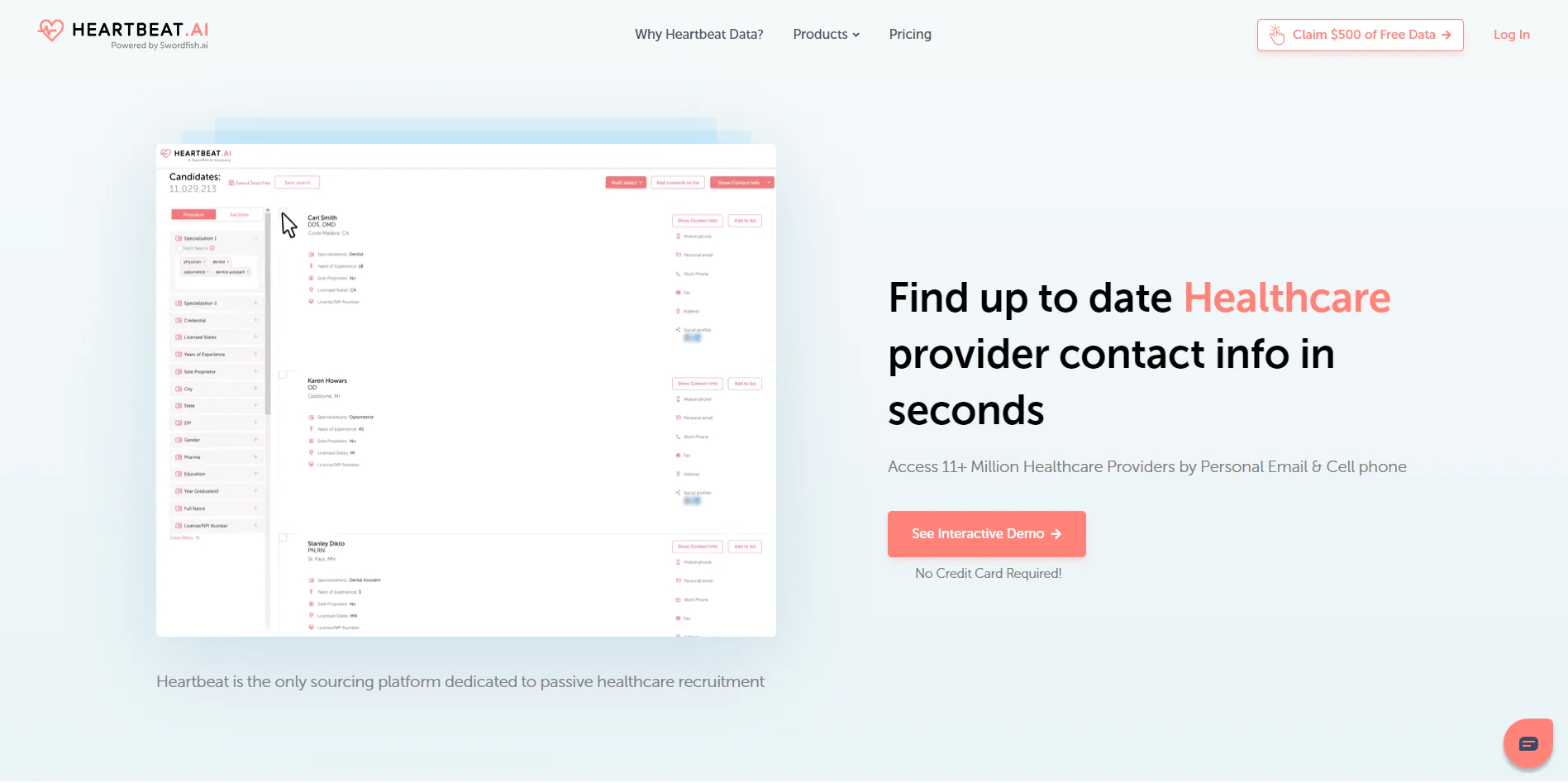
Heartbeat AI‘s palliative care physicians dataset is built for outreach teams who need to reach a specific specialty without wading through generic physician directories.
- Broad coverage: physicians across multiple regions and sub-specialties within palliative medicine.
- Verification-driven accuracy: records are checked against multiple sources to reduce bounced emails and dead numbers.
- Ongoing updates: contact details are refreshed on a regular cycle rather than compiled once and left static.
- Compliance-aware sourcing: data is gathered with attention to applicable privacy and data protection rules.
Data Fields Typically Included
- Physician name
- Location information
- Contact numbers (work, cell, mobile)
- Email address
- Specialization details
- Years of professional experience
- Sole proprietor status
- Licensed states
- License numbers
- Fax numbers
- Physical address
 Accuracy & coverage of personal contact info were unrivaled by other platforms… this gives any healthcare recruiter a competitive advantage when engaging hard-to-reach healthcare providers.
Senior Growth Strategist






Why a Verified Mailing List Matters for Palliative Care Outreach
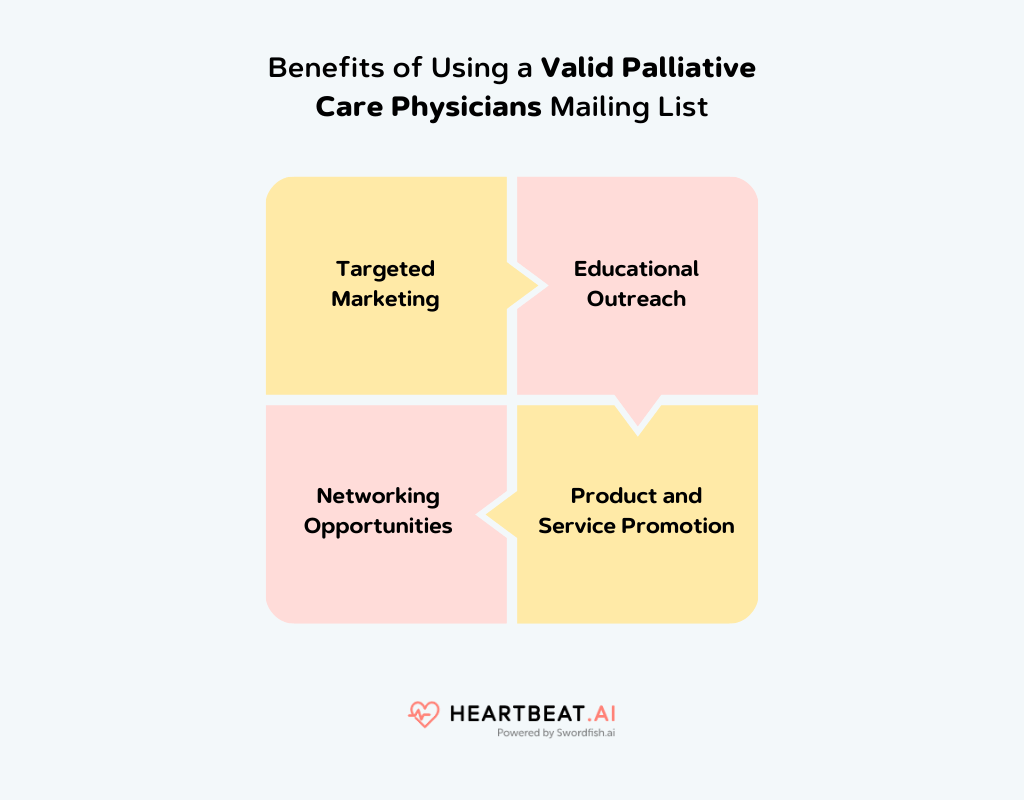
Targeted Marketing
Sending relevant material to a narrow specialty list produces better engagement than blasting a general physician database. Palliative care physicians respond differently to messaging around end-of-life planning, symptom management, and interdisciplinary care than a general internist would.
Educational Outreach
A working email channel lets you share research updates, treatment developments, or continuing education content directly with physicians actively practicing in the field.
Networking Opportunities
Recruiters and program administrators use accurate contact data to open conversations about collaborations, referral partnerships, or open roles, rather than relying on cold LinkedIn requests that often go unanswered.
Product and Service Promotion
Vendors selling equipment, medications, or support services relevant to palliative settings can reach physicians who are actually positioned to evaluate or recommend those products.
Palliative Care Physicians by Category
A useful list should let you filter by sub-specialty rather than treating “palliative care” as one undifferentiated group:
Palliative Care Physicians by State
Browse coverage by state below:
How This Data Gets Compiled
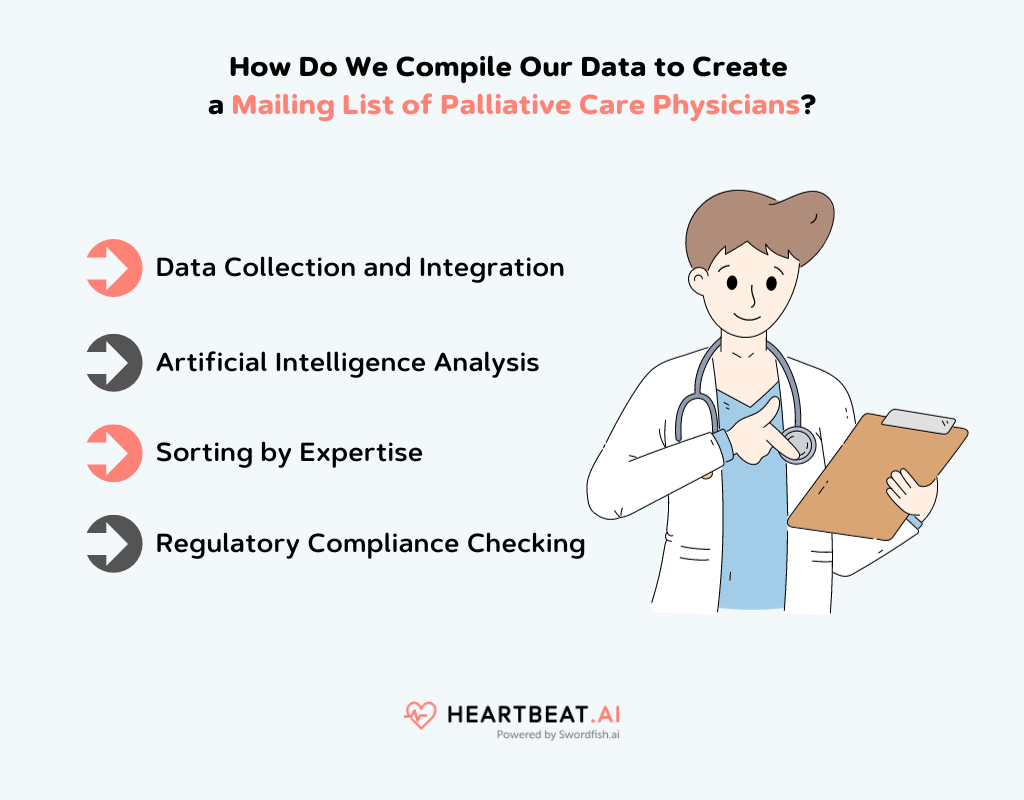
Here’s the general process Heartbeat follows to build and maintain a palliative care physicians database.
Data Collection and Integration
Heartbeat pulls from a network of official data partners, including hospitals, pharmacies, and palliative care service providers, then narrows the pool to specialists actually practicing palliative medicine.
Automated Cross-Checking
Records get checked against multiple sources to flag discrepancies, outdated employer info, or contact details that no longer match.
Sorting by Expertise
Because palliative care spans oncology, cardiology, pulmonology, geriatrics, and pediatrics, specialists are tagged by sub-specialty so lists can be filtered rather than treated as one flat group.
Compliance Review
Before data goes live, it’s reviewed against applicable privacy and data protection requirements, with attention to patient privacy and data security practices.
What Sets Heartbeat AI’s List Apart
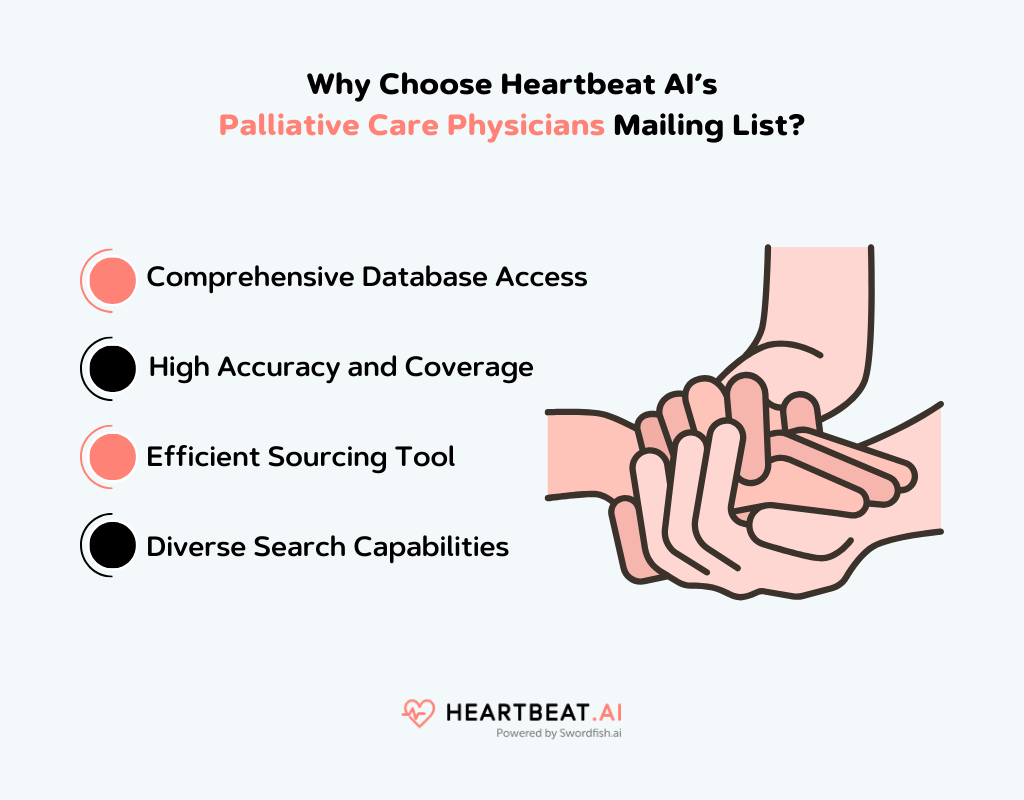
Database Scale
Heartbeat AI’s broader healthcare database covers over 11 million providers in the US, palliative care specialists included, giving outreach teams a large pool to filter from rather than a narrow static list.
Predictive Accuracy Modeling
Heartbeat applies predictive modeling aimed at up to 84% accuracy for cell phone numbers and 92% for personal emails. Treat these as target accuracy ranges rather than guarantees for every individual record, since physician contact details change constantly.
Built for Passive Sourcing
The platform is designed for passive healthcare recruitment, meaning it’s suited to identifying and reaching candidates who aren’t actively job-hunting but might respond to the right outreach.
Filtered Search
You can search by specialty, sub-specialty, and procedures performed, which matters when “palliative care physician” could mean a hospice medical director or a palliative oncologist depending on your campaign.
Chrome Extension for Live Sourcing
The Chrome Extension lets you pull contact details directly while browsing LinkedIn or Facebook, which cuts down on manual lookup between platforms.
Checklist: What to Verify Before Buying a Palliative Care Physician Email Directory
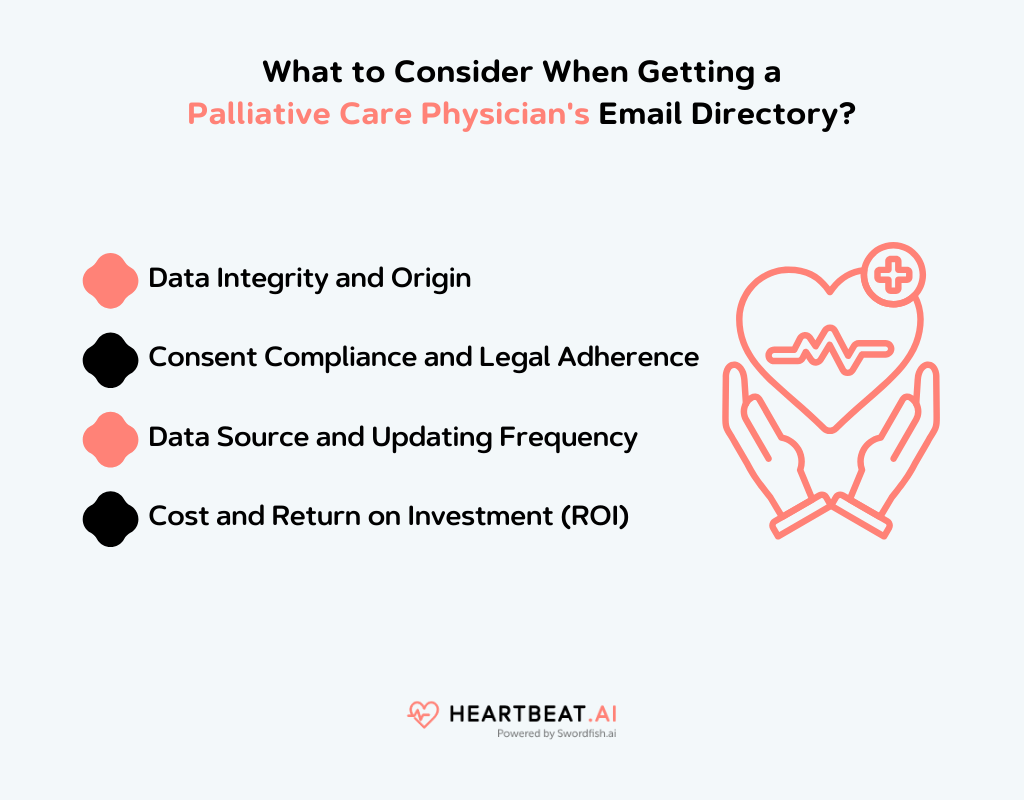
Data Source and Track Record
Ask where the records originate and how the provider verifies them. A vague answer usually means higher bounce rates down the line.
Legal Compliance
Confirm the provider’s approach to consent and applicable marketing laws, including the General Data Protection Regulation (GDPR) in Europe and the CAN-SPAM Act in the US. Sending unsolicited commercial email without meeting these requirements creates real legal exposure, not just a deliverability problem.
Update Frequency
Ask specifically how often records refresh. Physician contact data degrades faster than most B2B contact lists because of frequent job changes and credentialing moves.
Cost Versus Realistic ROI
Weigh price against actual usable contact rates, not just record count. A smaller, cleaner list that reaches real inboxes usually outperforms a bigger one full of stale entries.
Who Actually Uses This Type of List
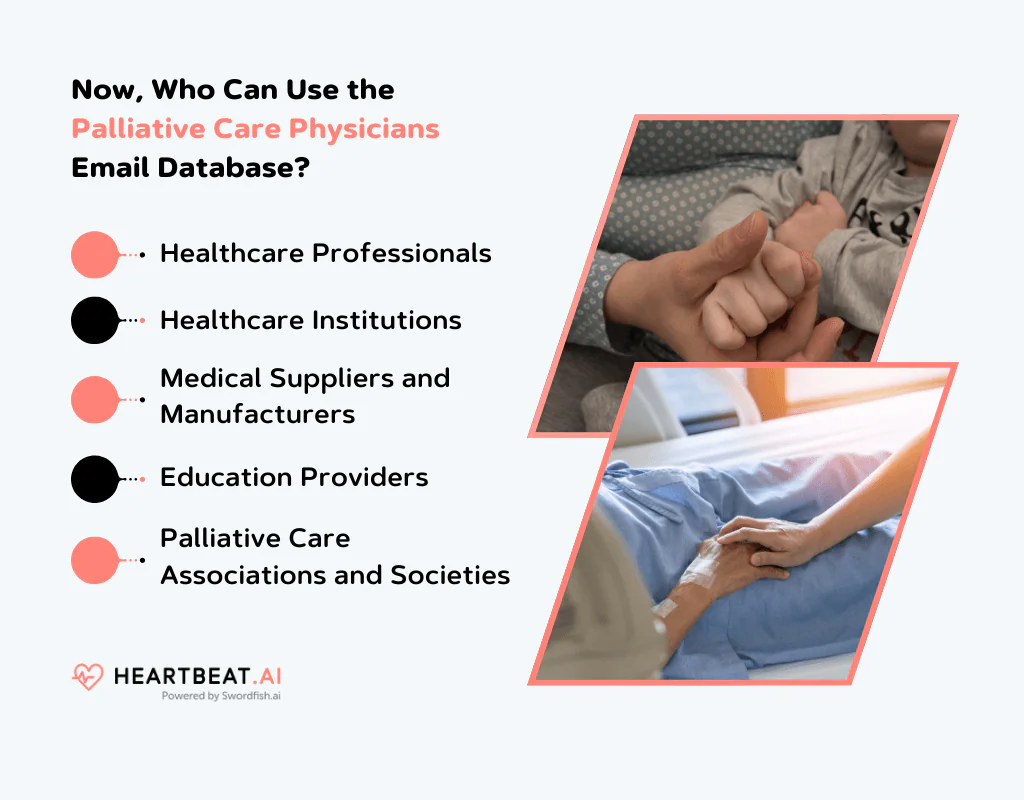
Healthcare Professionals
Physicians, nurses, and allied staff use directory access to stay current on developments and connect with peers working in the same niche.
Healthcare Institutions
Hospitals and palliative care units use verified contact data to coordinate training, conferences, and internal communication across dispersed staff.
Medical Suppliers and Manufacturers
Companies selling palliative-care-relevant products use the directory to reach physicians who are positioned to evaluate or recommend those products, rather than cold-calling general practice lines.
Education Providers
Organizations running continuing education programs use the list to market courses directly to practicing palliative care physicians.
Associations and Societies
Professional groups use directory access to share event details, research opportunities, and advocacy updates with their membership base.
Using the List Without Burning It Out
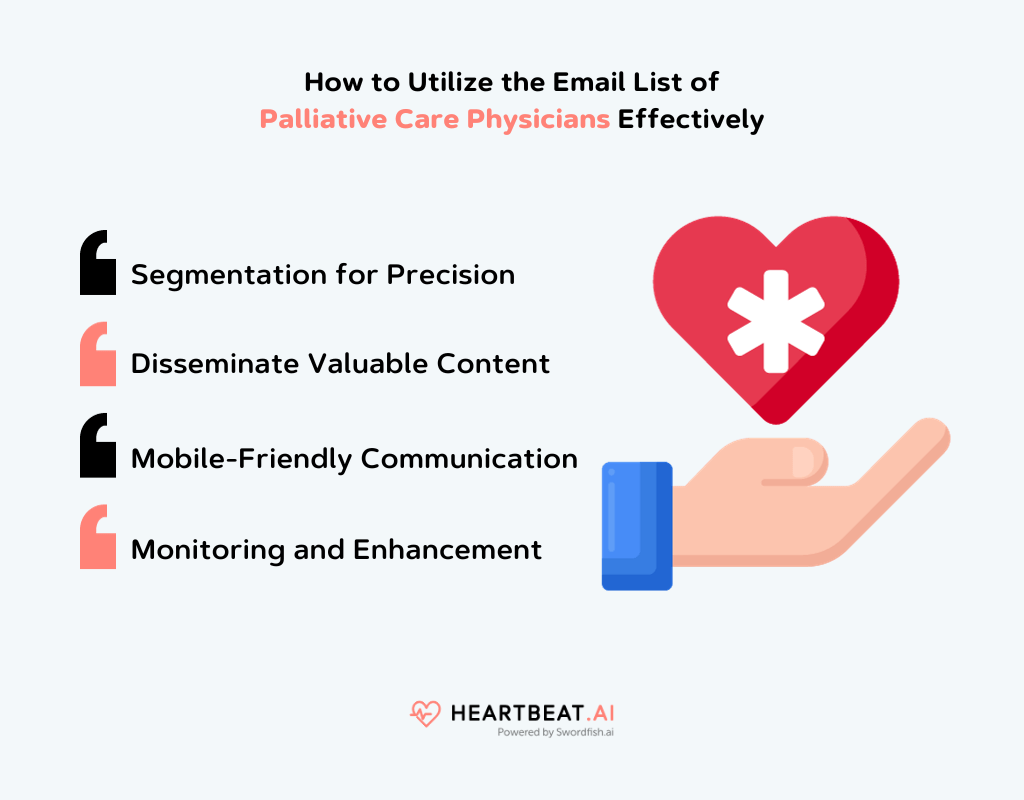
Segment Before You Send
Split contacts by role (physician, nurse, administrator, specialist) and sub-specialty before drafting anything. A single generic email to the whole list tends to underperform compared to a few smaller, targeted sends.
Lead With Useful Content
Palliative care specialists get plenty of vendor pitches. Emails built around genuinely useful updates, research, or procedural insight tend to get opened; pure sales pitches tend not to.
Design for Mobile
Test every send on a phone screen before it goes out. Many physicians triage email between patient visits, and a broken mobile layout gets deleted in seconds.
Track and Adjust
Watch open rates, click-through rates, and unsubscribe rates over time, and use that data to refine subject lines, send times, and content rather than assuming the first version was optimal.
Bottom Line
A well-maintained palliative care physicians email list saves time compared to manual prospecting, but its value depends entirely on how current and verified the underlying data is. Check update frequency and compliance practices before committing, and segment your outreach once you have access rather than treating the whole list as one audience.
Heartbeat AI provides access to this kind of verified, regularly updated contact data for outreach, recruiting, and partnership efforts in the palliative care space.
Frequently Asked Questions
Can I promote products or services using this list?
Yes. The directory can support product promotion, recruiting, partnership outreach, and other legitimate business communication, provided you follow applicable email marketing laws.
How accurate is the data?
Accuracy varies by provider. Heartbeat AI targets high accuracy through predictive modeling and regular verification, but no contact database achieves 100% accuracy given how often physicians change roles.
How often is the list updated?
Heartbeat AI refreshes records on a regular cycle, generally at least every 90 days, to account for job changes and other contact updates.

