Last updated: August 31, 2026
Finding accurate, current contact information for orthodontists in Montana is a narrower task than it looks. The state has a small, spread-out population of specialists, and generic web directories rarely keep pace with job changes, retirements, or new practice openings. For recruiters, dental suppliers, and healthcare marketers, that gap translates into wasted outreach and missed connections.
This guide covers what makes Montana’s orthodontic landscape different, why contact accuracy matters more here than in denser states, and how a verified provider database like Heartbeat.ai fits into an outreach workflow.
What’s on this page:
Orthodontic Care in Montana: A Small, Spread-Out Market
The Montana Board of Dentistry is the state government agency responsible for issuing licenses for dentists, hygienists, and denturists in the state, and it also handles complaints and administers rules related to dentistry. The Montana Dental Association represents over 1,000 dentists in the state and advocates for oral health statewide.
Orthodontists are a small subset of that overall dentist population, and most practice out of general or multi-specialty clinics rather than large hospital systems. That matters for outreach: a directory built for hospital-affiliated specialists will miss a large share of Montana’s orthodontic providers, who tend to run smaller independent practices concentrated in cities like Billings, Missoula, Bozeman, and Great Falls.
Why Accurate Contact Data Matters More in a Low-Density State
In states with dense provider networks, a stale email or wrong number is a minor inconvenience — there’s usually another practice down the street. In Montana, the distances between orthodontic practices can be substantial, and a single outdated contact can mean losing the only realistic point of contact in an entire region.
This affects three groups differently:
- Recruiters lose time and credibility when outreach bounces or goes to a provider who has relocated.
- Suppliers and vendors miss renewal or purchasing windows if the wrong person receives a pitch.
- Referral partners and dental networks struggle to build reliable local relationships without a way to verify who currently practices where.
Common Obstacles When Sourcing Montana Orthodontist Contacts
A few practical issues come up repeatedly when trying to build an outreach list for Montana specifically:
- Geographic spread. Montana’s low population density means orthodontists are unevenly distributed, with rural counties often served by a single traveling or part-time specialist.
- Limited public directories. State licensing boards confirm that a provider is licensed but rarely publish direct emails or cell numbers.
- Practice turnover. Small independent practices change hands, merge, or close more frequently than large group practices, and public listings lag behind these changes.
- Generic contact forms. Many practice websites route inquiries through a front-desk contact form rather than a direct line to the orthodontist, which slows down time-sensitive outreach like recruiting or partnership discussions.
How a Verified Contact Database Fits Into the Workflow
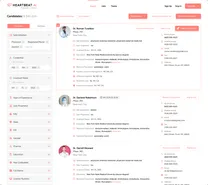
A structured provider database doesn’t replace relationship-building, but it removes the guesswork at the start of an outreach campaign. Heartbeat.ai’s platform lets you filter by specialty, location, and license status to build a list of Montana orthodontists rather than manually cross-referencing state board records against practice websites.
Typical fields available in a provider record include:
- Orthodontist name
- Location
- Contact numbers (work, cell, mobile)
- Email address
- Specialization
- Years of experience
- Sole proprietor status
- Licensed states
- License number
- Fax
- Address
 Accuracy & coverage of personal contact info were unrivaled by other platforms… this gives any healthcare recruiter a competitive advantage when engaging hard-to-reach healthcare providers.
Senior Growth Strategist






Orthodontist Contact Lists Available by State
Heartbeat.ai maintains similar contact lists for orthodontists across every US state, useful if your outreach isn’t limited to Montana.
| Orthodontists by state |
|---|
| Orthodontists in Alabama |
| Orthodontists in Alaska |
| Orthodontists in Arizona |
| Orthodontists in Arkansas |
| Orthodontists in California |
| Orthodontists in Colorado |
| Orthodontists in Connecticut |
| Orthodontists in Delaware |
| Orthodontists in Florida |
| Orthodontists in Georgia |
| Orthodontists in Hawaii |
| Orthodontists in Idaho |
| Orthodontists in Illinois |
| Orthodontists in Indiana |
| Orthodontists in Iowa |
| Orthodontists in Kansas |
| Orthodontists in Kentucky |
| Orthodontists in Louisiana |
| Orthodontists in Maine |
| Orthodontists in Maryland |
| Orthodontists in Massachusetts |
| Orthodontists in Michigan |
| Orthodontists in Minnesota |
| Orthodontists in Mississippi |
| Orthodontists in Missouri |
| Orthodontists in Montana |
| Orthodontists in Nebraska |
| Orthodontists in Nevada |
| Orthodontists in New Hampshire |
| Orthodontists in New Jersey |
| Orthodontists in New Mexico |
| Orthodontists in New York |
| Orthodontists in North Carolina |
| Orthodontists in North Dakota |
| Orthodontists in Ohio |
| Orthodontists in Oklahoma |
| Orthodontists in Oregon |
| Orthodontists in Pennsylvania |
| Orthodontists in Rhode Island |
| Orthodontists in South Carolina |
| Orthodontists in South Dakota |
| Orthodontists in Tennessee |
| Orthodontists in Texas |
| Orthodontists in Utah |
| Orthodontists in Vermont |
| Orthodontists in Virginia |
| Orthodontists in Washington |
| Orthodontists in West Virginia |
| Orthodontists in Wisconsin |
| Orthodontists in Wyoming |
How the Data Is Compiled
Heartbeat.ai aggregates healthcare provider records, including personal emails and cell numbers, from a mix of official, private, and public sources, then applies predictive modeling to fill gaps and improve match confidence. The goal is a working list you can start from — not a guarantee that every entry is current, since provider information changes constantly as people move, retire, or switch practices.
Who Typically Uses These Lists
- Healthcare recruiters filling orthodontic or dental support roles
- Dental supply and equipment vendors targeting independent practices
- Market research firms surveying specialty dental providers
- Marketing and advertising agencies running client campaigns aimed at dental professionals
Anyone using a purchased or aggregated contact list is responsible for complying with applicable data protection and communication laws, including opt-out requirements for commercial email and telemarketing rules for phone outreach.
A Practical Checklist Before You Reach Out
- Confirm the provider’s specialty and current practice location before drafting your message — small practices sometimes list a general dentist as the point of contact for orthodontic referrals.
- Keep initial outreach short and specific about why you’re reaching out; generic mass emails tend to underperform with independent practitioners.
- Respect time constraints — Montana orthodontists often run lean practices with limited administrative staff.
- Avoid requesting or referencing any patient-identifiable information in outreach messages.
- Cross-check unusually old contact records against the practice’s current website or the Montana Board of Dentistry before a high-priority outreach push.
Frequently Asked Questions
What services do orthodontists in Montana typically offer?
Most orthodontic practices in Montana offer braces, clear aligners, retainers, and referrals for orthodontic-related jaw surgery. Exact services vary by practice.
How can I verify whether a Montana orthodontist is currently licensed?
The Montana Board of Dentistry maintains licensing records and is the authoritative source for confirming an active license.
How long does orthodontic treatment usually take?
Treatment length varies by case, but many courses of orthodontic treatment run roughly one to three years. This is general information, not a prediction for any specific patient.
Does dental insurance cover orthodontic treatment in Montana?
Coverage depends on the individual plan. Checking directly with the insurance provider is the most reliable way to confirm what’s included.