Last updated: August 31, 2026
California has one of the largest and most active optometry markets in the country, which makes it a common target for recruiters, medical device reps, healthcare marketers, and staffing agencies. The challenge is rarely finding a list of names. It’s finding contact information that’s still accurate once you actually try to use it.
Optometrists change practices, retire, get acquired by larger vision-care groups, or simply stop checking the general inbox listed on their old website. Outdated contact data slows down recruitment cycles, wastes outreach budget, and creates friction for anyone trying to build a real relationship with a provider.
What’s on this page:
Optometry in California: A Quick Snapshot
California licenses optometrists through the California State Board of Optometry, which oversees education requirements, licensing exams, and disciplinary actions for the profession statewide. The California State Board of Optometry issues licenses to optometrists so that they may practice in the state of California, and a license means that the Board finds an optometrist fit to treat patients after completing the required education and passing state and national examinations.
The state is also home to academic and clinical institutions that train and employ optometrists, including university-affiliated eye institutes in Southern California that combine patient care with research and education. That academic pipeline is part of why California’s optometry workforce stays relatively large compared to many other states, even though the profession skews toward urban centers.
Why Accurate Contact Data Matters More Than It Seems
For recruiters and healthcare marketers, the cost of bad contact data isn’t just a bounced email. It’s the compounding effect of wasted outreach cycles: a recruiter spends a week trying to reach a candidate through a defunct practice email, a marketing team runs a campaign against a list where a third of the numbers are disconnected, or a sales rep books time with someone who left the practice six months ago.
Accurate data matters in three specific ways:
- Recruitment speed — direct lines and personal emails let recruiters skip the front-desk gatekeeping that slows down candidate outreach.
- Marketing efficiency — clean lists reduce bounce rates and improve deliverability, which protects sender reputation over time.
- Professional networking — optometrists rely on peer connections for referrals, continuing education, and clinical collaboration, all of which depend on being reachable.
Where Finding Optometrists Gets Difficult
California’s size and geographic spread create a real distribution problem. Optometrists cluster around Los Angeles, the Bay Area, San Diego, and Sacramento, while rural counties in the Central Valley or far north of the state have far fewer providers per capita. That unevenness makes generic directory searches unreliable if you’re targeting anything beyond the biggest metro areas.
A few practical limitations worth knowing before you build an outreach list:
- Public directories often list a practice’s main line, not a provider’s direct number.
- Board licensing records confirm that someone holds an active license, but they don’t include personal contact details.
- Group practices and vision-care chains frequently rotate staff, so a name-to-location match can go stale within months.
- Telehealth and remote consultation options have expanded access in underserved areas, but they don’t solve the problem of finding a specific provider’s direct contact information.
A Practical Workflow for Building an Optometrist Contact List
Whether you’re recruiting or running an outreach campaign, the process generally looks the same regardless of which state you’re targeting:
- Define the specialty and geography. General optometry, pediatric optometry, glaucoma management, and behavioral optometry are distinct enough that a generic “eye doctor” list won’t serve a targeted campaign well.
- Pull from a database that verifies license status. Cross-referencing against state board data helps confirm the provider is actively practicing, not retired or relocated out of state.
- Prioritize direct contact fields over general practice lines. Cell numbers and personal emails get through gatekeeping that front-desk numbers don’t.
- Segment your list before you send anything. A pediatric optometrist and a glaucoma specialist respond to very different messaging.
- Refresh the list periodically. Contact data degrades over time as providers change practices or retire, so a one-time pull isn’t enough for ongoing campaigns.
What a Heartbeat Optometrist Contact List Includes
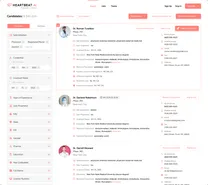
Heartbeat.ai’s optometrist data for California is organized around the fields that matter most for outreach and recruitment, rather than generic directory listings:
- Optometrist name
- Location
- Contact numbers (work, cell, mobile)
- Email address
- Specialization
- Years of experience
- Sole proprietor status
- Licensed states
- License number
- Fax
- Address
Optometrists by State
Browse contact lists for optometrists in other states below.
Who Actually Uses This Kind of List
The audience for optometrist contact data is narrower than it might seem. It’s mostly:
- Healthcare recruiters filling optometrist roles at group practices, hospital systems, or retail vision chains
- Medical device and pharma sales teams targeting eye-care specialists
- Marketing teams running campaigns for CE courses, practice management software, or clinical products
- Associations and organizations coordinating with practicing optometrists on advocacy or education
It’s worth being direct about limitations here: contact lists are a starting point for outreach, not a substitute for verifying license status or professional standing through the state board when it matters for a specific transaction.
Best Practices for Reaching Out
A good contact list doesn’t guarantee a good response rate. A few things consistently improve outcomes:
- Lead with something specific to the recipient’s specialty or practice type rather than a generic pitch.
- Respect opt-out requests immediately and keep an internal suppression list.
- Keep messages short — optometrists in active practice have limited time between patients.
- Avoid over-contacting the same person across multiple channels in a short window.
Closing Thoughts
California’s optometry workforce is large and geographically uneven, which makes targeted, verified contact data more useful than a broad directory scrape. Whether the goal is recruitment, sales outreach, or professional networking, the practical difference comes down to whether the data on file is still accurate when you actually try to use it.
Frequently Asked Questions
What services do optometrists in California provide?
Optometrists in California provide comprehensive eye exams, vision testing, prescriptions for glasses and contact lenses, and diagnosis and management of common eye conditions.
How do I find optometrists in California?
Options include state board license verification tools, online directories, insurance provider networks, and referrals from other healthcare professionals.
What qualifications do optometrists in California have?
A California optometry license means the Board has confirmed the optometrist completed the required education and training and passed both state and national examinations. Additional certifications, such as therapeutic pharmaceutical agent or glaucoma certifications, may also apply to a given license.
Are optometrists in California covered by insurance?
Many vision and health insurance plans cover optometric services, though coverage details and out-of-pocket costs vary by plan, so it’s worth confirming directly with the insurer.