Last updated: August 31, 2026
Occupational therapists in New York work across hospitals, outpatient clinics, schools, and home health settings, treating patients recovering from injury, illness, or developmental conditions. For anyone in healthcare recruiting, marketing, or partnerships, reaching this group directly is harder than it sounds. Job titles vary by employer, contact details change when practitioners switch employers, and general directories often lag behind actual licensure and practice status.
An accurate, regularly refreshed contact list for New York occupational therapists solves a specific problem: it lets you skip the guesswork and reach the right person the first time, whether you’re recruiting, promoting a clinical product, or building a referral network.
What’s on this page:
Get an Occupational Therapist Email List for New York from Heartbeat
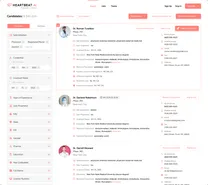
Heartbeat.ai’s database covers licensed healthcare professionals across the United States, including occupational therapists in New York. You can filter by specialty, location, and other criteria to build a targeted list rather than working through a generic directory.
The occupational therapist records in our system span multiple practice areas, including physical rehabilitation, pediatrics, mental health, geriatrics, and vision rehabilitation. If you need to reach a specific subset of practitioners rather than the entire population, filtering by specialty saves time compared to manually vetting contacts.
Whether the goal is recruiting, product outreach, research collaboration, or professional networking, a list that’s actually current matters more than one that’s simply large. Get your custom Occupational Therapist Email List for New York and start outreach with contact data that’s been recently verified rather than scraped once and left stale.
Occupational Therapy Licensure in New York: What Recruiters Should Know
New York occupational therapy licensure is administered by the New York State Education Department’s Office of the Professions. To become licensed, a candidate must graduate from a NY-registered or ACOTE-accredited OT program, complete six months of supervised occupational therapy experience, and pass the NBCOT OTR examination.
One detail worth knowing if you’re vetting candidates or building targeted outreach: the license itself never expires, but practitioners must maintain a current registration to legally use the title or practice. A lapsed registration doesn’t necessarily mean someone has left the field — it can simply mean they haven’t renewed. Licensed occupational therapists in New York must also complete thirty-six hours of continuing education every three years to keep their registration active.
New York also has a licensing quirk that’s easy to miss: the state requires OT license candidates to be at least 21 years old, so recent graduates who are 20 cannot be licensed until they turn 21, even after passing the NBCOT exam. This can matter when timing recruitment outreach to new graduates.
Why Accurate Contact Information Matters
Bad contact data creates real friction in three areas:
- Recruitment: Outdated emails or disconnected phone numbers mean recruiters miss qualified candidates entirely, or waste cycles chasing leads that go nowhere.
- Marketing and sales outreach: Campaigns sent to inactive addresses hurt deliverability and skew response metrics, making it harder to judge what’s actually working.
- Professional networking: Collaboration and referral relationships depend on being able to reach the right practitioner when an opportunity comes up, not weeks later after tracking down a working number.
None of this replaces clinical judgment or patient care coordination — accurate contact data is an operational tool, not a substitute for professional communication standards or privacy compliance.
Common Obstacles to Finding the Right Occupational Therapist
A few recurring issues make sourcing OT contacts in New York more difficult than it should be:
- Specialization mismatch: A general search doesn’t tell you whether a therapist focuses on pediatrics, geriatrics, or physical rehab — details that matter for both recruiting and referral relevance.
- Geographic spread: New York’s mix of dense urban areas and rural regions means availability and access vary widely by county.
- Stale directories: Many public listings aren’t tied to active registration status, so you can’t always tell if someone is currently practicing.
A filterable, regularly updated database addresses most of these by letting you narrow by specialty and location in one search rather than cross-referencing multiple sources.
What’s Included in Heartbeat’s Occupational Therapist Contact Data
Records in the Heartbeat database typically include the following fields:
- Occupational therapist name
- Location
- Contact numbers (work, cell, mobile)
- Email address
- Specialization
- Years of experience
- Sole proprietor status
- Licensed states
- License number
- Fax
- Address
Occupational Therapist Contact Lists by State
Browse occupational therapist contact lists organized by state below.
| Occupational therapist by states |
|---|
| Occupational therapist in Alabama |
| Occupational therapist in Alaska |
| Occupational therapist in Arizona |
| Occupational therapist in Arkansas |
| Occupational therapist in California |
| Occupational therapist in Colorado |
| Occupational therapist in Connecticut |
| Occupational therapist in Delaware |
| Occupational therapist in Florida |
| Occupational therapist in Georgia |
| Occupational therapist in Hawaii |
| Occupational therapist in Idaho |
| Occupational therapist in Illinois |
| Occupational therapist in Indiana |
| Occupational therapist in Iowa |
| Occupational therapist in Kansas |
| Occupational therapist in Kentucky |
| Occupational therapist in Louisiana |
| Occupational therapist in Maine |
| Occupational therapist in Maryland |
| Occupational therapist in Massachusetts |
| Occupational therapist in Michigan |
| Occupational therapist in Minnesota |
| Occupational therapist in Mississippi |
| Occupational therapist in Missouri |
| Occupational therapist in Montana |
| Occupational therapist in Nebraska |
| Occupational therapist in Nevada |
| Occupational therapist in New hampshire |
| Occupational therapist in New jersey |
| Occupational therapist in New mexico |
| Occupational therapist in New york |
| Occupational therapist in North carolina |
| Occupational therapist in North dakota |
| Occupational therapist in Ohio |
| Occupational therapist in Oklahoma |
| Occupational therapist in Oregon |
| Occupational therapist in Pennsylvania |
| Occupational therapist in Rhode island |
| Occupational therapist in South carolina |
| Occupational therapist in South dakota |
| Occupational therapist in Tennessee |
| Occupational therapist in Texas |
| Occupational therapist in Utah |
| Occupational therapist in Vermont |
| Occupational therapist in Virginia |
| Occupational therapist in Washington |
| Occupational therapist in West virginia |
| Occupational therapist in Wisconsin |
| Occupational therapist in Wyoming |
How Heartbeat Compiles Occupational Therapist Contact Data
Heartbeat aggregates healthcare provider data from official, private, and public sources, then uses predictive modeling to fill in and verify contact details like cell numbers and personal emails. The goal is to give recruiters and marketers a working head start rather than a stale directory pull, though as with any contact database, some records will still need spot-checking against current registration status, especially for professionals who’ve recently changed employers.
Who Uses Occupational Therapist Contact Lists
Contact lists like this serve a range of use cases:
- Recruiters sourcing candidates for open OT positions
- Marketing teams promoting clinical products, continuing education, or services relevant to OT practice
- Sales teams reaching decision-makers at clinics and rehab facilities
- Researchers and professional associations distributing surveys or field-specific communications
- Other healthcare professionals building referral or collaboration networks
Any use of this kind of contact data should stay within applicable privacy and communication regulations, including relevant email and telemarketing rules.
Using an Occupational Therapist Email List Effectively
A few practices separate effective outreach from list-based spam:
- Segment by specialty and location before sending anything — a pediatric OT and a geriatric OT rarely respond to the same message.
- Keep messages short and specific about why you’re reaching out; occupational therapists generally have limited time between patient appointments.
- Respect opt-outs and follow applicable communication regulations without exception.
- Follow up once, professionally, rather than repeatedly — persistence without relevance tends to hurt response rates over time.
Frequently Asked Questions
What is the role of an occupational therapist in New York?
Occupational therapists in New York help individuals improve their ability to perform everyday activities and enhance their quality of life through therapeutic interventions and techniques.
How do I become an occupational therapist in New York?
Candidates must graduate from a NY-registered or ACOTE-accredited OT program, complete six months of supervised occupational therapy experience, and pass the NBCOT OTR examination, then apply for licensure through the New York State Education Department. Registration must also be kept current to practice under the title.
What types of conditions do occupational therapists in New York treat?
Occupational therapists in New York treat a wide range of conditions including physical injuries, developmental disabilities, neurological disorders, mental health conditions, and age-related disorders. They work with patients of all ages to improve their functional abilities and independence.