Last updated: August 28, 2026

Reaching occupational therapists directly, whether for recruiting, product outreach, or research collaboration, depends on having contact data that’s actually current. OT staff move between rehab centers, hospitals, home health agencies, and private practice more often than list vendors update their files, so stale contact information is a real and common problem in this niche.
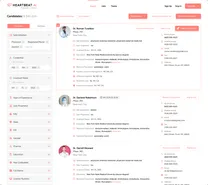
Heartbeat AI provides access to occupational therapist contact records, including work and mobile numbers, email addresses, and practice details, for teams that need to build or refresh outreach lists in this specialty.
What’s on this page:
What’s in Heartbeat’s Occupational Therapist Data

Heartbeat maintains contact records for occupational therapists practicing across the United States, spanning rehabilitation centers, nursing homes, hospitals, private clinics, and other care settings.
- Contact database: Verified records covering occupational therapy professionals nationwide.
- Updated details: Contact information kept current rather than pulled once and left stale.
- Segmentation for marketing: Filter by criteria relevant to your outreach instead of blasting an entire list.
- Engagement insights: Email performance data to help refine future campaigns.
- Depth of fields: Names, locations, work and mobile phone numbers, email addresses, specialties, and years of experience.
Data Fields Typically Included
- Name
- Location
- Work and mobile phone numbers
- Email address
- Specialization
- Years of experience
- Sole proprietor status
- Licensed states
- License number
- Fax
- Address
 Accuracy & coverage of personal contact info were unrivaled by other platforms… this gives any healthcare recruiter a competitive advantage when engaging hard-to-reach healthcare providers.
Senior Growth Strategist






Why Verified Contact Data Matters

Working from a current, accurate list changes the economics of outreach. A few concrete effects worth knowing before you build a campaign:
- Targeted marketing: Filter by location, specialization, or experience so messages reach the segment most likely to respond.
- Lower cost per response: Targeted campaigns typically waste less budget than broad, unsegmented sends.
- Networking access: A working list makes it easier to reach potential collaborators or partners in the field.
- Research sampling: Researchers can use segmented contact data to reach a relevant professional sample for studies or surveys.
- Compliance support: Working from a list built with consent-based collection practices reduces the risk of sending unwanted messages.
- Personalization: Segmented data lets you tailor messaging to the recipient’s specialty or setting rather than sending generic copy.
- Time savings: Fewer bounces and dead contacts mean less time spent chasing unreachable addresses.
Occupational Therapist Categories in the Database
The database spans a range of practice areas within occupational therapy.
Occupational Therapists by State
Contacts are searchable by state, which is useful if your outreach or hiring is regional rather than national.
| Occupational Therapist By States |
| Occupational Therapist in Alabama |
| Occupational Therapist in Alaska |
| Occupational Therapist in Arizona |
| Occupational Therapist in Arkansas |
| Occupational Therapist in California |
| Occupational Therapist in Colorado |
| Occupational Therapist in Connecticut |
| Occupational Therapist in Delaware |
| Occupational Therapist in Florida |
| Occupational Therapist in Georgia |
| Occupational Therapist in Hawaii |
| Occupational Therapist in Idaho |
| Occupational Therapist in Illinois |
| Occupational Therapist in Indiana |
| Occupational Therapist in Iowa |
| Occupational Therapist in Kansas |
| Occupational Therapist in Kentucky |
| Occupational Therapist in Louisiana |
| Occupational Therapist in Maine |
| Occupational Therapist in Maryland |
| Occupational Therapist in Massachusetts |
| Occupational Therapist in Michigan |
| Occupational Therapist in Minnesota |
| Occupational Therapist in Mississippi |
| Occupational Therapist in Missouri |
| Occupational Therapist in Montana |
| Occupational Therapist in Nebraska |
| Occupational Therapist in Nevada |
| Occupational Therapist in New Hampshire |
| Occupational Therapist in New Jersey |
| Occupational Therapist in New Mexico |
| Occupational Therapist in New York |
| Occupational Therapist in North Carolina |
| Occupational Therapist in North Dakota |
| Occupational Therapist in Ohio |
| Occupational Therapist in Oklahoma |
| Occupational Therapist in Oregon |
| Occupational Therapist in Pennsylvania |
| Occupational Therapist in Rhode Island |
| Occupational Therapist in South Carolina |
| Occupational Therapist in South Dakota |
| Occupational Therapist in Tennessee |
| Occupational Therapist in Texas |
| Occupational Therapist in Utah |
| Occupational Therapist in Vermont |
| Occupational Therapist in Virginia |
| Occupational Therapist in Washington |
| Occupational Therapist in West Virginia |
| Occupational Therapist in Wisconsin |
| Occupational Therapist in Wyoming |
How the Data Gets Compiled

Collection
Contact details are pulled from customer records, forms, and online sign-ups, covering names, emails, addresses, and phone numbers.
Cross-team input
Sales and marketing teams contribute leads and additional context about occupational therapists relevant to specific campaigns.
Organization and verification
Records go through validation steps intended to confirm accuracy before they’re made available for outreach.
Ongoing maintenance
Periodic review and cleaning aim to keep records current rather than letting them decay after the initial build.
Choosing an Occupational Therapist Data Provider: What to Check

Before you commit budget to any provider, run through this checklist:
- Data accuracy: Outdated records waste money and can hurt your sender reputation. Ask how recently records were verified.
- Source reliability: Data sourced from professional associations, healthcare directories, or reputable vendors tends to hold up better than scraped lists.
- Regulatory compliance: Confirm the list was built in a way that respects data protection regulations and that individuals’ information was obtained appropriately.
- Customization: Look for filtering by specialization, location, or experience level so you’re not stuck mailing an entire undifferentiated list.
- Update cadence: Ask how often records are refreshed and whether verification happens continuously or in batches.
- Ethical sourcing: Consent-based collection matters both for compliance and for deliverability.
- Security practices: Understand how the provider protects the confidentiality of the data it holds, consistent with general data protection standards.
- Reviews and reputation: Existing customer feedback is a reasonable signal of reliability.
- Cost versus value: Weigh price against the depth of fields, segmentation options, and update frequency actually offered.
Who Actually Uses This Kind of List

An occupational therapist contact list serves a fairly wide set of use cases across healthcare and adjacent industries:
- Healthcare service providers: Hospitals, clinics, and rehab centers use it for recruiting or collaboration.
- Medical equipment suppliers: Companies selling assistive devices or therapeutic tools target OTs who influence purchasing decisions.
- Pharmaceutical companies: Used for education, clinical trial recruitment, or medication information outreach.
- Healthcare software developers: Reaching OTs interested in documentation or practice-management tools.
- Research institutions: Building a sample for surveys or studies involving practicing therapists.
- Marketing and advertising agencies: Running promotional or continuing-education campaigns aimed at this audience.
- Job placement agencies: Connecting OTs with open roles.
- Educational institutions: Alumni engagement, guest lectures, or partnership outreach.
- Professional associations: Member communication and event promotion.
- Government health departments: Public health or regulatory updates directed at practicing therapists.
- Consulting firms: Outreach related to practice optimization or healthcare policy work.
Getting More Out of the List Once You Have It
Having accurate contact data is only half the job. How you use it determines whether it turns into meetings, hires, or sales.
Segment before you send
Split contacts by location, specialization, or years of experience so each message actually applies to the person receiving it. A generic blast to every OT in the file tends to underperform a smaller, well-matched segment.
Personalize beyond the name field
Reference the recipient’s practice setting or specialty rather than sending copy that could apply to anyone in healthcare.
Lead with something useful
Industry updates, research summaries, or practical resources tend to earn more attention than a straight pitch.
Make the next step obvious
One clear call to action, whether it’s downloading a resource, booking a call, or registering for an event, works better than several competing asks.
Design for mobile
Clinical staff often check email between patients on a phone, so a responsive layout isn’t optional.
Watch timing and frequency
Account for time zones and don’t over-send. Fatigue shows up quickly in open and unsubscribe rates.
Test and measure
Run A/B tests on subject lines and content, then track open rates, click-through rates, and conversions to see what’s actually working.
Follow up systematically
A short sequence that builds on the first message tends to outperform a single one-off email.
Stay compliant
Honor opt-out requests promptly and keep your practices aligned with applicable privacy rules.
Coordinate across channels
Pairing email with social promotion or webinars reinforces the message instead of relying on one channel alone.
A Few Limitations Worth Knowing
No contact database is perfect, and it helps to set expectations up front. Even well-maintained lists will include some contacts who’ve changed roles or facilities since the last verification pass. License numbers and specialty tags can lag behind real-world changes in practice focus. And segmentation only helps if your message is genuinely relevant to the segment you’re targeting; precise data doesn’t fix a generic pitch.
Conclusion
An occupational therapist contact list is a practical tool for reaching professionals in this specialty, whether the goal is recruiting, partnership, product outreach, or research. The value depends heavily on how current and well-segmented the data actually is.
Heartbeat AI provides an option for building an authentic contact list across the medical community, including occupational therapists, aimed at reducing the time spent chasing outdated contact information.
Consider testing Heartbeat AI against your current process to see whether it improves the reliability of your outreach.
FAQs
What is an occupational therapist email list?
It’s a compiled database of contact details, including email addresses, for professionals working in occupational therapy, used for targeted outreach and communication.
Can I use these lists for educational or research purposes?
Yes. These lists can support research collaboration, sharing findings, or gathering information relevant to academic or research initiatives.
Can I access demographic information in the list?
Depending on the provider, you may see details such as location, specialization, and years of experience. Choose a provider that documents what fields are actually included.
How do I ensure data security and privacy compliance when using email lists?
Work with a provider that follows data protection laws and regulations, ensure your own marketing practices obtain appropriate consent, and always honor opt-out requests promptly.