What’s on this page:
Key takeaways
- Contact databases can help recruiters, vendors, and sales teams find nursing home staff by role and location.
- The article reports 304 nursing homes and skilled nursing facilities in Tennessee, but facility counts and bed figures should be checked against current official data.
- Contact data is for outreach; it does not establish a facility’s quality of care or licensing status.
- Verify important contact details before a large campaign because staff and facility information can change.
- Check which privacy and marketing rules apply before contacting people by email, phone, or text.
Last updated: August 30, 2026
Tennessee has roughly 300 licensed nursing homes. For healthcare recruiters, sales teams, and vendors, finding the right contacts — such as administrators, directors of nursing, HR staff, and discharge planners — can be difficult. Facility directories may become outdated, and public listings may not include direct email addresses or mobile numbers. This article explains the contact-data gap and how a contact database such as Heartbeat’s may help with outreach.
Get an Email List of Nursing Homes in Tennessee from Heartbeat
Heartbeat.ai’s contact database covers licensed healthcare professionals across the United States, including staff at nursing homes and other long-term care facilities. You can filter by role, location, and specialty to build a list that matches your outreach goals instead of working through a generic directory.
The database spans different facility types — assisted living, rehabilitation centers, memory care, skilled nursing, and independent living communities — so you’re not stuck cross-referencing multiple sources to cover a market. If your search needs are narrower, our team can help scope a more targeted pull.
You can reach us through the Heartbeat.ai site, where a short form connects you with our team directly.
Tennessee’s Nursing Home Landscape
The article reports 304 nursing homes and skilled nursing facilities in Tennessee, across 159 cities, with 34,614 certified beds serving 24,858 residents. It gives an average of roughly 81 residents per facility and notes that facility sizes vary, from some rural homes with fewer than 50 beds to larger urban facilities with more than 150.
Oversight for hospitals, nursing homes, ambulatory surgical treatment centers, and other health care facilities in the state falls to the Tennessee Health Facilities Commission’s Division of Licensure and Regulation. The commission certifies nursing facility beds, serves as the state’s surveying agency for Medicare and Medicaid, and is responsible for licensure and regulatory oversight — including surveys, complaint investigations, and compliance enforcement.
Contact lists can help identify who to reach and at which location, but they do not establish a facility’s care quality. Industry groups such as THCA and its assisted-living affiliate report more than 450 member facilities statewide, including privately owned, government-operated, and nonprofit operators.
Why Accurate Contact Data Matters Here
Bad contact data costs time in three specific ways for anyone working in this space:
- Recruitment delays: Reaching a generic facility line rarely gets you to the person hiring. Direct emails and mobiles for administrators or DONs cut the loop out of the process.
- Vendor and sales outreach: Facility ownership changes hands often — a name that worked six months ago may no longer be the right contact after an acquisition or management change.
- Family and care coordination: Outdated numbers on public directories can delay urgent communication with care staff, which matters more than almost anything else on this list.
None of this is unique to Tennessee, but the state’s mix of large health systems and smaller rural operators means contact quality can swing widely depending on the facility.
Common Obstacles When Building a Tennessee Nursing Home List
A few recurring problems show up when compiling contact information for this sector:
- Fragmented sources: No single public database lists every facility with current staff contacts, pricing, and ratings side by side.
- Ownership churn: Facilities get bought, sold, or rebranded, and directories often lag behind these changes by months.
- Rural coverage gaps: Smaller towns often have thinner web presences, making manual research slower and less reliable.
- Inconsistent formatting: Publicly available data (state inspection reports, CMS filings) isn’t built for outreach — it’s built for compliance reporting.
A maintained database can make information easier to work with by consolidating it into one format and refreshing it regularly. As with any directory, users should verify important contacts rather than rely on a single static listing.
What’s Included in Heartbeat’s Nursing Home Contact Data
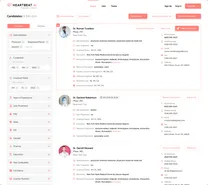
Heartbeat’s nursing home records are built to support both immediate outreach and longer-term relationship tracking. A typical record includes:
- Nursing home name
- Location
- Contact numbers (work, cell, mobile)
- Email address
- Specialization
- Years of experience
- Sole proprietor status
- Licensed states
- License number
- Fax
- Address
Nursing Home Contact Lists by State
Browse available nursing home contact lists across other states.
| Nursing homes by states |
|---|
| Nursing homes in Alabama |
| Nursing homes in Alaska |
| Nursing homes in Arizona |
| Nursing homes in Arkansas |
| Nursing homes in California |
| Nursing homes in Colorado |
| Nursing homes in Connecticut |
| Nursing homes in Delaware |
| Nursing homes in Florida |
| Nursing homes in Georgia |
| Nursing homes in Hawaii |
| Nursing homes in Idaho |
| Nursing homes in Illinois |
| Nursing homes in Indiana |
| Nursing homes in Iowa |
| Nursing homes in Kansas |
| Nursing homes in Kentucky |
| Nursing homes in Louisiana |
| Nursing homes in Maine |
| Nursing homes in Maryland |
| Nursing homes in Massachusetts |
| Nursing homes in Michigan |
| Nursing homes in Minnesota |
| Nursing homes in Mississippi |
| Nursing homes in Missouri |
| Nursing homes in Montana |
| Nursing homes in Nebraska |
| Nursing homes in Nevada |
| Nursing homes in New hampshire |
| Nursing homes in New jersey |
| Nursing homes in New mexico |
| Nursing homes in New york |
| Nursing homes in North carolina |
| Nursing homes in North dakota |
| Nursing homes in Ohio |
| Nursing homes in Oklahoma |
| Nursing homes in Oregon |
| Nursing homes in Pennsylvania |
| Nursing homes in Rhode island |
| Nursing homes in South carolina |
| Nursing homes in South dakota |
| Nursing homes in Tennessee |
| Nursing homes in Texas |
| Nursing homes in Utah |
| Nursing homes in Vermont |
| Nursing homes in Virginia |
| Nursing homes in Washington |
| Nursing homes in West virginia |
| Nursing homes in Wisconsin |
| Nursing homes in Wyoming |
How Heartbeat Builds Its Nursing Home Contact Data
Heartbeat.ai says it consolidates healthcare provider information from public, private, and official sources, cross-references data points, and uses predictive modeling to address gaps in public records. The company says this approach is intended to improve the likelihood of finding direct contact details compared with using a single free source. No dataset is perfect, so verify key contacts before a large campaign.
Who Uses a Nursing Home Contact List Like This
Typical users include recruitment teams filling clinical and administrative openings, sales and marketing staff selling equipment or services into long-term care, consultants doing market research, and organizations coordinating training or partnership programs across facilities. Outreach users should check which data privacy and marketing rules apply to their channels; CAN-SPAM and TCPA are among the laws relevant to some email, phone, and text outreach.
Getting More Out of a Nursing Home Contact List
A few practical habits separate effective outreach from a wasted list:
- Segment before you send. A recruiting message and a vendor pitch shouldn’t go to the same inbox with the same subject line.
- Lead with something concrete. Administrators and DONs get pitched constantly — specificity about the role, product, or ask gets read faster than a generic intro.
- Respect their time constraints. Facility staff are often short-staffed; keep first-touch messages short and easy to act on.
- Track what changes. Ownership and staff turnover in this sector is common enough that a list needs periodic refreshing, not a one-time pull.
Where This Fits and Where It Doesn’t
A contact database can help find the right person, but it does not replace due diligence on care quality, facility ratings, or licensing status. For those questions, consult the Tennessee Health Facilities Commission and CMS’s Care Compare tool. Use contact data to support outreach, and use regulatory and quality information when evaluating care.
Frequently Asked Questions
What services do nursing homes in Tennessee offer?
Nursing homes in Tennessee typically provide 24-hour supervised care, help with daily activities, medical care, and social or recreational programming for residents.
How much does it cost to stay in a nursing home in Tennessee?
Costs vary by location, level of care, and amenities. Rather than quoting a fixed range that goes stale quickly, check current facility pricing directly or through CMS’s Care Compare tool for up-to-date figures.
What should I consider when choosing a nursing home in Tennessee?
Key factors include care quality ratings, cleanliness and safety records, staff-to-resident ratios, availability of specialized care, and inspection history through the Tennessee Health Facilities Commission.
Are there government resources to help find nursing homes in Tennessee?
Yes. The Tennessee Health Facilities Commission oversees licensing and inspections, and CMS’s Care Compare tool lets you compare facilities nationwide, including in Tennessee, based on inspection results and quality measures.