Last updated: August 30, 2026
Alabama has roughly 224 to 230 nursing homes and skilled nursing facilities, depending on the dataset and how CCRCs, assisted living, and memory care communities are counted.
For anyone working in healthcare staffing, sales, or partnership development, that number matters less than the ability to reach the right person at the right facility. Administrators, directors of nursing, and admissions coordinators change roles often, and a contact list built even a year ago can already be stale.
What’s on this page:
Why Alabama’s nursing home landscape is worth understanding
Alabama’s older population is growing, with seniors representing more than 17% of the state’s residents, and the geriatric population expected to increase substantially in the coming decades. The state has just over 230 licensed nursing homes equipped to care for tens of thousands of adults who are frail, sick, or disabled and need long-term or short-term rehabilitative care.
The average cost of nursing home care in Alabama runs around $191 per day, which is lower than the national average of about $228 per day. That gap matters for recruiters and vendors sizing markets, and for families comparing options, though actual rates vary by facility, room type, and level of care.
Alabama’s Department of Public Health also tracks Special Focus Facilities — homes with a history of serious quality issues placed into a program meant to drive improvement — and currently lists only one such facility in the state. That’s a useful data point for anyone vetting a facility list before outreach, since quality flags can affect how you approach recruitment or partnership conversations.
Why accurate contact data matters more than volume
A long list of nursing home names is not the same as a usable contact list. Outdated phone numbers and generic front-desk emails routinely stall recruiting pipelines, vendor outreach, and even basic care coordination. A few practical consequences of bad data:
- Recruiting delays: Reaching a switchboard instead of a director of nursing or administrator can add days to a hiring cycle that’s already time-sensitive.
- Wasted outreach spend: Sales and marketing teams sending campaigns to bounced emails or disconnected numbers burn budget without generating leads.
- Missed compliance windows: Vendors and suppliers coordinating with facilities on time-sensitive matters need a direct line, not a general inbox that may go unchecked.
- Family communication gaps: For personal use cases, an outdated number can delay something as simple as confirming a visit or checking on a resident.
Common obstacles when researching Alabama nursing homes
Anyone trying to build a facility list or vet options in Alabama typically runs into a few recurring problems: quality of care varies widely between facilities, publicly available service details are often thin, and costs are rarely transparent until you call. Rural coverage gaps compound the problem — fewer facilities means less competition and less incentive for any single home to keep an updated web presence.
A structured contact database helps address this by centralizing details like location, service lines, and direct contact information in one place, rather than requiring separate searches across state directories, CMS listings, and individual facility websites.
What a healthcare-focused contact list should include
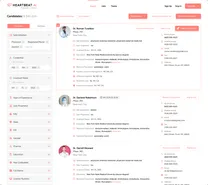
Heartbeat.ai’s approach to nursing home contact data is built around fields that matter for outreach and recruiting, not just a facility directory. A useful record typically includes:
- Nursing home name and address
- Direct contact numbers (work, cell, mobile)
- Email address
- Specialization or care type
- Years of experience
- Sole proprietor status
- Licensed states and license number
- Fax number
The value isn’t the list of fields itself — it’s having enough detail to filter down to the specific role or facility type you actually need, whether that’s a skilled nursing facility administrator in Birmingham or a memory care coordinator in a rural county.
Available Nursing Homes in Our Contact List by States
Explore our comprehensive email list detailing available nursing homes across various states.
| Nursing homes by states |
|---|
| Nursing homes in Alabama |
| Nursing homes in Alaska |
| Nursing homes in Arizona |
| Nursing homes in Arkansas |
| Nursing homes in California |
| Nursing homes in Colorado |
| Nursing homes in Connecticut |
| Nursing homes in Delaware |
| Nursing homes in Florida |
| Nursing homes in Georgia |
| Nursing homes in Hawaii |
| Nursing homes in Idaho |
| Nursing homes in Illinois |
| Nursing homes in Indiana |
| Nursing homes in Iowa |
| Nursing homes in Kansas |
| Nursing homes in Kentucky |
| Nursing homes in Louisiana |
| Nursing homes in Maine |
| Nursing homes in Maryland |
| Nursing homes in Massachusetts |
| Nursing homes in Michigan |
| Nursing homes in Minnesota |
| Nursing homes in Mississippi |
| Nursing homes in Missouri |
| Nursing homes in Montana |
| Nursing homes in Nebraska |
| Nursing homes in Nevada |
| Nursing homes in New hampshire |
| Nursing homes in New jersey |
| Nursing homes in New mexico |
| Nursing homes in New york |
| Nursing homes in North carolina |
| Nursing homes in North dakota |
| Nursing homes in Ohio |
| Nursing homes in Oklahoma |
| Nursing homes in Oregon |
| Nursing homes in Pennsylvania |
| Nursing homes in Rhode island |
| Nursing homes in South carolina |
| Nursing homes in South dakota |
| Nursing homes in Tennessee |
| Nursing homes in Texas |
| Nursing homes in Utah |
| Nursing homes in Vermont |
| Nursing homes in Virginia |
| Nursing homes in Washington |
| Nursing homes in West virginia |
| Nursing homes in Wisconsin |
| Nursing homes in Wyoming |
How this kind of data gets compiled
Contact databases like this pull from a mix of official licensing records, public directories, and private sourcing, then apply matching logic to connect a named professional with a current phone number or email. No dataset is perfect — professionals change facilities, numbers get reassigned, and small independent homes are harder to verify than large chains. Treat any purchased or aggregated list as a strong starting point that still benefits from periodic re-verification, especially for high-stakes recruiting or compliance-sensitive outreach.
Who actually uses nursing home contact lists
The use cases split fairly cleanly into a few groups:
- Healthcare recruiters filling clinical and administrative roles at skilled nursing and rehab facilities.
- Sales and marketing teams selling medical supplies, staffing services, software, or care products to facility decision-makers.
- Vendors and suppliers coordinating deliveries, contracts, or service agreements.
- Researchers and analysts tracking market coverage or facility density across regions.
Families researching placement for a loved one are a different audience with different needs — for that use case, state directories and the Alabama Department of Public Health’s facility listings are more appropriate starting points than a B2B contact database.
A quick workflow for using a nursing home contact list well
- Segment by facility type and region first — a statewide blast to every nursing home rarely performs as well as targeted outreach to a specific care category or metro area.
- Verify the role you’re contacting still exists at that facility before assuming a title is current.
- Keep messages short and specific to the recipient’s likely priorities — staffing needs, cost pressures, or compliance deadlines.
- Track bounce and response rates by segment so you can flag stale records for re-verification rather than re-using them blindly.
- Respect any applicable communication regulations and facility-level policies on solicitation.
Limitations to keep in mind
No contact database, including one built from hundreds of sourcing inputs, is fully current the moment you use it. Small independent and rural facilities are harder to keep updated than large hospital-affiliated systems. Direct cell numbers and personal emails also carry different reliability profiles than work lines, so it’s worth weighting outreach strategy accordingly rather than treating every contact field as equally dependable.
Frequently Asked Questions
What are the requirements for admission to nursing homes in Alabama?
Admission typically requires the individual to need skilled nursing care or assistance with daily activities, along with a medical assessment confirming that level of need. Specific intake requirements vary by facility.
How much does nursing home care cost in Alabama?
The average cost of nursing homes in Alabama is around $191 per day, which is lower than the national average of about $228 per day. Actual costs vary by facility, room type, and level of care needed.
What services and amenities are typically offered in nursing homes in Alabama?
Most facilities offer round-the-clock nursing care, help with daily living activities, medication management, therapy services, and social or recreational programming. Amenities can include private or semi-private rooms, dining options, and outdoor spaces, though offerings vary by facility.
Are nursing homes in Alabama regulated?
Nursing homes in Alabama are overseen by the Alabama Department of Public Health’s Bureau of Health Provider Standards, and facilities are also subject to federal Medicare and Medicaid certification requirements.