Last updated: August 29, 2026
Nuclear pharmacists sit in a small, highly specialized corner of the pharmacy profession. In Colorado, they work inside hospital systems, nuclear medicine departments, and compounding facilities to prepare radiopharmaceuticals used in diagnostic imaging and certain treatments. Because the specialty is small and licensing requirements are strict, building an accurate outreach list for recruiting, sales, or professional networking takes more effort than it does for larger provider categories.
This guide covers what the role involves, why contact data for this group tends to go stale quickly, and how a database like Heartbeat.ai’s can be used responsibly to reach these professionals.
What’s on this page:
Get an Email List of Nuclear Pharmacists in Colorado from Heartbeat
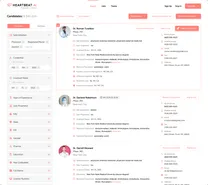
Heartbeat.ai maintains contact records for licensed healthcare professionals across the United States, including specialty roles like nuclear pharmacy. Filters let you narrow a search by state, license type, and other criteria so you can build a list focused specifically on Colorado.
Types of Nuclear Pharmacists You’ll Find in a Contact List
Not every nuclear pharmacist works in the same setting, and the distinction matters if you’re targeting outreach:
- Hospital nuclear pharmacists prepare and dispense radioactive materials for imaging and therapy within a hospital or health system.
- Community or commercial radiopharmacy pharmacists supply radiopharmaceuticals to outpatient clinics and hospitals from a centralized nuclear pharmacy.
- Academic nuclear pharmacists teach, research, or train students and residents in nuclear pharmacy programs.
- Industry-based nuclear pharmacists work on production and quality control of radiopharmaceuticals for pharmaceutical or radiopharmaceutical manufacturers.
Segmenting a list by these categories helps you tailor messaging instead of sending one generic pitch to everyone.
Nuclear Pharmacy in Colorado’s Healthcare System
Colorado’s healthcare system includes large hospital networks such as UCHealth and Denver Health, both of which rely on nuclear medicine services for diagnostic imaging. Children’s Hospital Colorado is another facility where nuclear pharmacy supports pediatric diagnostic and treatment protocols. Because the specialty is concentrated in a relatively small number of facilities statewide, the total pool of licensed nuclear pharmacists in Colorado is modest compared to more common pharmacy roles.
What It Takes to Become a Nuclear Pharmacist
Understanding the credentialing path is useful context if you’re recruiting or verifying a contact’s specialty. Board certification for this specialty is administered by the Board of Pharmacy Specialties (BPS) under the credential Board Certified Nuclear Pharmacist (BCNP). To become board certified, a pharmacist must graduate from an ACPE-accredited pharmacy program and complete up to 4,000 hours of experience in nuclear pharmacy, which can include a residency accredited by ASHP, an internship meeting state board requirements, and academic or practical training. Candidates must also pass the BPS Nuclear Pharmacy Certification Examination.
Training covers radiation physics and instrumentation, radiation protection, radiation biology, radioactivity-related math, and radiopharmaceutical chemistry, along with hands-on practical training in a nuclear pharmacy setting. Nuclear pharmacy was the first pharmacy specialty recognized by BPS, established in 1978.
Beyond board certification, nuclear pharmacists must hold an active state pharmacist license and typically operate under additional radiation-handling authorizations tied to Nuclear Regulatory Commission rules. State-specific licensing detail should be confirmed directly with the Colorado State Board of Pharmacy, since requirements and renewal cycles can change.
Why Accurate Contact Data Matters for This Specialty
A wrong phone number or an inactive email address costs more time in a niche field than in a high-volume one, simply because there are fewer alternative candidates to fall back on. For recruiters, that means a missed connection with one nuclear pharmacist in Colorado might mean starting the search over from a very short list. For vendors and marketers, outdated contact data means wasted outreach cycles on people who’ve moved employers or retired from the specialty.
Three practical reasons accuracy matters here:
- Small candidate pool. Fewer professionals hold this credential compared to general pharmacy roles, so each verified contact carries more weight.
- Employer turnover. Nuclear pharmacists move between hospital systems, commercial radiopharmacies, and academic settings, and licensing records don’t always reflect a current employer.
- Compliance sensitivity. Anyone reaching out about radioactive material handling, training, or products needs to confirm the recipient’s current role and facility before assuming relevance.
Common Challenges in Finding Nuclear Pharmacists in Colorado
A few recurring obstacles come up when building a list of this specialty:
- A limited number of licensed practitioners statewide, concentrated in a handful of hospital systems and commercial radiopharmacies.
- Geographic spread that puts some facilities in rural or less-connected parts of the state.
- Licensing and certification records that live across multiple state and national databases rather than one central source.
- Employer or specialty changes that outpace how quickly public directories get updated.
Recruitment platforms and licensing databases can narrow this gap, but no single source is guaranteed complete. Cross-checking a contact’s current employer against a recent, verifiable source before reaching out is still good practice.
What’s in a Heartbeat.ai Nuclear Pharmacist Contact Record
Heartbeat.ai’s contact records for this specialty are built to support recruitment, sales, and networking use cases. A typical record includes:
- Nuclear pharmacist name
- Location
- Contact numbers (work, cell, mobile)
- Email address
- Specialization
- Years of experience
- Sole proprietor status
- Licensed states
- License number
- Fax
- Address
Available Nuclear Pharmacists in Our Contact List by State
Explore our email list of nuclear pharmacists, organized by state.
| Nuclear pharmacists by states |
|---|
| Nuclear pharmacists in Alabama |
| Nuclear pharmacists in Alaska |
| Nuclear pharmacists in Arizona |
| Nuclear pharmacists in Arkansas |
| Nuclear pharmacists in California |
| Nuclear pharmacists in Colorado |
| Nuclear pharmacists in Connecticut |
| Nuclear pharmacists in Delaware |
| Nuclear pharmacists in Florida |
| Nuclear pharmacists in Georgia |
| Nuclear pharmacists in Hawaii |
| Nuclear pharmacists in Idaho |
| Nuclear pharmacists in Illinois |
| Nuclear pharmacists in Indiana |
| Nuclear pharmacists in Iowa |
| Nuclear pharmacists in Kansas |
| Nuclear pharmacists in Kentucky |
| Nuclear pharmacists in Louisiana |
| Nuclear pharmacists in Maine |
| Nuclear pharmacists in Maryland |
| Nuclear pharmacists in Massachusetts |
| Nuclear pharmacists in Michigan |
| Nuclear pharmacists in Minnesota |
| Nuclear pharmacists in Mississippi |
| Nuclear pharmacists in Missouri |
| Nuclear pharmacists in Montana |
| Nuclear pharmacists in Nebraska |
| Nuclear pharmacists in Nevada |
| Nuclear pharmacists in New hampshire |
| Nuclear pharmacists in New jersey |
| Nuclear pharmacists in New mexico |
| Nuclear pharmacists in New york |
| Nuclear pharmacists in North carolina |
| Nuclear pharmacists in North dakota |
| Nuclear pharmacists in Ohio |
| Nuclear pharmacists in Oklahoma |
| Nuclear pharmacists in Oregon |
| Nuclear pharmacists in Pennsylvania |
| Nuclear pharmacists in Rhode island |
| Nuclear pharmacists in South carolina |
| Nuclear pharmacists in South dakota |
| Nuclear pharmacists in Tennessee |
| Nuclear pharmacists in Texas |
| Nuclear pharmacists in Utah |
| Nuclear pharmacists in Vermont |
| Nuclear pharmacists in Virginia |
| Nuclear pharmacists in Washington |
| Nuclear pharmacists in West virginia |
| Nuclear pharmacists in Wisconsin |
| Nuclear pharmacists in Wyoming |
How Heartbeat.ai Compiles This Data
Heartbeat.ai aggregates contact information from a wide range of public and private sources, then applies predictive modeling to fill gaps and verify accuracy for cell phone numbers and personal emails. The goal is a database broad enough to cover most U.S. healthcare providers while staying current as people change roles or employers. No third-party database, including this one, is a substitute for confirming a contact’s current license status and employer directly when it matters for compliance or credentialing purposes.
Who Uses a Nuclear Pharmacist Contact List
Common use cases include:
- Healthcare recruiters filling open positions at hospitals, commercial radiopharmacies, or research institutions
- Pharmaceutical and medical device sales teams reaching specialists directly
- Continuing education providers marketing relevant courses or certifications
- Professional associations and conference organizers doing outreach
How to Use the List Effectively
A few practices make outreach to this specialty more productive and less likely to be ignored:
- Segment by setting. A hospital-based nuclear pharmacist and an academic one respond to different pitches.
- Keep messages short. Specialists in a busy clinical or lab environment don’t have time for long pitches.
- Be transparent about intent. State clearly whether you’re recruiting, selling, or networking.
- Respect communication preferences and applicable privacy regulations. Avoid unsolicited messages where opt-in rules apply.
Limitations to Keep in Mind
No contact database, including one built from broad aggregation and predictive modeling, guarantees 100% accuracy for every specialty as small as nuclear pharmacy. License status, employer, and even board certification standing can change between database refresh cycles. Treat any purchased list as a strong starting point for outreach, not a final source of truth for credentialing or compliance decisions.
Frequently Asked Questions
What qualifications are needed to become a nuclear pharmacist?
A pharmacist typically needs to graduate from an ACPE-accredited pharmacy program, complete the required practice and academic hours in nuclear pharmacy, hold an active state pharmacist license, and pass the BPS Nuclear Pharmacy Certification Examination to earn the BCNP credential.
Are there specific regulations for handling radioactive materials?
Yes. Nuclear pharmacists work under regulations governing the handling, storage, and administration of radioactive materials, overseen in part by the Nuclear Regulatory Commission alongside state pharmacy board rules and USP guidelines. Specific state requirements should be verified with the Colorado State Board of Pharmacy.
Where do nuclear pharmacists in Colorado typically work?
They’re generally found in hospital systems, commercial or community radiopharmacies, research institutions, and academic pharmacy programs. Contacting these facilities directly is the most reliable way to confirm current staff and openings.