What’s on this page:
Key takeaways
- A New Hampshire dentists email list can support marketing, networking, continuing education, recruiting, and professional updates.
- Public licensing and association directories may help identify practitioners but often do not include direct email or mobile contact details.
- Before buying a list, ask how records are verified and refreshed, and whether the provider shares bounce-rate information or offers a remedy for invalid contacts.
- Segment contacts by relevant criteria and tailor messages instead of sending the same outreach to every dentist.
- Check applicable privacy and email-marketing requirements, and provide recipients with a clear way to opt out.
Last updated: August 28, 2026
Reaching dentists across New Hampshire one by one — cold calls, front-desk gatekeepers, LinkedIn messages that go unanswered — eats up time that could go toward actual selling or recruiting. New Hampshire’s dental workforce is relatively small compared to neighboring states, which makes list quality matter even more: a database with dead emails or outdated practice addresses can burn through a meaningful chunk of your total addressable market before you even get a response.
A New Hampshire dentists email list is a contact database used to reach dentists in the state for marketing, networking, education, recruiting, or professional updates. This guide explains how to evaluate a provider and what to check before buying or subscribing.
Who Actually Uses a New Hampshire Dentists Mailing List
A dentist contact list isn’t just for dental supply companies. Several types of organizations rely on this kind of data for very different reasons.
Targeted Marketing Campaigns
Vendors selling dental equipment, materials, or practice-management software can tailor messaging to dentists directly instead of running broad healthcare campaigns that waste impressions on the wrong audience. Relevance drives response rates more than volume does.
Networking Opportunities
Dental associations, study clubs, and referral networks use contact lists to keep practitioners connected — sharing clinical updates, coordinating referrals, or organizing local events.
Educational Outreach
Continuing dental education (CDE) providers use email outreach to notify licensed dentists about courses and seminars. New Hampshire, like most states, requires ongoing continuing education for license renewal, so timely, relevant outreach here tends to land well.
Recruitment and Staffing
Dental service organizations (DSOs), private practices, and staffing agencies use verified contact data to reach dentists directly about open positions, rather than waiting on job board applications.
Policy and Advocacy Updates
State dental boards, insurers, and advocacy groups sometimes need to notify practitioners about regulatory changes or licensing updates quickly. A current contact list matters here because outdated information can mean missed compliance deadlines.
Where Verified Contact Data Actually Comes From
There’s no single perfect source. Most reliable lists are built by combining a few of the following:
Direct and Public Sources
State licensing boards, dental association directories, and hospital or clinic staff pages often list current practitioners. These sources tend to be accurate on names and credentials but rarely include direct email or mobile contact information.
Partnerships and Professional Networks
Relationships with dental schools, local associations, or referral networks can surface contacts that aren’t published anywhere online. This route takes longer to build but produces warmer introductions.
Manual Search
Searching a dentist’s name alongside their practice and terms like “contact” can occasionally turn up a direct email, but this doesn’t scale past a handful of names and the results are inconsistent.
Specialized Data Providers
Healthcare contact-data vendors may combine licensing records, practice websites, and verification processes to build larger databases than those available through public searches. The tradeoff is cost, and providers vary in accuracy and update frequency, so check their methods before committing.
Comparing Providers: What to Look For
Not all healthcare data vendors serve the same purpose. Some specialize narrowly in dental contacts, others cover broader healthcare verticals with dental as one segment among many. Here’s a look at three providers commonly used for this kind of outreach, based on their own published information.
1. Heartbeat AI

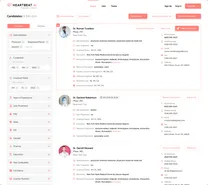
Heartbeat AI describes its database as covering millions of U.S. healthcare workers, including dentists, and says it offers direct mobile and email contacts. This may suit teams seeking contact channels beyond professional social networks; verify coverage and contact accuracy for your target audience before purchasing.
About Heartbeat AI
- Founded: 2020
- Headquarters: Delaware
- Company Size: 11–50 employees
Key Features
Email Verification
Addresses are checked before delivery to reduce bounce rates.
Chrome Extension and Prospector Tool
The Chrome extension pulls contact details from social platforms, while the Prospector tool lets you search by specialty and get contact info directly.
File Upload
You can upload existing contact lists to clean, verify, or enrich them.
CRM Sync
Integration with CRM systems keeps contact records consistent across your existing workflow.
Customized Lists
Lists can be filtered by specialty, location, or practice size rather than delivered as one flat file.
Support
Heartbeat’s team offers guidance on using purchased lists effectively for outreach.
Pricing
Pricing is custom and based on client needs; contact their sales team for a quote.
Pros
- Straightforward interface for building and exporting lists
- Direct access to both mobile numbers and email addresses
- Contact data drawn from over 200 sources for cross-verification
Cons
- Premium tiers carry a higher price point than basic list purchases
2. MedicoLeads

MedicoLeads maintains a global healthcare contact database spanning more than 120 countries, with dentists as one of several specialties covered. It’s aimed at teams that need segmentation flexibility across job title, specialty, and location.
About MedicoLeads
- Founded: 2016
- Headquarters: Santa Clara, CA
- Company Size: 11–50 employees
Features
- Broad Healthcare Coverage: Database spans multiple specialties across 120+ countries, with dentist-specific segments.
- Customizable Lists: Filter by job title, specialty, and location.
- Verification Process: Combines automated checks with manual review to reduce bounce rates.
- Segmented Data: Allows targeting narrower healthcare sub-groups rather than a single flat list.
Pricing
Custom, based on client scope.
Pros
- Global reach beyond U.S.-only providers
- Flexible list customization
- Regularly refreshed contact data
Cons
- Less useful if your outreach isn’t limited to healthcare
3. DataCaptive

DataCaptive positions itself around scale, offering a large global dentist database with detailed attributes for segmentation. It suits marketers who need granular filtering beyond basic location and specialty.
About DataCaptive
- Founded: 2015
- Headquarters: Santa Clara, California
- Company Size: 1,000–5,000
Features
- Large Verified Database: Over a million dentist records globally, according to the company.
- Detailed Contact Records: Names, specialties, emails, phone numbers, and locations.
- Segmentation: Filter by specialty, practice type, location, and more.
- Customizable Attributes: More than 40 fields available for building targeted lists.
Pricing
DataCaptive offers Free, Basic, and Premium tiers, with Basic starting around $5/month and Premium around $10/month, according to the company’s published pricing.
Pros
- Large overall database
- Stated adherence to international privacy regulations
- Granular customization options
Cons
- Learning curve for making full use of the available data fields
How to Evaluate Any Provider Before You Buy
Marketing copy tends to sound similar across vendors. These are the practical checks that matter more than feature lists:
- Reputation: Look for independent reviews or case studies rather than testimonials the vendor selected itself.
- Compliance: Confirm the provider’s data collection and consent practices align with applicable privacy regulations for your target region.
- Update Frequency: Ask directly how often records are refreshed and how bounced or invalid contacts get removed.
- Customization: Confirm you can filter by the specific criteria that matter to your campaign — specialty, location, practice size — rather than buying a static, one-size list.
- Bounce and Delivery Rates: A provider unwilling to share average bounce rates is a signal to keep looking.
- Support: Test their responsiveness before you commit to a larger purchase.
- Pricing and Guarantees: Compare cost against any refund policy for undeliverable contacts — a guarantee signals the provider stands behind their data quality.
Getting More Out of the Data You Buy
Buying a list is the easy part. Getting a return on it takes some structure:
- Segment before you send. Break contacts down by specialty, geography, or practice size rather than blasting the entire list with one message.
- Personalize the message. A generic pitch sent to every dentist in the state performs worse than a message tailored to a segment’s likely concerns.
- Respect consent and compliance. Make sure your outreach practices align with applicable email marketing regulations and that recipients have a clear way to opt out.
- Layer channels. Combining email with direct mail or professional networking outreach tends to outperform email alone.
- Track what works. Open rates, click-throughs, and response rates should inform your next round of messaging, not just get logged and ignored.
- Refresh regularly. Dentists change practices, retire, or update contact information. A list that’s a year old will have more dead entries than one refreshed within the last few months.
- Offer something useful. Continuing education info, industry updates, or genuinely relevant offers get better engagement than pure sales pitches.
A Reasonable Bottom Line
A New Hampshire dentists email list may save time compared with manual outreach, but its value depends on how current and accurate the data is. Check providers’ verification processes and update frequency before comparing prices. Heartbeat AI is one option to evaluate if direct mobile and email contact is important to your outreach.
Frequently Asked Questions
Can I get a free dentists email database list?
Free, comprehensive lists are uncommon since building and verifying this kind of data takes ongoing work. Some providers offer limited samples or promotional credits — it’s worth asking directly.
How can I buy a New Hampshire dentists email list?
Most providers, including Heartbeat AI, let you request a quote or start a account through their website, then filter contacts by state and specialty before purchasing or subscribing.
Are there restrictions on how I can use the data?
Yes. Outreach using purchased contact data should comply with applicable email marketing and privacy regulations, and should respect recipients’ consent and opt-out preferences.