What’s on this page:
Key takeaways
- Evaluate an email list for its contact fields, segmentation options, verification methods, update frequency, and delivery format.
- Ask vendors how they collect and verify contact details; data sources and verification practices can vary.
- Use filters such as location, subspecialty, and institutional affiliation to define a relevant audience.
- Keep outreach concise, specific to the recipient’s professional work, and clear about the requested next step.
- Check applicable privacy and email-marketing requirements, and make opt-outs easy to use and honor them promptly.
Last updated: August 28, 2026

Reaching neuropsychologists at scale is harder than it looks. They’re spread across hospitals, rehab centers, private practices, schools, and research institutions, and general physician directories rarely separate them out from neurologists or clinical psychologists. Roughly 2.8 million Americans sustain a traumatic brain injury each year, and neuropsychologists are among the specialists who evaluate and manage the cognitive effects of these injuries. A verified, well-segmented email list is the practical way to reach this specific group without wasting outreach budget on the wrong contacts.
This article explains what a neuropsychologists email list may include, how providers describe compiling that data, and how to evaluate and use a list responsibly.
What’s Typically Included in a Neuropsychologists Email List
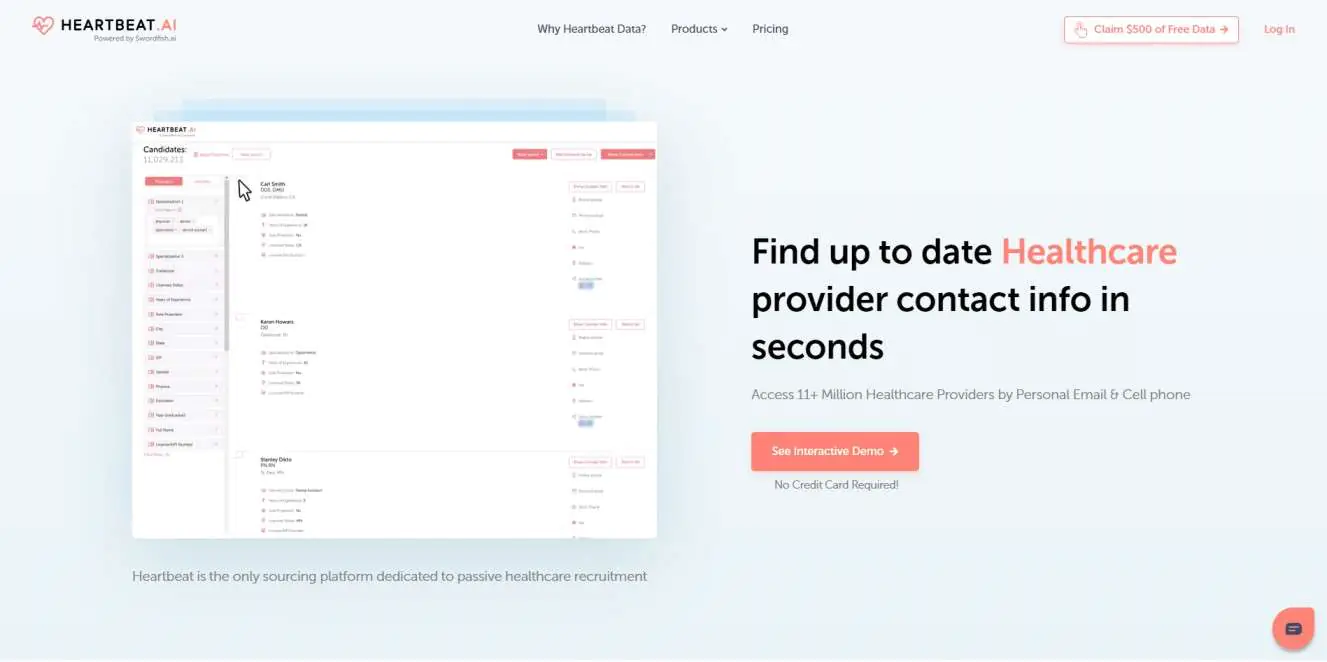
A useful neuropsychologist database goes beyond a name and an email address. Here’s what a well-built list generally offers:
- Comprehensive contact details: Email addresses, phone numbers, and mailing addresses in one record, rather than requiring multiple lookups.
- Segmentation options: Filtering by location, specialization, years of experience, or hospital affiliation so campaigns reach the right subset instead of everyone at once.
- Regular verification: Lists that are refreshed periodically reduce bounce rates and keep outreach from landing on dead addresses.
- Broad network coverage: Contacts spanning multiple regions and institution types, not just a handful of large hospital systems.
- Customization: The ability to narrow the list to a specific demographic or subspecialty when a campaign calls for it.
- CRM-friendly formatting: Data delivered in a format that imports cleanly into standard CRM and email tools without manual cleanup.
Typical Data Fields in a Neuropsychologists Mailing List
- Name
- Location
- Contact numbers (work, cell, mobile)
- Email address
- Specialization
- Years of experience
- Sole proprietor status
- Licensed states
- License number
- Fax
- Address
 Accuracy & coverage of personal contact info were unrivaled by other platforms… this gives any healthcare recruiter a competitive advantage when engaging hard-to-reach healthcare providers.
Senior Growth Strategist






Why a Verified List Beats a Generic Contact Dump
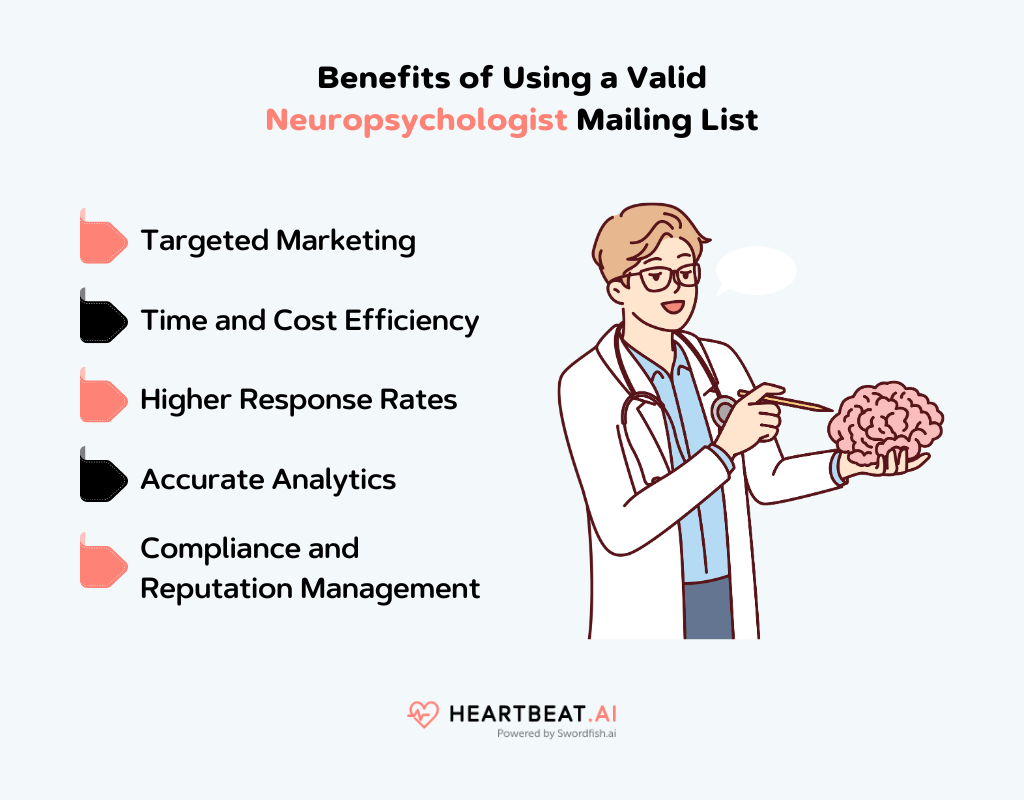
Targeted marketing
A targeted campaign can focus on professionals who are relevant to the offer instead of a broad group of unrelated medical professionals.
Time and cost efficiency
A well-matched list can help focus spending on contacts who fit the target profile and reduce time spent on inactive or mismatched addresses.
Higher response rates
Recipients may be more likely to engage when they consider the content relevant to their practice, though results vary by campaign and audience.
Cleaner analytics
A clearly defined audience can make campaign performance data easier to interpret and help inform future planning.
Compliance and reputation
Using a current list and checking that your outreach is permitted can help reduce bounces and complaints that may harm sender reputation.
Neuropsychologist Categories You’ll Find in a Database
Neuropsychology covers several distinct practice areas, and a good list should let you filter by them.
| Neuropsychologists By Categories |
| Clinical Neuropsychologist |
| Pediatric Neuropsychologist |
| Forensic Neuropsychologist |
| Research Neuropsychologist |
| Rehabilitation Neuropsychologist |
| Cognitive Neuropsychologist |
| School Neuropsychologist |
| Neurodevelopmental Neuropsychologist |
| Experimental Neuropsychologist |
| Geriatric Neuropsychologist |
Neuropsychologists by State
Looking for neuropsychologists in a specific state or region? Browse the directory below.
How Neuropsychologist Contact Data Gets Compiled
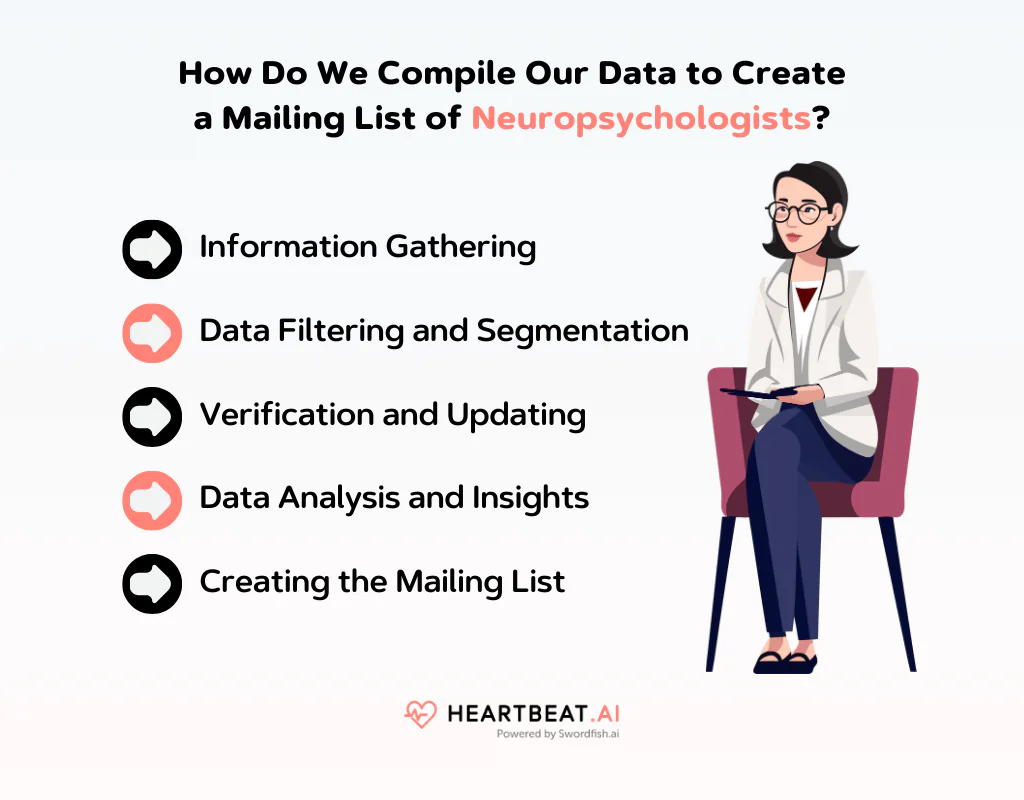
Building a reliable specialty list isn’t a one-step process. It generally follows a workflow like this:
Information gathering
List providers may gather information from sources such as medical directories, hospital websites, and professional networking sites. Ask each provider which sources it uses and how it handles contact details and places of work.
Filtering and segmentation
The raw dataset is filtered down so it exclusively features neuropsychologists, removing adjacent specialties that don’t match the intended audience.
Verification and updating
Ask how the provider checks email addresses and phone numbers, how often it updates records, and what it considers verified; verification methods and results can vary.
Analysis and segmentation logic
Once verified, the data can be organized by geography, subspecialty, or institutional affiliation to support more precise targeting.
Delivery
The finished list is typically delivered in a spreadsheet or CRM-ready format for straightforward import into outreach tools.
Limitation worth noting: even well-maintained lists degrade over time as people change jobs or retire, so periodic refreshes matter more than a one-time purchase.
What Heartbeat AI Offers for Neuropsychologist Outreach
Broad database coverage
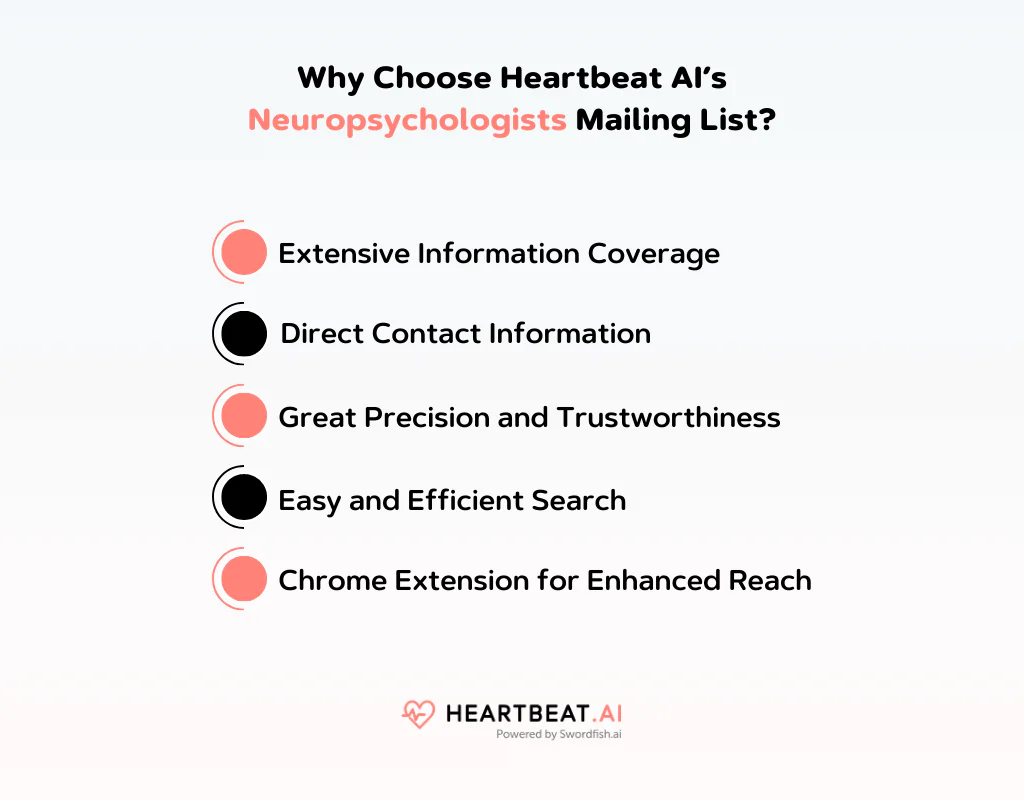
Heartbeat’s database spans over 11 million healthcare professionals in the US, including neuropsychologists, which gives outreach teams a wide pool of potential contacts.
Direct contact information
Heartbeat AI says its platform provides direct cell phone numbers and personal email addresses, in addition to contact options such as office lines or shared inboxes.
Search by specialty and subspecialty
Heartbeat AI says its platform supports searches by specialty and subspecialty. Check the available filters and confirm that they fit your targeting needs.
Chrome Extension
The Chrome Extension extends contact lookup to platforms like LinkedIn and Facebook, useful for finding contact details while already browsing a provider’s profile.
What to Check Before Buying a Neuropsychologist Email List
A quick checklist before committing to a vendor:
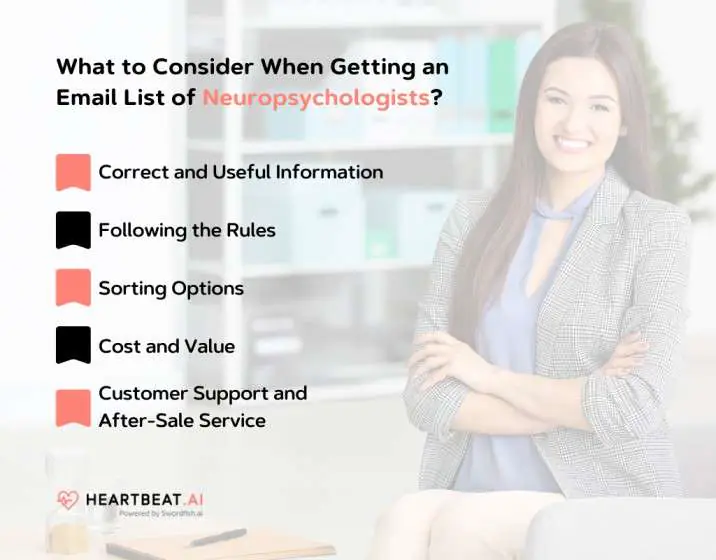
- Accuracy and refresh cadence: Ask how often the list is updated and what verification methods are used.
- Compliance: Confirm the list and your intended use align with applicable privacy and anti-spam regulations, such as CAN-SPAM for commercial email in the US, or GDPR if you’re contacting providers in the EU.
- Segmentation depth: Look for filters by geography, specialty, or practice setting rather than one flat list.
- Cost versus value: The cheapest list isn’t automatically the best deal if it’s stale or poorly segmented.
- Support: Check what happens if you hit data quality issues after purchase — responsive support matters more than it seems until you need it.
Who Actually Uses These Lists
Neuropsychologist contact databases tend to serve a specific set of buyers:
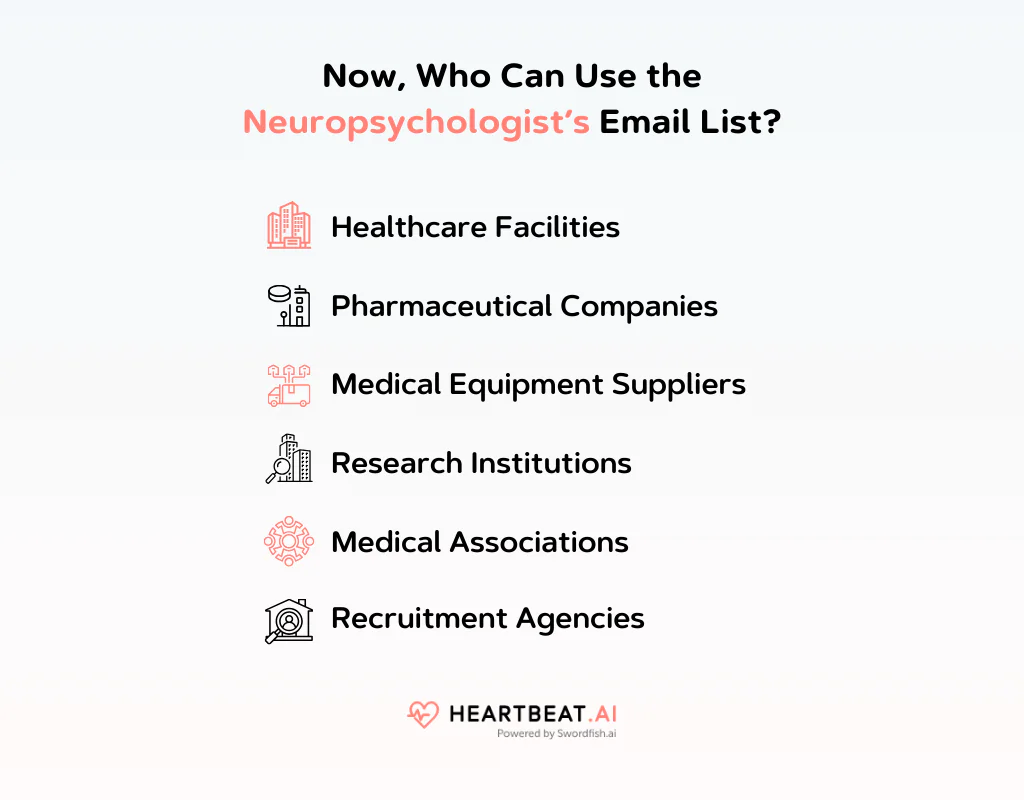
Healthcare facilities
Hospitals, clinics, and healthcare centers use these lists for recruitment, collaboration, and informing providers about new equipment or services.
Pharmaceutical companies
Pharma teams target neuropsychologists for product marketing and clinical trial recruitment related to brain injury and cognitive research.
Medical equipment suppliers
Vendors selling equipment and devices used in neuropsychological assessment or neurosurgery-adjacent care can reach relevant buyers directly.
Research institutions
Universities and research bodies use the data to recruit collaborators or invite specialists to conferences and studies.
Medical associations
Associations use the lists to communicate with members, coordinate events, and share updates relevant to the field.
Recruitment agencies
Healthcare staffing firms use verified contact data to source candidates for open neuropsychology roles.
How to Actually Use the List Without Annoying People
Know who you’re emailing
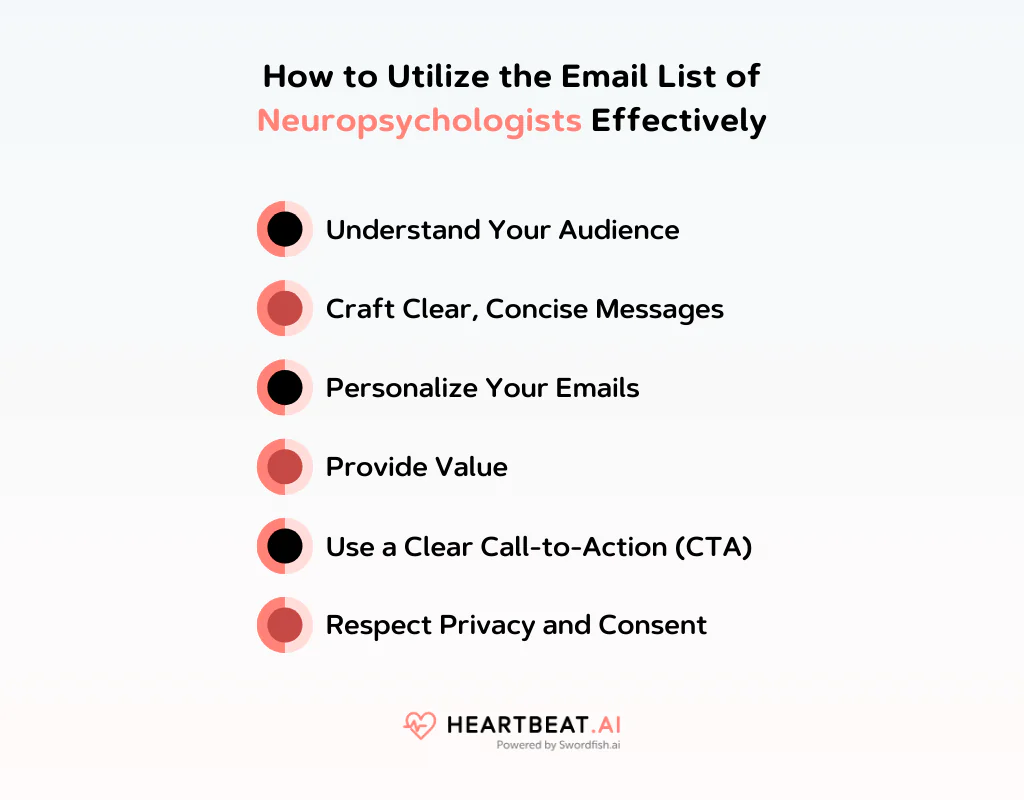
Neuropsychologists are busy clinicians and researchers. Messages that connect clearly to their work — such as patient care, research interests, or practice logistics — may be more relevant than generic pitches.
Keep it short
Skip the long preamble. State the point and the benefit early.
Personalize where it’s realistic
Referencing their subspecialty or a relevant development in the field signals the email wasn’t blasted to everyone in the database.
Lead with value
Share something useful — a relevant resource, event, or update — rather than sending outreach with no clear purpose.
Make the next step obvious
One clear call to action beats three vague ones. Decide what you want the reader to do and say it plainly.
Respect opt-outs
Make unsubscribing easy and honor opt-out requests promptly, as required by applicable rules. Doing so is also a basic courtesy and can help protect your sender reputation.
Bottom Line
A neuropsychologists email list is most useful when its records are accurate enough for your needs and its filters help identify the right audience. The goal is not simply to have a large file of names, but to reach relevant professionals with a useful message while respecting their time and following applicable rules.
For a broader specialty database with direct contact details and search filters, Heartbeat AI is one option worth evaluating alongside other providers, based on your specific outreach needs.
FAQs
Is a neuropsychologists email directory compliant with privacy laws?
Reputable providers structure their data collection and delivery to align with applicable regulations like CAN-SPAM and GDPR, but compliance for your specific campaign still depends on how you use the list.
Can I use this list for targeted marketing campaigns?
Yes — this is the primary use case, provided the outreach is relevant to the recipient’s professional role and follows applicable email marketing rules.
What are the legal considerations when using the email list?
Follow email marketing regulations, including clear sender identification, honest subject lines, and an easy opt-out mechanism for recipients.