Last updated: August 30, 2026
Wyoming’s healthcare system is small by national standards, but it still relies on the same administrative backbone as larger states: medical office managers who keep clinics, hospitals, and specialty practices running day to day. If you’re building outreach lists for recruitment, sales, or partnership development in this market, finding accurate, current contact details for these professionals is the practical bottleneck most teams run into.
This guide covers what medical office managers in Wyoming actually do, why the state’s geography makes them harder to reach through generic databases, and how a purpose-built healthcare contact platform like Heartbeat.ai can shorten that process.
What’s on this page:
Get an Email List of Medical Office Managers in Wyoming from Heartbeat
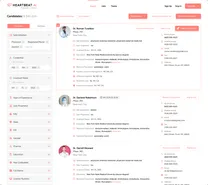
Heartbeat.ai’s platform is built to help you find licensed healthcare professionals across the United States, including office managers, administrators, and clinical staff. You can apply filters by state, specialty, or facility type to narrow a list down to the exact profiles you want to reach.
Medical office managers come in several forms depending on the setting they work in. Knowing which type you need helps you target outreach more precisely instead of blasting a generic list:
- General medical office managers — oversee daily operations of a clinic or practice.
- Dental office managers — manage dental clinics or hospital dental departments.
- Medical spa managers — handle administrative and compliance work in medical spa settings.
- Hospital office managers — coordinate administrative functions across hospital departments.
- Physiotherapy office managers — run the business side of physical therapy practices.
- Chiropractic office managers — manage scheduling, billing, and operations for chiropractic clinics.
Segmenting by role type matters because a message aimed at a hospital administrator won’t land the same way with someone running a two-provider chiropractic office. Heartbeat.ai’s list structure lets you filter by these categories rather than treating every office manager the same.
Overview of the Healthcare Industry in Wyoming
Wyoming’s healthcare system is a mix of urban medical centers, small regional hospitals, and rural clinics, each managed by administrative staff who handle very different scales of operation. Cheyenne Regional Medical Center is a 222-bed hospital, located in Cheyenne, Wyoming, and the Cheyenne Regional Medical Center healthcare system serves southeastern Wyoming and western Nebraska with more than 175 physicians, 1,800 employees and 200 volunteers. Facilities of this size typically employ multiple office managers across departments, each responsible for a distinct area of operations, finance, HR, or compliance.
Smaller Wyoming facilities operate on a leaner model, often with one office manager handling several administrative functions at once. That difference in scale is worth accounting for when you build outreach: a message that works for a large hospital system’s administrative team may need a different approach for a single-location rural clinic.
Why Accurate Contact Information Matters
Reliable contact details for medical office managers serve three distinct purposes, and each comes with its own stakes:
- Patient-facing needs — appointment scheduling, records requests, and billing questions all route through office management staff.
- Recruitment — office managers are frequently the first point of contact in hiring decisions, screening candidates before they reach a physician or department head.
- Networking and partnerships — vendors, consultants, and other healthcare organizations often need a direct line to office management to discuss contracts, integrations, or referral arrangements.
Outdated contact information doesn’t just waste time. It creates missed opportunities in a hiring cycle where administrative roles can turn over quickly, and it can damage credibility if outreach lands on the wrong person’s desk repeatedly.
Challenges in Finding Medical Office Managers in Wyoming
Wyoming’s low population density and rural geography make it harder to build and maintain accurate contact lists compared to more urban states. A few practical limitations to keep in mind:
- Fewer large hospital systems means fewer administrative roles concentrated in any one place, so lists skew toward smaller, more dispersed contacts.
- Turnover in rural administrative roles can be harder to track than in urban markets with more established HR reporting.
- Publicly available directories often lag behind actual staffing changes, especially for smaller clinics.
Digital tools help close some of this gap. Verified contact databases, updated on a rolling basis rather than a one-time scrape, reduce the risk of reaching out to someone who’s already left the role. Predictive matching against multiple public and professional sources can also surface contacts that a single directory search would miss.
What’s Included in Heartbeat’s Medical Office Manager Contact Data
Heartbeat.ai’s database is built for teams who need more than a name and a general office line. Typical fields available for medical office manager profiles include:
- Medical office manager’s name
- Location
- Contact numbers (work, cell, mobile)
- Email address
- Specialization
- Years of experience
- Sole proprietor status
- Licensed states
- License number
- Fax
- Address
Medical Office Managers by State
Explore medical office manager contact data for other states below.
| Medical office managers by states |
|---|
| Medical office managers in Alabama |
| Medical office managers in Alaska |
| Medical office managers in Arizona |
| Medical office managers in Arkansas |
| Medical office managers in California |
| Medical office managers in Colorado |
| Medical office managers in Connecticut |
| Medical office managers in Delaware |
| Medical office managers in Florida |
| Medical office managers in Georgia |
| Medical office managers in Hawaii |
| Medical office managers in Idaho |
| Medical office managers in Illinois |
| Medical office managers in Indiana |
| Medical office managers in Iowa |
| Medical office managers in Kansas |
| Medical office managers in Kentucky |
| Medical office managers in Louisiana |
| Medical office managers in Maine |
| Medical office managers in Maryland |
| Medical office managers in Massachusetts |
| Medical office managers in Michigan |
| Medical office managers in Minnesota |
| Medical office managers in Mississippi |
| Medical office managers in Missouri |
| Medical office managers in Montana |
| Medical office managers in Nebraska |
| Medical office managers in Nevada |
| Medical office managers in New hampshire |
| Medical office managers in New jersey |
| Medical office managers in New mexico |
| Medical office managers in New york |
| Medical office managers in North carolina |
| Medical office managers in North dakota |
| Medical office managers in Ohio |
| Medical office managers in Oklahoma |
| Medical office managers in Oregon |
| Medical office managers in Pennsylvania |
| Medical office managers in Rhode island |
| Medical office managers in South carolina |
| Medical office managers in South dakota |
| Medical office managers in Tennessee |
| Medical office managers in Texas |
| Medical office managers in Utah |
| Medical office managers in Vermont |
| Medical office managers in Virginia |
| Medical office managers in Washington |
| Medical office managers in West virginia |
| Medical office managers in Wisconsin |
| Medical office managers in Wyoming |
How Heartbeat Compiles Contact Data
Heartbeat.ai aggregates healthcare provider and administrative staff data from a wide range of public and professional sources, then applies matching and verification steps to reduce outdated or duplicate entries. The goal is direct contact details — cell numbers and personal emails rather than general office lines — so outreach doesn’t get stuck at a front desk or shared inbox.
For a state like Wyoming, where the pool of office managers is smaller and more dispersed than in high-population states, this kind of ongoing verification matters more than raw volume. A list that’s accurate for 200 contacts is more useful than one that claims thousands but hasn’t been checked recently.
Who Uses Medical Office Manager Contact Lists?
Contact lists like this typically get used by:
- Recruiters and staffing agencies filling administrative healthcare roles
- Sales teams selling practice management software, billing services, or medical supplies
- Business development teams pursuing partnerships with clinics or hospital systems
- Researchers and consultants studying healthcare administration trends
Using These Lists Effectively
A contact list is only as useful as the outreach built around it. A few practical guidelines:
- Segment by role type (hospital, dental, spa, physiotherapy, chiropractic) rather than sending one generic message to everyone.
- Keep messages short — office managers are handling scheduling, billing, HR, and compliance simultaneously, and long pitches tend to get ignored.
- Follow up once or twice rather than repeatedly; persistence without relevance reads as spam.
- Respect consent and privacy expectations in every outreach channel, especially email.
Limitations to Keep in Mind
No contact database is perfect, and Wyoming’s small, rural healthcare market makes this more true than in larger states. Job titles and duties can vary between facilities, some smaller practices may not have a dedicated “office manager” title at all, and contact details can change quickly when a small clinic changes ownership or staff. Treat any purchased or aggregated list as a strong starting point, not a guaranteed match for every target.
Frequently Asked Questions
What are the typical duties of medical office managers in Wyoming?
Medical office managers in Wyoming are generally responsible for overseeing daily operations, managing staff, handling administrative tasks, and ensuring compliance with healthcare regulations.
What qualifications are typically expected for this role?
Employers often look for a background in healthcare administration or a related field, along with hands-on experience in a clinical or hospital setting. Specific requirements vary by employer and facility size.
How do office managers in Wyoming stay current with industry trends and regulations?
Many attend conferences, workshops, and training sessions, and participate in professional organizations for ongoing education and networking.