Last updated: August 30, 2026
Reaching lactation consultants directly is harder than it sounds. Many work part-time, split hours between hospitals and private practice, or operate independently without a listed office number. A working list of names, emails, and phone numbers saves the manual searching that usually eats up outreach budgets.
Estimates on the size of this workforce vary by source and methodology, but figures commonly cited put the number of International Board Certified Lactation Consultants (IBCLCs) in the tens of thousands nationally, with some counts around 19,000 and others closer to 38,000-39,000 worldwide. The exact number depends on whether a source counts only IBCLCs or includes other credentialed lactation professionals like CLCs and CLEs. Rather than lean on a single disputed figure, it’s worth understanding what these professionals do and how to reach them responsibly.
What’s on this page:
What This List Typically Includes
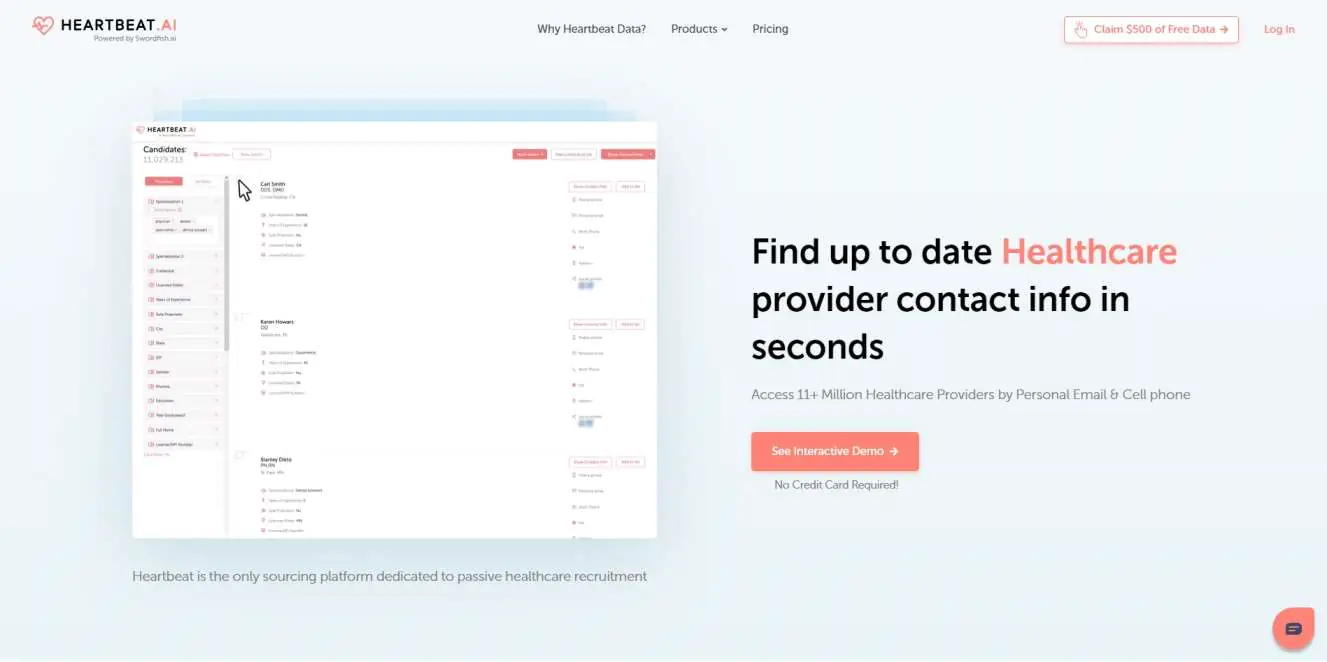
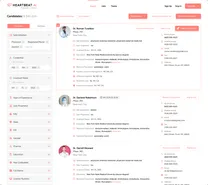
A lactation consultants contact database built for healthcare outreach generally covers:
- Full contact details: email, phone numbers, and mailing addresses for licensed lactation consultants.
- Filtering options: location, specialty, years of experience, or hospital affiliation, so you’re not messaging everyone at once.
- Regular refreshes: contact data that’s checked periodically to reduce bounced emails and disconnected numbers.
- Broad coverage: professionals across different practice settings and institutions.
- CRM-ready formatting: exportable in formats that plug into standard email and CRM platforms.
Typical Data Fields
- Name
- Location
- Contact numbers (work, cell, mobile)
- Email address
- Specialization
- Years of experience
- Sole proprietor status
- Licensed states
- License number
- Fax
- Address
 Accuracy & coverage of personal contact info were unrivaled by other platforms… this gives any healthcare recruiter a competitive advantage when engaging hard-to-reach healthcare providers.
Senior Growth Strategist





Why a Targeted List Matters More Than a Large One
A big, unfiltered contact list feels productive but rarely performs well. Here’s what changes when you narrow to a verified, relevant list instead:
Targeted Marketing
Messages land with people who are actually positioned to respond, rather than getting lost among unrelated healthcare specialties.
Time and Cost Efficiency
Every outreach dollar goes toward contacts who fit your offer, instead of being spread across a generic healthcare database.
Higher Response Rates
Relevance drives replies. A lactation consultant is more likely to open and act on an email that speaks directly to their work.
Cleaner Analytics
When your audience is well-defined, campaign metrics actually tell you something. Open rates and click-throughs become comparable across campaigns.
Compliance and Reputation
Accurate, permission-conscious lists reduce the risk of running afoul of anti-spam rules and help protect your sender reputation over time.
Categories You’ll Find in a Lactation Consultant Directory
Lactation consulting isn’t a single job description. The field includes several practice types, and knowing the difference helps you target messaging appropriately.
| Lactation Consultants Categories |
| Public Health Lactation Consultant |
| International Board Certified Lactation Consultant (IBCLC) |
| Hospital-Based Lactation Consultant |
| Pediatric Lactation Specialist |
| Adoption and Surrogacy Lactation Consultant |
| Nutritional Lactation Consultant |
Browse Lactation Consultants by State
Looking for a state-specific list? Use the directory below to find lactation consultants across the U.S.
How Contact Data Like This Gets Compiled
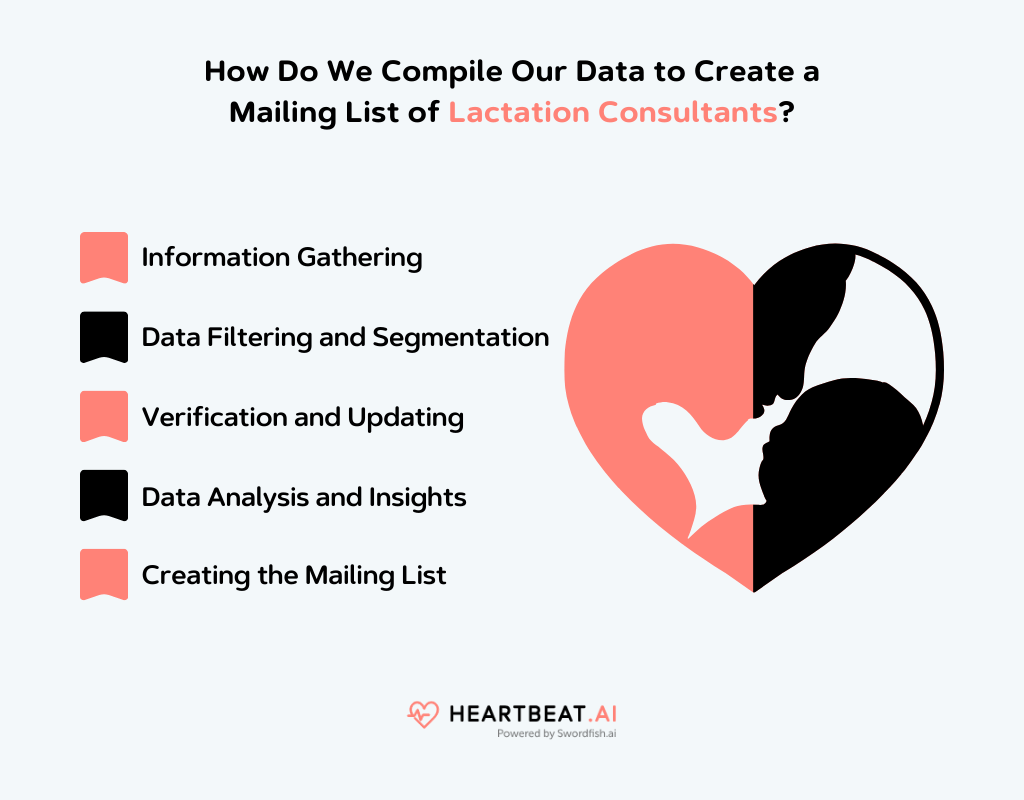
Building an accurate list of healthcare specialists follows a fairly consistent process, whether you’re doing it yourself or relying on a vendor:
1. Sourcing
Data is pulled from public and professional sources: medical directories, hospital staff pages, and professional networking profiles, capturing names, credentials, and workplace affiliations.
2. Filtering and segmentation
Records are sorted so that only lactation-focused professionals remain, separating them from adjacent roles like general nurses or dietitians.
3. Verification
Emails get checked for deliverability and phone numbers are validated, since directories go stale fast in healthcare.
4. Analysis
Verified records can be reviewed for patterns, such as regional concentration or common specialty areas, which helps with campaign planning.
5. Formatting for use
The final list is exported into a usable format, typically a spreadsheet, ready to import into a CRM or email platform.
What Heartbeat.ai Offers
Broad database
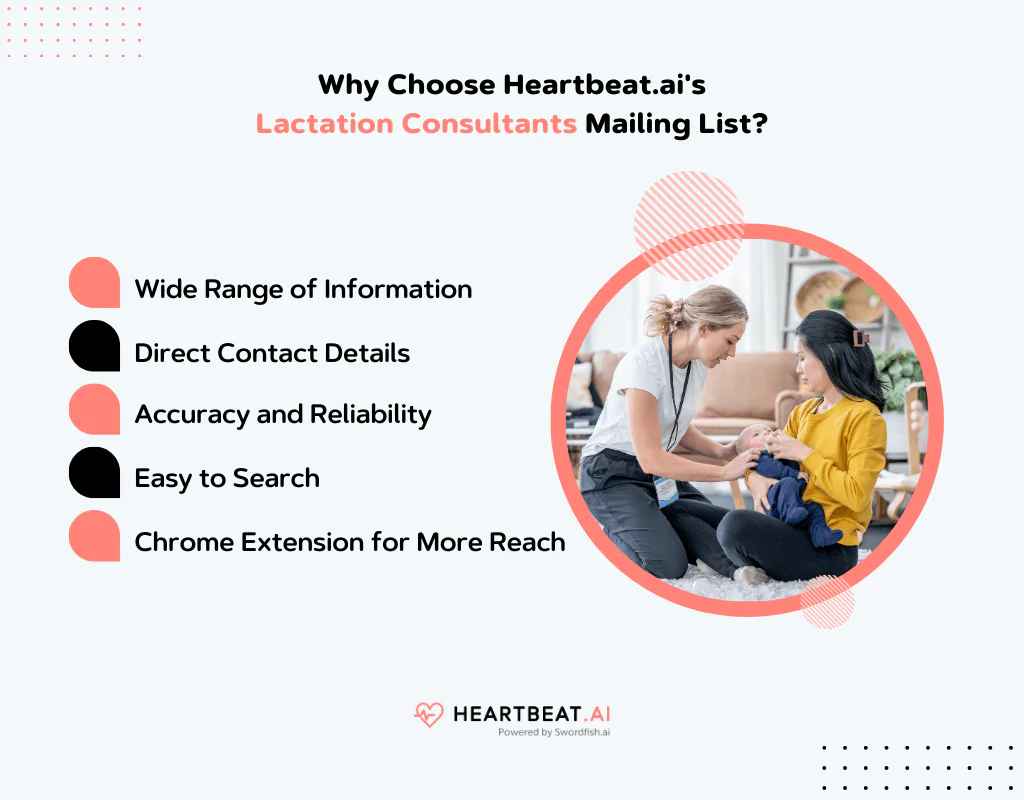
Heartbeat.ai maintains a database covering more than 11 million healthcare professionals in the U.S., including lactation consultants, giving outreach teams a wide pool to work from.
Direct contact details
The platform provides direct cell numbers and personal email addresses rather than generic office lines, which matters in a field where practitioners often work independently.
Accuracy claims
Heartbeat.ai states its contact data runs approximately 84% accurate for cell phones and 92% for emails. As with any third-party data claim, it’s worth validating a sample against your own outreach results before scaling a campaign.
Search and filtering
You can search by specialty, narrowing results instead of working through an unfiltered list.
Chrome extension
The Heartbeat.ai Chrome Extension surfaces contact info while browsing sites like LinkedIn, useful for quick lookups during prospecting.
What to Check Before Buying Any List
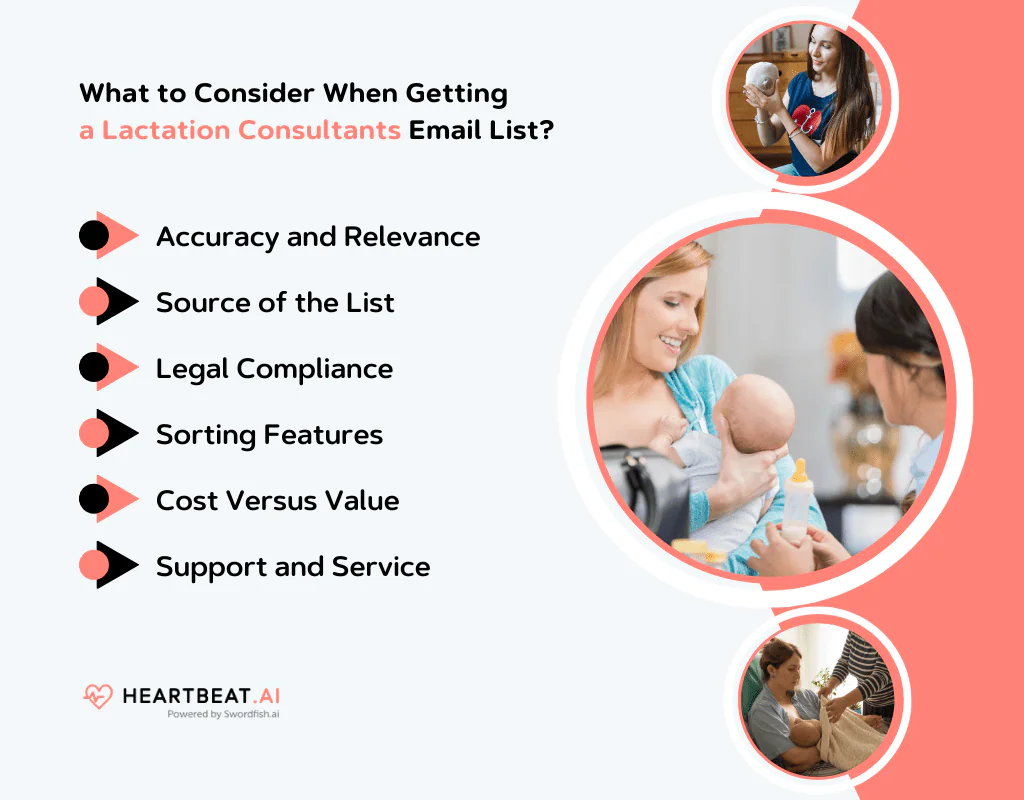
- Update frequency: ask how often records are refreshed and how emails and numbers are verified.
- Data provenance: lists built from direct, traceable sources are more trustworthy than scraped or resold contacts of unknown origin.
- Legal compliance: confirm the list and your intended use align with applicable privacy rules, including GDPR where relevant and HIPAA considerations around any patient-related data you might combine with contact info.
- Segmentation options: can you filter by region, specialty, or experience, or are you stuck emailing the whole list at once?
- Cost versus usable records: a cheaper list with a high bounce rate often costs more in wasted sends than a pricier, cleaner one.
- Support: check what happens if you hit data quality issues after purchase.
Who Actually Uses This Kind of List
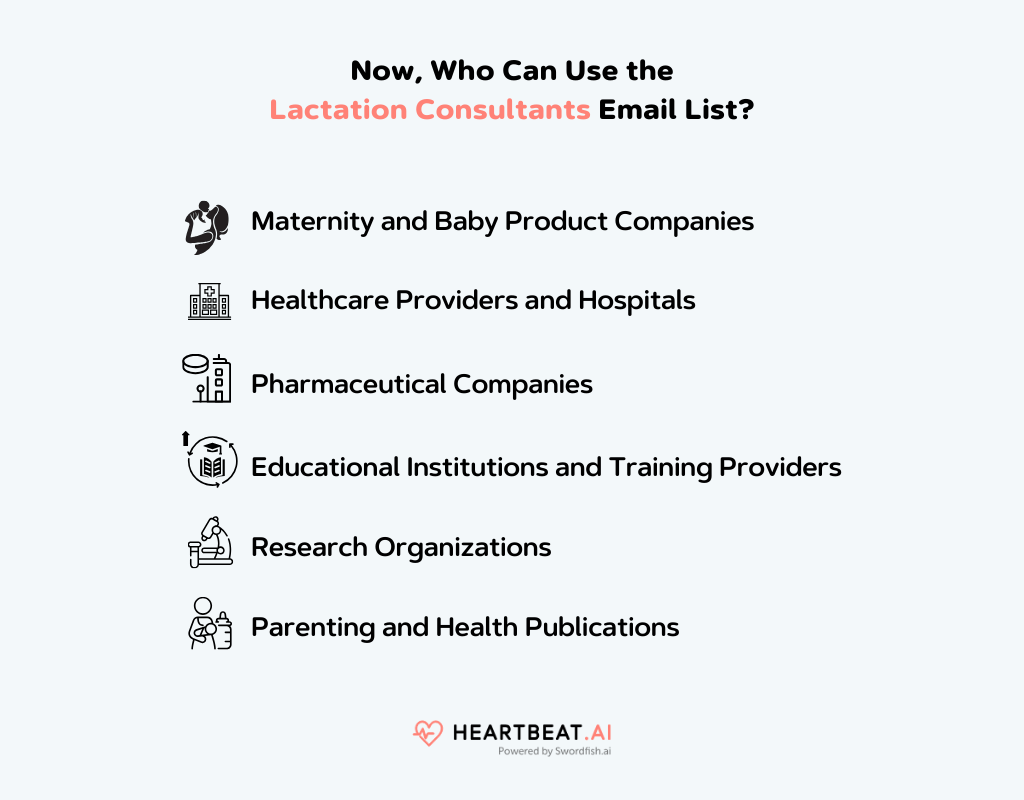
- Maternity and baby product companies introducing breast pumps, nursing wear, or feeding products, sometimes pursuing consultant endorsements.
- Healthcare providers and hospitals building referral relationships for coordinated maternal and infant care.
- Pharmaceutical companies with breastfeeding- or postnatal-related products who need to inform practitioners of new offerings.
- Educational institutions and training providers promoting certification courses or continuing education.
- Research organizations recruiting participants or collaborators for maternal and child health studies.
- Parenting and health publications sourcing expert commentary for articles.
Getting More Out of the List Once You Have It
Owning accurate contact data is only half the job. How you use it determines whether it produces replies or gets marked as spam.
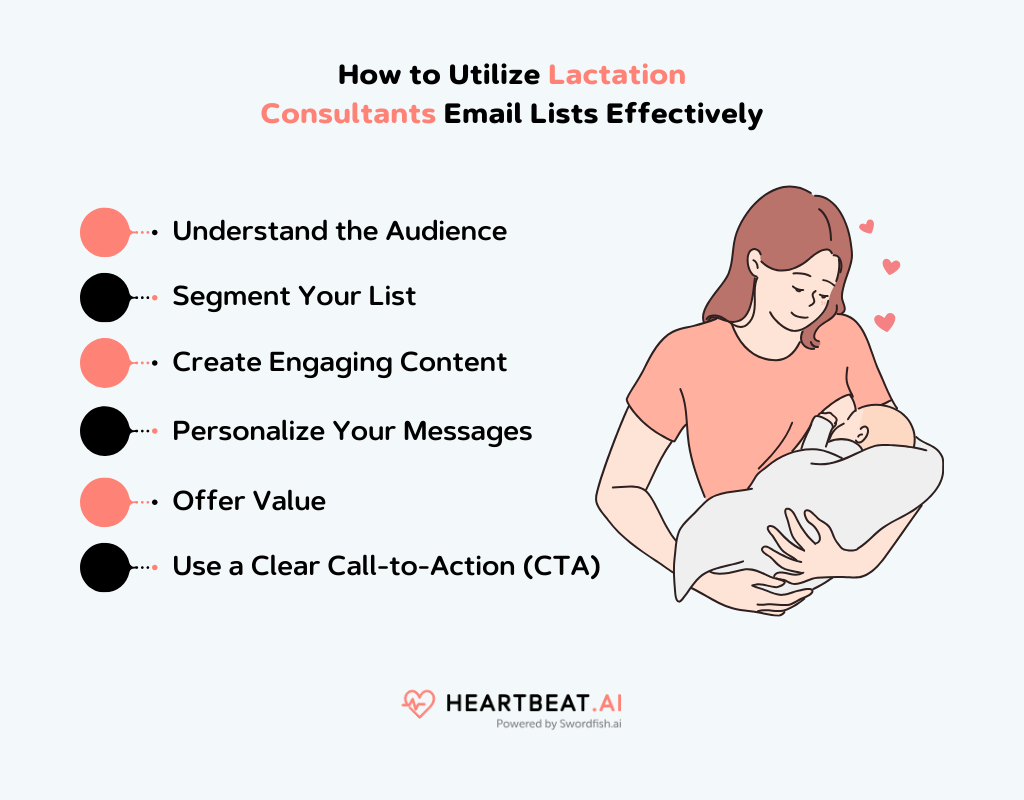
Know who you’re writing to
Lactation consultants think in terms of breastfeeding support and maternal care outcomes. Generic sales language tends to fall flat with this audience.
Segment before you send
Break the list down by location, experience level, or specialty rather than blasting everyone with the same message.
Lead with useful content
New research summaries, product updates relevant to their practice, or continuing education opportunities tend to perform better than pure promotional copy.
Personalize beyond the first name
Reference their specific practice setting or specialty where you can. It signals you did some homework instead of running a mass blast.
Give something back
Educational resources, relevant discounts, or invitations to webinars give recipients a reason to keep opening your emails.
Make the next step obvious
One clear call to action per email, whether that’s visiting a page, registering for something, or replying, beats a message with three competing asks.
A Few Limitations Worth Knowing
No list, regardless of vendor, is permanently accurate. Lactation consultants change employers, go independent, or retire from clinical practice more often than directories get updated. Treat any purchased list as a starting point that needs periodic re-verification, and build in a process for tracking bounces and opt-outs so your sender reputation doesn’t take a hit over time.
Conclusion
A workable lactation consultants list comes down to two things: accuracy and relevance. Filtering matters as much as raw contact volume, and verification matters more than either. If you’re evaluating Heartbeat AI or a similar provider, ask for a data sample first and test it against a small campaign before committing to a larger list.
Frequently Asked Questions
How can a lactation consultants email list support targeted marketing?
Filtering by location, specialty, and experience lets you send messages relevant to a specific segment instead of one generic blast to everyone on the list.
Can this kind of list be integrated with CRM systems?
Most vendors export data in spreadsheet formats compatible with standard CRM and email platforms, making import straightforward.
What response rates should I expect?
Response rates vary by campaign, offer, and list accuracy. Well-segmented, verified lists generally outperform broad, unfiltered ones, but no vendor can guarantee a specific rate.