Last updated: August 31, 2026
Finding a qualified IV infusion therapist in Virginia is a narrower search than it looks. These clinicians hold specific certifications, work across hospital, outpatient, and home-infusion settings, and their contact details are not always easy to track down through general staff directories.
For recruiters, medical device sales teams, and healthcare marketers, the difference between a stale contact list and a verified one shows up directly in response rates and time-to-hire. This article covers what IV infusion therapists do, why accurate contact data matters, the practical obstacles to finding them in Virginia, and how a vendor-provided contact database like Heartbeat’s fits into that workflow.
What’s on this page:
Who counts as an IV infusion therapist
The title covers several credential types rather than one standardized role. In practice, contact lists in this space typically include:
- Registered Nurses (RN) specializing in IV infusion
- Licensed Practical Nurses (LPN) who administer IV therapy
- Certified Registered Nurse Infusion (CRNI) professionals
- Vascular Access Board Certified (VA-BC) practitioners
- Infusion nurse consultants and IV therapy technicians
These professionals administer medications, fluids, and blood products intravenously, and they work in both hospital and outpatient infusion settings.
Virginia’s healthcare landscape, briefly
Virginia’s health system includes large regional networks such as Inova Health System, University of Virginia Health System, and HCA Virginia, all of which run infusion services alongside broader hospital and outpatient care. These systems serve large patient populations across the state, and infusion therapy is one of many specialized services layered into their operations.
Beyond these anchor systems, infusion care in Virginia is also delivered through independent outpatient clinics and home health agencies, which is part of why a single directory rarely captures the full picture of who’s practicing where.
Why accurate contact information matters here
Outdated or incomplete contact data creates real friction in three areas:
- Patient-facing access: correct phone and email details matter for scheduling and follow-up, particularly for patients managing ongoing infusion regimens.
- Recruitment: hiring teams lose time chasing disconnected numbers or bounced emails, which slows down filling infusion nursing roles that are already in short supply in some regions.
- Professional networking: device reps, clinical educators, and referral partners rely on working contact details to build relationships with infusion specialists over time.
None of this is unique to Virginia, but the combination of a large, fragmented provider base and pockets of workforce shortage makes accurate data more valuable, not less.
The practical challenge: fragmentation, not just scarcity
Two separate problems tend to get blurred together when people talk about finding infusion therapists:
- Supply gaps. Some regions, particularly outside major metro areas, have fewer certified infusion practitioners relative to demand.
- Findability. Even where practitioners exist, their contact information is scattered across employer directories, licensing boards, and professional association listings that don’t always stay current.
Centralized databases address the second problem more directly than the first. A well-maintained list can tell you who’s practicing and how to reach them, but it can’t manufacture more certified infusion nurses in an undersupplied region. Telehealth and remote monitoring can partially offset access gaps for certain infusion-adjacent consultations, but they don’t replace the need for accurate, direct contact data when recruiting or coordinating in-person care.
What a Heartbeat contact record typically includes
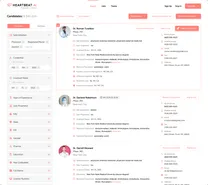
Heartbeat.ai compiles contact records for healthcare professionals, including IV infusion therapists, aggregated from public, private, and official sources. A typical record includes:
- IV infusion therapist name
- Location
- Contact numbers (work, cell, mobile)
- Email address
- Specialization
- Years of experience
- Sole proprietor status
- Licensed states
- License number
- Fax
- Address
Available IV infusion therapist listings by state
Browse IV infusion therapist contact listings by state:
| IV infusion therapist by state |
|---|
| IV infusion therapist in Alabama |
| IV infusion therapist in Alaska |
| IV infusion therapist in Arizona |
| IV infusion therapist in Arkansas |
| IV infusion therapist in California |
| IV infusion therapist in Colorado |
| IV infusion therapist in Connecticut |
| IV infusion therapist in Delaware |
| IV infusion therapist in Florida |
| IV infusion therapist in Georgia |
| IV infusion therapist in Hawaii |
| IV infusion therapist in Idaho |
| IV infusion therapist in Illinois |
| IV infusion therapist in Indiana |
| IV infusion therapist in Iowa |
| IV infusion therapist in Kansas |
| IV infusion therapist in Kentucky |
| IV infusion therapist in Louisiana |
| IV infusion therapist in Maine |
| IV infusion therapist in Maryland |
| IV infusion therapist in Massachusetts |
| IV infusion therapist in Michigan |
| IV infusion therapist in Minnesota |
| IV infusion therapist in Mississippi |
| IV infusion therapist in Missouri |
| IV infusion therapist in Montana |
| IV infusion therapist in Nebraska |
| IV infusion therapist in Nevada |
| IV infusion therapist in New Hampshire |
| IV infusion therapist in New Jersey |
| IV infusion therapist in New Mexico |
| IV infusion therapist in New York |
| IV infusion therapist in North Carolina |
| IV infusion therapist in North Dakota |
| IV infusion therapist in Ohio |
| IV infusion therapist in Oklahoma |
| IV infusion therapist in Oregon |
| IV infusion therapist in Pennsylvania |
| IV infusion therapist in Rhode Island |
| IV infusion therapist in South Carolina |
| IV infusion therapist in South Dakota |
| IV infusion therapist in Tennessee |
| IV infusion therapist in Texas |
| IV infusion therapist in Utah |
| IV infusion therapist in Vermont |
| IV infusion therapist in Virginia |
| IV infusion therapist in Washington |
| IV infusion therapist in West Virginia |
| IV infusion therapist in Wisconsin |
| IV infusion therapist in Wyoming |
How Heartbeat compiles this data
Heartbeat.ai aggregates healthcare provider contact data, including direct cell numbers and personal emails, from a wide range of public, private, and official sources. The company reports maintaining a large national database of healthcare professionals with associated cell numbers, personal emails, and direct dial numbers, and states that its predictive modeling produces high match-rate accuracy for cell phone and email contacts.
These figures come from the vendor and haven’t been independently verified here, so treat them as claims to confirm during a trial or sales conversation rather than settled fact.
Deciding whether a vendor list fits your workflow
A purchased contact database is useful when you need volume and speed: filling multiple infusion nursing roles, running a multi-state outreach campaign, or building a territory list for a device or pharma sales team. It’s less useful as a substitute for verifying licensure or clinical credentials, which still needs to happen through state boards or direct confirmation before any hiring or clinical decision.
A reasonable workflow looks like this: pull a filtered list by state and specialization, spot-check a sample of records against a state licensing lookup, then run outreach in smaller batches to catch bounce or disconnect rates before scaling up. This catches data quality issues early rather than after a full campaign has gone out.
Who uses these contact lists
Beyond recruiters, these lists get used by device and pharma sales teams, healthcare marketing agencies, clinical education vendors, and professional associations doing outreach or membership campaigns. Anyone using a purchased list for outbound communication should understand applicable privacy and anti-spam rules before sending unsolicited emails or texts, since requirements vary by communication channel and audience.
Getting more from an IV infusion therapist contact list
A few practices tend to separate effective outreach from wasted effort:
- Segment by specialization and setting (hospital-based vs. outpatient vs. home infusion) rather than treating all infusion therapists as one audience.
- Keep messaging specific to the recipient’s role — a recruiting pitch to a CRNI reads differently than a product update to an infusion clinic administrator.
- Respect response time and confidentiality norms; these are working clinicians, not a general consumer list.
- Refresh or re-verify contact data periodically, since job changes and license updates happen regularly in this field.
Where this leaves recruiters and marketers in Virginia
Locating infusion therapists in Virginia isn’t primarily a supply problem in most areas — it’s a findability problem, made worse by contact information scattered across employer sites, license boards, and association directories. A verified, filterable database can shorten that search considerably, but it works best alongside direct license verification and a sensible outreach cadence, not as a replacement for either.
Frequently asked questions
What qualifications are required to become an IV infusion therapist in Virginia?
Typically a nursing or related healthcare degree, IV therapy certification, and a valid Virginia nursing or healthcare license. Exact requirements vary by credential type and employer, so confirm current standards with the Virginia Board of Nursing or the relevant certifying body.
How can I find a licensed IV infusion therapist in Virginia?
Start with local hospitals, outpatient infusion centers, and home healthcare agencies that offer IV therapy, or ask a primary care physician for a referral. A filtered contact database can supplement this by surfacing practitioners across multiple facilities at once.
What services do IV infusion therapists in Virginia typically provide?
They administer intravenous medications, fluids, and nutrients, monitor patients during infusion, manage IV catheters, and support patients with chronic conditions, cancer treatment, or other needs requiring ongoing IV therapy. This is general background information, not clinical guidance for any specific patient situation.