


Last updated: August 28, 2026

Finding the right interventional cardiologists inside a large physician population is not a quick task. Estimates of the total U.S. cardiologist workforce vary widely depending on the data source and definition used, but every credible count puts the number well into the tens of thousands, spread unevenly across states.
A verified interventional cardiologists email list narrows that search. Instead of sorting through general cardiology directories, you get contact records built specifically around professionals who perform catheter-based cardiac procedures.
Below, we walk through what a list like this typically includes, how to evaluate one before you buy, who tends to use this kind of data, and how to put it to work without wasting outreach budget.
What’s on this page:
What’s Included in an Interventional Cardiologists Email Database
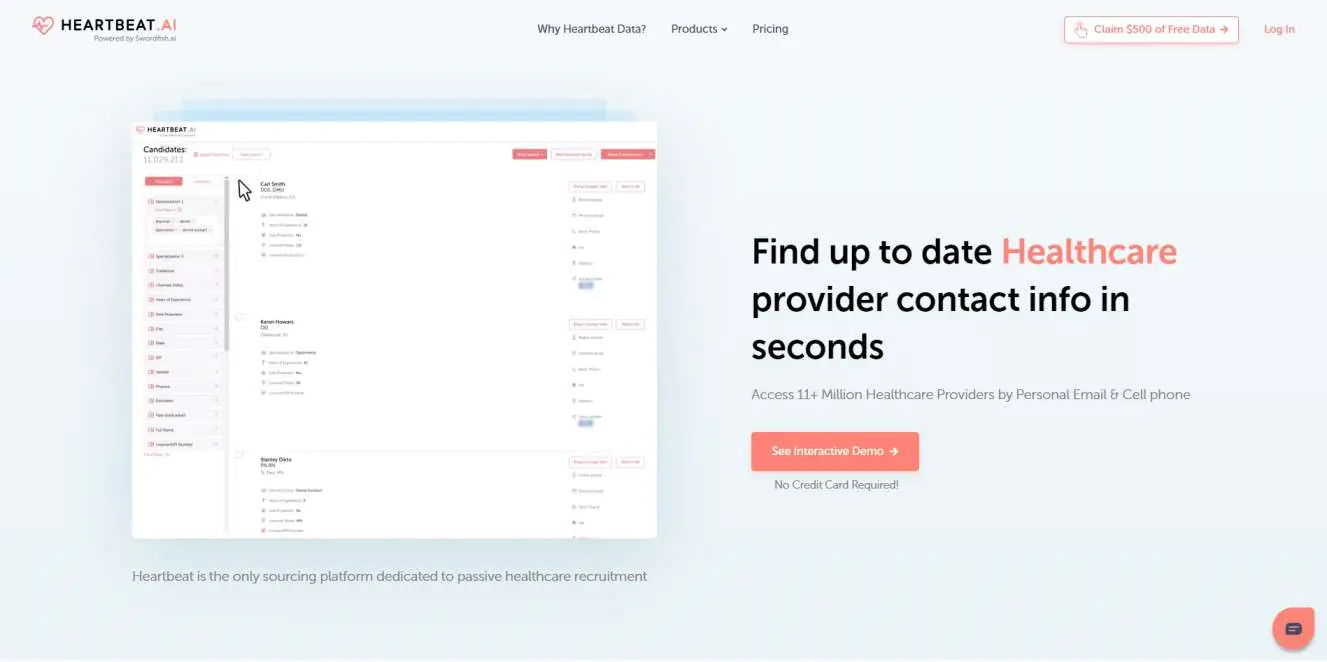
A useful interventional cardiologists list should give hospital administrators, recruiters, and healthcare marketers enough detail to segment outreach by specialty, geography, and experience level rather than sending a single generic message to everyone on the list.
Typical Data Fields
- Name of the interventional cardiologist
- Location (city, state)
- Contact numbers (work, cell, mobile)
- Email address
- Specialization within interventional cardiology
- Years of experience
- Sole proprietor status
- Licensed states
- License number
- Fax
- Practice address
 Accuracy & coverage of personal contact info were unrivaled by other platforms… this gives any healthcare recruiter a competitive advantage when engaging hard-to-reach healthcare providers.
Senior Growth Strategist






Why a Specialty-Specific List Beats a General Cardiology List
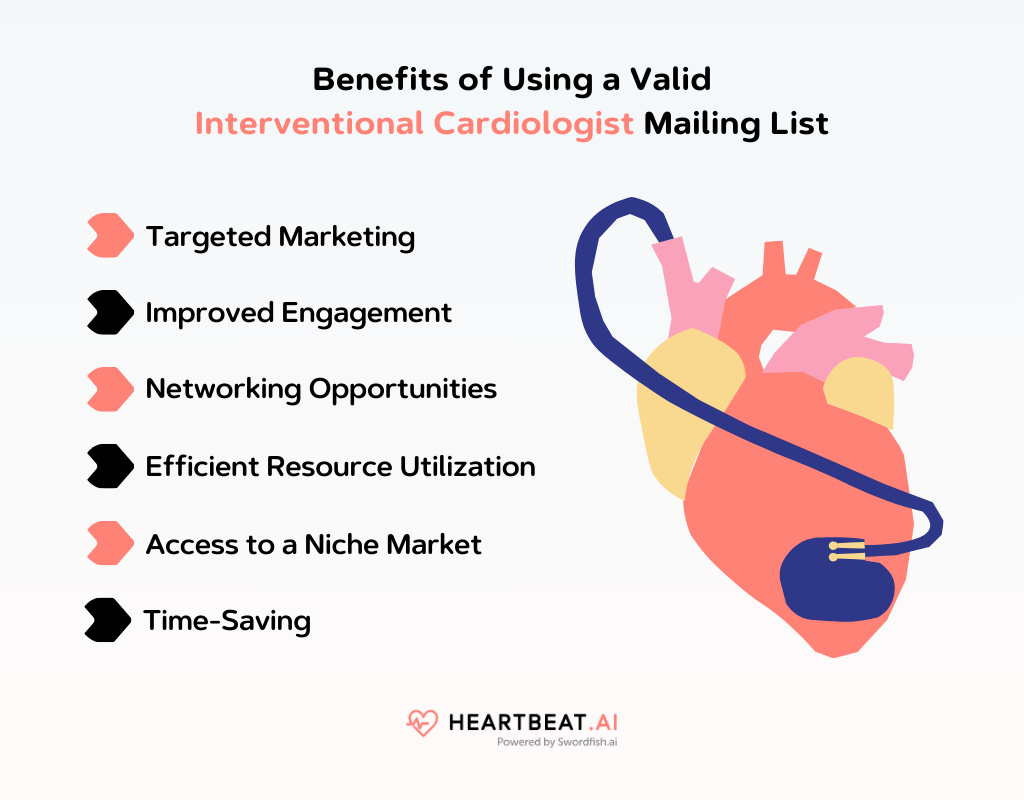
A general cardiology list mixes in electrophysiologists, general practice cardiologists, and administrators who have no reason to open a message about catheter-based devices or interventional CME. That mismatch shows up as lower open rates and higher unsubscribe counts over time.
Targeted Marketing
A list built around interventional cardiology lets you send device, drug, and program messaging to people who actually perform the relevant procedures, rather than the entire cardiology specialty.
Improved Engagement
Recipients who match the message subject tend to respond at higher rates than a broad, unsegmented list would produce.
Networking Opportunities
Beyond marketing, the list works as a starting point for building relationships with practicing interventional cardiologists for research, advisory boards, or partnership conversations.
Efficient Resource Utilization
Narrowing the audience means fewer wasted sends and a better return on the time and budget spent on each campaign.
Access to a Niche Market
Interventional cardiology is a defined subspecialty, and a purpose-built list gives you a way into that smaller professional group without guessing who qualifies.
Time Saved on Manual Research
Manually compiling names, license numbers, and current contact details for this subspecialty from public directories is slow. A pre-verified list removes that step.
Interventional Cardiologists by Category
Interventional cardiology covers several distinct procedural focuses. A quality list should let you filter by these categories rather than treating the specialty as one undifferentiated group.
| Interventional Cardiologists by Category |
| Coronary Interventional Cardiologist |
| Peripheral Vascular Interventional Cardiologist |
| Structural Heart Interventional Cardiologist |
| Endovascular Interventional Cardiologist |
| Pediatric Interventional Cardiologist |
| Electrophysiology Interventional Cardiologist |
| Congenital Heart Disease Interventional Cardiologist |
| Hemodynamic Interventional Cardiologist |
| Transradial Interventional Cardiologist |
| Transcatheter Aortic Valve Replacement (TAVR) Interventional Cardiologist |
Interventional Cardiologists by State
Outreach that ignores geography tends to underperform, since licensing, referral patterns, and hospital systems are largely regional. Browse interventional cardiologist contacts by state below.
How This Data Gets Compiled
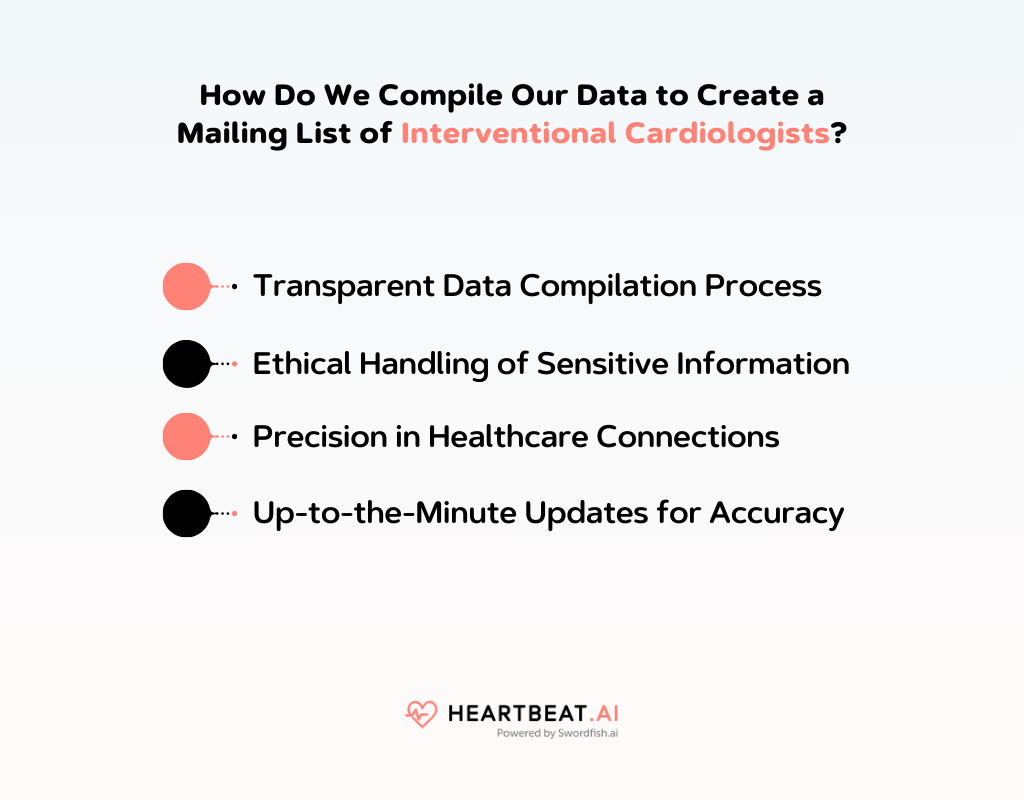
Building a reliable interventional cardiologist mailing list takes more than pulling names from a public registry once and calling it done. It requires an ongoing process of sourcing, verification, and refresh.
Transparent Compilation Process
A trustworthy provider should be able to explain, in general terms, where its records come from and how they’re refreshed, so buyers understand what they’re paying for.
Ethical Handling of Sensitive Information
Handling healthcare professional data responsibly means following applicable privacy rules and limiting use to legitimate business outreach rather than indiscriminate scraping.
Precision in Healthcare Connections
Heartbeat AI’s broader database spans more than 11 million U.S. healthcare professionals with personal email addresses, and the interventional cardiologist segment is drawn from that same base.
Ongoing Updates
Contact details change as physicians move practices or change roles. Lists that aren’t refreshed regularly accumulate bounces and outdated numbers quickly, so ask any provider how often records are checked.
Why Consider Heartbeat AI’s List
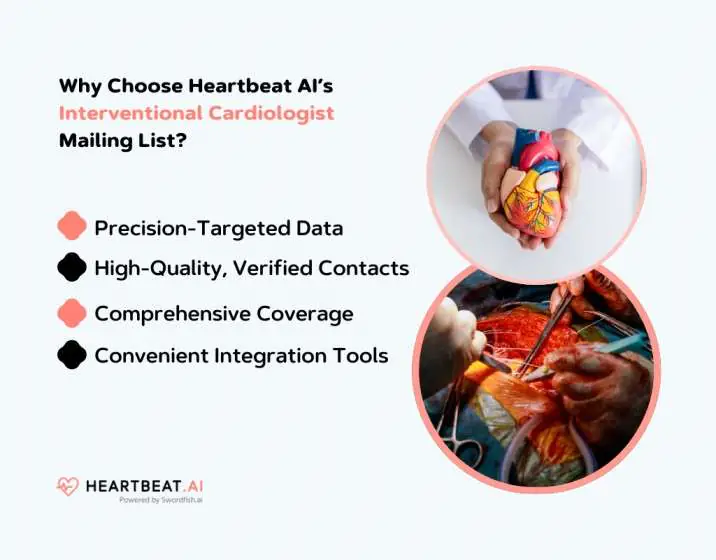
Precision-Targeted Data
The list is curated to help you reach professionals within the interventional cardiology subspecialty specifically, rather than the entire cardiology category.
Verified Contacts
Records are collected and checked through a network of more than 200 data partners, aimed at reducing bounces and improving deliverability compared to unverified lists.
Broad Coverage
Heartbeat AI’s data network spans physicians across the country, giving you room to expand outreach into new states or regions as needed.
Integration Tools
A Chrome Extension connects with LinkedIn and Facebook, making it easier to pull contact details while researching prospects on those platforms.
What to Check Before You Buy a List
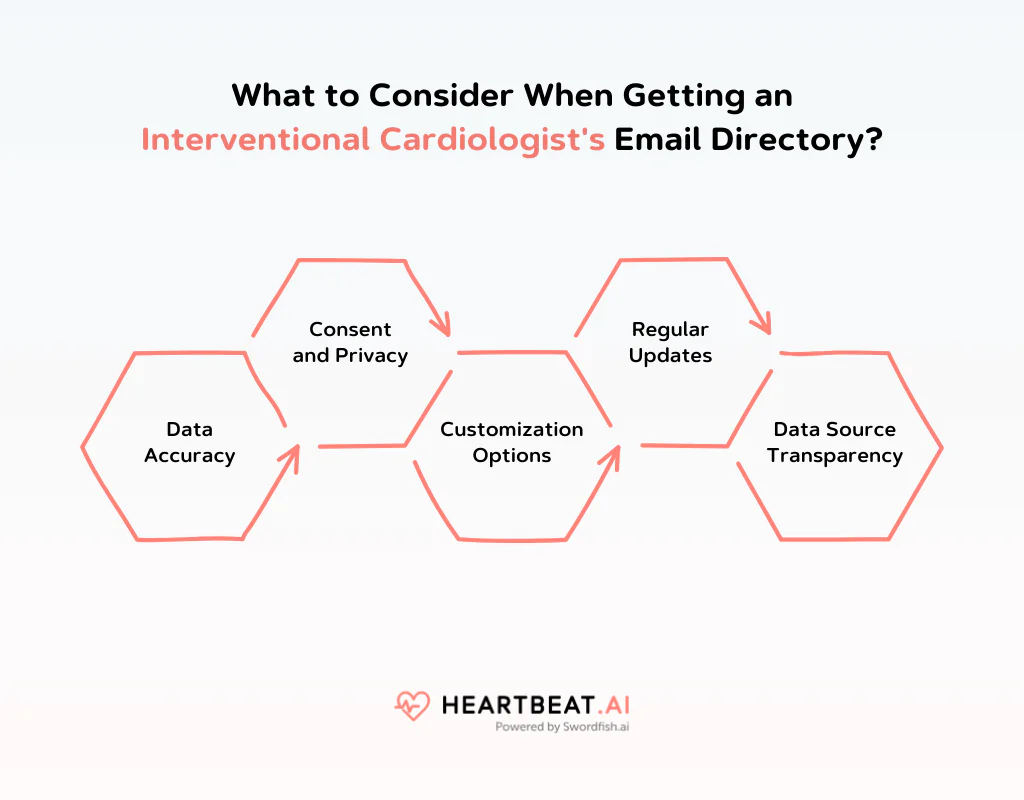
- Data accuracy: Ask how records are verified and how often they’re checked against source data.
- Consent and privacy: Confirm the provider follows applicable privacy standards for handling professional contact information.
- Customization options: Look for filters by specialization, state, and years of experience so you’re not buying an all-or-nothing list.
- Update frequency: Ask directly how often the database refreshes contact details.
- Source transparency: A provider that can explain its sourcing approach in plain terms is generally more trustworthy than one that can’t.
Who Typically Uses This Kind of List
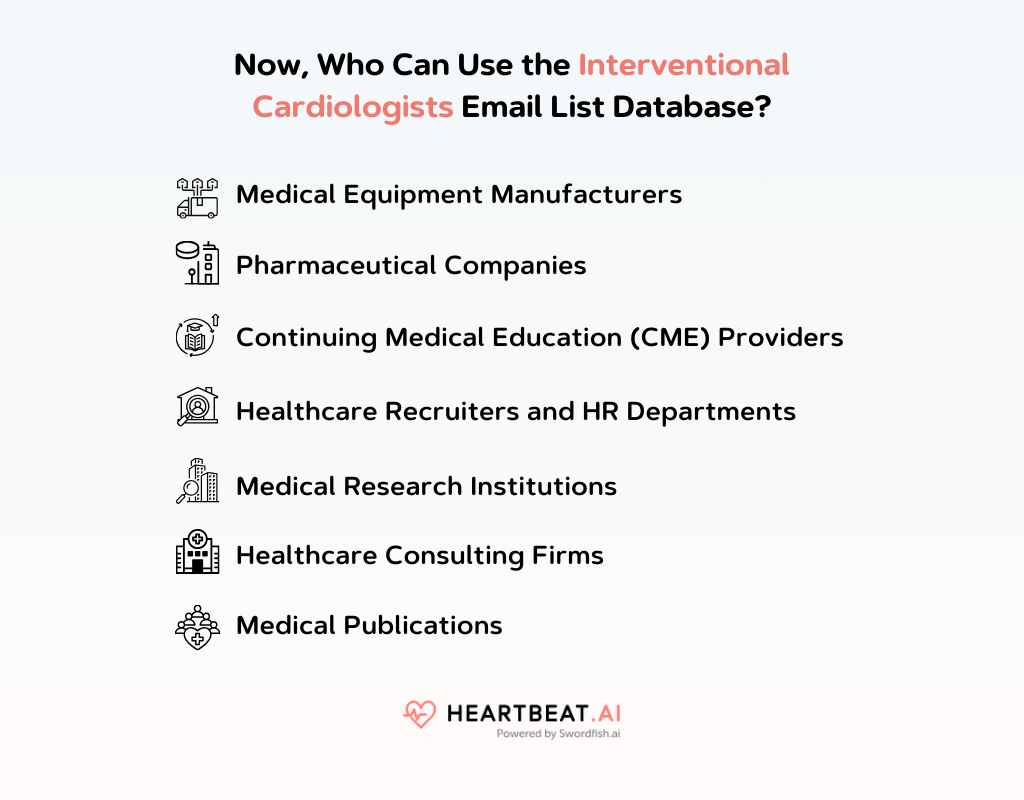
Medical Equipment Manufacturers
Companies producing stents, catheters, and cardiac imaging equipment use these lists to reach the physicians who select and use that equipment.
Pharmaceutical Companies
Firms marketing cardiovascular drugs and therapies use the list to reach the specialists who prescribe them.
Continuing Medical Education (CME) Providers
Organizations running CME programs use the list to promote courses relevant to interventional cardiology practice.
Healthcare Recruiters and HR Departments
Recruiters sourcing specialized cardiology talent use the list to identify and contact candidates directly.
Medical Research Institutions
Researchers studying cardiovascular disease use the list to find potential collaborators or trial participants among practicing specialists.
Healthcare Consulting Firms
Consultants offering practice management or compliance services use the list to connect with interventional cardiologists who might need those services.
Medical Publications
Journals and newsletters use the list to distribute content, calls for papers, or subscription offers to the specialty audience.
Getting More Out of the List Once You Have It
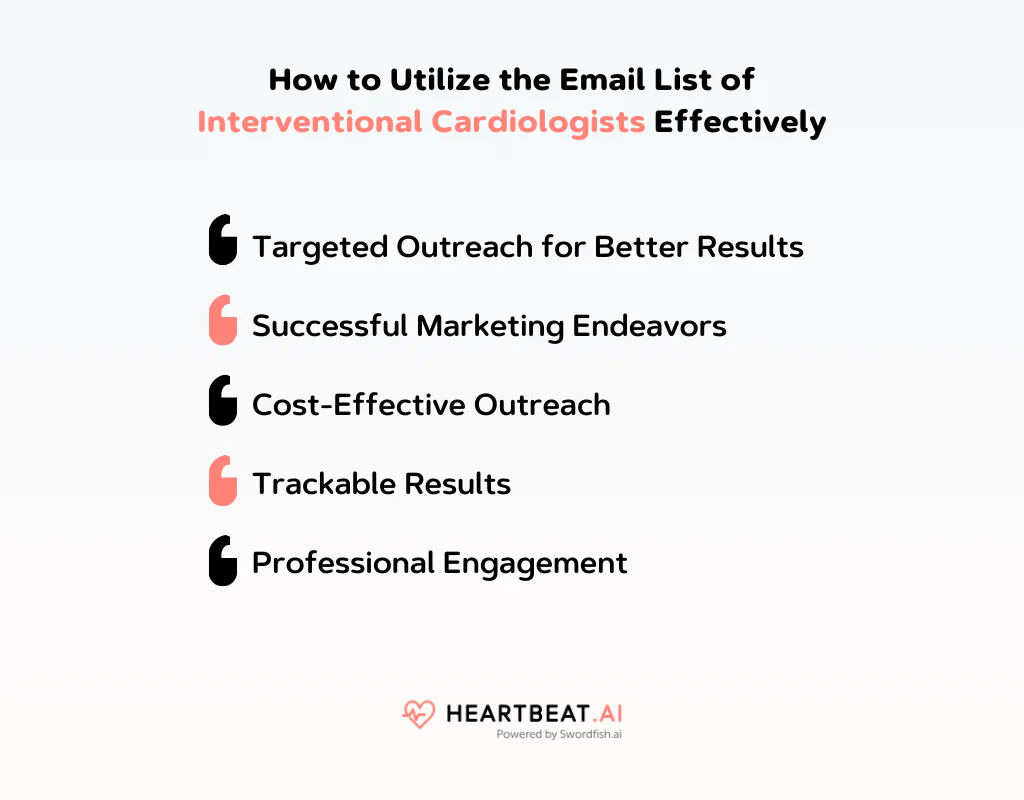
Owning the data is only step one. A basic workflow helps turn the list into results rather than letting it sit unused:
- Segment contacts by category (coronary, structural heart, TAVR, etc.) and state before drafting any messaging.
- Match message content to the segment — a device pitch to coronary interventionalists differs from a CME invite to pediatric interventional cardiologists.
- Send in smaller batches first and track open and bounce rates before scaling up.
- Track which segments and messages perform best, and adjust future sends based on that data rather than repeating the same approach.
- Keep communication consistent over time rather than one-off blasts, since specialists are more likely to engage with senders they recognize.
One limitation worth noting: even a well-maintained list can’t guarantee response rates, and healthcare professionals are a famously hard-to-reach audience regardless of data quality. Treat the list as a tool that improves your odds, not a guarantee of results.
Bottom Line
A verified, specialty-specific interventional cardiologists email list saves time compared to manual research and typically performs better than broad cardiology lists because the audience match is tighter. The tradeoff is that you still need a sensible outreach workflow and realistic expectations — data quality helps deliverability and relevance, but it doesn’t replace a thoughtful message or a reasonable send cadence.
If you’re sourcing contacts for interventional cardiologists across the U.S., Heartbeat AI is one option worth evaluating against the checklist above.
FAQs
What is Heartbeat AI’s interventional cardiologist email database?
It’s a list built specifically around interventional cardiology professionals, including contact details, names, and titles for targeted outreach.
Can I target specific states with this directory?
Yes. The directory can be filtered by state so you can focus campaigns on particular regions.
How can this list benefit my marketing efforts?
It supports more targeted outreach and segmentation than a general cardiology list, which tends to improve engagement, though results still depend on message quality and cadence.

