Last updated: August 31, 2026
California employs one of the largest hospital pharmacist workforces in the country, spread across academic medical centers, community hospitals, and specialty facilities from San Diego to Sacramento. For recruiters, pharmaceutical marketers, and healthcare organizations trying to reach this group, the challenge usually isn’t finding a pharmacist’s name — it’s finding a working phone number or email that hasn’t changed jobs, license status, or contact details since the last database update.
This page covers what hospital pharmacists in California actually do, why current contact data matters for recruitment and outreach, the practical obstacles to finding it, and what a well-built contact list should include.
What’s on this page:
Get a Hospital Pharmacist Email List for California from Heartbeat
Heartbeat.ai’s database covers licensed healthcare professionals across the United States, including hospital pharmacists in California. You can filter by specialty, location, license status, and experience level to build a targeted list rather than a broad, unfiltered one.
Hospital pharmacists work across a wide range of clinical settings — general medicine, pediatrics, oncology, emergency and critical care, clinical pharmacy, and specialized areas like radiopharmacy or pain management. A contact list built for outreach should reflect that variety, since a message aimed at an oncology pharmacist rarely fits a pain management specialist just as well.
These professionals influence medication decisions, patient counseling, and disease management protocols inside their institutions, which makes them a relevant audience for pharmaceutical companies, healthcare recruiters, and medical publishers — provided outreach is targeted and respects their time.
California’s Hospital Pharmacist Workforce: A Quick Overview
California’s healthcare system includes major academic and specialty hospitals — UCLA Medical Center, Cedars-Sinai, and Stanford Health Care among them — that rely on hospital pharmacists for medication safety, dosing, and therapy management. These institutions also train new pharmacists and conduct clinical research, which means the workforce here skews toward a mix of early-career and highly specialized professionals.
Licensing in California runs through the California State Board of Pharmacy. To become a licensed pharmacist in California, candidates must pass the North American Pharmacist Licensure Examination (NAPLEX) and the California Practice Standards and Jurisprudence Examination for Pharmacists (CPJE). Licensure also requires 1,500 hours of pharmacy practice experience, with at least 900 hours completed under the supervision of a licensed pharmacist. That licensure trail is also why verified license numbers and status matter in any contact database — pharmacists move between hospitals, states, and specialties more often than static directories tend to capture.
Why Accurate Contact Information Matters
Outdated contact data has a direct cost. In recruitment, a wrong email or disconnected number means a missed reference check, a delayed offer, or a candidate who accepts a competing position first. In networking and business development, stale contacts translate into wasted outreach cycles and low response rates.
A few practical reasons accurate data matters more here than in many other B2B contexts:
- Licensure churn: Pharmacists retake exams, transfer licenses between states, or leave hospital practice for retail, industry, or telehealth roles.
- Institutional turnover: Large hospital systems reorganize departments and change internal contact structures fairly often.
- Specialization matters: A message meant for an oncology pharmacist that lands with someone in ambulatory care wastes both parties’ time.
- Compliance exposure: Outreach to healthcare professionals carries privacy and anti-spam obligations, so knowing exactly who you’re contacting — and confirming consent where required — isn’t optional.
Why Finding Hospital Pharmacists in California Is Harder Than It Looks
California’s size works against simple recruitment methods. Hospital pharmacists are spread across a state that’s geographically enormous, with talent pools concentrated in different regions — the Bay Area, Los Angeles, San Diego, and the Central Valley all have distinct hiring dynamics.
Licensure requirements also limit the pool. Because the CPJE is California-specific, out-of-state pharmacists face an added step before they can practice here, which narrows the number of professionals available compared to national totals.
Manual recruitment methods — cold calling hospital switchboards, scraping directory listings, relying on LinkedIn alone — tend to be slow and produce inconsistent results. They also rarely verify license status or specialization, which matters if you’re trying to reach a specific type of hospital pharmacist rather than any pharmacist willing to answer.
A more efficient approach combines geographic filtering with credential verification: searchable databases that let you filter by specialization, years of experience, and license state cut down on wasted outreach and reduce the odds of contacting someone who’s no longer practicing.
What’s Included in a Heartbeat Hospital Pharmacist Contact List
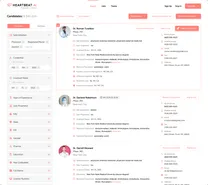
Heartbeat’s database is built to reduce the friction described above — organizing contacts geographically and refreshing data regularly rather than leaving records to go stale indefinitely. A typical entry includes:
- Hospital pharmacist name
- Location
- Contact numbers (work, cell, mobile)
- Email address
- Specialization
- Years of experience
- Sole proprietor status
- Licensed states
- License number
- Fax
- Address
Available Hospital Pharmacists by State
Explore our list of hospital pharmacists across various states.
| Hospital pharmacists by states |
|---|
| Hospital pharmacists in Alabama |
| Hospital pharmacists in Alaska |
| Hospital pharmacists in Arizona |
| Hospital pharmacists in Arkansas |
| Hospital pharmacists in California |
| Hospital pharmacists in Colorado |
| Hospital pharmacists in Connecticut |
| Hospital pharmacists in Delaware |
| Hospital pharmacists in Florida |
| Hospital pharmacists in Georgia |
| Hospital pharmacists in Hawaii |
| Hospital pharmacists in Idaho |
| Hospital pharmacists in Illinois |
| Hospital pharmacists in Indiana |
| Hospital pharmacists in Iowa |
| Hospital pharmacists in Kansas |
| Hospital pharmacists in Kentucky |
| Hospital pharmacists in Louisiana |
| Hospital pharmacists in Maine |
| Hospital pharmacists in Maryland |
| Hospital pharmacists in Massachusetts |
| Hospital pharmacists in Michigan |
| Hospital pharmacists in Minnesota |
| Hospital pharmacists in Mississippi |
| Hospital pharmacists in Missouri |
| Hospital pharmacists in Montana |
| Hospital pharmacists in Nebraska |
| Hospital pharmacists in Nevada |
| Hospital pharmacists in New hampshire |
| Hospital pharmacists in New jersey |
| Hospital pharmacists in New mexico |
| Hospital pharmacists in New york |
| Hospital pharmacists in North carolina |
| Hospital pharmacists in North dakota |
| Hospital pharmacists in Ohio |
| Hospital pharmacists in Oklahoma |
| Hospital pharmacists in Oregon |
| Hospital pharmacists in Pennsylvania |
| Hospital pharmacists in Rhode island |
| Hospital pharmacists in South carolina |
| Hospital pharmacists in South dakota |
| Hospital pharmacists in Tennessee |
| Hospital pharmacists in Texas |
| Hospital pharmacists in Utah |
| Hospital pharmacists in Vermont |
| Hospital pharmacists in Virginia |
| Hospital pharmacists in Washington |
| Hospital pharmacists in West virginia |
| Hospital pharmacists in Wisconsin |
| Hospital pharmacists in Wyoming |
How Heartbeat Builds Its Hospital Pharmacist Contact Data
Heartbeat.ai aggregates healthcare provider contact information from a broad network of official, private, and public sources, then applies verification and update cycles so records don’t sit stale for years. For California specifically, that means filtering by hospital, specialty, and license status rather than pulling a flat, undifferentiated list.
No database is perfect. License status changes, job moves, and retirements happen faster than any directory can track in real time, which is why verification at the point of outreach — confirming a role or license before a critical communication — remains good practice regardless of the data source.
Choosing a Data Source: What to Check Before You Buy
- Update frequency: Ask how often records are refreshed and how bounces or invalid numbers get flagged.
- Filtering depth: Can you segment by specialty, hospital system, license state, and experience — or just by job title?
- Compliance posture: Does the provider address consent and anti-spam requirements for healthcare outreach?
- Geographic granularity: For a state as large as California, regional filtering (Bay Area vs. Southern California vs. Central Valley) saves real time.
Who Uses a Hospital Pharmacist Contact List
Healthcare recruiters, pharmaceutical and medical device sales teams, medical publishers, and industry event organizers are the most common users of this type of list. Non-profit health organizations sometimes use it for outreach related to continuing education or professional associations.
Any use of this data should respect professional courtesy and applicable privacy and anti-spam laws — hospital pharmacists have demanding schedules, and unsolicited, poorly targeted outreach tends to backfire regardless of how accurate the contact information is.
Using the List Effectively
A few practical habits separate effective outreach from noise:
- Segment by specialty before sending anything — a general message to every pharmacist on the list performs worse than a targeted one to a relevant subgroup.
- Keep messages short. Hospital pharmacists work in time-pressured clinical environments.
- Confirm consent and follow applicable communication regulations before sending marketing content.
- Time outreach around shift patterns where possible, rather than assuming standard business hours apply.
Bottom Line
Finding hospital pharmacists in California isn’t difficult in the abstract — the state has a large, well-documented healthcare workforce. The real challenge is keeping contact data current enough to be useful for recruitment or outreach, given how often pharmacists change roles, specialties, or licensure status. A database with regular verification, meaningful filtering, and geographic granularity solves most of that friction; a static list scraped once and never updated will not.
Frequently Asked Questions
What are the requirements to become a licensed hospital pharmacist in California?
Candidates must complete a Doctor of Pharmacy (PharmD) program, complete required practice hours, and pass both the North American Pharmacist Licensure Examination (NAPLEX) and the California Practice Standards and Jurisprudence Examination for Pharmacists (CPJE).
What roles do hospital pharmacists play in California healthcare settings?
Hospital pharmacists in California are involved in medication management, drug therapy monitoring, patient education, and coordination with other healthcare providers to support safe medication use.
How can hospital pharmacists in California help improve patient outcomes?
Their work generally focuses on optimizing medication regimens, catching potential medication errors, providing drug information to care teams, and supporting medication adherence — all within the scope of their clinical role, not as a substitute for direct medical advice.