Last updated: August 30, 2026
Hematology practices, hospital blood disorder programs, and oncology-hematology divisions across New York State employ specialists who diagnose and manage conditions like anemia, leukemia, lymphoma, and clotting disorders. For recruiters, life science marketers, and healthcare vendors, reaching these professionals directly depends on having contact data that’s actually current — not a list scraped once and left untouched.
This guide covers what a hematologist contact list should include, where the data challenges typically show up, and how to use the information without wasting a recruiter’s time or a hematologist’s inbox.
What’s on this page:
Get a Hematologist Email List for New York from Heartbeat
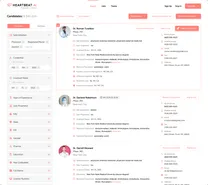
Heartbeat.ai’s platform lets you search licensed healthcare professionals across the U.S., including hematologists in New York, using filters for specialty, location, and experience.
The database spans subspecialties including pediatric hematology, hematology-oncology, hematopathology, and clinical hematology — the physicians who treat anemia, leukemia, lymphoma, and myeloma. Rather than assembling a list manually from hospital directories and licensing boards, you can pull verified contact records directly.
Hematology Care in New York State
New York’s healthcare system includes major academic medical centers with dedicated hematology divisions. NYU Langone Health runs a Division of Hematology and Medical Oncology as part of its Perlmutter Cancer Center, a National Cancer Institute–designated Comprehensive Cancer Center, and trains fellows through an ACGME-accredited program. NewYork-Presbyterian’s hematology teams manage a wide range of congenital and acquired blood disorders, such as anemias, neutropenias, thrombocytopenias and thrombocytosis, and coagulation disorders, with dedicated programs for lymphoma, myeloma, and leukemia. Mount Sinai also maintains hematology and bone marrow transplant services in coordination with other New York City hospitals.
Because staffing at these institutions changes — new division chiefs, fellows rotating in and out, physicians moving between practices — any list of hematologists needs periodic refreshing rather than a one-time pull.
Why Accurate Contact Data Matters Here
Three groups depend on correct hematologist contact information, each for different reasons:
- Patients and referring providers need reliable ways to reach a treating physician for follow-up questions or urgent concerns related to an existing treatment plan.
- Recruiters and hospital HR teams need direct lines to hematologists to discuss openings, credentialing timelines, and contract terms without routing everything through a front desk.
- Vendors, researchers, and professional networks use contact data to coordinate on clinical trials, conferences, or product outreach relevant to hematology practice.
Outdated contact records cause the same problem in every case: wasted outreach cycles, missed connections, and — in recruiting specifically — longer time-to-hire because messages bounce or go to a number the physician no longer uses.
Why Finding Hematologists in New York Can Be Difficult
A few recurring obstacles come up when building a hematologist contact list for New York State:
- Volume and turnover. New York’s population and hospital density mean a large pool of specialists, and physician movement between practices is constant.
- Uneven distribution. Hematology specialists concentrate around major metro academic centers, leaving fewer options in more rural parts of the state.
- Verifying credentials and subspecialty. Confirming whether a hematologist focuses on pediatric cases, oncology, or hemostasis/thrombosis takes more than a name and a phone number.
Comprehensive provider databases help close these gaps by centralizing licensing, specialty, and practice-location data in one place, reducing the manual work of cross-referencing multiple hospital directories.
What a Heartbeat Hematologist Contact List Includes
Heartbeat’s hematologist records are built to support recruiting, outreach, and networking use cases, not just a name and general office number. Each record can include:
- Hematologist name
- Location
- Contact numbers (work, cell, mobile)
- Email address
- Specialization
- Years of experience
- Sole proprietor status
- Licensed states
- License number
- Fax
- Address
 Accuracy & coverage of personal contact info were unrivaled by other platforms… this gives any healthcare recruiter a competitive advantage when engaging hard-to-reach healthcare providers.
Senior Growth Strategist





Hematologists by State
| Hematologists by states |
|---|
| Hematologists in Alabama |
| Hematologists in Alaska |
| Hematologists in Arizona |
| Hematologists in Arkansas |
| Hematologists in California |
| Hematologists in Colorado |
| Hematologists in Connecticut |
| Hematologists in Delaware |
| Hematologists in Florida |
| Hematologists in Georgia |
| Hematologists in Hawaii |
| Hematologists in Idaho |
| Hematologists in Illinois |
| Hematologists in Indiana |
| Hematologists in Iowa |
| Hematologists in Kansas |
| Hematologists in Kentucky |
| Hematologists in Louisiana |
| Hematologists in Maine |
| Hematologists in Maryland |
| Hematologists in Massachusetts |
| Hematologists in Michigan |
| Hematologists in Minnesota |
| Hematologists in Mississippi |
| Hematologists in Missouri |
| Hematologists in Montana |
| Hematologists in Nebraska |
| Hematologists in Nevada |
| Hematologists in New hampshire |
| Hematologists in New jersey |
| Hematologists in New mexico |
| Hematologists in New york |
| Hematologists in North carolina |
| Hematologists in North dakota |
| Hematologists in Ohio |
| Hematologists in Oklahoma |
| Hematologists in Oregon |
| Hematologists in Pennsylvania |
| Hematologists in Rhode island |
| Hematologists in South carolina |
| Hematologists in South dakota |
| Hematologists in Tennessee |
| Hematologists in Texas |
| Hematologists in Utah |
| Hematologists in Vermont |
| Hematologists in Virginia |
| Hematologists in Washington |
| Hematologists in West virginia |
| Hematologists in Wisconsin |
| Hematologists in Wyoming |
How the Data Is Compiled
Heartbeat aggregates healthcare provider data from a wide network of official, private, and public sources, then applies matching and verification to associate direct phone and email records with each licensed hematologist. Records are refreshed on an ongoing basis rather than compiled once and left static, which matters given how often physicians change practices or contact details.
No provider database reaches perfect accuracy on every record — treat contact data as a strong starting point for outreach, and verify details when the stakes are high, such as a signed offer or a time-sensitive clinical communication.
Who Uses a Hematologist Contact List
Recruiters and hospital talent teams use these lists to fill hematology and hematology-oncology openings faster. Medical device and pharma field teams use them to reach specialists relevant to a specific therapeutic area. Conference organizers, professional associations, and researchers use them to invite participation or build collaborations. Market research firms occasionally use them to survey specialist opinion on treatment trends.
Using the List Without Wasting a Physician’s Time
A few practical guidelines make outreach more effective and less likely to be ignored:
- Lead with a specific reason for contacting them — a role, a study, an event — rather than a generic pitch.
- Reference their subspecialty when relevant; a message addressed to a general hematologist reads differently than one aimed at a pediatric hematology-oncology specialist.
- Keep messages short. Hematologists in active clinical roles have limited time between patients and rounds.
- Follow up once or twice, not repeatedly, and respect opt-outs immediately.
- Handle contact data in line with applicable privacy requirements and your organization’s data-handling policies.
Bottom Line
Finding hematologists in New York isn’t the hard part — the state has a deep bench of specialists across major academic centers and community practices. The harder part is keeping contact records current enough that outreach actually lands, whether that outreach is a recruiting call, a research invitation, or a vendor introduction. A maintained provider database narrows that gap; it doesn’t replace basic verification for anything mission-critical.
Frequently Asked Questions
What services do hematologists in New York provide?
Hematologists in New York diagnose and manage blood disorders such as anemia, leukemia, lymphoma, and clotting conditions, often within larger hospital oncology or medicine divisions.
How can I find a hematologist in New York?
Common paths include a referral from a primary care physician, hospital or health system directories, and provider databases that let you filter by specialty and location.
What training do hematologists in New York typically have?
Hematologists are physicians who complete a residency, usually in internal medicine or pediatrics, followed by a fellowship in hematology or hematology-oncology before practicing independently.