Last updated: August 31, 2026
Georgia has a wide network of gynecologic care, ranging from community OB/GYN practices to academic medical centers handling complex cases. For anyone doing outreach in this space, whether that’s healthcare marketing, recruiting, or building referral relationships, the challenge usually isn’t finding a list of names. It’s finding contact details that are still accurate once you try to use them.
This guide covers what a gynecologist contact list is useful for, the different types of specialists you’ll encounter in Georgia’s provider landscape, common obstacles to reaching them, and how a data provider like Heartbeat fits into that workflow.
What’s on this page:
Get an Email List of Gynecologists in Georgia from Heartbeat
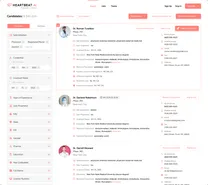
Heartbeat.ai’s database lets you search licensed healthcare professionals across the United States, including gynecologists in Georgia, and apply filters to narrow results by specialty, location, and other criteria before reaching out.
Gynecology isn’t one uniform specialty. Depending on what you’re trying to accomplish, whether that’s a marketing campaign, a recruiting search, or a networking effort, the sub-specialty you’re targeting matters. Here’s a breakdown of the types you’ll typically find in a Georgia provider directory:
- General Gynecologists — diagnose and treat a broad range of conditions related to women’s health.
- Gynecologic Oncologists — focus on prevention, diagnosis, and treatment of cancers such as uterine, ovarian, and cervical cancer.
- Reproductive Endocrinologists — treat infertility and hormonal disorders affecting reproduction.
- Urogynecologists — specialize in pelvic floor disorders, including incontinence and prolapse.
- Maternal-Fetal Medicine Specialists — manage high-risk pregnancies and complex pre- and perinatal complications.
- Adolescent Gynecologists — address reproductive health concerns specific to teenagers.
If you’re building an outreach list, it’s worth deciding up front which of these sub-specialties actually matters for your campaign. A staffing firm recruiting for a rural clinic has different needs than a device company targeting oncology surgeons at an academic center.
Overview of Gynecologic Care in Georgia
Georgia’s healthcare system includes academic medical centers with dedicated gynecology divisions, such as Emory Healthcare and Augusta University Medical Center, alongside community hospitals and independent practices spread across the state. Emory’s department offers services in General Gynecology and Obstetrics, Labor and Delivery, Surgery, Minimally Invasive Gynecologic Surgery, Reproductive Endocrinology and Infertility, Maternal-Fetal Medicine, Gynecologic Oncology, and Female Pelvic Medicine and Reconstructive Surgery. Emory is also positioned within the Winship Cancer Institute, the only National Cancer Institute-designated Comprehensive Cancer Center in Georgia.
Coverage tends to concentrate around Atlanta, Augusta, and other metro areas, which means rural parts of the state often have fewer specialists within easy driving distance. That distribution pattern is one of the practical reasons contact data quality matters so much here: if you’re trying to reach providers outside the major metros, there simply are fewer of them, and a stale phone number or bounced email eliminates a meaningful chunk of your reachable pool.
Why Accurate Contact Information Matters
Accurate contact details serve three distinct groups, and each one runs into different consequences when the data is wrong.
For patients or referring providers, having a direct line to a trusted gynecologist matters for scheduling and timely follow-up. For recruiters and healthcare organizations, direct contact information shortens the hiring cycle by allowing outreach without going through multiple gatekeepers. For marketers and business development teams, it determines whether a campaign actually reaches decision-makers or lands in an inbox nobody checks anymore.
Professional networking is the fourth, less obvious use case. Referral relationships, research collaboration, and mentorship in gynecology often depend on being able to reach the right specialist directly rather than through a general practice line.
Challenges in Finding Gynecologists in Georgia
A few recurring problems show up when building outreach lists for this specialty:
- Uneven geographic distribution — specialists cluster in Atlanta, Augusta, and a handful of other metro areas, leaving rural regions thinner on options.
- Fragmented directories — hospital websites, insurance directories, and state licensing boards each hold partial information, and none of them are built for bulk outreach.
- Data decay — providers change practices, get acquired by larger health systems, or update contact details faster than most directories are updated.
Consolidated databases and predictive contact-matching tools can help close some of this gap by pulling from multiple sources into a single searchable profile. Telehealth has also expanded how gynecologic care reaches patients in remote parts of the state, though that’s a clinical delivery trend rather than a data problem, and it doesn’t substitute for having accurate direct contact information when you need to reach a provider directly.
What You Get with a Heartbeat Gynecologists Contact List
Heartbeat’s database is built to let users search for gynecologists by state, specialty, or other criteria and pull direct contact details rather than a generic office line. A typical profile includes:
- Gynecologist’s name
- Location
- Contact numbers (work, cell, mobile)
- Email address
- Specialization
- Years of experience
- Sole proprietor status
- Licensed states
- License number
- Fax
- Address
Available Gynecologists in Our Contact List by State
Explore our list of gynecologists organized by state:
| Gynecologists by states |
|---|
| Gynecologists in Alabama |
| Gynecologists in Alaska |
| Gynecologists in Arizona |
| Gynecologists in Arkansas |
| Gynecologists in California |
| Gynecologists in Colorado |
| Gynecologists in Connecticut |
| Gynecologists in Delaware |
| Gynecologists in Florida |
| Gynecologists in Georgia |
| Gynecologists in Hawaii |
| Gynecologists in Idaho |
| Gynecologists in Illinois |
| Gynecologists in Indiana |
| Gynecologists in Iowa |
| Gynecologists in Kansas |
| Gynecologists in Kentucky |
| Gynecologists in Louisiana |
| Gynecologists in Maine |
| Gynecologists in Maryland |
| Gynecologists in Massachusetts |
| Gynecologists in Michigan |
| Gynecologists in Minnesota |
| Gynecologists in Mississippi |
| Gynecologists in Missouri |
| Gynecologists in Montana |
| Gynecologists in Nebraska |
| Gynecologists in Nevada |
| Gynecologists in New hampshire |
| Gynecologists in New jersey |
| Gynecologists in New mexico |
| Gynecologists in New york |
| Gynecologists in North carolina |
| Gynecologists in North dakota |
| Gynecologists in Ohio |
| Gynecologists in Oklahoma |
| Gynecologists in Oregon |
| Gynecologists in Pennsylvania |
| Gynecologists in Rhode island |
| Gynecologists in South carolina |
| Gynecologists in South dakota |
| Gynecologists in Tennessee |
| Gynecologists in Texas |
| Gynecologists in Utah |
| Gynecologists in Vermont |
| Gynecologists in Virginia |
| Gynecologists in Washington |
| Gynecologists in West virginia |
| Gynecologists in Wisconsin |
| Gynecologists in Wyoming |
How Heartbeat Builds Its Gynecologist Contact Data
Heartbeat.ai compiles provider contact data from a combination of official, private, and public sources, then applies matching and verification steps to keep cell phone and email records current for direct outreach. The goal is to reduce the manual work of chasing down a provider’s current practice, phone number, or email one by one.
Who Uses a Gynecologist Contact List
This type of list gets used by a mix of people and organizations, each with a slightly different goal:
- Marketers and sales teams promoting products or services relevant to OB/GYN practices.
- Recruiters and staffing firms sourcing candidates for open positions at hospitals or clinics.
- Medical device and pharmaceutical reps building territory outreach lists.
- Researchers and professional networkers seeking collaboration or referral relationships.
Whatever the use case, outreach should stay compliant with applicable privacy and communication laws, and should respect that these are working clinicians with limited time.
Getting More Out of a Gynecologist Contact List
A few practical habits separate effective outreach from a list that just sits unused:
- Segment by sub-specialty first. A message relevant to a maternal-fetal medicine specialist won’t land the same way with a general gynecologist.
- Verify before a large send. Even a well-maintained database benefits from spot-checking a sample before a full campaign, especially for recruiting outreach where one bad contact can cost a candidate.
- Keep messaging specific. Generic pitches get ignored faster in medical outreach than in most other B2B contexts.
- Track response patterns by region. Given Georgia’s uneven distribution of specialists, response rates may vary meaningfully between metro and rural areas.
Limitations to Keep in Mind
No contact database is perfect. Providers change practices, retire, or move between health systems, and even frequently updated records can lag behind those changes. Treat any single data point, cell number, email, or license status, as a starting point for outreach rather than a guaranteed current fact, and confirm critical details directly when the interaction matters, such as a job offer or a compliance-sensitive campaign.
Conclusion
Georgia’s gynecologic care spans academic centers handling complex, high-risk cases and community practices covering routine care across the state. Reaching the right specialists, whether for recruiting, marketing, or professional networking, depends less on finding names and more on finding contact information that’s still accurate when you use it. A consolidated, regularly maintained database is one practical way to close that gap.
Frequently Asked Questions
What services do gynecologists in Georgia provide?
Gynecologists in Georgia provide services including annual check-ups, prenatal care, contraceptive counseling, and treatment for menstrual disorders, with academic centers also offering specialized care such as oncology and maternal-fetal medicine.
How do I find a gynecologist in Georgia?
You can find a gynecologist through a referral from a primary care physician, an insurance provider’s in-network directory, or a hospital system’s provider search tool.
What qualifications should I look for in a gynecologist in Georgia?
Relevant factors include board certification, years of experience, and any sub-specialty training such as reproductive endocrinology, gynecologic oncology, or maternal-fetal medicine.
What should I expect during my first visit to a gynecologist in Georgia?
A first visit typically includes a medical history review and physical exam, with additional screenings or tests depending on age and individual health history.